
Reviewed · BIG ISLAND OF HAWAII
Big Island GOAT Experience: Mauna Kea Summit, Sunset & Stars
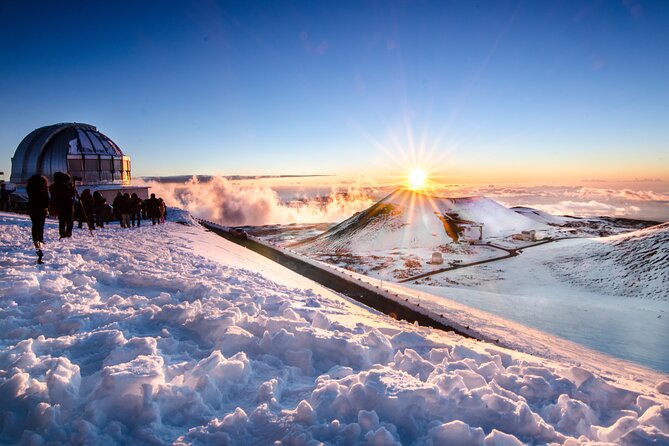
Mauna Kea gives you two big spectacles in one evening: the sun setting above the clouds and a sky dark enough to reveal stars, planets, galaxies, and nebulae. The summit reaches 13,796 feet, so this is not a quick lookout stop. It is a long mountain outing with thin air, strong cold, and a serious change in altitude.
I like the warm jackets, gloves, hot drinks, snacks, and included night photo. I also like that guides such as Kella, John, Val, Chris, and Tay bring more than transport, adding Hawaiian stories, volcanic geology, constellation lore, and practical care. The main drawback is simple: weather controls the show, and the ride takes up much of the seven- to eight-hour day.
Key points to know before booking
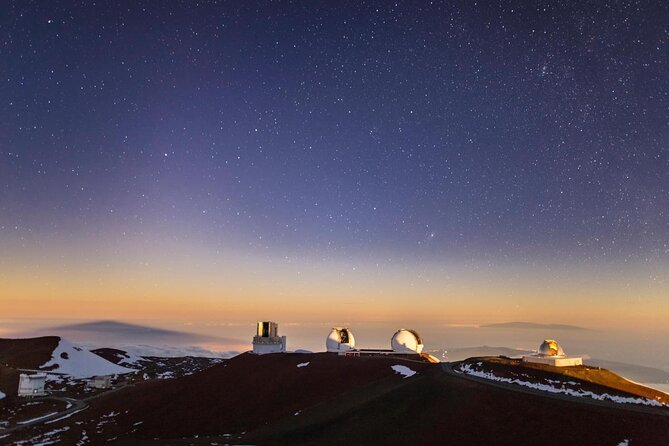
- The summit sits at 13,796 feet, with sunset views above the clouds and a close look at Mauna Kea’s major observatories.
- Stargazing usually happens lower on the mountain, near the 9,200-foot visitor center, where guides use a professional Celestron telescope and laser pointer.
- Cold is the biggest practical challenge. Coats and gloves are supplied, but bring warm layers, a hat, thick socks, and your own gloves if you have them.
- The small-group limit is 14 people, though one account described roughly 30 people spread across two vans on one departure, so group size may vary by operation.
- The guides add real value, with astronomy, Hawaiian navigation, volcanic geology, and stories about Poliʻahu, Lilinoe, and Waiau.
- The $289 price buys convenience and equipment, but it will feel expensive if clouds block the stars or you dislike long van rides.
Why Mauna Kea makes such a strong evening outing
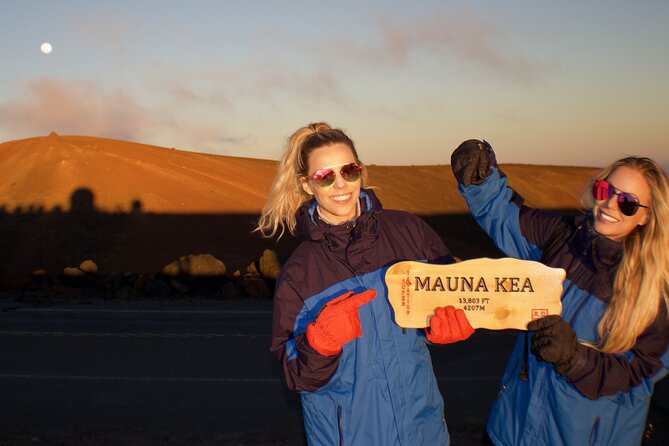
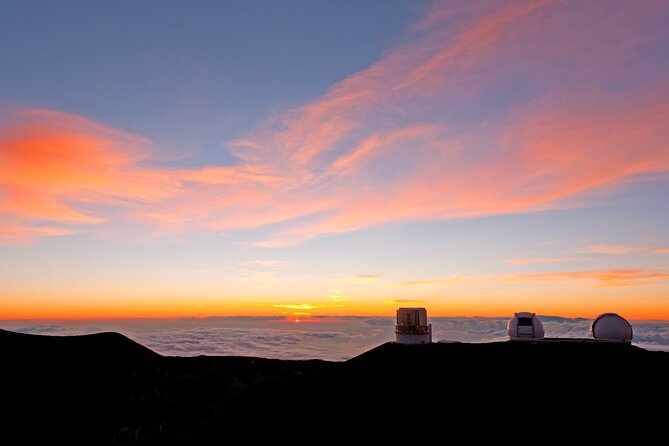
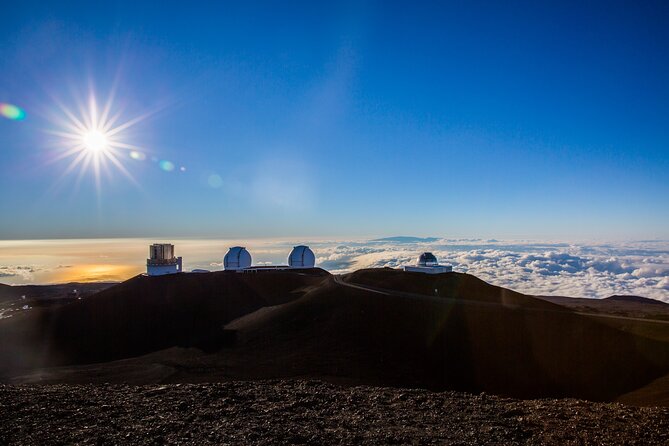
Mauna Kea is the highest point in Hawaii, and its summit feels far removed from the beaches and resort towns below. You can look across the island from above the cloud layer, then watch the light fade while the observatory domes take on the last colors of sunset.
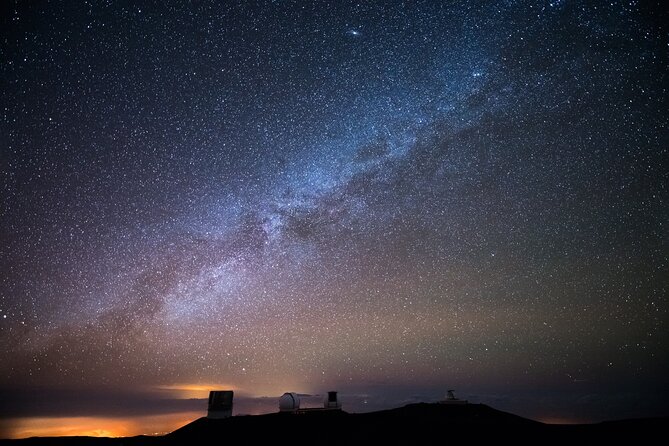
The location also explains the science. The high, dry summit has unusually dark and clear skies, which is why international research groups operate major observatories here. You do not tour the large university telescopes or use them yourself, but you get close enough to understand why this mountain matters to astronomy.
The evening also has a Hawaiian cultural side. Maunakea is connected with the goddess Poliʻahu and with Lilinoe and Waiau. The summit was once kapu, or restricted, except to high chiefs and priests. Queen Emma made the difficult journey to the summit in 1881, visiting sacred Lake Waiau.
That context gives the trip more weight than a simple sunset drive. Still, the cultural discussion depends heavily on your guide, so pay attention during the ride and at Halepōhaku, the mid-level astronomy facility.
A few more the Big Island of Hawaii days worth weighing up
- Big Island in a Day: Volcanoes Waterfalls Sightseeing and History
★ 5.0 · 6,569 reviews - Big Island Manta Ray Night Snorkel
★ 5.0 · 5,656 reviews - Big Island: Kona Manta Ray Snorkel Tour in Keauhou Harbor
★ 4.5 · 2,465 reviews
Pickup, vans, and the long climb
Pickup is offered from selected locations in Hilo, Waikoloa Village, and Kailua-Kona. Choose carefully when booking, since your included transport is tied to the pickup option you select. The full outing lasts about seven to eight hours, including driving, summit time, and the night-sky stop.
A 4×4 passenger van handles the mountain road, saving you from driving at altitude and leaving you free to watch the island change outside the windows. The ride is part of the experience, but it is also the least exciting portion. Bring patience, especially if you are staying in Kona or Hilo and have a long approach before reaching the mountain.
Your guide may use the drive for useful island details. Kella has discussed lava types, volcano ages, and Hawaiian gods and demigods. Other guides have filled the trip with astronomy facts and stories about the way Polynesian navigators used the stars.
The small-group promise is important here. A maximum of 14 people should make it easier to hear the guide, share the telescope, and get a clear turn for photographs. One account described about 30 people divided between two vans, with more noise and less personal space than expected. I would confirm the expected group size if that matters to you.
The summit at sunset: beautiful, exposed, and cold
The summit portion takes about four hours according to the planned schedule, though that includes time for the approach and outdoor stops. Once you arrive near the observatories, you can put on the supplied jacket and gloves before settling in for sunset.
Do not mistake the provided coat for a complete winter outfit. The summit can be below freezing, with wind that cuts through ordinary clothing. Several people found their feet and hands especially cold after standing outside for a long time. Wear long pants, several warm layers, a knit hat, thick socks, and sturdy closed shoes. Lightweight gloves or rechargeable hand warmers are useful additions.
The supplied jackets are described as warm, but they are shared, one-size items. A few coats have had damaged zippers, and the gloves may not be enough by themselves. You do not need to pack a bulky winter parka for Hawaii, but you should plan for real mountain cold, not mild beach weather.
The reward is the sunset. On a clear evening, the sun drops toward a broad layer of clouds, giving you a high viewpoint that is very different from a coastal sunset. Snow can appear on the summit in winter, adding another unusual detail to the scene. A recent winter outing reached the summit after a snowstorm, with the snowcap making the sunset especially striking.
The summit is also where the altitude becomes noticeable. Even a short uphill walk can feel hard at nearly 14,000 feet. Move slowly, avoid unnecessary exertion, and tell your guide if you feel unwell. The trip is not suitable for anyone with heart problems or other serious medical conditions, and it is not recommended for pregnant people or anyone in poor health.
Halepōhaku and the astronomy stop
Halepōhaku, also called the Onizuka Center for International Astronomy Astronomer’s Mid-Level Facility, sits at about 9,200 feet. The scheduled visit lasts around 30 minutes, but the astronomy portion may extend into a longer stop lower on the mountain.
This lower elevation matters. It gives your body a break after the summit and provides a better setting for a longer look at the night sky. One account described an extended stargazing stop at this level, with hot chocolate and an astronomy talk from Val.
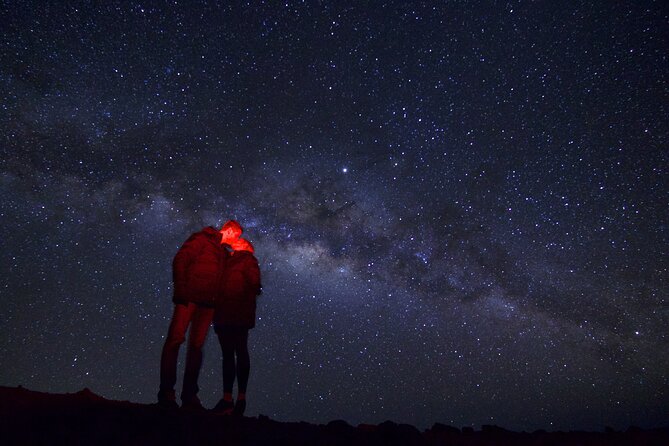
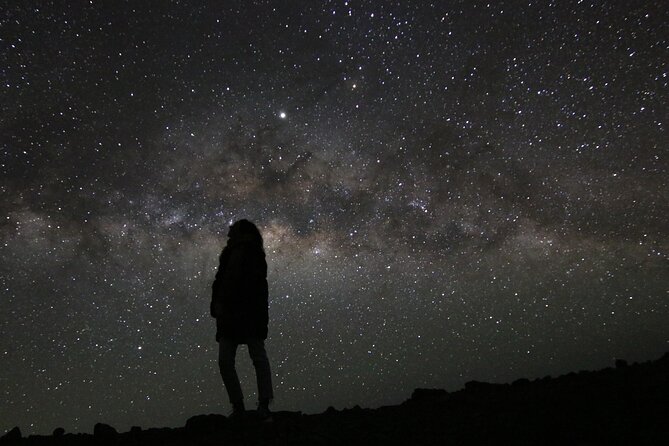
The guide uses a laser pointer to identify stars and constellations. With a professional Celestron telescope, you might see planets, galaxies, nebulae, and other sky features. Andromeda has been a highlight for some outings. Depending on the night, you might also spot the International Space Station or Starlink satellites moving across the sky.
The telescope time is not a private viewing session. You may look through it briefly while the group shares the equipment. If you expect long, uninterrupted telescope use, you may find the experience limited. If you value having someone explain what you are seeing, the guide-led format is much more useful.
The skies can change quickly. One cloudy evening eventually opened for a short period, allowing a fine view of the stars. Another outing had a striking sunset but cloud cover that hid most of the stargazing. A full moon can also brighten the scene, making the stars less dramatic but adding its own appeal.
A different sort of day out, same corner of the Big Island of Hawaii:
- Hilo Shore Excursion: Volcanoes National Park & Black Sand Beach
★ 4.5 · 2,338 reviews - Big Island: Captain Cook Snorkel On A Power Catamaran With Lunch
★ 5.0 · 2,232 reviews - KONA Manta Ray Night Snorkel – FREE re-ride if no Sightings
★ 5.0 · 2,212 reviews - Manta Ray Night Snorkel at Kona, Big Island
★ 5.0 · 1,758 reviews
Guides make the difference
The strongest part of this outing is often the guide. John has been praised for humor, safety, and a steady stream of facts. Chris and Val have worked together as drivers and astronomy guides, with Val handling stories and sky explanations while Chris focuses on the practical side of the trip.
Tay has been singled out for astronomy expertise and for finding interesting objects through the telescope. Kella has brought Hawaiian folklore, volcano facts, and a warm, attentive manner. Valerie has been described as kind and informative, with a talent for taking photographs.
The names may change on your departure, but the role is the same. A good guide turns a dark sky into a story. You learn not only what constellation you are seeing, but also how Polynesian navigators read the heavens and how Hawaiian traditions connect the mountain with the gods.
Guides also make the weather easier to handle. One guide kept spirits up during a rainy day because Mauna Kea can be clear when Hilo is wet. Another adjusted the plan and returned to lower altitude when wind made the summit uncomfortable and one person began having trouble with the elevation.
What is included, and what you still need
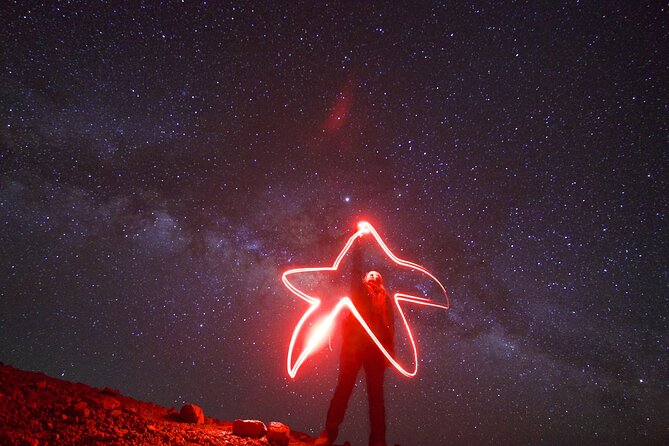
The price is $289 per person. That is a considerable fee, but it covers round-trip 4×4 transport, a guide, jackets, gloves, snacks, a hot beverage, telescope use when weather allows, and a professional night photo.
The included photograph adds real value. The guides use a professional DSLR camera, and the result is more likely to show both you and the stars than a quick phone snapshot. The photo is normally provided through a link, so save it promptly. One person had trouble opening the link on a phone.
Dinner is not included, and food is not available for purchase at the mountain. Bring a packed dinner if you need a full meal. The snack bag is useful, but it is not a substitute for dinner after a long afternoon and evening.
The price makes the most sense if you do not want to handle a 4×4 vehicle, mountain road, cold-weather gear, telescope, camera, and astronomy lesson on your own. It makes less sense if you are mainly seeking a short sunset stop or if you are unhappy paying for an experience that weather can partly cancel.
The less polished parts to plan around
The vans are practical rather than spacious. One account described a crowded rear seat with limited legroom and no easy access to a seatbelt. That is not acceptable comfort or safety, so check your seat and speak up if you cannot buckle in properly.
The route may also include more than one van ride. Even with a small planned group, the transport portion can feel long. Restrooms are available at the visitor center, with portable facilities near the summit, but conditions can be basic. Carry tissues or toilet paper as a sensible backup.
The experience requires moderate physical fitness because of the altitude and outdoor standing. The issue is not a long hike. It is the combination of thin air, cold, wind, and short walks on an exposed mountain. If you have a medical condition, ask your doctor before booking and be candid with the operator.
Free cancellation is available until 24 hours before the start time. Weather cancellations offer a different date or a full refund, while late changes and cancellations are not refunded.
Who should book the Mauna Kea sunset and stars tour
I would choose this for someone who wants a major Big Island outing rather than another beach afternoon. It suits couples, families with children 13 and older, and anyone who enjoys astronomy, Hawaiian culture, geology, or dramatic natural views.
It is especially good for you if you prefer to let someone else handle the driving. You get the summit, the sunset, the telescopes, and the night sky without arranging a suitable vehicle or learning the mountain road.
I would hesitate if you dislike cold, long drives, shared telescope viewing, or plans that depend on clear weather. The sunset is usually the safer payoff, while the stars remain a bonus controlled by clouds, wind, moonlight, and timing.
Should you book it?
Yes, if Mauna Kea is high on your Big Island wish list and you are willing to prepare for the cold. The strongest combination is the summit sunset, the guide’s Hawaiian and astronomy stories, and the chance to see the Milky Way, Andromeda, planets, or nebulae through a telescope.
Book with realistic expectations. You are paying for a full evening of transport, altitude access, equipment, and expert interpretation, not just five minutes at a telescope. Pack more warm clothing than you think you need, bring dinner, and accept that clouds may change the plan. For the right person, the summit view and dark sky are worth the time and cost.
FAQ
Where can I be picked up for the tour?
Pickup is available from selected locations in Hilo, Waikoloa Village, and Kailua-Kona. Select the correct pickup option when you reserve.
How long does the experience last?
The tour lasts approximately seven to eight hours, including transport, summit time, and the stargazing stop.
How high is Mauna Kea’s summit?
The summit reaches 13,796 feet, or 4,205 meters. The visitor center area is at about 9,200 feet, or 2,800 meters.
Is transportation included?
Yes. Round-trip transportation is provided in a 4×4 passenger van from the pickup location you select.
Are jackets and gloves provided?
Yes. Jackets and gloves are supplied, but you should still bring warm layers, a hat, thick socks, and additional gloves if you have them.
Is dinner included?
No. Snacks and a hot beverage are included, but dinner is not. You may bring a packed dinner, and there is no food available for purchase at the mountain.
Do I use the large observatory telescopes?
No. The large observatories are operated by universities and organizations from several countries. The tour may provide viewing through a professional Celestron telescope instead.
Are children allowed?
People under age 13 are not allowed on this tour.
What happens if bad weather cancels the tour?
You can receive a different date or a full refund if poor weather causes the operator to cancel the experience. You must cancel at least 24 hours before the start time to receive a full refund for your own cancellation.
Just added around the Big Island of Hawaii
- Hilo Shore Excursion: Active Volcano, Lava Tube, Waterfall and Gardens★ 5.0 · 393 reviews
- Volcano Adventure: Hilo Sightseeing w/ Optional Helicopter Tour★ 4.5 · 412 reviews
- Kealakekua Bay Snorkeling Tour – 4 hour Kona Zodiac Adventure★ 5.0 · 508 reviews
- Big Island, Hawaii: Volcanoes National Park Safari★ 4.5 · 545 reviews
- Whale Watching On The Big Island★ 5.0 · 573 reviews
- Zodiac Raft Whale Watching Adventure★ 5.0 · 456 reviews
- Manta Ray Night Snorkel Tour in Kailua-Kona, Big Island★ 5.0 · 382 reviews
- Snorkel with Manta Rays Guaranteed★ 5.0 · 738 reviews
Big Island of Hawaii Tours, compared.
Big Island in a Day: Volcanoes Waterfalls Sightseeing and History
Read our review →
Kona Manta Ray Snorkel Tour in Keauhou Harbor
Read our review →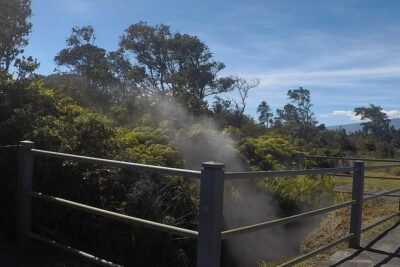
Hilo Shore Excursion: Volcanoes National Park & Black Sand Beach
Read our review →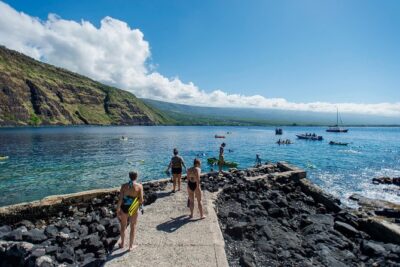
Captain Cook Snorkel On A Power Catamaran With Lunch
Read our review →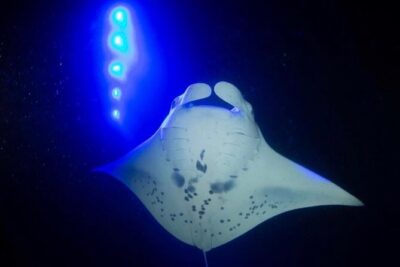
KONA Manta Ray Night Snorkel – FREE re-ride if no Sightings
Read our review →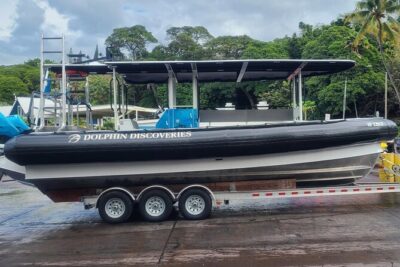
Small Group Big Island Twilight Volcano and Stargazing Tour
Read our review →Browse the lists this tour appears in