
Reviewed · BOSTON
City Cruises Boston Whale Watching Cruise by High-Speed Boat
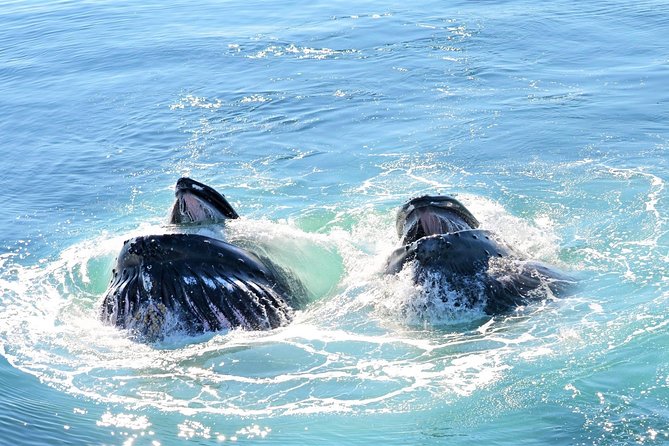
Boston’s best whale watching begins with a fast ride out from Long Wharf to Stellwagen Bank National Marine Sanctuary, where humpback, fin, and minke whales feed. The setting is open and wild, with dolphins and seabirds also possible. You are not just looking at the harbor. You are heading into Massachusetts Bay’s working ocean.
I like the high-speed catamaran, which cuts down the time spent getting to the feeding grounds, and I like the naturalist narration. Guides point out animals, explain tracking and conservation, and help turn a distant blow or tail into something meaningful. The main drawback is the sea itself: wind, cold, crowds, and motion sickness can make this a long three-and-a-half hours.
The quick facts that matter most
- Stellwagen Bank is the main destination: This protected marine area is a feeding ground for several whale species, dolphins, seabirds, and other sea life.
- The boat is built for speed: The high-speed catamaran gets you away from Boston and toward open water faster than a slower sightseeing vessel.
- Naturalist narration adds real value: A guide from the New England Aquarium naturalist team provides facts about behavior, science, and conservation. Colin is one guide praised by name for his fun facts and clear commentary.
- Sightings are strong but never promised: Some trips see six, ten, or more whales, while another may produce only a few sightings or none at all.
- Prepare for cold and motion: Even a pleasant fall day can feel sharply cold and windy on deck. Motion-sickness medication is not included.
- You return to Long Wharf: The tour lasts about three hours and 30 minutes, including the ride out, time near the whales, and the trip back.
Leaving Long Wharf for the open bay
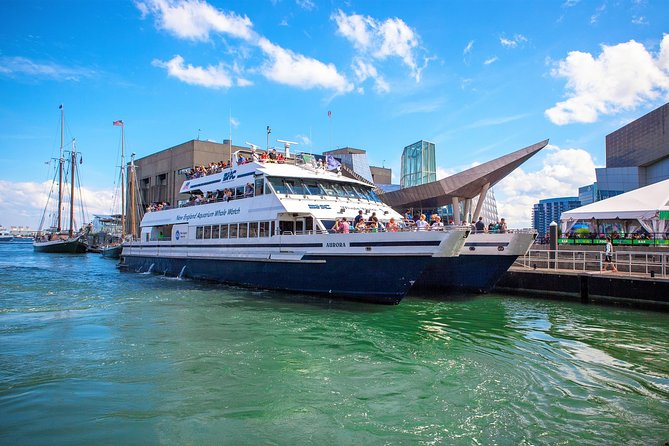
You meet at 1 Long Wharf, close to Boston’s waterfront attractions and public transportation. Boarding begins 30 minutes before departure, and you need to arrive early. A late arrival will miss the boat, with no convenient way to catch up once the catamaran leaves.
The departure point is useful if you are already spending time around the Aquarium, Faneuil Hall, or the harbor. The boat returns to the same place, so you can plan another downtown activity afterward. Allow yourself some breathing room, though. The advertised duration is approximate, and sightings depend on conditions at sea.
Once aboard, you can choose between the outdoor decks and the climate-controlled cabin. The decks provide the best chance of seeing a whale first, but you will face wind and spray. Inside, you have shelter, seating, a galley selling food and drinks, and an onboard restroom.
The boat can carry up to 350 people. That is a useful number to know before booking. On a busy sailing, people may move constantly between the cabin and the deck, and finding a clear viewing spot can take patience. Some passengers have found seating limited, especially during the long run to the sanctuary.
More Boat Tours in Boston
- Boston Duck Boat Sightseeing City Tour with Cruise Along Charles River
★ 4.5 · 9,378 reviews - Boston: City Cruises Whale Watching Cruise
★ 4.5 · 4,710 reviews - Boston: City Cruises Historical Sightseeing Cruise
★ 4.6 · 1,771 reviews
Why Stellwagen Bank is worth the ride
Stellwagen Bank is not a roadside attraction where whales appear on schedule. It is an offshore feeding area, and the animals gather there because food is available. That makes the trip feel more like a visit to a working part of the natural world than a staged show.
The sanctuary sits at the mouth of Massachusetts Bay. From Boston, the ride takes you away from the city and into open water. The city skyline and sunset can be beautiful on the return, but the main event is the change in setting. You leave the harbor behind and spend time watching the surface for a blow, a fin, a back, or a tail.
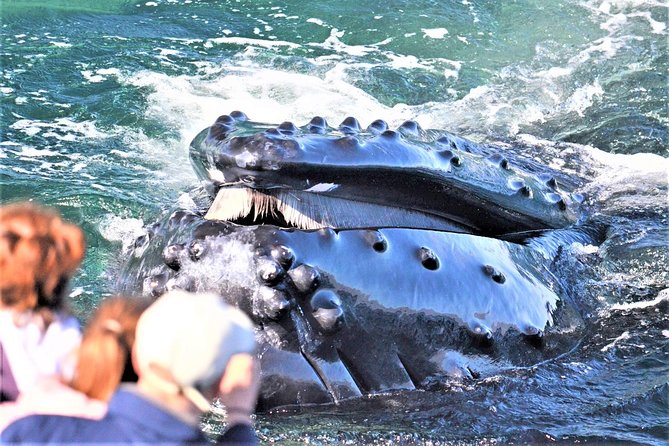
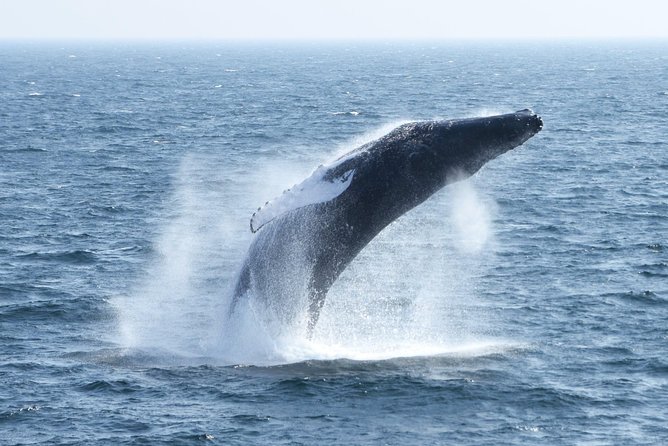
A whale may appear close to the catamaran, or it may surface farther away. Some of the most memorable sightings have included two humpbacks beside the boat, a full breach, flipper slapping, and repeated surfacing. Other trips have produced minke whales, fin whales, Atlantic white-sided dolphins, and groups of ten or more whales.
You need to accept the quiet stretches. One trip can spend several hours searching before finding two humpbacks together. Another may see whales within 45 to 60 minutes. The crew works with the conditions and the animals, but no company can control where a whale surfaces.
What the naturalist adds to the trip
The guide is more than a voice pointing toward a splash. The narration covers animal behavior, scientific tracking, conservation status, and the work involved in studying whales in New England waters.
That background changes the way you watch. A distant tail becomes part of a pattern. A blow tells you where to look next. A guide can help you understand why a whale surfaces, travels, rests, or disappears for several minutes.
The tone appears to vary by guide, but the strongest part of the narration is its mix of useful facts and enthusiasm. Colin is singled out for his fun facts, and the crew is often praised for answering questions and pointing out animals quickly. Some jokes may be a little corny, but that is a small price for keeping a boat full of people engaged during quiet periods.
I especially value the conservation information. Seeing whales is exciting, but learning how scientists track them and monitor their condition gives the outing more purpose. You come away with a better sense of the animals as individuals and of the pressures affecting them.
The ride out, the search, and the return
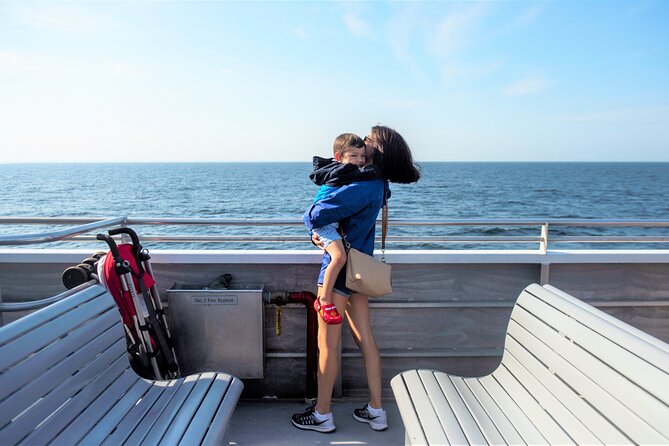
The first part of the cruise is the run from Long Wharf toward the sanctuary. The high-speed catamaran matters here. You still spend time traveling, but the faster vessel helps maximize the hours available for searching and watching.
The route is not a narrated city tour from start to finish. The focus shifts quickly from Boston Harbor to the open bay. If you enjoy boats, the ride itself can be part of the fun. You get changing views of the harbor and the city, then a broad stretch of water where the horizon seems to take over.
At the feeding grounds, the crew begins searching for signs of life. You may hear an announcement and see people gather on one side of the boat. This is when a clear view matters. Move carefully, keep your eyes on the water, and remember that the best sighting can happen behind you or on the opposite side.
The return trip gives you time to warm up, eat, and review your photographs. The onboard galley sells snacks and drinks, and families can use books, coloring pages, and other children’s activities during the longer stretches. You are back at Long Wharf at the end, without a separate transfer.
More Speedboat Rides in Boston:
- City Cruises Boston Codzilla High-Speed Thrill Boat Ride
★ 4.0 · 424 reviews - NYC: Circle Line “The Beast” Midtown/Downtown Speedboat Ride
★ 4.6 · 4,259 reviews - Speedboat Sightseeing Adventure of Miami
★ 4.5 · 3,025 reviews - Miami: Sightseeing Speedboat Tour
★ 4.6 · 1,829 reviews
Whale sightings, with realistic expectations
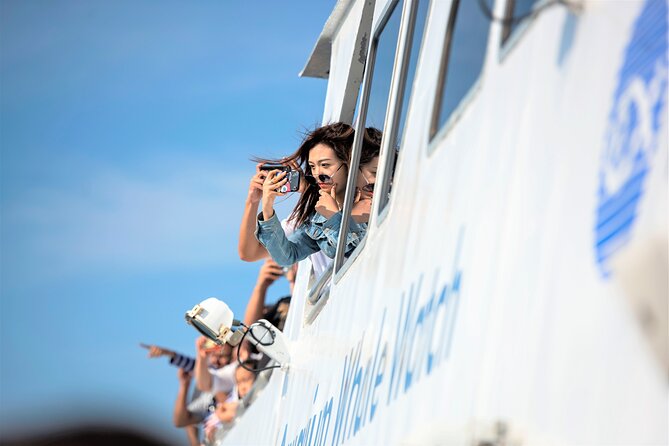
This is a wildlife trip, not a guaranteed performance. The range of outcomes is wide. Some sailings see one or two whales. Others see four, six, eight, or ten or more. Dolphins may join the show, and seabirds add interest while you wait.
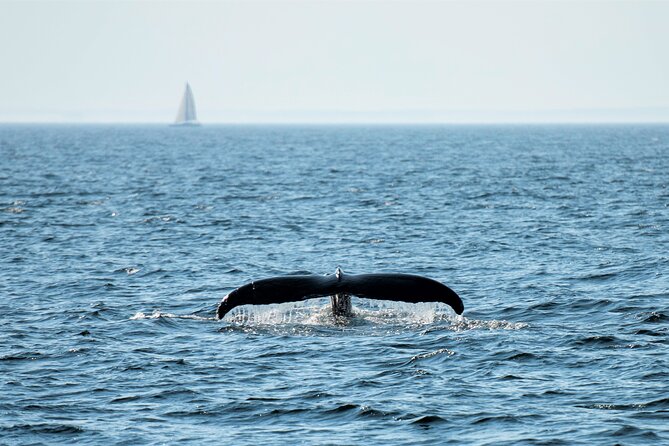
The most dramatic encounters are possible but not normal. A whale can surface close enough for photographs, show its fluke, slap a fin, or breach. You might also see only a back and blow before it moves away. Both kinds of sighting are genuine, but they feel very different from the front row.
I would not book this solely because you need a particular photograph. Book it because you want several hours on the water with a reasonable chance of seeing large marine animals in their feeding area. That attitude protects the day from disappointment.
One sailing reported no whales but still offered city views, food, bathrooms, and a steady ride through choppy water. That is not the ideal result, especially at this price, but it explains why your expectations should include the boat trip itself and the sanctuary setting.
Cold wind and rough water
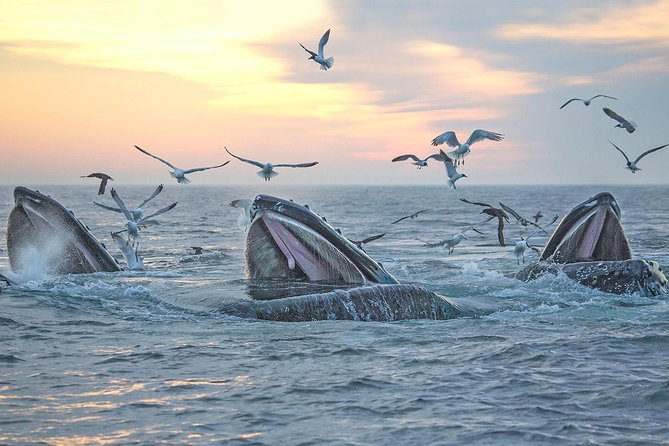
Weather makes a major difference. A sunny forecast does not mean a warm boat ride. On an October trip with temperatures around 60 degrees, the upper deck felt very cold and windy. A light sweater or jacket is the minimum sensible plan, and a warmer layer is better in the shoulder seasons.
Bring sunscreen and sunglasses even on a cool day. Open water reflects light, and you may spend long periods outside. If you have long hair, bring something to tie it back. Wind can turn a pleasant viewing spot into an uncomfortable one quickly.
Motion sickness is the more serious concern. The catamaran handles rough water well, but it cannot remove the movement of the sea. Some people have felt dizzy or sick, particularly when the water became choppy. The tour does not provide sea-sickness medication, so you need to plan that yourself if you are prone to motion sickness.
A sensible approach is to take whatever preventative measure you normally use before boarding, rather than waiting until you feel ill. You can retreat to the climate-controlled cabin, but the ride remains a boat ride. If motion sickness regularly ruins your time on the water, this may not be the right Boston outing.
Is the $85.56 price fair?
At $85.56 per person, this is not a casual harbor cruise. You are paying for a half-day outing, a fast catamaran, access to a major feeding area, a naturalist guide, indoor shelter, a restroom, and the chance to see animals that cannot be scheduled.
The value is strongest when you see several whales and get clear views. A trip with humpbacks close to the boat, dolphins, or repeated activity can feel like a memorable use of a Boston morning or afternoon. The price is harder to justify if the weather is rough, the boat is crowded, or sightings are sparse.
Food and drinks cost extra, and gratuities are optional. Those expenses are small compared with the ticket, but they matter for families. You can plan ahead and treat the galley as a convenience rather than part of the fare.
For a first Boston visit, I consider this a worthwhile splurge if marine life is a real interest. If you have only one free morning and need predictable sightseeing, a city tour offers more certainty. This cruise offers a different kind of value: access to a place and experience you cannot reproduce from shore.
Who will enjoy this cruise most
This is a good fit for you if you enjoy wildlife, boats, and a little uncertainty. Families can benefit from the onboard children’s activities, and the naturalist program gives the trip an educational purpose beyond taking pictures.
It also suits solo visitors. You do not need a group to enjoy the open water, and the crew’s narration gives the day structure. Couples and friends will find plenty to discuss, though the viewing experience can become competitive on a crowded deck.
I would hesitate to recommend it to anyone with severe motion sickness, limited tolerance for cold, or a firm need for guaranteed whale sightings. The boat is described as not built for some passengers with mobility limitations, so you should check your own needs before booking rather than assume the vessel will be easy to navigate.
The maximum capacity of 350 people also matters. If you want a quiet, small-boat experience, this is not that. You are joining a large public cruise with a busy deck and shared viewing areas.
Booking, cancellations, and practical planning
The experience is commonly booked about 16 days ahead, so advance planning makes sense during popular periods. It is offered in English, and you receive a mobile ticket.
Free cancellation is available if you cancel at least 24 hours before the start time. Changes or cancellations inside that window are not accepted for a refund. If poor weather cancels the cruise, you are offered another date or a full refund. The same choice applies if the minimum number of passengers is not reached.
The operator may also have to shorten or alter a trip for an emergency. On one sailing, the crew handled a passenger injury by taking the person to another community, explaining what was happening, and offering refunds. That can cut into your planned schedule, but safety has to come first.
Plan to arrive at Long Wharf at least 30 minutes before departure. Wear layers, carry sun protection, and bring motion-sickness supplies if you need them. Those few preparations can make the difference between watching the water and spending the trip inside feeling unwell.
Should you book this Boston whale watch?
I would book it if you can accept that wildlife follows its own schedule. The strongest reasons are the fast ride to Stellwagen Bank, the chance to see humpbacks and other marine life, and the naturalist narration that gives the sightings meaning.
I would skip it if you dislike open water, cannot handle cold or motion, or need an activity with a guaranteed payoff. For everyone else, this is one of Boston’s more memorable ways to spend half a day. Bring warm clothes, arrive early, keep your expectations flexible, and give the crew time to find the animals.
FAQ
How long is the Boston whale-watching cruise?
The cruise lasts approximately three hours and 30 minutes, including the ride from Boston to the sanctuary, time spent searching for whales, and the return to Long Wharf.
Where does the cruise depart?
The boat leaves from 1 Long Wharf, Boston, Massachusetts, near public transportation and Boston’s waterfront attractions.
Where does the cruise end?
The activity ends back at the same meeting point at Long Wharf.
What animals might I see?
Possible sightings include humpback, fin, minke, and pilot whales, Atlantic white-sided dolphins, seabirds, and other marine life.
Is seeing whales guaranteed?
No. Whale sightings depend on the animals and sea conditions. Some trips see many whales, while others may see only a few or none.
Is food available on the boat?
Yes. Food and beverages are available for purchase in the onboard galley. They are not included in the ticket price.
Is there an indoor area?
Yes. The catamaran has a comfortable, climate-controlled indoor cabin, along with outdoor viewing decks.
Should I bring a jacket?
Yes. You should bring a light sweater or jacket, sunscreen, and sunglasses. The wind can make the boat feel cold even on a sunny day.
What happens if the cruise is canceled?
If poor weather or an insufficient number of passengers causes cancellation, you are offered a different date or experience, or a full refund. You can also cancel for a full refund if you do so at least 24 hours before the scheduled start time.
More Whale Watching in Boston
- Juneau Wildlife Whale Watching
★ 5.0 · 7,379 reviews - Juneau Wildlife Whale Watching & Mendenhall Glacier
★ 5.0 · 6,236 reviews - Whale Watching Tour in Gloucester
★ 5.0 · 4,460 reviews - Maui Eco-Raft Tour: Eye-Level Whale or Dolphin Watching – Lahaina
★ 5.0 · 2,482 reviews
Just added around Boston
- Boston’s Freedom Trail: A Revolutionary Walking Tour★ 5.0 · 1,343 reviews
- Delicious Donuts of Boston: A Sweet History Walking Tour★ 5.0 · 1,038 reviews
- Narrated Sunset Cruise of Boston Harbor★ 4.0 · 532 reviews
- Sunset Sailing Cruise on a Tall Ship in Boston Harbor★ 4.5 · 414 reviews
- Freedom Trail Walking Tour 250★ 4.5 · 1,118 reviews
- Boston’s North End Food and History Walking Tour★ 5.0 · 459 reviews
- Boston North End Food Tour of 6+ Tastings, Cannoli, Lobster Roll★ 5.0 · 1,404 reviews
- Boston’s North End Food Tour: Italian Flavors & Heritage Walk★ 5.0 · 1,322 reviews
Boston Tours, compared.
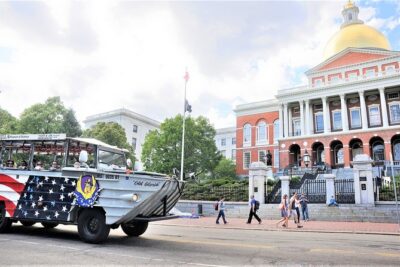
Boston Duck Boat Sightseeing City Tour with Cruise Along Charles River
Read our review →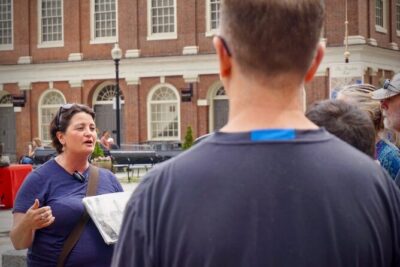
Freedom Trail History Small Group Walking Tour
Read our review →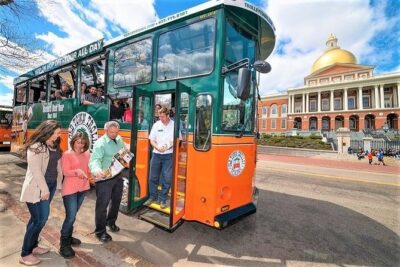
Boston Hop-On Hop-Off Trolley Tour with 13 Stops
Read our review →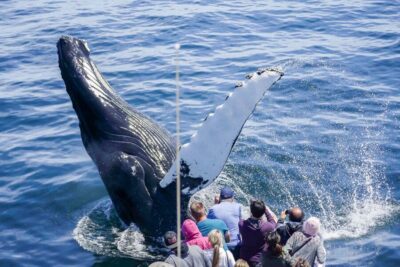
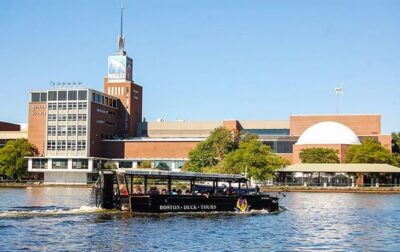
Boston Duck Tour: The Original and World-Famous
Read our review →
Cambridge: Harvard University Student-Guided Walking Tour
Read our review →
Harvard University Campus Guided Walking Tour
Read our review →
Boston Fenway Park: Guided Ballpark Tour with Options
Read our review →Browse the lists this tour appears in