
Reviewed · JACKSON HOLE
Grand Teton Wildlife Safari in a Enclosed or Open-Air Vehicle (season dependent)
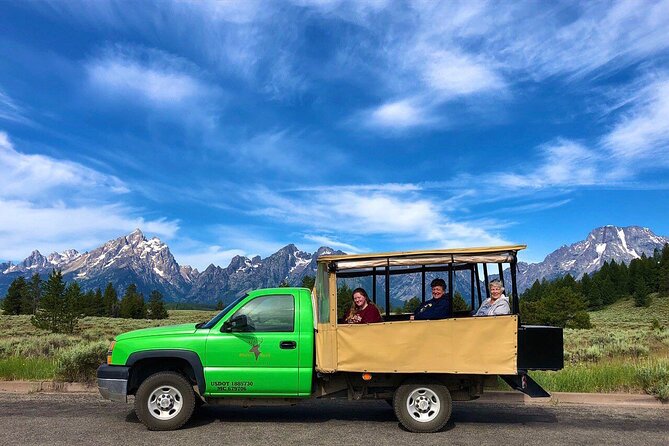
A Grand Teton wildlife safari gives you a better chance of finding animals than simply driving through the park and hoping something appears. At dawn or dusk, your guide scans roadsides, river flats, and wooded areas for moose, elk, bison, bears, wolves, deer, and birds, then uses binoculars or a spotting scope to help you see what the naked eye misses. The open-air vehicle used in warm weather also gives you a fine view of the peaks and a real sense of the cold morning air.
I like two things in particular: the guides, including Kyle, Kelsey, Allie, Anthony, and Neil, are praised for mixing animal spotting with clear explanations of geology, ecology, local history, and homesteading; and the small group, capped at 12 people, gives you room to ask questions and get help with photos. The main catch is simple: wildlife is never guaranteed. One four-hour outing produced only a distant moose and a few pronghorn, while another found bears, wolves, moose, elk, and bison.
Key points at a glance
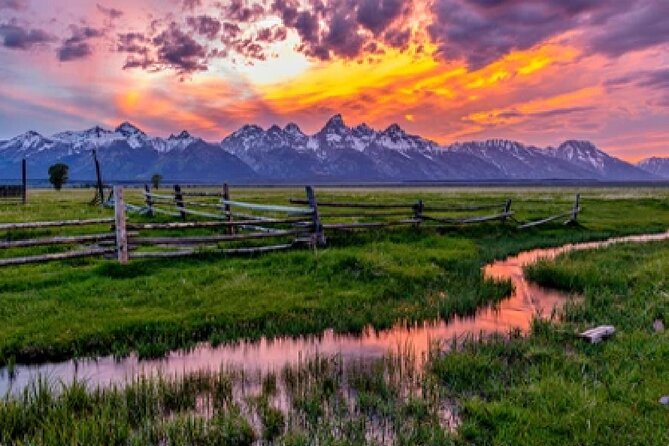
- Sunrise and sunset timing: Animals are often most active early and late in the day, though those departures can be chilly.
- Seasonal vehicles: Ride open-air from June to mid-September, weather permitting, and use a heated enclosed vehicle from mid-September through May.
- Small group size: A maximum of 12 people makes it easier to hear the guide and share viewing equipment.
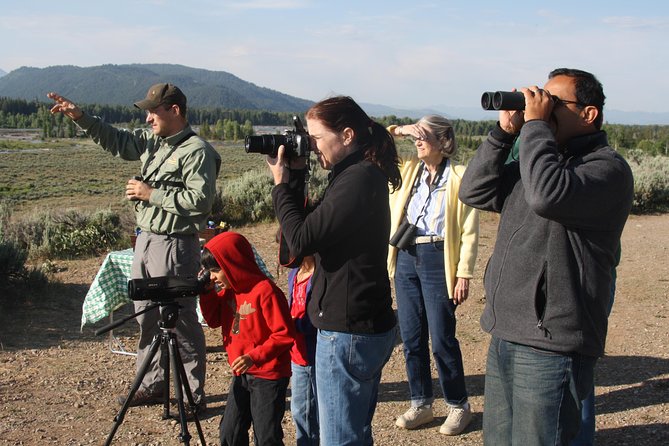
- Wildlife tools included: Binoculars and a spotting scope help you see animals that may be far from the road.
- Mormon Row in season: March through November tours stop at the famous barns, while December through February tours skip the area because of snow.
- Useful extras: Snacks, bottled water, soda, and hotel pickup in the approved Jackson Hole area during the colder months are included.
Four hours in Grand Teton with a wildlife specialist
This is not a zoo visit or a guaranteed animal show. You ride through part of Grand Teton National Park, a huge protected area with about 310,000 acres and many different habitats. Your guide watches the roadside and distant hills while explaining what you are seeing and why certain animals appear in certain seasons.
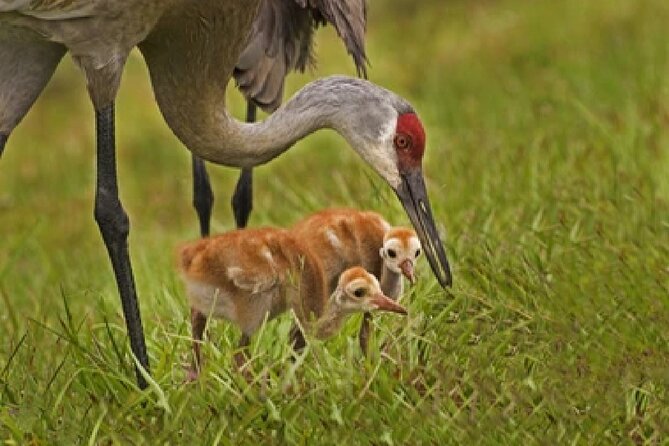
The park supports roughly 60 mammal species and more than 300 bird species. The possible sightings include elk, moose, mule deer, pronghorn, bison, bighorn sheep, black bears, grizzly bears, and wolves. In the sky, you might see bald eagles, golden eagles, ospreys, hawks, owls, or sandhill cranes.
The guide’s role matters here. A moose partly hidden in trees can be almost impossible to spot from a moving car. A trained guide may notice an ear, antler, or patch of movement before you do, then stop safely and point it out. Guides also carry binoculars and a spotting scope, and several guides have helped visitors take photos or shared pictures after the tour.
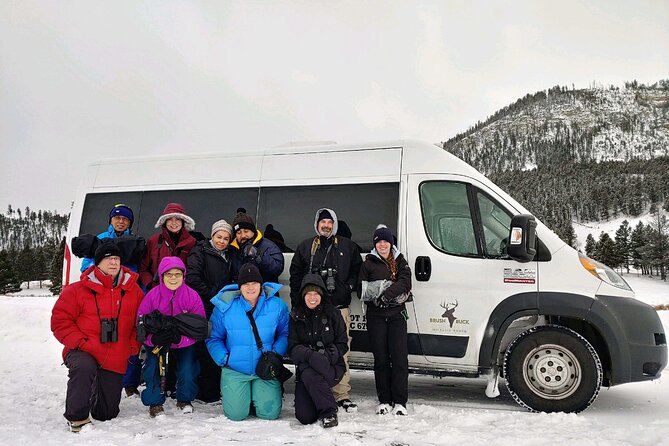
The timing is useful for wildlife, but it affects comfort. Early starts can be cold even in summer. Bring a jacket and long pants for warm-season departures, and expect much heavier clothing needs in winter: snow boots, insulated pants or bibs, a winter coat, gloves, hat, and scarf.
More Wildlife Tours in Jackson Hole:
- Sunset 4-Hour Grand Teton Wildlife Adventure
★ 5.0 · 1,020 reviews - Sunrise 4-Hour Grand Teton Wildlife Adventure
★ 5.0 · 899 reviews - Jackson: Grand Teton National Park Guided Wildlife Tour
★ 4.8 · 676 reviews
Choosing between the open-air and enclosed vehicle
From June through about mid-September, the tour uses a customized open-air safari vehicle when weather permits. You sit higher than you would in a normal car and get an unobstructed view of the Teton peaks, Snake River scenery, trees, and roadside animals.
This format feels more like a safari than a standard sightseeing drive. You can hear the surroundings, feel the breeze, and scan in several directions without relying only on windows. It is especially appealing for photographers and anyone who enjoys being outdoors rather than sealed inside a van.
The drawback is exposure. Summer mornings and sunset outings can feel cold, and the open-air format is not recommended for people with back problems. Sturdy walking shoes, long pants, and a warm layer are sensible even when the forecast looks mild.
From mid-September through May, the tour uses an enclosed vehicle with heating and air conditioning. This is the practical choice for cold weather, snow, and anyone who prefers a steadier ride. It also makes the tour more comfortable during the fall and winter season, when the open-air format would be unpleasant or unsafe.
The vehicle can change the feel of the outing, but the wildlife search remains the main event. In either setup, you will spend time on paved highways and dirt roads, with frequent stops for animals, scenic viewpoints, and points of interest.
The wildlife search: moose, elk, bears, and birds
The animals you see depend heavily on the month, weather, and luck. The tour covers a large park, not a short circuit designed to produce the same sightings every day.
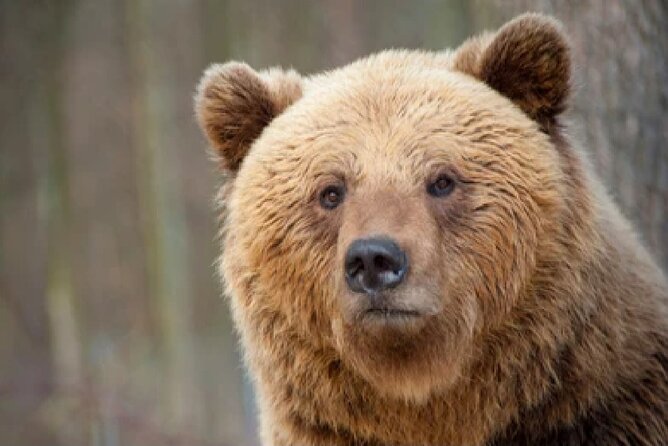
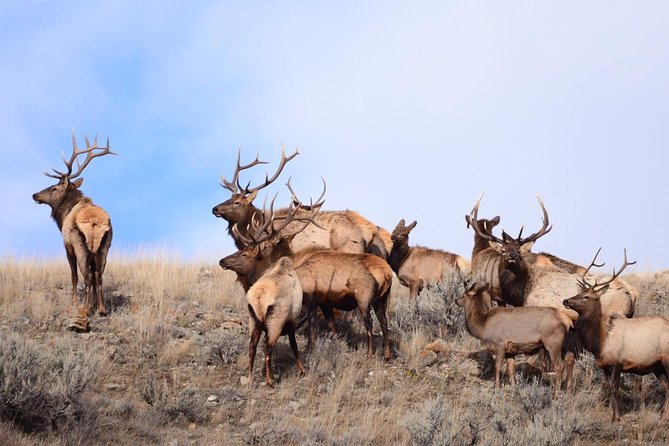
Elk and mule deer are among the animals you might find in open areas or near woods. Moose can be harder to spot because they often stay near water or in thick vegetation. Pronghorn and bison are easier to notice when they are in open fields, but they may still be far from the road.
Bears and wolves are special sightings, not normal guarantees. Some outings have found black bears, grizzlies with cubs, and even a wolf or a playing pack. On another morning, the only major mammals were part of a moose hidden among trees and pronghorn seen while driving by. That contrast is important when judging the $159 price.
Birds give the search more variety. Bald eagles, golden eagles, ospreys, hawks, owls, and cranes can appear even when larger animals stay out of sight. A guide who knows bird behavior can turn a quiet stretch into a useful lesson rather than four hours of simply waiting for a bear.
The guides also explain migration and seasonal patterns. For me, that adds value beyond the animal checklist. You begin to understand why one month is better for certain species, why some animals stay near water, and why dawn or dusk can be worth the early alarm.
Snake River views and Teton geology
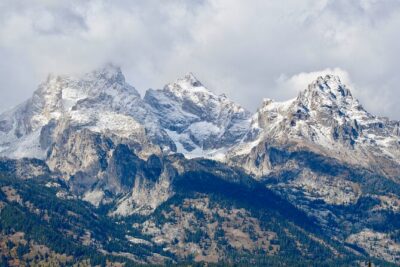
Grand Teton is not only about animals. The drive includes views of the Snake River, broad valleys, wooded areas, and the sharp mountain peaks, including Grand Teton, the park’s tallest summit.
Your guide discusses the geology that shaped the range, along with the ecology of the park. That context helps you read the scenery. Instead of seeing only a dramatic mountain wall, you get an explanation of how the land, river, forests, and wildlife fit together.
The guide also covers human history and culture, including the early Mormon homesteaders who settled in Jackson Hole. This mix of natural and human stories gives the trip more substance than a simple animal-spotting run.
Frequent stops allow time for photographs. You can take pictures of animals, mountain views, river scenery, and historic buildings without trying to shoot through a car window at highway speed. Several guides, including Anthony, Kelsey, Kyle, and Neil, have been especially praised for helping with photos or sending guide-taken images afterward. Confirm the photo arrangement with your guide, since the supplied details do not promise professional photos on every departure.
A few more Jackson Hole days worth weighing up
- Grand Teton Half Day Tour
★ 5.0 · 1,067 reviews - Tetons and Snake River Scenic Float Trip In Jackson Hole
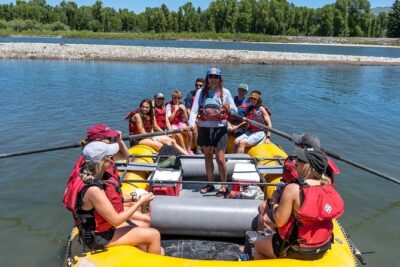
★ 5.0 · 1,000 reviews - Whitewater Rafting in Jackson Hole : Family Standard Raft
★ 5.0 · 965 reviews - Horseback Riding with Grand Teton Views in Jackson Hole
★ 4.5 · 916 reviews
Mormon Row and the famous barns
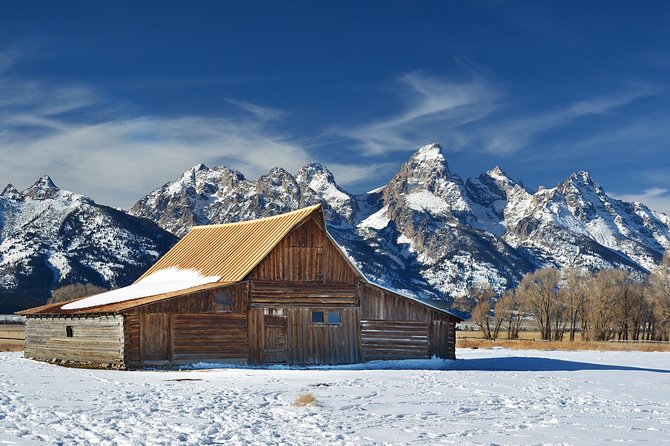
From March through November, the tour includes a stop in the Mormon Row Historic District. In December, January, and February, snow coverage means this stop is not included.
Mormon Row is tied to some of Jackson Hole’s earliest Mormon homesteaders. The old barns, fences, fields, and mountain backdrop make this one of the park’s most recognizable photo locations. You get about 20 minutes here, enough for pictures and a quick look at the settlement area.
The itinerary lists the T. A. Moulton Barn and notes that the guide will stop at either the T. A. Moulton Barn or the John Moulton Barn. Both are famous, but you should not assume you will visit both during this four-hour trip.
This stop is valuable because it breaks up the wildlife search with a cultural site. It also gives you a reliable photo opportunity on a tour where animal sightings can vary. The tradeoff is time: every historic stop is time not spent scanning for wildlife. For most people, the balance is worthwhile, especially if you are visiting Grand Teton only once.
Sunrise or sunset: which departure suits you?
A sunrise departure gives you the best chance of starting when animals are active. It also gives you crisp morning light on the peaks and a quiet beginning to the day. The price is cold air and an early start, so bring more clothing than you think you need. One useful comfort detail is that guides may carry wool blankets, but you should still dress properly.
A sunset departure offers warmer conditions in summer and softer light for photographs. It can also be a pleasant way to finish a day in Jackson Hole. As daylight fades, you may need to rely more on the guide’s spotting equipment and experience.
I would choose sunrise if finding animals is your top goal and you do not mind getting up early. I would choose sunset if comfort, photography, and a slower start matter more. Both options can work well, but neither guarantees a particular species.
What the $159 price really includes
At $159 per person, this is not a cheap way to get from Jackson Hole into the park. You are paying for a four-hour guided search, a small group, wildlife equipment, park interpretation, transportation, snacks, bottled water, and soda.
The value improves if you do not own binoculars, are unfamiliar with Grand Teton roads, or want someone else to handle the searching and driving. A good guide can save you from passing an animal without seeing it and can explain what you are looking at once the vehicle stops.
The value is less certain if your only goal is to see a long list of animals. You can drive parts of the park yourself, and there is no guarantee that a paid tour will find more wildlife on a particular day. One outing produced limited sightings, which is a fair reminder that nature does not follow a booking schedule.
The small group helps justify the cost. With no more than 12 people, the guide can answer questions, position the spotting scope, and help children or anyone struggling with binoculars. Some guides have also made a real effort to keep everyone involved rather than letting one person control the view.
National park entrance fees are not included. Summer hotel pickup and drop-off are also not included, though pickup can be requested in the approved Jackson Hole area from November through mid-May. The listed starting point is 210 North Cache Street in Jackson.
Guide quality makes the biggest difference
This experience depends heavily on the individual guide. The best guides combine animal-spotting skill with good timing, clear narration, and patience at stops.
Names repeatedly associated with strong outings include Kyle, Kelsey, Allie, Anthony, Neil, Cameron, Kevin, Pat, Phil, Jack, Diego, and Ellie. Specific strengths have included finding bears, helping children use binoculars, explaining the park’s geology, spotting animals while driving, and keeping the group entertained between sightings.
Kelsey has been praised for bringing snacks and blankets on a sunset trip. Allie has been noted for spotting animals quickly and finding a bear. Anthony has helped groups find wolves, bison, pronghorn, and several moose while explaining park history. Neil has been praised for hotel pickup, comfort, animal identification, and giving the group time to watch.
Still, equipment can fail. One outing had a speaker problem that made it difficult for part of the group to hear information while driving. That appears to be an exception, but it is worth knowing because narration is a major part of the price. If you cannot hear, tell the guide promptly so the issue can be addressed during the tour.
Who should book this safari?
I would recommend it for first-time visitors to Grand Teton, families who want help finding animals, photographers who appreciate guided stops, and anyone who prefers interpretation to a self-guided drive.
It is also a good choice if you are staying in Jackson Hole and have only half a day for the park. The four-hour length leaves room for other plans, while still giving you a focused wildlife outing.
Children age five and younger are not allowed. Most older visitors can participate, and service animals are allowed. Summer open-air departures are not recommended for people with back problems. Winter participants need proper snow gear, not ordinary city clothes.
The experience is less suitable if you need guaranteed sightings, dislike cold mornings, or want a fast sightseeing loop with little time spent waiting and scanning. The tour is non-refundable and cannot be changed for personal reasons, so choose your date carefully. If poor weather or low enrollment cancels the outing, you can receive a full refund or choose another option.
Should you book it?
Book this Grand Teton safari if you want a guide to handle the searching, provide binoculars and a spotting scope, explain the park, and stop for photos. The strongest value comes from the small group and the quality of the naturalist, not from any promise of seeing a bear or wolf.
I would choose an early or late departure, bring serious layers, and set your expectations correctly: you are paying for a well-led search through a spectacular park, not a guaranteed wildlife performance. If you can accept that uncertainty, $159 is a reasonable price for a focused introduction to Grand Teton.
FAQ
How long is the Grand Teton wildlife safari?
The tour lasts approximately four hours and ends back at the meeting point in Jackson.
Where does the tour begin?
The listed meeting point is 210 N Cache Street, Jackson, Wyoming 83001. Hotel pickup may be requested in the approved Jackson Hole area from November through mid-May.
What vehicle is used?
Tours use a customized open-air safari vehicle from June through mid-September when weather permits. From mid-September through May, transportation is in an enclosed vehicle with heating and air conditioning.
What animals might I see?
Possible sightings include elk, moose, mule deer, pronghorn, bison, bighorn sheep, black bears, grizzly bears, and wolves. Birds may include bald and golden eagles, ospreys, hawks, owls, and sandhill cranes.
Are binoculars and food included?
Yes. Binoculars and a spotting scope are provided, along with snacks, bottled water, and soda.
Does every tour visit Mormon Row?
No. Tours from March through November stop at Mormon Row and visit either the T. A. Moulton Barn or the John Moulton Barn. Tours from December through February do not make this stop because of snow coverage.
Can young children join the tour?
Children age five and younger are not allowed. Most other visitors can participate, and service animals are permitted. Summer open-air tours are not recommended for people with back problems.
Just added around Jackson Hole
- Half-Day Wildlife Safari Tour in Grand Teton National Park★ 5.0 · 341 reviews
- Snake River Scenic Float★ 5.0 · 534 reviews
- Jackson Hole Whitewater Rafting Classic from Jackson Hole,Wyoming★ 5.0 · 365 reviews
- Whitewater Rafting in Jackson Hole: Small Boat Excitement★ 5.0 · 542 reviews
- Jackson Hole: Bridger-Teton National Forest Horseback Ride★ 4.6 · 337 reviews
- From Jackson: Half-Day Grand Teton National Park Tour★ 4.8 · 344 reviews
- Jackson: Grand Teton National Park Guided Wildlife Tour★ 4.8 · 676 reviews
- Jackson Hole: Aerial Tram and Gondolas Sightseeing★ 4.8 · 632 reviews
Jackson Hole Tours, compared.
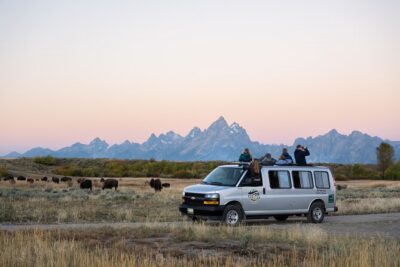
Sunset 4-Hour Grand Teton Wildlife Adventure
Read our review →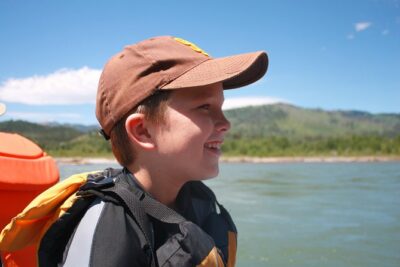
Tetons and Snake River Scenic Float Trip In Jackson Hole
Read our review →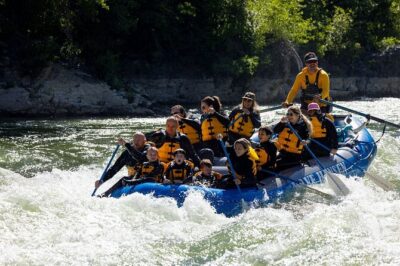
Whitewater Rafting in Jackson Hole : Family Standard Raft
Read our review →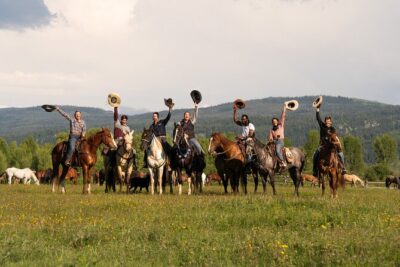
Horseback Riding with Grand Teton Views in Jackson Hole
Read our review →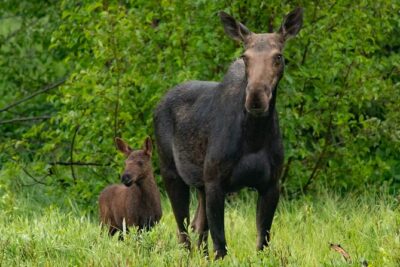
Snake River Scenic Float Trip with Teton Views in Jackson Hole
Read our review →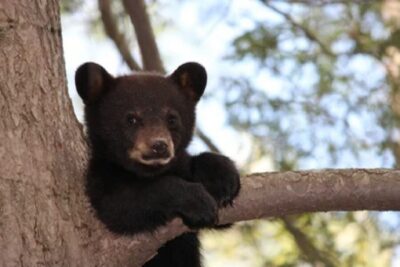
Jackson: Grand Teton National Park Guided Wildlife Tour
Read our review →Browse the lists this tour appears in