
Reviewed · LAS VEGAS
Titanic: The Artifact Exhibition at the Luxor Hotel and Casino
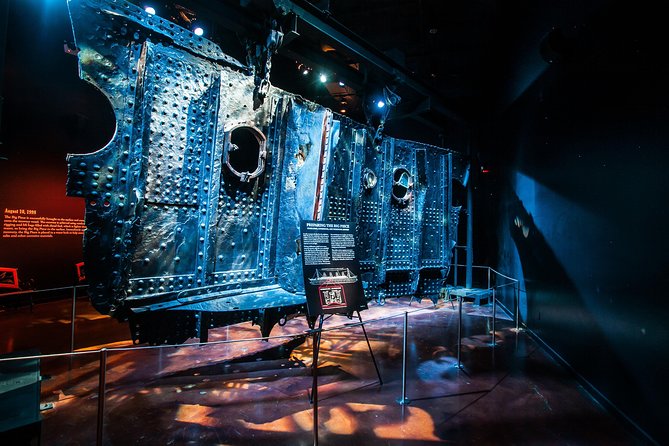
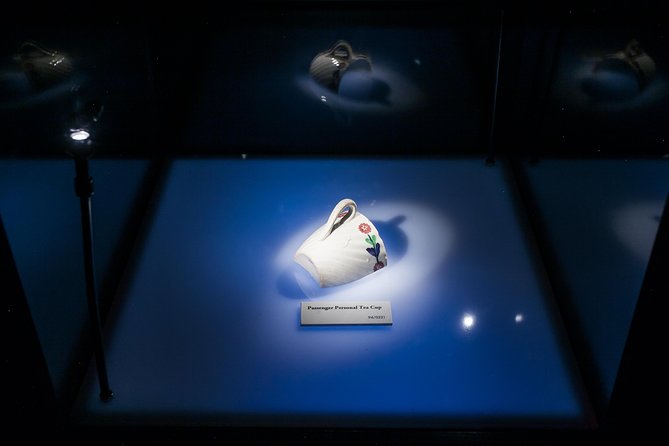
The most powerful object here is the Big Piece, a huge section of Titanic’s hull recovered from the wreck. It gives the tragedy a hard, physical reality that photographs and films cannot match. Around it, 250 authentic items include luggage, jewelry, china, floor tiles, ship’s whistles, and an unopened bottle of Champagne.
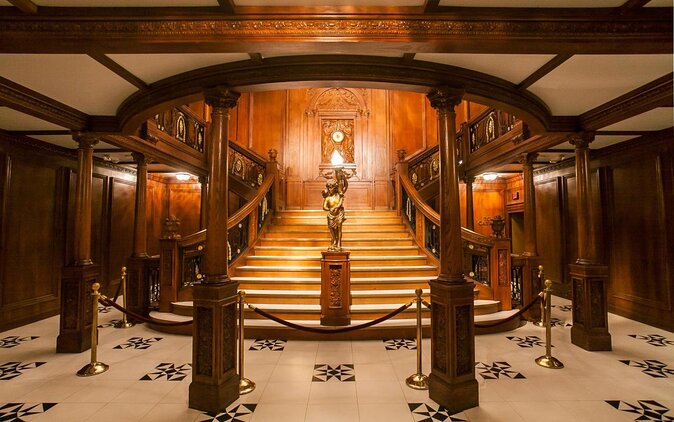
I like the passenger card you receive at the entrance, which gives you a name, age, class, travel reason, and companions to follow through the exhibit. I also like the careful recreations of the Grand Staircase and the first- and third-class cabins. The main drawback is the dark lighting, which adds mood but can make some information panels hard to read.
Key things to know before you go
- The Big Piece is the emotional center: A large section of Titanic’s actual hull, complete with remaining details, makes the ship feel startlingly real.
- Your passenger card adds a human story: Scan it at the end to learn if your assigned passenger survived.
- Expect a two-hour visit: You can move at your own pace, but careful readers may want longer.
- The exhibit is family-friendly: Children under four enter free, and discounted admission is available for older children.
- The Luxor setting affects the visit: The exhibit is on the Atrium Level, near the food court, with restaurants and the casino close by.
- Bring patience for the text panels: The low light can make smaller lettering difficult to read.
Seeing Titanic beyond the movie
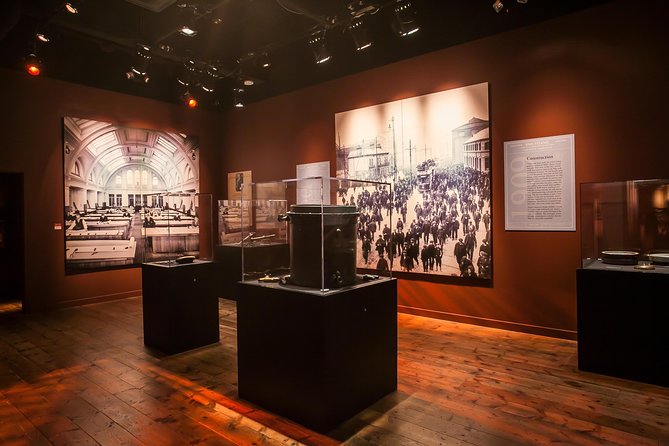
Titanic is one of those subjects that can become trapped inside the famous film: the romance, the iceberg, the music, and the final plunge. This exhibition takes a more grounded path. It gives you the ship’s design, its social divisions, its recovered objects, and the names of people who boarded for very different reasons.
That shift matters. A first-class passenger traveling in luxury occupied a very different world from a third-class passenger seeking a new life. The displays help you see that difference without turning the disaster into a simple Hollywood story.
You enter the exhibit with a passenger card. It identifies a real person connected with the voyage and gives you a few details about age, class, reason for travel, and companions. Keep it with you as you walk. At the end, scan the card to discover if that person survived. It is a simple feature, but it gives the visit a personal thread.
The exhibition covers about 25,000 square feet, so this is not a quick display tucked beside a casino entrance. You will find rooms of artifacts, recreated spaces, text panels, and large structural pieces. The normal visit takes about two hours, though you can spend less time if you mainly want the major objects or more time if you read everything.
More Museums in Las Vegas:
- Ticket for ARTE Museum Las Vegas
★ 5.0 · 2,106 reviews - Las Vegas Mob Museum Admission Ticket
★ 4.5 · 1,295 reviews - Madame Tussauds Wax Museum Las Vegas
★ 4.4 · 601 reviews
Starting at the Luxor’s Atrium Level
The exhibition is inside the Luxor Hotel and Casino, on the Atrium Level. From the parking garage, enter the hotel and take the escalators upward. From the main entrance, use the escalators and look for the exhibit on your right, just past the food court.
This location makes the exhibit easy to pair with other Las Vegas plans. You can eat before or after your visit, and the casino is nearby if that is part of your evening. The tradeoff is that you are visiting a serious historical exhibit inside a large resort complex, not a quiet standalone museum. Give yourself a few extra minutes to find the entrance, especially if you are meeting family members.
Normal hours are listed as 11 a.m. to 8 p.m., though hours can change. Last entry is one hour before closing. The booking information lists an 11 a.m. start time, but admission can be used during the long opening hours, so check the current schedule before setting out.
Advance booking helps secure a place, especially if Titanic is high on your Las Vegas list. Confirmation is sent within 48 hours, subject to availability. Parking and valet fees are not included, so add those costs if you are driving.
The artifacts make the tragedy real
The collection contains 250 authentic objects recovered from the wreck long after Titanic sank in the North Atlantic in 1912. The range is what makes it effective. You are not looking at only grand objects linked to wealthy passengers. You also see ordinary belongings that hint at daily life aboard ship.
Luggage suggests movement and migration. Jewelry points to the wealth carried by some passengers. China and floor tiles reveal the ship’s polished interior. Ship’s whistles connect the disaster to the practical workings of a huge ocean liner. An unopened bottle of Champagne adds a strange, almost intimate detail: something prepared for celebration that survived the voyage and the wreck.
The exhibit also includes a window frame from the Verandah Cafe and floor tiles from the first-class smoking room. These pieces help you picture the ship as a working place, not only as a wreck on the ocean floor.
The displays explain how Titanic was built and how the ship’s design reflected class. You learn about the luxury offered to first-class passengers and the more basic conditions in third class. The point is not simply to admire expensive fittings. It is to understand how the ship was organized and how that organization shaped the experience of the people aboard.
The Big Piece and the ship’s physical scale
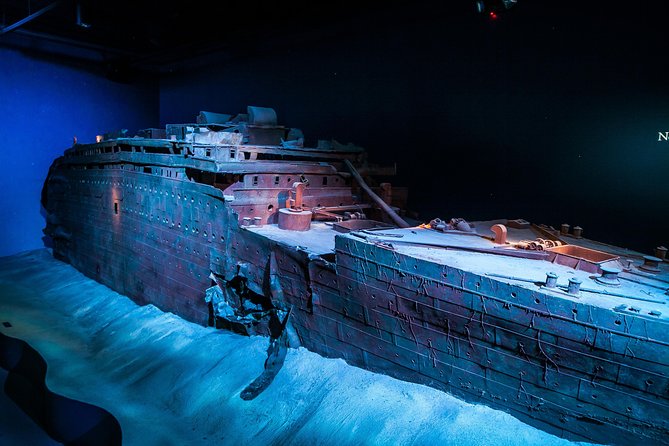
The hull section is the object I would make sure not to miss. Known as the Big Piece, it is a large part of Titanic recovered from the wreck. Its size gives you a better sense of the ship’s construction than a small artifact can.
You can see remaining details, including portholes and glass in parts of the structure. Those details are especially striking because they connect the grand idea of Titanic with a real piece of metal that spent decades underwater.
Some displays can feel almost too polished for such a sad subject, but the hull section cuts through that distance. It is not a replica, an illustration, or a film prop. It is an actual surviving part of the ship.
Take your time here. The Big Piece is often the visual focus of the visit, and it deserves more than a quick photograph before you move on. It also makes a useful reference point for the rest of the exhibit. After seeing it, the cabins and decorative details feel less like stage sets and more like parts of a real vessel.
A few more Las Vegas days worth weighing up
- Half-Day Mojave Desert ATV Tour from Las Vegas
★ 5.0 · 7,350 reviews - Ultimate VIP Hoover Dam Tour from Las Vegas with Lunch
★ 5.0 · 6,782 reviews - Las Vegas Helicopter Night Strip Flight Tour with Optional Dinner
★ 4.5 · 5,693 reviews - Half-Day Emerald Cave Kayak Tour with Optional Hotel Pickup
★ 5.0 · 4,978 reviews
Grand Staircase, cabins, and life at sea
The recreated Grand Staircase gives you a sense of Titanic’s first-class style. It is one of the exhibit’s most recognizable settings, with attention paid to the look and furnishings associated with the original ship.
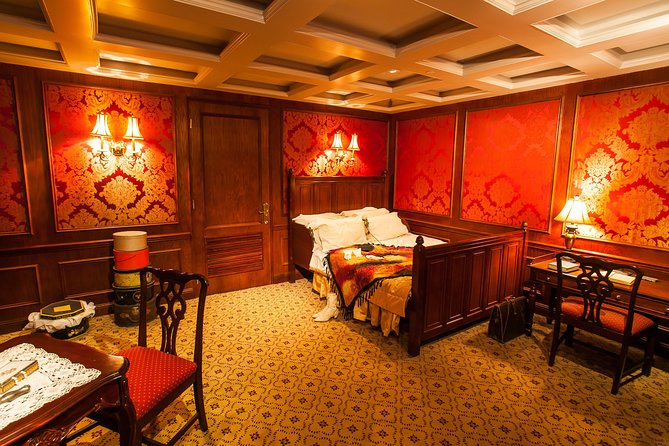
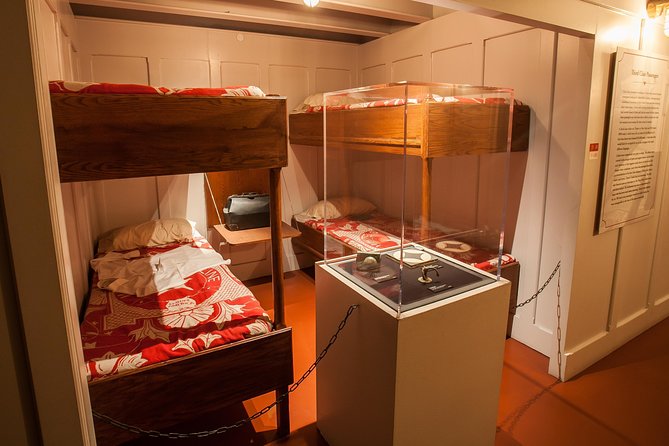
The first-class cabin recreation shows how much comfort and space the wealthiest passengers received. The third-class cabin provides a needed contrast. Seeing both spaces in the same exhibit helps explain the social structure of the voyage more clearly than a written description alone.
Furnishings were made by the original manufacturers, according to the exhibit information. That detail matters because the rooms are intended to reflect the materials and design of Titanic rather than serving as generic period rooms.
The recreated spaces are also among the darker parts of the exhibition. Some people find the low light atmospheric, while others may struggle with the smaller lettering on nearby panels. If you have trouble reading, move closer and give your eyes a moment to adjust. The darker areas are navigable, but visitors with limited vision may want to allow extra time.
Photography rules may differ between displays. You can photograph much of the exhibit, but personal photography has been restricted around some replica areas, including the staircase, at times. Staff photography may be offered in those spots. Ask before taking pictures rather than assuming every room follows the same rule.
Passenger stories give the exhibit its heart
The ship’s story becomes more meaningful when you stop treating it as one large event and focus on individual people. The passenger cards do this efficiently. You start with a name and a few facts, then carry that person through the rooms as you read about the voyage.
The text panels also explain the fate of men, women, and children aboard Titanic. Less than half survived. That statistic is stark, but the personal details are what make it land.
I would not rush through the names and stories to reach the large objects. The artifacts attract your eye, but the written material explains who used them and what kind of life they represented. A family visit can work well here because children can follow the passenger-card feature while adults read the broader historical material.
The tone is somber without requiring you to know every detail about Titanic beforehand. You do not need to be a dedicated ship enthusiast. The exhibit explains the construction, the voyage, the collision, and the sinking in a clear sequence.
A practical two-hour plan
A sensible visit starts with a slow walk through the early displays. Read enough to understand the ship’s construction and social divisions before reaching the recovered objects. This prevents the artifacts from becoming a disconnected collection of old luggage and china.
Next, spend time with the cabin replicas and Grand Staircase. Compare the first- and third-class spaces rather than viewing each room alone. The contrast is one of the strongest teaching tools in the exhibit.
Set aside time for the hull section and the larger structural displays. These are the best places to pause and consider the physical size of the ship and the force of the disaster.
Finish with the passenger-card scan. It is easy to forget if you are focused on the final rooms, but it provides a clear ending to your visit. If you want to read every plaque, two hours may feel tight. If you skim the panels and focus on the artifacts, you can finish sooner.
The exhibition is wheelchair accessible, and most people can take part without special preparation. Service animals are welcome, but pets are not allowed. Since the exhibit has dim areas and a lot of written information, families should plan for a slower pace than the bright, noisy casino outside.
Is $36.20 a fair price?
Admission is $36.20 per person. That is not a bargain by Las Vegas standards, but it is reasonable if you spend close to two hours inside and take time with the text, passenger stories, and replicas.
The value depends on your interests. If you only want a quick look at the Big Piece, the price may feel high. If you enjoy museums, maritime history, or the Titanic story, the number of authentic objects and the personal material make the ticket easier to justify.
Children receive discounted admission, and children under four are free. That improves the value for families. The flexible visit also helps: you are not locked into a fixed tour group or a guide’s pace.
One point to check before buying is the ticket source. The box office may offer combinations involving two exhibits or activities for only a little more than a single admission. Compare the current options at the Luxor if you already plan to see another attraction there. Advance booking remains useful when you want to secure a particular day.
Free cancellation is available up to 24 hours before the experience start time. Cancellations or changes made inside that window are not refunded.
Who will enjoy this most?
I would recommend this to anyone interested in Titanic beyond the film. The exhibit works particularly well for couples, families with school-age children, and solo visitors who like to read at their own pace.
It is also a good choice when Las Vegas heat or noise becomes tiring. You can spend a quiet couple of hours indoors, then eat at the Luxor or continue elsewhere on the Strip.
The exhibit may disappoint you if you expect a large interactive attraction with constant theatrical effects. Its strength is the actual material: recovered objects, replicas, explanatory panels, and passenger stories. The emotional weight comes from what the objects are, not from a fast-moving show.
If you have already visited the Titanic exhibition in Belfast, you may find the Las Vegas presentation smaller in scope. It still offers impressive artifacts and the Big Piece, but it may not match a major museum built around the ship’s construction and local history.
Should you book Titanic at the Luxor?
Book it if you want to see authentic Titanic artifacts, especially the Big Piece, and you are willing to read and reflect rather than simply pass through. The passenger card, class-based cabin displays, and recovered objects give the visit more substance than a collection of famous photographs.
I would skip it only if your Las Vegas schedule is packed with attractions you value more or if museum-style displays are not your thing. For everyone else, two hours at the Luxor offers a thoughtful break from the casino floor and a useful, human-scale account of one of the most famous disasters at sea.
FAQ
Where is Titanic: The Artifact Exhibition located?
It is on the Atrium Level of the Luxor Hotel and Casino. From the parking garage, enter the hotel and take the escalators up. From the main entrance, use the escalators and look for the exhibit on the right, just past the food court.
What are the normal opening hours?
Normal hours are daily from 11 a.m. to 8 p.m., though hours can change. Last entry is one hour before closing.
How long does a visit take?
The average visit takes about two hours. You can explore at your own pace and spend less or more time inside.
What does admission include?
Your admission ticket includes entry to Titanic: The Artifact Exhibition. Hotel pickup, hotel drop-off, parking, and valet fees are not included.
Is the exhibition suitable for children?
Yes. It is educational and suitable for children of all ages. Children under four enter free and do not need a ticket, while discounted admission is available for children.
Is the exhibition wheelchair accessible?
Yes, the exhibition is wheelchair accessible.
Can I bring a pet?
Pets are not allowed. Guide dogs and other service animals are welcome.
Can I cancel my booking?
You can cancel up to 24 hours before the experience start time for a full refund. Cancellations or changes made less than 24 hours before the start time are not accepted and are not refunded.
Just added around Las Vegas
- Wild West Sunset Horseback Ride with Dinner from Las Vegas★ 5.0 · 1,031 reviews
- Valley of Fire Tour★ 4.5 · 423 reviews
- Extreme Flight Experience in Las Vegas★ 5.0 · 404 reviews
- Valley of Fire Guided Hike from Las Vegas★ 5.0 · 1,611 reviews
- The Rat Pack Is Back★ 4.5 · 497 reviews
- Tournament of Kings Dinner and Show at Excalibur Hotel and Casino★ 4.5 · 464 reviews
- The Vegas Mob Tour★ 5.0 · 366 reviews
- Las Vegas Mob Museum Admission Ticket★ 4.5 · 1,295 reviews
Las Vegas Tours, compared.

Half-Day Mojave Desert ATV Tour from Las Vegas
Read our review →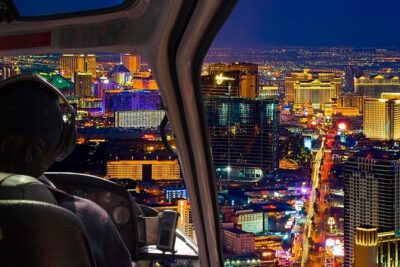
Las Vegas Helicopter Night Strip Flight Tour with Optional Dinner
Read our review →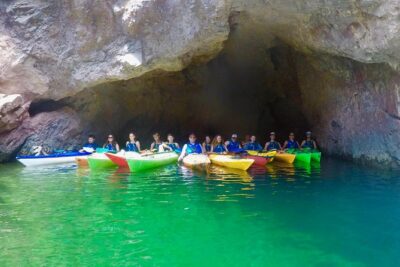
Half-Day Emerald Cave Kayak Tour with Optional Hotel Pickup
Read our review →
Award Winning 3-Hour Hoover Dam Small Group Mini Tour from Vegas
Read our review →
David Copperfield at the MGM Grand Hotel and Casino
Read our review →
Las Vegas Strip: The High Roller at The LINQ Ticket
Read our review →
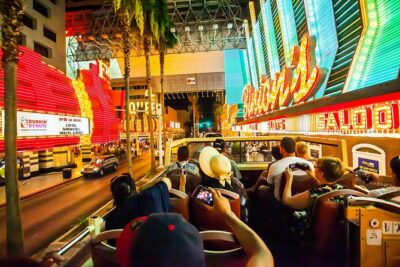
Big Bus Las Vegas: Sightseeing Night Tour by Open-Top Bus
Read our review →Browse the lists this tour appears in