
Reviewed · NASHVILLE
Grand Ole Opry House Guided Backstage Tour in Nashville
The most moving part of this tour is the chance to stand where generations of country performers have stood. You may step onto the Grand Ole Opry stage and into its famed wooden circle, then walk through the artist entrance and dressing-room corridor where show-night nerves turn into live performance. It is a compact, story-filled look at a working music institution, not just a museum visit.
I love the opening film hosted by Garth Brooks and Trisha Yearwood, and I like the dressing rooms, each tied to a country music legend. The possible drawback is the pace: one hour goes quickly, and some people have found it hard to hear the guide or take photos before the group moves on. Stage access also depends on the Opry House schedule.
Key points to know before you go
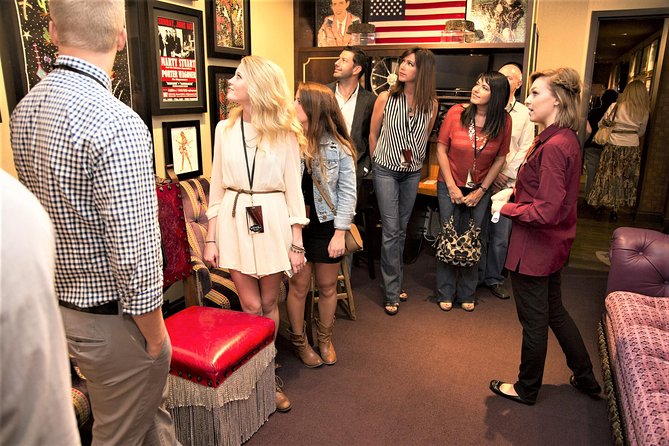
- The wooden circle is the emotional high point: You may get to stand in the same spotlight used by Opry performers.
- The tour is small but tightly timed: Groups can have up to 14 people, with tours operating every 15 minutes.
- The dressing rooms tell personal stories: You may see several of 18 themed rooms honoring country music figures.
- Studio A may be included: This former home of Hee Haw adds a television connection to the music story.
- Your guide matters: Guides such as David, Vera, Shelby, Barrett, and Ted have been praised for humor, warmth, and strong storytelling.
- The show ticket is separate: The $39.75 price covers the backstage tour, not admission to an evening Grand Ole Opry performance.
The Grand Ole Opry stage is the main event
The Grand Ole Opry is not simply a concert hall with a famous name. It is a performance home with a strong sense of ritual, and the tour lets you see the spaces that support that ritual.
You begin at the Opry House, then enter a small-group tour led by an Opry guide. The setting feels intimate because the group is limited to 14 people, though the tour itself moves on a fixed schedule. You are not free to wander at your own speed, so pay attention from the start.
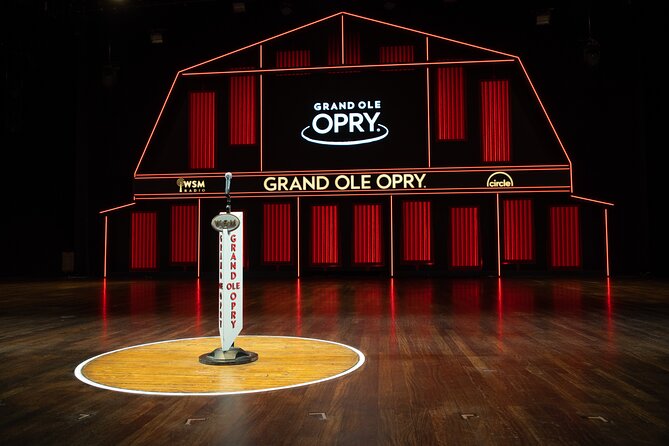
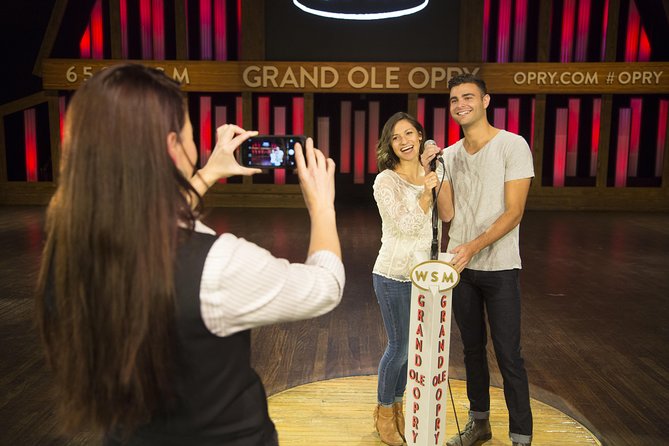
The emotional peak is usually the stage. If the schedule allows, you can step into the spotlight and stand inside the wooden circle. That small piece of flooring carries much of the Opry’s meaning. It connects today’s performers with past members and with the generations of country artists who have helped shape the show.
Stage access is not guaranteed. An active show schedule, rehearsal, or another event can close that part of the route. That is the one detail I would keep firmly in mind before booking. If standing in the circle is your main reason for coming, treat it as a possible highlight rather than a promise.
Even without stage access, the tour still takes you through the artist entrance, backstage corridors, dressing rooms, and other working areas. You get a better idea of how performers enter, prepare, wait, and finally appear before the audience.
More Live Music Tours in Nashville
- Grand Ole Opry Show Admission Ticket
★ 4.5 · 2,518 reviews - Discover Nashville City Tour with Entry to Ryman & Country Music Hall of Fame
★ 4.5 · 2,412 reviews - Country Music Hall of Fame and Museum Admission
★ 4.5 · 1,918 reviews
The Circle Room film gives the tour its opening frame
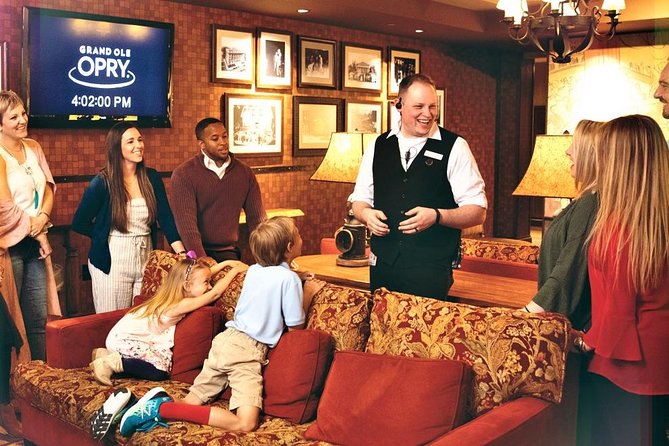
Daytime tours begin with the Circle Room theater experience. The introductory film is hosted by Garth Brooks and Trisha Yearwood, and it sets up the Opry’s past and present before you head backstage.
This opening matters because the building can otherwise feel like a series of rooms and hallways. The film gives those places a sense of purpose. You see the Opry as a continuing family of performers rather than only a famous stage.
The presentation also helps visitors who do not know much about country music. One person who arrived with little interest in the genre came away with a new appreciation for it. That is a useful sign: you do not need to identify every name on the walls to enjoy the tour.
Still, the film is only an introduction. The real value comes afterward, when your guide links the images and stories to the places you are standing in. Guides vary, but names praised for their delivery include David, Vera, Shelby, Barrett, and Ted. Aubrey also provided a particularly personal tour for a group affected by a booking mix-up, though you should not assume that kind of private experience will be part of your visit.
Dressing rooms turn country music into personal stories
The Grand Ole Opry House has 18 artist dressing rooms, each decorated around a country music legend. You may not see every room, but the ones on the route give the tour its most human details.
A stage can feel distant. A dressing room feels personal. It suggests the last-minute conversations, makeup checks, costume changes, and quiet waiting that happen before the curtain opens. The themed rooms also give your guide a natural way to explain the people behind the songs.
You can expect stories reaching from Minnie Pearl to Carrie Underwood, along with photographs from major moments in the Opry’s past. The presentation is not limited to one period. It links older country traditions with current Opry members and performers.
Photography can be tricky here. You may want time to study the decor and take pictures, but the group may already be moving toward the next stop. If photos matter to you, take them promptly and stay close to the guide. A few people have felt the tour was rushed, especially when trying to photograph the dressing rooms.
The rooms are also a reminder that this is a working venue, not a fully open museum. Access can change, and the route may be adjusted around the Opry House schedule. That flexibility is practical for the venue, but it means you should not expect every backstage space to be available on every departure.
Studio A adds a television chapter
Some tours include Studio A, the live television studio that was once home to Hee Haw, the variety show that ran from 1969 through 1992.
This stop broadens the tour beyond the concert stage. The Opry is tied to radio, live performance, television, and the public image of country music. Studio A helps show how performers reached audiences beyond the people seated inside the house.
The word may matters here. Studio A is not guaranteed, just as stage access is subject to the building’s schedule. If both are available, the route gives you a satisfying mix of live music and television history. If one is closed, you will still see the main backstage areas and hear stories about the Opry’s performers.
The tour works best when you let the guide supply the connections. Studio A on its own is a room. Studio A as part of the Opry story shows how country entertainment moved between stage, studio, television, and home.
A different sort of day out, same corner of Nashville:
- Nashville Hop On Hop Off Trolley Tour
★ 4.5 · 5,643 reviews - Nashville: Food Tour with 5+ Tastings of Local Delicacies
★ 5.0 · 2,704 reviews - Best of Nashville City Sightseeing Tour on Double Decker Bus
★ 4.5 · 2,601 reviews - Explore the City of Nashville Sightseeing Tour by Golf Cart
★ 5.0 · 2,544 reviews
The artist entrance shows the Opry from the performer’s side
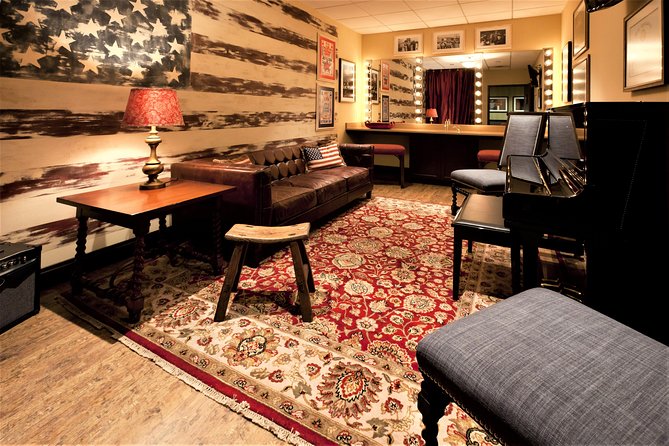
One of the more useful stops is the artist entrance. This is where new performers, established stars, and country legends enter the building on the night of a show.
It is an ordinary-looking practical space with an extraordinary list of people attached to it. Your guide explains what happens behind the scenes and shares stories about performers from the Opry’s past and present. You get a sense of the transition from private preparation to public performance.
That shift is part of what makes the tour feel different from a standard auditorium visit. You are not only looking at the seats and stage from the audience’s viewpoint. You are following the route used by the people who make the show happen.
You may also see photographs and displays covering major Opry moments. Some displays touch on the venue’s connection to guest presidents, tours to Carnegie Hall, and the effort to preserve important pieces of the Opry’s past after the 2010 flood. These details reward anyone who enjoys the story behind a famous institution.
One hour is enough, but do not expect a leisurely visit

The tour lasts about one hour. That is enough time to see several major areas and hear a useful selection of stories, but not enough time to linger at every photograph or dressing room.
I would think of it as a guided introduction rather than a full afternoon inside the Opry. The small group helps, since a maximum of 14 people is easier to manage than a large crowd. Even so, the route runs on a firm timetable, with departures every 15 minutes.
Arrive 10 to 15 minutes early. You need to redeem your voucher at the box office and exchange it for the tour ticket, and you should allow time for parking. The box office is on site near the main entrance and retail shop. A valid photo ID is required.
Late arrival is a real concern. The tour is timed, and missing your slot may mean losing the experience without a refund. The practical rule is simple: get to the Opry House early, collect your ticket, and be ready before the scheduled start.
The supplied directions refer to the Opry Mills Drive address, with both 600 Opry Mills Drive and 2804 Opry Mills Drive appearing in the booking information. Use the current address shown with your confirmation, and allow extra time if you are unfamiliar with the complex.
What $39.75 gets you
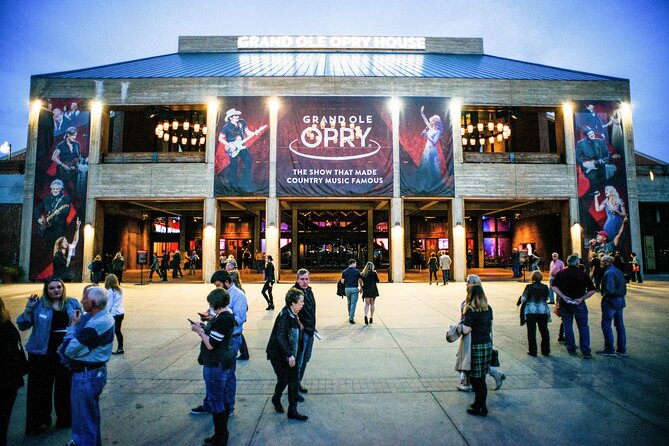
At $39.75 per person, this is not the cheapest Nashville attraction, but the price is reasonable if you care about country music or want access to spaces that a standard concert ticket does not show you.
Your fee covers the guided backstage tour, professional guide, introductory film, themed dressing-room access where available, the artist entrance, and possible stage or Studio A access. Taxes and fees are included. The price does not include a Grand Ole Opry show ticket.
That last point matters. A backstage visit and an evening performance are separate purchases. If you want the full experience, budget for both. The tour can also make sense on its own if your schedule does not allow a show, or if you prefer stories and behind-the-scenes access to a two-hour concert.
The value depends on what you want from Nashville. A casual visitor with no interest in country music may find the tour more specialized than other city attractions. A fan who has dreamed of standing in the Opry circle will likely find the price easier to justify.
It is also a practical choice for families. Children must be accompanied by an adult, and the route involves limited walking rather than a long outdoor trek. Wheelchair assistance is available, and service animals are allowed. The tour operates in all weather, so dress for the conditions between your car, the entrance, and the building.
Why the guides make or break the hour
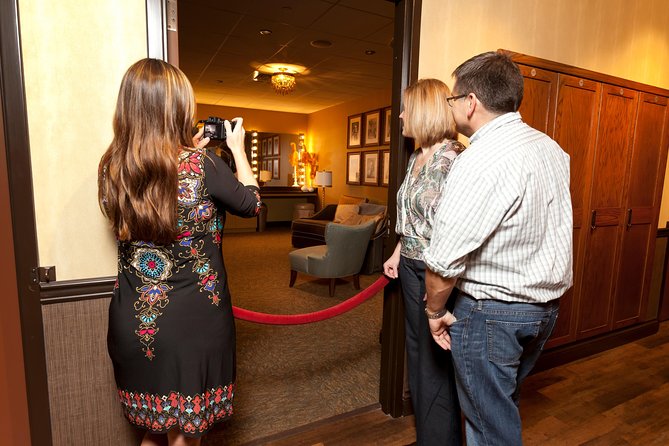
The tour depends heavily on the guide’s delivery. The best guides make the names and dates feel connected to the rooms around you. David has been praised for being funny and well informed, while Vera, Shelby, Barrett, and Ted have also been singled out for clear, engaging tours.
A good guide also helps the group keep moving without making the experience feel hurried. That balance is important here. There are many photographs, names, and stories packed into a short route, and the guide has to decide what deserves time.
Hearing can be a concern. One person had trouble hearing the guide, and another felt rushed while trying to keep up from the back. I would stay near the guide, especially if you have any hearing difficulty, and ask for clarification early rather than waiting until the group has moved to another room.
The experience is offered in English. It is story-driven, so you will get the most from it if you enjoy spoken explanation rather than simply looking at displays.
Who should book this Opry experience?
I would recommend it most strongly to country music fans, first-time visitors to Nashville, and anyone curious about how a live music institution works behind the curtain.
It is also a good pick if you are traveling with relatives or children who know a few performers but do not yet understand the Opry’s place in country music. The film, photographs, dressing rooms, and stage access create several different ways into the story.
You can also use it as an alternative to another night in the downtown bar district. The tour is indoors, structured, and focused on music history. It gives you a quieter way to spend an hour while still feeling tied to Nashville’s identity.
I would be more cautious if your plans are packed or if you strongly dislike timed group activities. The route is fixed, stage access is not guaranteed, and photo time can be short. You will also need a separate ticket if you want to see the Opry show itself.
Should you book the Grand Ole Opry backstage tour?
Book it if you want to see the artist entrance, hear stories tied to real performers, visit themed dressing rooms, and possibly stand in the famous wooden circle. The experience has enough substance for dedicated country fans, yet the film and guide can also bring along people who know little about the music.
The best approach is to reserve early, arrive ahead of time, and keep your expectations realistic. You are buying one focused hour, not unlimited backstage access. If the stage and Studio A are open, the tour can feel special. If the schedule limits those stops, the dressing rooms, photographs, artist entrance, and guide’s stories still make it a worthwhile introduction to the Opry.
Free cancellation is available up to 24 hours before the start time. Changes or cancellations inside that window are not refunded, so leave room in your Nashville schedule before committing.
FAQ
How long is the Grand Ole Opry backstage tour?
The tour lasts approximately one hour.
How much does the tour cost?
The listed price is $39.75 per person, with taxes and fees included.
Does the price include a Grand Ole Opry show?
No. The backstage tour ticket does not include admission to an evening Grand Ole Opry show.
Can I stand on the Grand Ole Opry stage?
You may have the chance to step onto the stage and into the famed wooden circle. Stage access depends on the Opry House schedule and availability.
Will I visit Studio A?
The tour may include a stop at Studio A, the live television studio formerly used for Hee Haw. This stop is not guaranteed.
How many people can join a tour?
The tour has a maximum group size of 14 people.
What language is the tour offered in?
The tour is offered in English.
How early should I arrive?
Plan to arrive 10 to 15 minutes before your scheduled time. You need time for parking and for exchanging your voucher for a tour ticket at the box office.
Can I cancel for a refund?
You can cancel at least 24 hours before the start time for a full refund. Cancellations or changes made less than 24 hours before the experience are not refunded.
Just added around Nashville
- Nashville: Line Dancing Class with Keepsake Video★ 4.9 · 773 reviews
- Nashville: Hop-on Hop-off Trolley Tour★ 4.6 · 1,634 reviews
- Nashville: Country Music Hall of Fame and Museum★ 4.7 · 945 reviews
- Nashville: Homes of the Stars Narrated Bus Tour★ 4.6 · 531 reviews
- Nashville: Grand Ole Opry Show Ticket★ 4.8 · 1,041 reviews
- Nashville: Music City Nighttime Trolley Tour★ 4.6 · 490 reviews
- Nashville: Double-Decker City Tour★ 4.6 · 738 reviews
- Nashville: Grand Ole Opry Backstage Tour★ 4.8 · 433 reviews
Nashville Tours, compared.

Food Tour with 5+ Tastings of Local Delicacies
Read our review →
Best of Nashville City Sightseeing Tour on Double Decker Bus
Read our review →
Explore the City of Nashville Sightseeing Tour by Golf Cart
Read our review →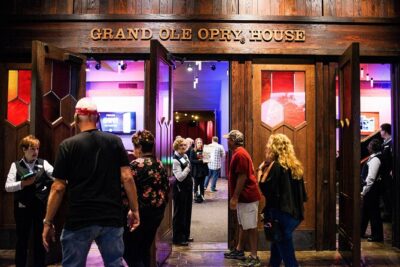

Downtown Nashville Public Party Tractor 21+ Only
Read our review →
Discover Nashville City Tour with Entry to Ryman & Country Music Hall of Fame
Read our review →
Belle Meade Guided Mansion Tour with Complimentary Wine Tasting
Read our review →Browse the lists this tour appears in