
Reviewed · OAHU
Waikiki Trolley Red Line Heroes & Legends Hop-on Hop-off Tour
The most useful thing about the Red Line trolley is its wide view of Honolulu. In one ride, you move from Waikiki beach hotels to the State Capitol, Chinatown, Punchbowl Crater, Honolulu Harbor, and Ala Moana. It gives you a quick sense of how the resort strip connects to the island’s older civic and cultural center.
I like the easy history lesson and the chance to spot places worth returning to later. I also like the open-air ride, especially when a guide such as Sam, Chuck, Big Tony, Chico, or Turk is handling the microphone with humor and local detail. The main catch is timing: buses may be crowded, late, or spaced far apart, so this is not always the carefree hop-on hop-off system the name suggests.
Key points to know before you board
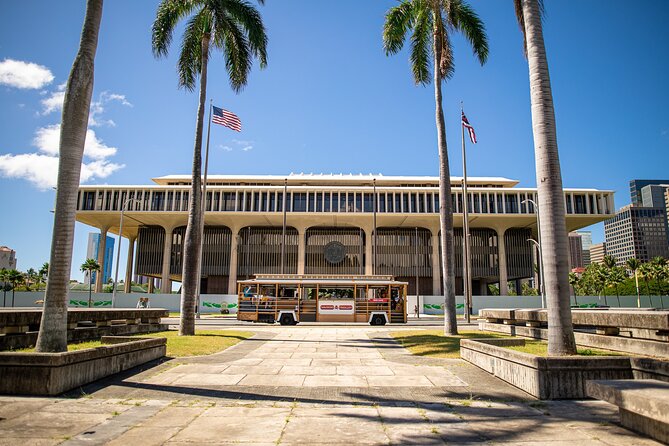
- The route links Waikiki with Honolulu’s historic core: You see the State Capitol, King Kamehameha Statue, Chinatown, Aloha Tower, and more in one sweep.
- The ride is best on your first day: It helps you decide where to spend more time during the rest of your Oahu stay.
- The full loop can take longer than 80 minutes: Traffic, parades, passenger loading, and long waits can stretch the outing toward two hours or more.
- Commentary is a major part of the value: Guides explain Hawaiian monarchy, local culture, wartime history, monuments, and city landmarks.
- Stop signs and pickup points can be unclear: At Ala Moana and some other locations, confirm exactly where the trolley waits before walking off.
- Crowding is the serious concern: Some departures have had standing passengers, wooden seats, or poor sound caused by wind and engine noise.
Why this trolley makes a good first look at Honolulu
The Red Line is not simply a ride around Waikiki. It is a moving introduction to Oahu’s capital, with the strongest stretch running beyond the hotel district into downtown Honolulu and the older parts of the city.
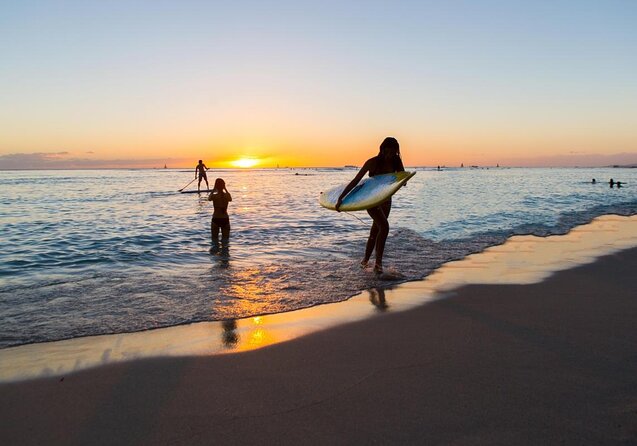
You begin near Waikiki Shopping Plaza, then pass the Duke Paoa Kahanamoku Statue and the Twin Fin Hotel. Duke’s statue is an easy reminder that Waikiki is tied not just to swimming and surfing, but also to one of Hawaii’s best-known athletes and ambassadors.
From there, the route heads toward the Honolulu Museum of Art, the Hawaii State Capitol, Punchbowl Crater, and the National Memorial Cemetery of the Pacific. That change of scenery is the point. You go from beach traffic and shopping to government buildings, memorials, gardens, religious sites, and Chinatown.
I would take this ride early in your stay. Use it to mark places on your mental map, then return later to the museum, cemetery, Chinatown, or harbor with more time. Several people use the trolley this way, as a simple orientation ride rather than a full day of scheduled sightseeing.
More Trolley Tours in Oahu:
- Waikiki Trolley Hop-On Hop-Off Tour of Honolulu
★ 4.5 · 4,783 reviews - Waikiki Trolley Blue Line Coastline & Local Grindz Hop-on Hop-off
★ 5.0 · 4,159 reviews - Oahu: Waikiki Trolley Hop-on Hop-off All-Line Pass
★ 4.4 · 810 reviews
The Waikiki stops: easy access, familiar sights
The first three stops are the most convenient for anyone staying in Waikiki. Waikiki Shopping Plaza is the listed starting point, and its central location makes it a practical place to begin if you are already near the main hotel strip.
The Duke Kahanamoku Statue is a useful photo stop and a good place to connect the modern Waikiki scene with Hawaiian sporting culture. If you hop off here, remember that you may need to wait for the next trolley. The service is not a taxi, and the gap between vehicles can be close to an hour according to some accounts.
The Twin Fin Hotel stop gives you another Waikiki pickup point. This flexibility sounds simple, but you need to watch the trolley’s exact stopping place. Pickup signs are not always obvious, and one passenger had trouble locating the stop near Ala Moana Park. Ask the driver or a trolley representative before leaving the vehicle if you plan to get off.
Honolulu Museum of Art and the State Capitol
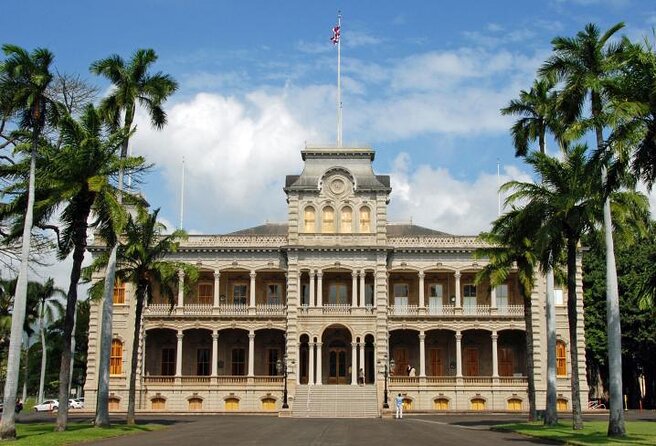
The Honolulu Museum of Art is the first major cultural stop outside Waikiki. It gives you a chance to trade beach time for paintings, sculpture, and a quieter indoor visit. The museum is closed on Monday and Tuesday, so check the day before planning your whole route around it.
The trolley then reaches the Hawaii State Capitol. This part of the ride helps explain Honolulu as a working capital, not just a holiday base. Your guide may point out the public buildings and the people who shaped Hawaii’s government, including the era of the Hawaiian monarchy.
This is also where commentary matters most. The route passes buildings and monuments that can look ordinary if you do not know why they matter. Guides such as Big Tony and Chico have been singled out for lively narration, Hawaiian name pronunciation, jokes, and clear explanations.
The open sides give you a better sense of the city than a sealed coach, but they also create noise. Wind can make speech hard to follow, especially toward the back, and the engine can interfere with the sound system. Sit near the front when you can, and do not count on hearing every word from the rear bench.
Punchbowl Crater and the National Memorial Cemetery
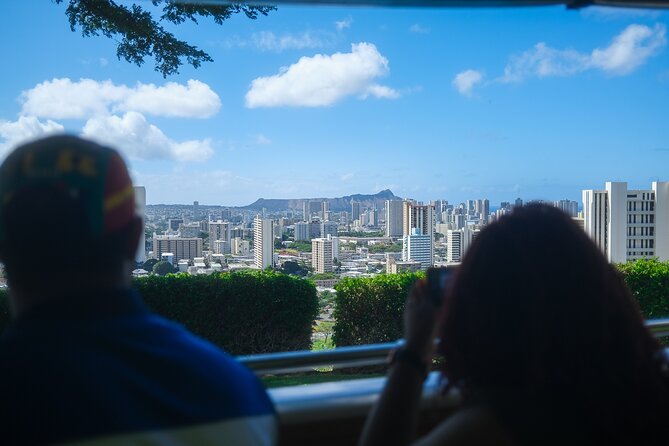
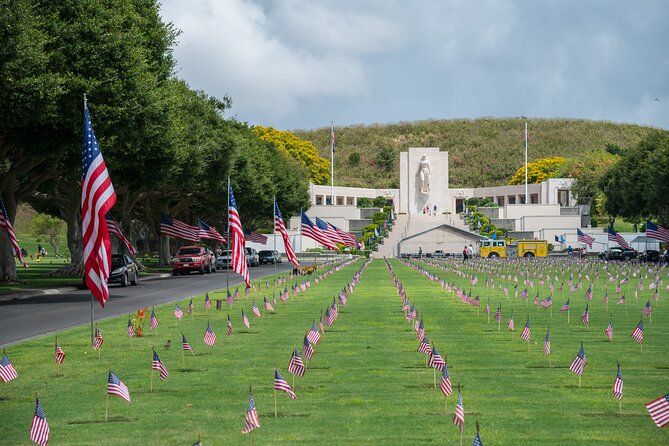
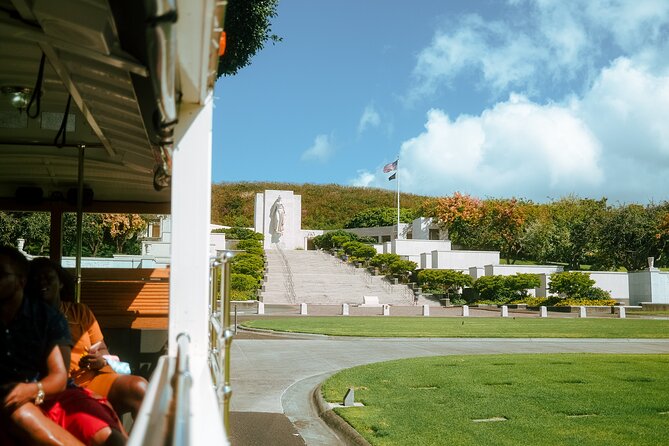
The stop at Punchbowl Crater is one of the most memorable parts of the route. The National Memorial Cemetery of the Pacific sits inside this broad volcanic crater, and its formal entrance, trees, memorial setting, and elevated views offer a sharp change from Waikiki’s commercial streets.
Give this stop the respect it deserves. It is not just a photo point or a quick scenic pause. It is a memorial site, and the quiet setting can be the emotional center of the ride.
The route may offer only a brief look unless you choose to leave the trolley and wait for another one. That is the tradeoff with hop-on hop-off service. You gain freedom, but a stop can become a long commitment if the next bus is delayed or full.
If anyone in your group has limited stamina, plan carefully. Service animals are allowed, and most people can participate, but the supplied details do not promise reserved seating or a guaranteed accessible boarding arrangement. Crowding has caused problems for some passengers, including people who had to stand.
More Hop-On Hop-Off Tours in Oahu:
- Savannah Hop-On Hop-Off Trolley Tour
★ 4.5 · 6,527 reviews - New York: Hop-on Hop-off Sightseeing Tour by Open-top Bus
★ 4.2 · 5,863 reviews - Nashville Hop On Hop Off Trolley Tour
★ 4.5 · 5,643 reviews - Boston Hop-On Hop-Off Trolley Tour with 13 Stops
★ 4.5 · 5,576 reviews
Botanical gardens, a Japanese mission, and Chinatown
Foster Botanical Garden provides a calmer stop after the memorial. It is a useful choice if you want plants and shade rather than another monument or shopping district. The trolley also passes the Izumo Taishakyo Mission of Hawaii and Royal Kitchen, giving the route a wider cultural range than its Waikiki label suggests.
The Chinatown stop covers downtown Honolulu’s older commercial center, with Hawaii Theatre nearby. You can use the stop for food, a short walk, or a look at a part of the city that feels very different from the resort district.
Go with realistic expectations. Some blocks may feel worn and less polished than Waikiki, and you should allow time to get oriented before wandering far from the pickup point. The stop can be rewarding if you want to see a working urban district, but it may not suit anyone expecting a picture-perfect shopping area.
Chinatown is also one of the places where a long bus interval matters most. If you get off for food, you might be waiting close to an hour, and a full trolley may pass before you can board. Ask about the next departure and keep your time flexible.
King Kamehameha, Aloha Tower, and the harbor
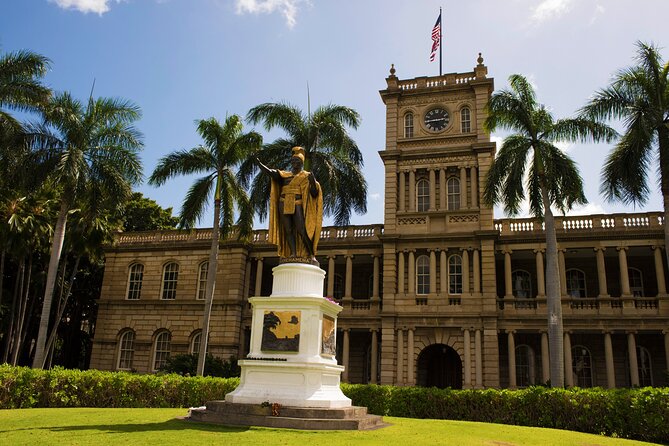
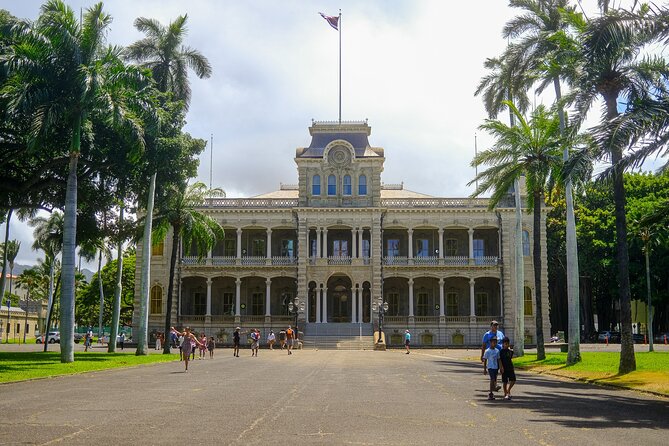
The King Kamehameha Statue is among the route’s most recognizable landmarks. It honors the ruler who united the Hawaiian Islands, and the guide’s explanation adds needed context to the statue’s ceremonial appearance.
Next comes Aloha Tower Marketplace and Honolulu Harbor. The itinerary includes a brief sightseeing break here, so this is one of the easier places to step off, take photographs, and see the harbor without arranging a separate excursion.
This section works well for a quick introduction to Honolulu’s port and civic center. It is not a substitute for a long waterfront visit, but it gives you a useful stop between Chinatown and the newer Kakaʻako district.
If the trolley is running late, however, a short harbor break can become squeezed. Traffic, parades, and passenger loading have caused major delays on some days. One ride was affected by a parade, leaving passengers on board much longer than expected and dropping them away from the planned stop.
Kakaʻako, Ward Centre, and Ala Moana
SALT at Our Kakaʻako and Ward Centre show you a newer side of Honolulu. The route shifts from historic monuments to restaurants, shops, and redeveloped city blocks. These stops are useful if you want to compare Honolulu’s older downtown with its newer urban districts.
Ala Moana Regional Park is the final listed stop, near the wide open space between Waikiki and the Ala Moana shopping area. The park offers a different kind of city view, but pickup information needs extra attention here.
The Ala Moana area has caused confusion for some riders. A trolley stop may not be obvious at the park, and the nearby mall is not automatically the same pickup point. Before getting off, ask where the next trolley will collect you and note a clear landmark.
The Red Line can also connect with other trolley routes, including the Pink, Green, and Blue lines. Some riders have found those services easier to use for other parts of Waikiki, while the Red Line is the better choice when your goal is Honolulu history and downtown sights.
How long the ride really takes
The advertised ride lasts about 1 hour and 20 minutes. That is a useful estimate for the moving route, not a promise that your entire outing will fit neatly into that time.
A nonstop loop may take about two hours when traffic is heavy. Add a stop at the museum, cemetery, Chinatown, or harbor and you could spend much of an afternoon on the outing. Waiting between buses is the biggest variable, with reports of gaps around an hour.
That timing changes how I would use the tour. If you have a flight, dinner reservation, or timed attraction afterward, leave a generous buffer. If you are free for the afternoon, the delays matter less.
The route is also affected by crowd size. A full trolley can pass you by, or you may have to stand. On the other hand, some departures run smoothly and punctually, especially when traffic and demand are light.
Commentary, seating, and the open-air tradeoff
The best guides turn the ride into a moving history lesson. Sam has been praised for making the trip educational and relaxing. Chuck is known for being friendly and funny. Big Tony has focused on Hawaiian heroes and legends, while Chico has delivered detailed narration and careful Hawaiian pronunciation. Turk has also made a strong impression with humor and local stories.
That guide quality is the strongest reason to choose this over simply taking a city bus. You are paying for transportation, but also for interpretation as you pass monuments and districts you might otherwise ignore.
The weak point is the sound. Engine noise, wind, and the open trolley design can swallow parts of the narration. Sit near the front if hearing the guide is important, and expect the ride to be less quiet than an enclosed coach.
Seats may be wooden or limited, and standing passengers have been reported. This matters for older adults, anyone recovering from surgery, and anyone who cannot comfortably remain upright for long periods. Most people can participate, but comfort depends heavily on how busy that particular departure is.
Is $35 a fair price?
At $35 per person, the Red Line is not the cheapest way to move around Honolulu. The city bus costs less, and one account specifically compared it with a $3 bus fare and all-day transfers. Public buses may be a better bargain if you already understand the routes and want basic transportation.
The trolley earns its price through convenience and commentary. You do not need to plan each downtown connection, and the guide points out the meaning behind places such as Punchbowl, the State Capitol, and King Kamehameha’s statue.
Value depends on how you use it. If you stay on for the full ride and listen to the guide, $35 can be reasonable as a compact city orientation. If you need dependable transport to one specific stop, a regular bus or taxi may be more practical.
The ticket is mobile, confirmation arrives when you book, and the experience is offered in English. It is non-refundable and cannot be changed, so do not book it on a day when your schedule is uncertain.
Who should book the Red Line
I would recommend it to first-time visitors who want a broad look at Honolulu before choosing which places deserve more time. It suits couples, families, and anyone who needs a low-effort break from the beach.
It is also a good fit for history-minded visitors who would otherwise spend the whole trip eating, shopping, and swimming. The route brings Hawaiian monarchy, wartime memory, civic buildings, religious sites, and modern Honolulu into one outing.
I would be cautious if you need precise departures, guaranteed seating, clear stop signage, or strong audio. It is also less useful if you already have a detailed Pearl Harbor tour, since some historical information may overlap.
The service operates daily from 8:00 a.m. to 4:00 p.m. and is often booked around 11 days ahead. That suggests planning early, but check the day’s timing before you build other fixed plans around it.
Should you book this Honolulu trolley?
Book it if you want a friendly introduction to Honolulu and can treat the schedule as flexible. The route covers an impressive amount of ground, and a good guide can add meaning to places you would otherwise pass without a second look.
Skip it if you need the lowest-cost transport or cannot tolerate long waits and crowded seating. For the best chance of a smooth outing, ride early in your stay, sit near the front, confirm each pickup point before getting off, and keep the rest of your day open.
FAQ
How long does the Red Line tour take?
The listed duration is approximately 1 hour and 20 minutes. Traffic, stops, parades, and waits for another trolley can extend the outing to about two hours or longer.
Where does the Red Line stop?
Stops include Waikiki Shopping Plaza, the Duke Kahanamoku Statue, the Twin Fin Hotel, Honolulu Museum of Art, Hawaii State Capitol, National Memorial Cemetery of the Pacific, Foster Botanical Garden, Izumo Taishakyo Mission of Hawaii, Chinatown, King Kamehameha Statue, Aloha Tower Marketplace, SALT at Our Kakaʻako, Ward Centre, and Ala Moana Regional Park.
Is the trolley hop-on hop-off?
Yes. You can get on and off along the route, but buses may be spaced far apart and some departures may be full. Confirm the pickup point before leaving the trolley.
Is the tour offered in English?
Yes. The experience is offered in English, with onboard commentary about Hawaiian history and culture.
Can service animals join the tour?
Yes. Service animals are allowed, and most people can participate.
Can I cancel or change the booking?
No. The experience is non-refundable and cannot be changed for any reason.
Just added around Oahu
- Waikiki Starlight Luau on The Great Lawn-Hilton Hawaiian Village★ 3.5 · 374 reviews
- WWII Pearl Harbor Heroes Deluxe Tour★ 4.5 · 621 reviews
- Ultimate Pearl Harbor Circle Island★ 5.0 · 404 reviews
- Tribute to Pearl Harbor Arizona Memorial and Honolulu City Tour★ 4.5 · 733 reviews
- Shared Round-Trip Transfer: Honolulu Airport to Hotel or Cruise Terminal★ 4.0 · 711 reviews
- Shared Arrival Transfer: Honolulu Airport to Hotel or Cruise Terminal★ 3.5 · 609 reviews
- Royal Crown of Oahu – 60 Min Helicopter Tour – Doors Off or On★ 5.0 · 755 reviews
- Oahu: Roundtrip Shuttle From Waikiki to Dole Plantation & Haleiwa★ 4.5 · 561 reviews
Oahu Tours, compared.
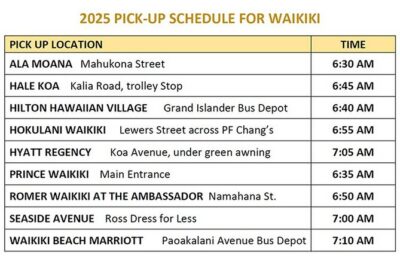
Oahu Grand Circle Island and Haleiwa Tour: 9-Hr Deluxe Experience
Read our review →
Grand Tour Around Island 16 Locations plus Snorkeling
Read our review →


Oahu’s Ultimate Tour: Dole, Turtle Snorkel, Pali Lookout & More
Read our review →
Oahu Circle Island Tour with Turtle Snorkeling— Small-Groups
Read our review →
Browse the lists this tour appears in