

Reviewed · SEDONA
Sedona Stargazing Tours LLC
Sedona’s red rocks fade into darkness, and the sky takes over. At this private Oak Creek stargazing session, you use powerful GPS-guided telescopes to view planets, star clusters, nebulae, and faraway galaxies while guides such as Wes or Dave explain what you are seeing. Saturn’s rings have been a memorable sight, and the laser pointer makes constellations easier to follow.
I like the personal setup: your group has a comfortable chair, wide-view binoculars, and time to ask questions rather than simply watching a scripted show. I also like the guides’ ability to adjust the night around your interests. The main catch is weather and moonlight. Clouds can cancel the experience, while a bright moon can wash out fainter stars. At $89 per person, that matters.
Key points before you book
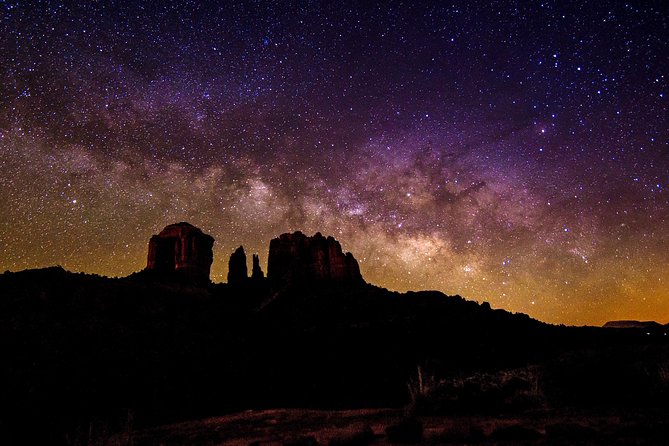
- Powerful GPS-guided telescopes: View planets, the Moon, stars, galaxies, nebulae, and star clusters with equipment that automatically locates targets.
- Private and customizable: Only your group participates, and you can tell the astronomer what you most want to see.
- Clear constellation lessons: Laser pointers help connect the dots between the stars and make zodiac names easier to understand.
- Comfort in a cold field: Chairs, wide-view binoculars, blankets, and, in colder weather, parkas help you stay outside longer.
- A short but focused evening: The experience lasts about 1 hour and 15 minutes, with the observing site near Oak Creek.
- Weather controls the result: Poor conditions can lead to a new date or a full refund, while a full moon can reduce the number of visible stars.
Why Sedona is a fine place to look up
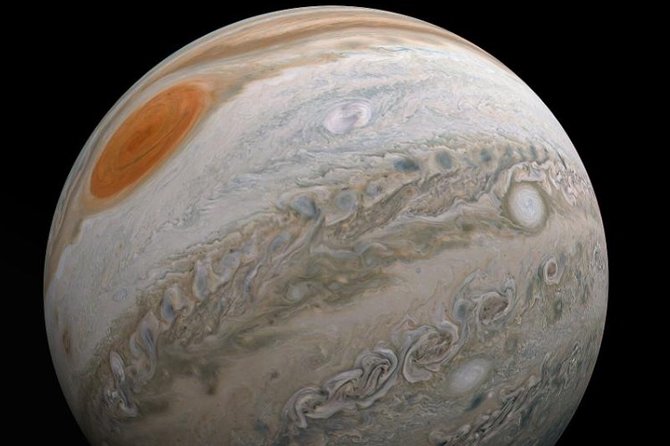
Sedona is famous for its red rock formations, but after dark the best view may be above you. Away from the town’s brighter streets, the sky near Oak Creek gives astronomers a better setting for showing stars and deep-sky objects.
This is not simply a matter of sitting back and hoping to spot something. The guide begins with the broad pattern of the sky, using a laser pointer to identify constellations and explain their positions. That helps you understand the sky as a map rather than a random scatter of lights.
I especially like this approach for first-time stargazers. You do not need to know the names of stars before arriving. A guide can point out the major shapes, explain zodiac constellations, and then connect what you see with the larger solar system.
The exact sights depend on the date, weather, and moon phase. Planets may be the evening’s stars, or the guide may focus on clusters, galaxies, and nebulae. You can also ask questions and shape the session around your interests, which makes the private format more useful than a fixed lecture.
A few more Sedona days worth weighing up
- Verde Canyon Railroad Adventure Package
★ 4.5 · 2,821 reviews - Explore Sedona’s Vortexes: 2.5 Hour Jeep Tour of Mysticism
★ 5.0 · 1,834 reviews - Guided ATV Tour of Western Sedona
★ 5.0 · 1,767 reviews
Meeting at Verde Valley School near Oak Creek
The meeting point is 3511 Verde Valley School Road, Sedona, Arizona 86351. The activity begins and ends there, so you do not need to arrange a separate ride between several stops.
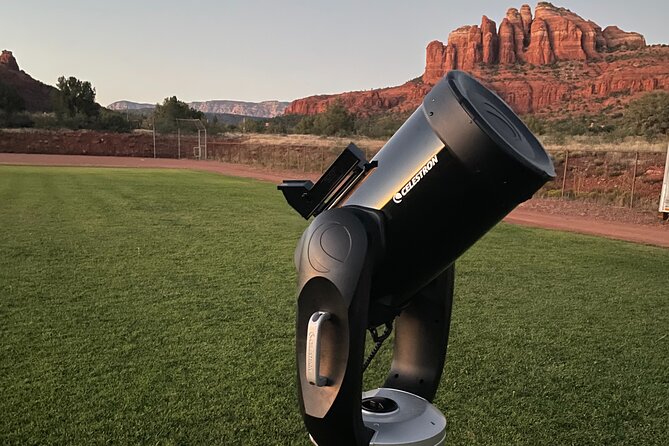
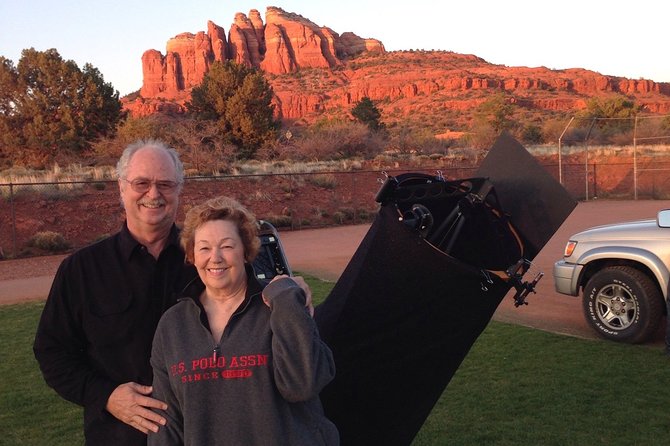
From the meeting area, you make a short walk to the observing spot. One description places the setup on a soccer field, with chairs waiting near several large telescopes. That gives you a practical sense of the setting: this is an outdoor field session, not an indoor planetarium with climate control.
Wear layers, even if the afternoon felt warm. December and other cold-season sessions can feel sharply chilly once you are sitting still under an open sky. Blankets and parkas may be provided, but warm clothing remains the sensible first line of defense.
The site is also dark by design. That is good for stargazing, though it means you should be comfortable walking a short distance outdoors at night. Most people can participate, and one particularly thoughtful account describes the staff helping a person with a disability. Still, if anyone in your group has specific mobility needs, confirm the site details before booking.
The opening constellation lesson
The first formal part of the experience is a tour of the visible sky. Your astronomer guide uses a laser pointer to identify constellations and explain where they sit overhead. The zodiac names and star positions become much easier to follow when you can see the guide’s pointer tracing the pattern.
This opening talk gives the telescope viewing some context. Instead of hearing only a string of object names, you learn how the objects fit into the sky. Guides Wes, Dave, Richard, and Mr. Sanders have each been praised for clear explanations, storytelling, humor, or a strong interest in astronomy.
The presentation style can vary by guide and by how many people are gathered around the equipment. One account noted that it was sometimes hard to hear or tell when the guide was speaking. If you have trouble hearing, move closer and ask the guide to repeat a point. The setting is outdoors, so sound does not carry as neatly as it would in a theater.
The educational side suits families well. Children who already like outer space can see real objects rather than only pictures, while adults can ask more technical questions. The guide’s job is not just to name a planet, but to help you understand what the telescope is showing.
Taking turns at the GPS-guided telescopes
The telescopes are the main event. Their GPS auto-positioning helps the guide locate selected objects quickly, then the staff fine-tunes the view so you can look through the eyepiece.
You may see planets, stars, galaxies, nebulae, and star clusters. The Moon is another strong possibility, especially when its surface is bright and detailed. Saturn has been a major highlight, with its rings and a moon visible through the telescope when the planet is in the right part of the sky.
Do not expect every target to look like a glossy space photograph. A telescope gives you a direct view, but distant galaxies and nebulae can appear as soft, faint forms rather than bright, colorful images. That is part of the lesson. You are looking at actual light that has traveled enormous distances to reach the instrument.
The equipment earns much of the $89 price. Several large telescopes are used, and the automatic positioning saves time that might otherwise be spent searching manually. The guide also checks focus and helps you make sure you are looking in the right place.
Because the tour is private, you can ask to spend more time on a particular object or request a different type of target. That flexibility matters if your group is more interested in planets than galaxies, or if children want repeated looks at the Moon.
The session is not a free-form observatory visit. You take turns at the equipment, so there can be brief pauses between views. The binoculars and chairs make those pauses part of the experience rather than dead time.
A different sort of day out, same corner of Sedona:
- Half-day Sedona Sightseeing Tour
★ 4.5 · 1,688 reviews - Sedona Outlaw Trail: 3-Hr 4×4 Tour of Western Canyons & Wildlife
★ 5.0 · 1,335 reviews - Sightseeing Highlights Tour of Sedona
★ 4.5 · 1,279 reviews - Mogollon Rim Run Supreme Jeep Tour from Sedona
★ 5.0 · 856 reviews
Binoculars and a chair make a difference
Each person can use wide-view binoculars while waiting for a telescope turn. Binoculars show more of the surrounding sky than the narrow telescope eyepiece, so they are useful for taking in star fields and following the guide’s broader explanations.
I like that the setup recognizes a simple truth: stargazing involves waiting. Even when the telescope is being repositioned, you can scan the sky, listen to the guide, or ask a question from your chair.
The chair is not a minor extra. Sitting outside for an hour or more is much easier than standing in a field, especially in winter. Blankets and parkas have also been provided during cold sessions, though you should still bring warm layers, closed shoes, and whatever personal cold-weather gear you normally need.
Phone photography is possible, but keep expectations modest. One family managed to capture good sky photos, and a visitor photographed the Moon or stars with a phone. The telescope is built for viewing, not for producing professional astrophotography. Ask the guide for help if you want to try a quick phone image, but do not make photography the main reason you book.
The moon, clouds, and the limits of the sky
Stargazing has one drawback that no operator can remove: the sky decides how much you will see. Cloud cover can block stars and make telescope work impossible. If conditions are poor, the tour may be canceled and you will be offered another date or a full refund.
That policy is important. A cloudy-night cancellation is disappointing, especially if you drove out to the site, but a telescope session under solid clouds would not deliver what you paid for. One account describes several canceled attempts followed by a full refund.
The Moon creates a different problem. A bright or nearly full Moon is a wonderful telescope target, with craters and surface features that can look sharp. But moonlight also brightens the whole sky and hides faint stars, the Milky Way, and some deep-sky objects.
If your priority is seeing as many stars as possible, ask about the moon phase when choosing your date. If your priority is the Moon itself, a bright lunar night may suit you well. The guides can still provide an interesting session under moonlight, but you should not expect the same dark-sky view as on a moon-free night.
The operator has also changed arrival instructions at times based on sunset, moon phase, and viewing conditions. Check your email and messages after booking, since the useful arrival time may differ from the original time shown during purchase.
Is $89 per person fair?
At $89 per person, this is not the cheapest way to spend an evening in Sedona. You can look at the sky for free from many dark spots, assuming you know where to go and have suitable conditions.
The price becomes easier to justify if you value the equipment and instruction. You get access to large telescopes with automatic positioning, a guide who can identify what you are seeing, binoculars, seating, and a private format. For a family or small group that wants a guided introduction to astronomy, those pieces add up.
The value drops if your night is heavily clouded, or if a full Moon limits the faint objects you hoped to see. One person found an hour-long session expensive, even while praising the telescopes. That is a fair concern, especially since the advertised experience is only about 1 hour and 15 minutes.
I would book it for a clear night when at least one person in the group is eager to learn about astronomy. I would be more cautious if your budget is tight or if you mainly want a long, relaxed view of the Milky Way. In that case, confirm the moon phase and cancellation terms before committing.
Who will enjoy this most
Families are a strong match. Children can see planets through real telescopes, ask questions, and use binoculars while waiting. Saturn, when visible, can create a powerful first connection between an abstract school topic and something directly in front of them.
Couples and friends also get a pleasant evening activity that is quieter than Sedona’s daytime attractions. The chairs, blankets, and conversational format make it easy to focus on the sky without rushing from one object to another.
Solo visitors can enjoy it too, particularly if they want a structured introduction rather than trying to identify constellations alone. The private arrangement lets you ask basic questions without feeling out of place.
This may not suit you if you dislike sitting outdoors in the cold, have little patience for changing weather, or expect every telescope view to resemble a NASA image. It is also not the right pick if you need a guaranteed list of specific planets, since the visible objects change with date and conditions.
Booking, cancellation, and practical details
The ticket is mobile, and confirmation is sent at booking. Additional departure information and the address are provided by email, so check your messages before setting out.
Free cancellation is available up to 24 hours before the local start time for a full refund. Changes or cancellations within 24 hours are not accepted for a refund.
Poor weather can cancel the session. In that case, you are offered a different date or a full refund. The same applies if the minimum number needed to operate is not met.
The activity is offered in English. It is a private tour, so only your group participates, and most people can take part. The listed duration is approximately 1 hour and 15 minutes, though the exact flow can depend on the observing conditions and what your group wants to see.
Should you book Sedona Stargazing Tours?
Book this tour if you want more than a pretty night sky. You get a guide-led explanation of the constellations, powerful telescopes, binoculars, seating, and the chance to choose your targets. The strongest moments are likely to come from seeing a planet such as Saturn, then understanding where it sits in the larger sky.
Go in with realistic expectations. Check the moon phase, watch the forecast, bring warm layers, and read any updated arrival message. If clouds force a cancellation, take the refund or reschedule rather than accepting a poor substitute.
For families, curious first-time stargazers, and anyone who wants an informed look at Sedona after dark, $89 can be fair value on a clear night. If you want the cheapest possible view of the stars, or you are unwilling to accept weather risk, save your money and look up on your own.
FAQ
Where does the stargazing tour meet?
The meeting point is 3511 Verde Valley School Road, Sedona, Arizona 86351. The activity ends back at the same meeting point.
How long does the experience last?
The listed duration is approximately 1 hour and 15 minutes. The observing portion is described as about one hour, with the exact flow depending on conditions and your group’s interests.
Is this a private tour?
Yes. Only your group participates in the private activity.
What can I see through the telescopes?
Depending on the date and sky conditions, you may view planets, stars, galaxies, nebulae, and star clusters. The Moon may also be visible.
Are binoculars provided?
Yes. You can use wide-view binoculars while waiting for a turn at the telescopes.
Are chairs and warm items provided?
A comfortable chair is provided, and blankets are available. Cold-season sessions may also include parkas, but you should still bring warm layers.
Is the tour offered in English?
Yes. The experience is offered in English.
Can I choose what I want to see?
Yes. The tour is customizable, and you can ask the astronomer guide to focus on your interests during the experience.
What happens if the weather is poor?
If poor weather prevents the experience from operating, you will be offered a different date or a full refund.
What is the cancellation policy?
You can cancel at least 24 hours before the local start time for a full refund. Cancellations or changes made within 24 hours are not accepted for a refund.
Just added around Sedona
- Downtown Flagstaff Haunted History Tour★ 5.0 · 374 reviews
- Mogollon Rim Run Supreme Jeep Tour from Sedona★ 5.0 · 856 reviews
- Sedona’s Seven Canyons: 2-Hour Rugged Adventure & Stunning Views★ 5.0 · 655 reviews
- Visit 4 Wineries in Limo Party Bus-Includes Charcuterie Lunch!★ 4.5 · 756 reviews
- Small Group or Private Sedona and Native American Ruins Day Tour★ 5.0 · 576 reviews
- Chuck Wagon Supper & Western Stage Show at Blazin’ M Ranch Ticket★ 4.5 · 554 reviews
- Kayak Tour on the Verde River★ 5.0 · 591 reviews
- Sedona Outlaw Trail: 3-Hr 4×4 Tour of Western Canyons & Wildlife★ 5.0 · 1,335 reviews
Sedona Tours, compared.
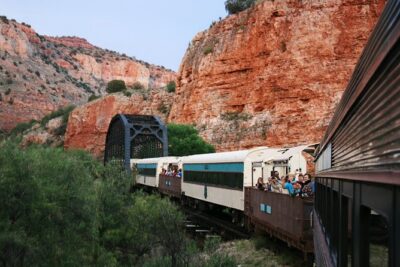
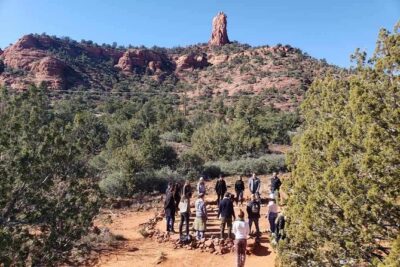
Explore Sedona’s Vortexes: 2.5 Hour Jeep Tour of Mysticism
Read our review →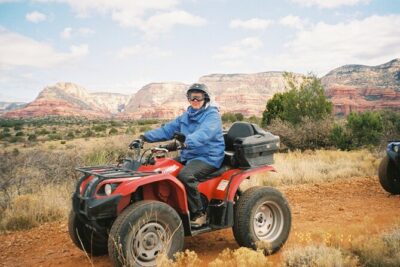

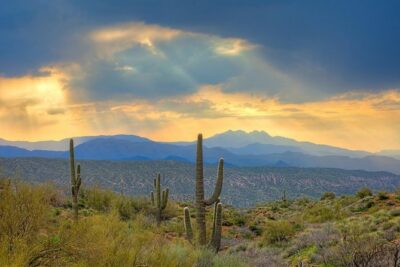
Sedona Outlaw Trail: 3-Hr 4×4 Tour of Western Canyons & Wildlife
Read our review →
Mogollon Rim Run Supreme Jeep Tour from Sedona
Read our review →
Visit 4 Wineries in Limo Party Bus-Includes Charcuterie Lunch!
Read our review →Browse the lists this tour appears in