
Reviewed · MONTEREY & CARMEL
Monterey Bay: Whale Watching Tour
Monterey Bay is one of those rare places where whales can be found close to shore, thanks to the deep submarine canyon running through the bay. On a good morning, you might watch humpbacks feeding for hours, spot dolphins riding the bow, or see a blue whale surface beside the boat. The wildlife is real and unpredictable, which is part of the appeal.
I especially like the small boat setup, which gives you room to move around and find a clear view. I also like the biologist-led commentary. Guides such as Isaiah, Maddy, and Sophie have been praised for making the science easy to follow without turning the trip into a lecture. The main drawback is the sea: even a successful trip can be cold, wet, and rough, so motion sickness and layers deserve serious thought.
Key points to know before you book
- Whales can appear in every season: Summer and fall focus on feeding humpbacks, while winter trips often follow migrating gray whales.
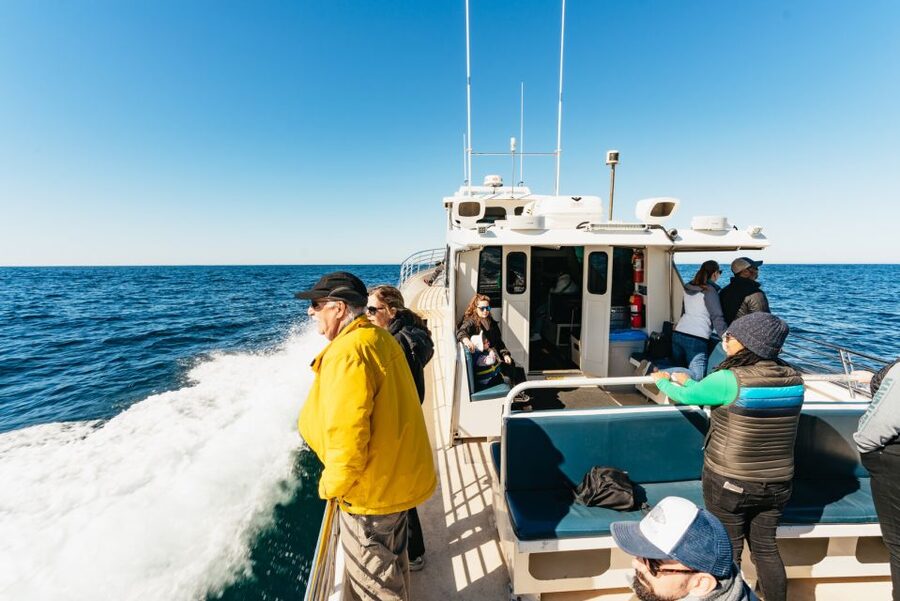
- The boat is relatively small: A group of about 25 people gives you better room to shift sides and watch the action.
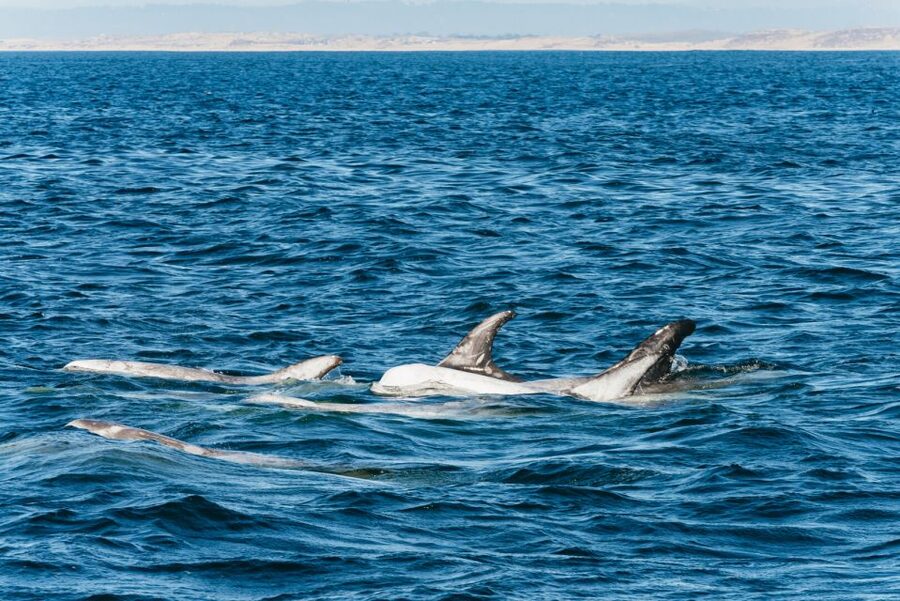
- The wildlife list is unusually broad: Humpback, gray, blue, fin, and orca sightings are possible, along with dolphins, porpoises, sea lions, seals, and otters.
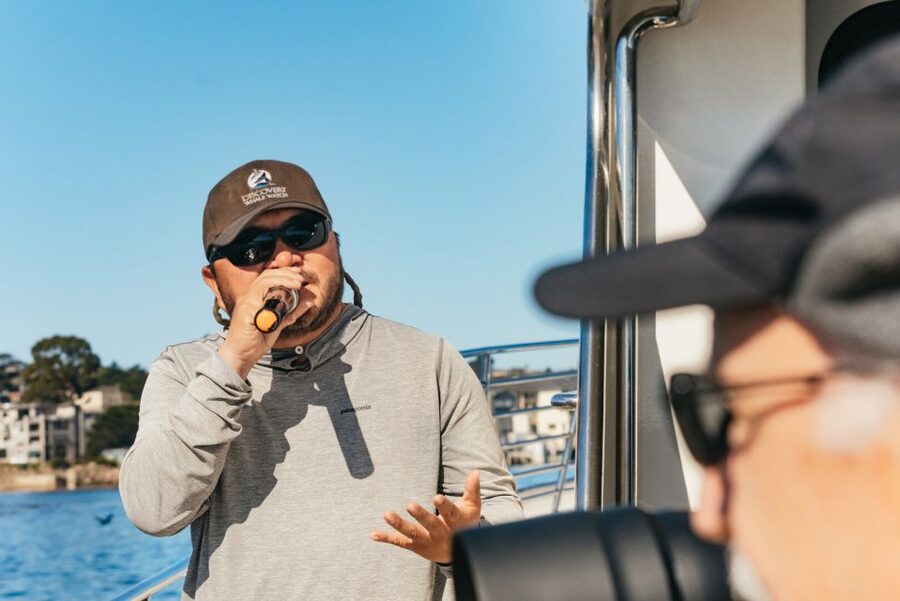
- The guide matters: Biologists such as Isaiah and Maddy add useful context about animal behavior and conservation.
- Sea conditions affect the day: Bring layers and consider motion sickness medicine before boarding.
- Plan for more than the advertised minimum: Some cruises run over four hours, so do not schedule a tight appointment afterward.
Why Monterey Bay is such a strong place for whale watching
The bay has an unusual advantage: its underwater canyon reaches close to shore. That deep water helps bring food into the area and allows large marine animals to feed within a practical boat ride of Monterey.
You are not simply sailing offshore hoping for a distant spout. The crew searches for active feeding areas, where small fish and krill attract humpback whales, seabirds, sea lions, and dolphins. This can create a busy scene on the water, with several species appearing at once.
Still, whale watching is wildlife watching, not a theater show. No operator can promise a breach, a blue whale, or an orca. The strong sighting record on this trip makes it appealing, but you should book it for time in a protected marine ecosystem rather than for one guaranteed animal.
More Whale Watching in Monterey & Carmel
- Monterey: Monterey Bay Dolphin and Whale Watching Boat Tour
★ 4.7 · 1,645 reviews - 4 Hour Whale Watching Tour From Monterey
★ 5.0 · 1,045 reviews - Monterey: Sunset Whale Watching Cruise with A Guide
★ 4.7 · 519 reviews
Starting at Old Fisherman’s Wharf
You meet at Discovery Whale Watch, at 66 Fisherman’s Wharf, and should check in at least 45 minutes before departure. The coastguard waiver must be completed electronically for every person in your group. Adults complete forms for children, and the link can be forwarded by text or email.
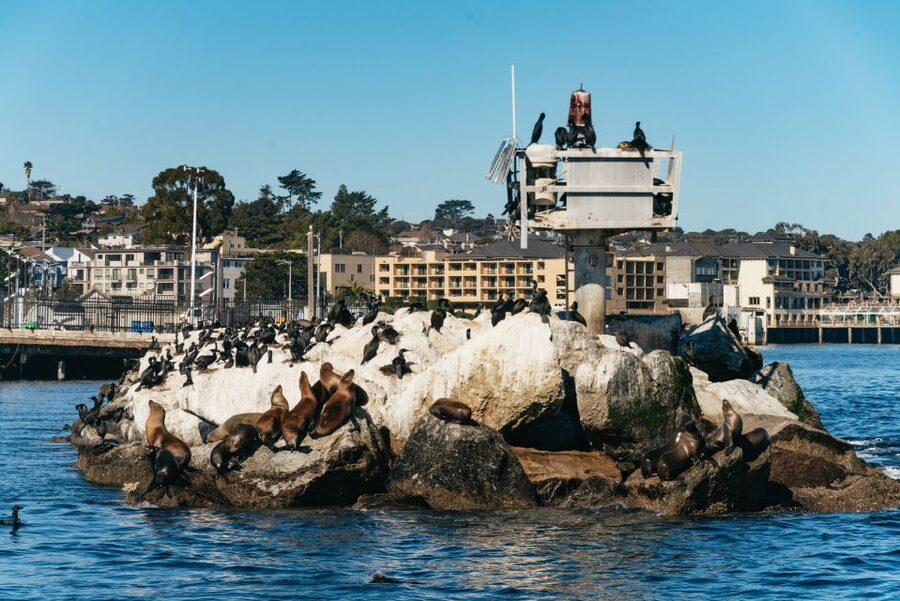
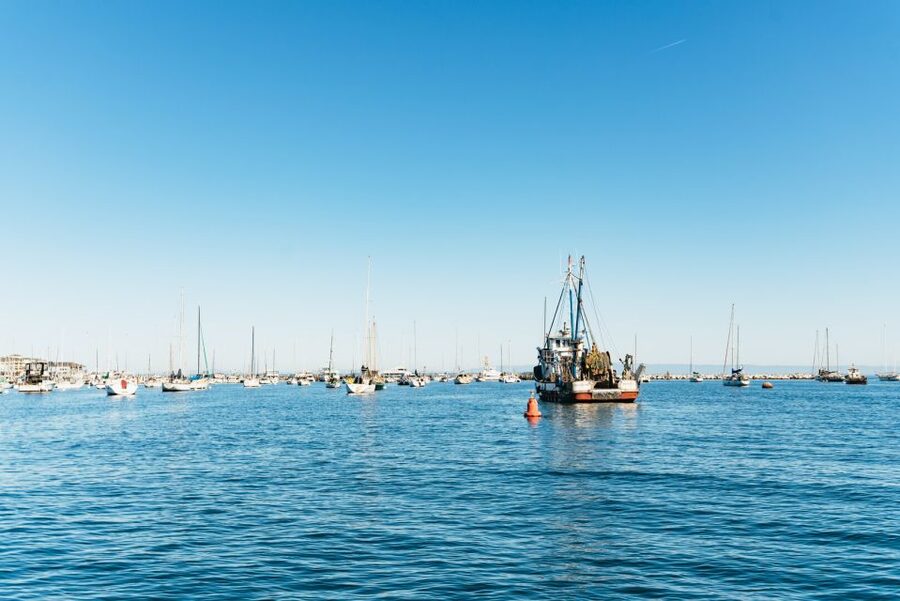
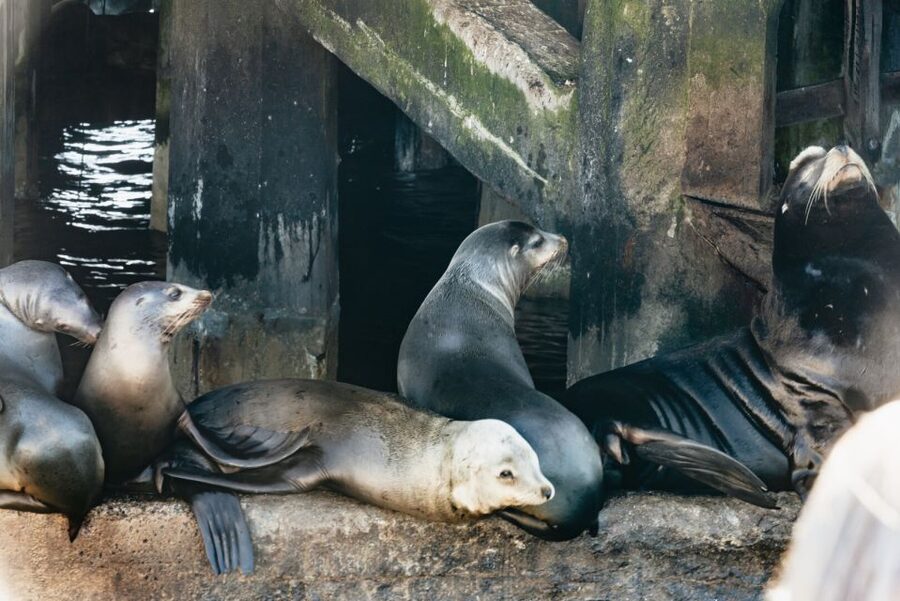
The departure area gives you an enjoyable start. As the boat leaves the harbor, look toward the water for the large groups of California sea lions gathered near the docks. They bark, pile onto platforms, and jostle for space, giving you an easy wildlife sighting before the main search even begins.
Parking is at the Monterey Harbor Waterfront lot at 245 Washington Street. Pay before walking to the wharf using the ParkMobile app or a pay station. The directions warn of a $49 ticket for unpaid parking, so do not leave this detail until the last minute.
From the lot, walk toward Wharf 1. Pass the pink Harbor House, continue beyond the yellow Crab House, and look for the blue Discovery Whale Watch building on the right. If your hotel is nearby, walking may be easier than dealing with parking.
Passing Cannery Row and entering the sanctuary
The boat passes Cannery Row before reaching Monterey Bay National Marine Sanctuary. This part of the route connects the famous waterfront with the marine environment you came to see.
Once outside the harbor, the view opens up and the search begins. The crew watches for blows, dorsal fins, flukes, birds, and sudden surface activity. Your guide explains what you are seeing and why certain species gather in particular parts of the bay.
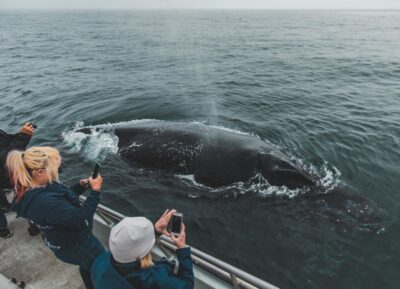
This is where the small boat helps. A group of roughly 25 people is far less crowded than a large sightseeing vessel, and you can usually move from one side to the other when an animal surfaces. You still need patience and quick eyes. Whales do not always appear where you expect them, and several people may point in different directions at once.
The boat has restrooms and free hot beverages. Small packed lunches and non-alcoholic drinks are allowed, and snacks or drinks may also be available for purchase. Smoking, alcohol, and drugs are not permitted.
What you might see in summer and fall
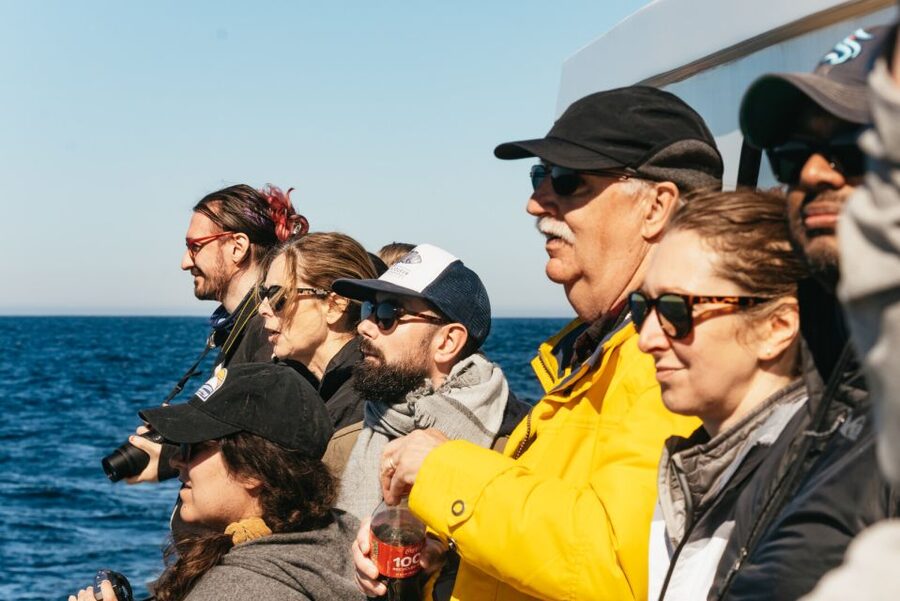
Summer and fall are the main feeding months. Humpback whales are the most regular headline act, and the best encounters can last well beyond a quick surfacing. You might see a whale arch its back, raise its tail, slap a fin, or lunge through a patch of baitfish.
The feeding scenes can include much more than whales. Seabirds gather over the fish, sea lions work the same area, and dolphins may pass through. One reported July trip included humpbacks, a blue whale and calf, tufted puffins, salmon sharks, and albatross. That is an exceptional mix, not a promise, but it shows how varied the bay can be.
Blue whales are possible in the warmer months. They are the largest animals on Earth, yet a sighting can be surprisingly quiet: a long back, a small dorsal fin, and a powerful blow before the animal disappears. Fin whales, porpoises, white-sided dolphins, Risso’s dolphins, and even orcas have also been seen.
Several trips have included ten or more whales, and some have had far higher counts. One especially active outing produced around 30 whales. Again, conditions change from day to day, but the bay offers a real chance of seeing repeated wildlife activity rather than one brief encounter.
More Whale Watching in California:
- San Diego Whale Watching Cruise
★ 5.0 · 2,317 reviews - San Diego Whale Watching & Dolphin Cruise
★ 4.5 · 1,588 reviews - Newport Beach: 2-Hour Whale Watching Tour
★ 4.2 · 1,375 reviews - Two-Hour Luxury Whale Watching Tour from Oceanside
★ 4.5 · 937 reviews
What changes in winter
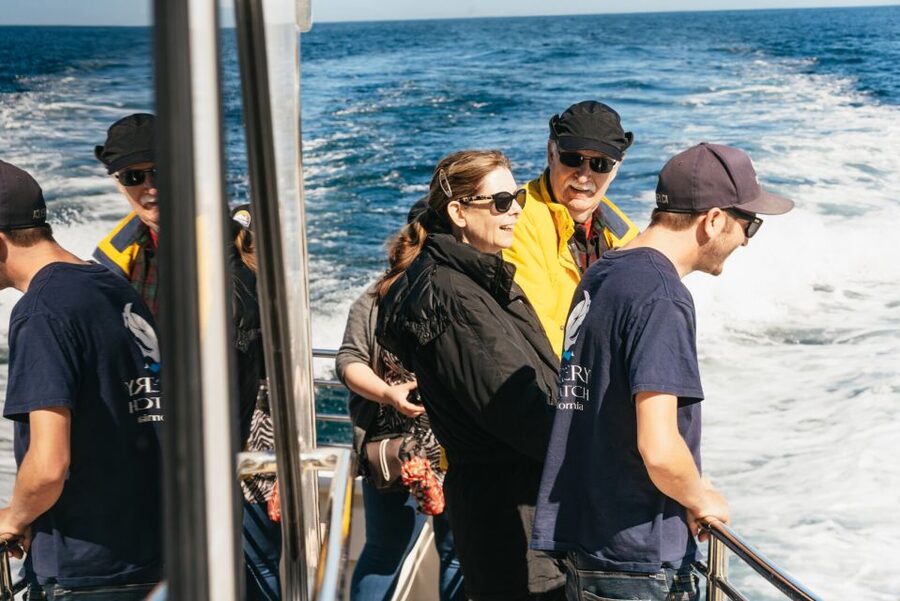
Winter trips shift toward the south end of Monterey Bay, where migrating whales may pass. Gray whales are the main seasonal draw, and their movement along the coast can make a winter cruise rewarding even when humpback activity is quieter.
Winter is not a bad time to go, but it is a different experience. Some late November and December trips have still produced around ten whales, along with dolphins and sea lions. Other outings have had fewer sightings. You should expect cooler air and be prepared for rougher conditions.
The morning winter cruises generally last about 2.5 to 3 hours. Summer and fall morning trips run about 3.5 to 4 hours, while afternoon trips year-round usually last 2.5 to 3 hours. Check the exact departure when booking, since the duration depends on the option and season.
The guides make the difference
The onboard biologist is more than a voice announcing sightings. A good guide helps you understand why the animals are there, how feeding behavior works, and what conservation means in a busy marine sanctuary.
Isaiah has been singled out for clear explanations, humor, photography, and even the occasional sea shanty. Maddy and Sophie have also been praised for their warmth and enthusiasm, while other trips have featured Ryan, Mattie, Matt, and other crew members. Staff names can change, but the format remains the same: a guide watches with you, explains the behavior, and answers questions.
The best commentary keeps you interested during the quiet stretches. If the boat spends time searching, you learn to recognize the difference between a whale blow, a dolphin fin, and a sea lion raft. That makes the trip worthwhile even before the next big sighting.
Some guides take photographs during the cruise and make them available afterward. This can be useful because whales are difficult to photograph from a moving boat, especially when you are also trying to watch with your own eyes.
Boat comfort, weather, and seasickness
The boat is described as comfortable for its size, but this is still an ocean cruise. The ride may bounce, and the open water can feel much colder than Monterey’s streets. One successful trip included large swells, while another had calm seas and dry weather. You need to prepare for both.
Wear layers, even on a sunny day. Add sunglasses, a hat, sunscreen, and comfortable shoes. A waterproof outer layer is sensible if the forecast looks damp. Free hot drinks are a welcome touch, especially on a cloudy morning.
If you are prone to motion sickness, take the issue seriously. Remedies are sold at the office, and you may bring your own. One person became very sick but received repeated attention and ginger candy from the crew. That care is helpful, but it is better to prevent the problem before the boat leaves the harbor.
The activity is not suitable for pregnant women or people with mobility impairments. Friendly dogs are allowed onboard. Ask yourself honestly how you handle moving boats before choosing this as a centerpiece of your day.
Is $75 a fair price?
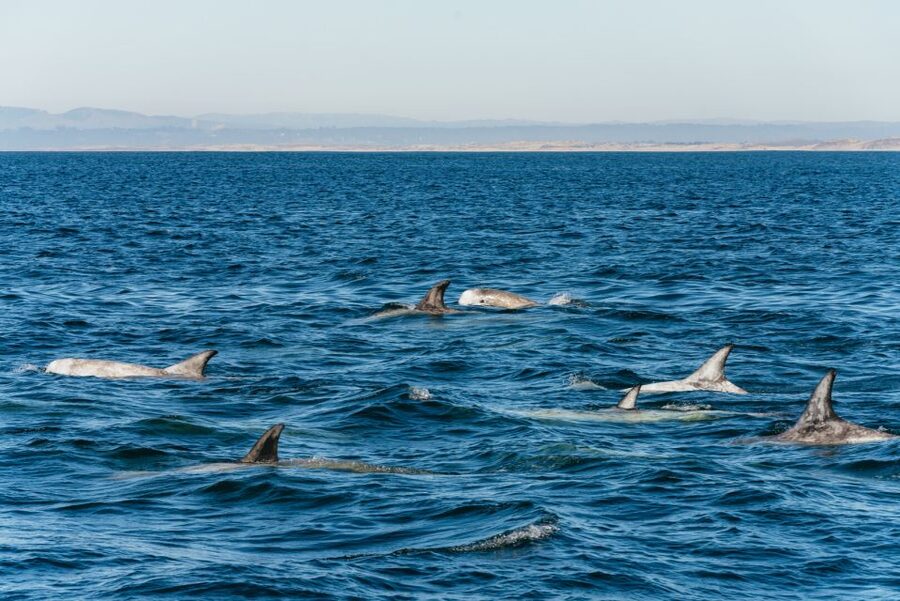
At $75 per person, this is not the cheapest way to spend a morning in Monterey. You are paying for three to four hours on the water, a captain and crew, a biologist guide, restroom access, and the chance to see animals that cannot be viewed reliably from land.
The value improves when you consider the small group. A boat with roughly 25 people gives you more room than a packed vessel and makes it easier to change sides when whales surface. The free hot beverages also help, though food is not included.
I would call the price fair for anyone who genuinely wants a whale-watching cruise. It is less compelling if you are only looking for a quick harbor ride or a guaranteed close-up photograph. The cost buys time and opportunity, not a fixed result.
The trip can run longer than planned when wildlife is active. That is good news for the experience but important for your schedule. Leave extra space afterward, especially if you have a dinner reservation, a long drive, or another timed activity.
Who will enjoy this cruise most
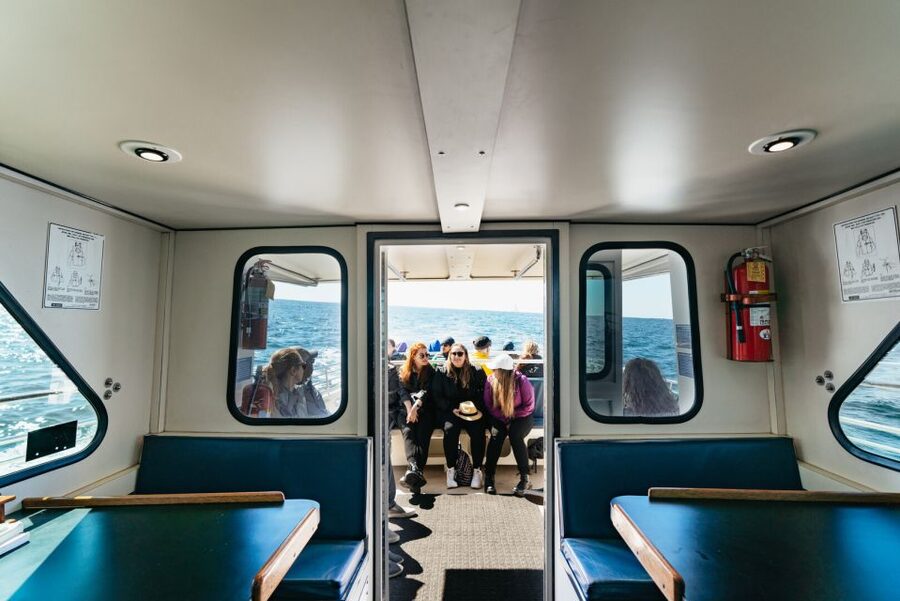
This tour suits families, couples, first-time whale watchers, and anyone interested in marine life. Children have enjoyed the combination of wildlife and friendly guides, and the free hot chocolate can be a small but welcome bonus.
It is also a good fit for photographers, although you should not expect every shot to be sharp. The boat moves, the animals surface briefly, and the light changes. Bring a camera if you want, but keep watching instead of spending the entire trip behind a screen.
The trip is less suitable if you dislike cold weather, cannot tolerate waves, or need step-free mobility. It is also not ideal for a tight itinerary. The most memorable sightings may happen late in the cruise, and the return time can vary with conditions.
The activity is conducted in English. If clear naturalist commentary matters to you, confirm that your group is comfortable following an English-speaking guide.
Booking and arrival advice
You can cancel up to 24 hours before departure for a full refund, and the reserve-now-pay-later option keeps your plans flexible. Check the available start times because the cruise length varies by season and departure.
Complete the coastguard waivers before arriving. Reach the office at least 45 minutes early, particularly if you need parking or have children in your group. Bring your own water and lunch if you want them, but keep the food small and practical for a moving boat.
Give yourself time at Old Fisherman’s Wharf before or after the cruise. The sea lions near the harbor are worth a look, and Cannery Row is close to the route. This makes the whale watch easy to pair with a broader Monterey waterfront day.
Should you book Discovery Whale Watch?
I would book this cruise if seeing whales in the wild is high on your Monterey list. The bay offers excellent odds, the boat size is sensible, and the guides add real value through clear explanations and good humor. Humpbacks are the most dependable target, but gray whales, blue whales, orcas, dolphins, otters, seals, and sea lions can all add surprises.
Book with realistic expectations. You may get breaching humpbacks, a feeding frenzy, or a rare orca encounter. You may also spend time scanning empty water in cold wind. Bring layers, prepare for motion sickness, protect a half-day in your schedule, and you will be ready for the kind of wildlife experience that cannot be repeated on demand.
FAQ
Where does the whale-watching tour depart?
The tour departs from Discovery Whale Watch at 66 Fisherman’s Wharf, Monterey, California.
How early should I arrive?
You should check in at least 45 minutes before departure, with the coastguard waivers completed.
How long is the cruise?
The cruise lasts between 3 and 4 hours depending on the option booked. Summer and fall morning tours usually last 3.5 to 4 hours. Winter morning tours and afternoon trips year-round generally last 2.5 to 3 hours.
What whales might I see?
Possible sightings include humpback, blue, fin, gray, and killer whales. Humpbacks are commonly seen during summer and fall, while winter trips may focus on migrating gray whales.
Can I see dolphins and sea lions too?
Yes. Dolphins, porpoises, sea lions, seals, and otters may also appear. Sea lions can often be seen near the harbor as the boat departs.
Is food included?
Food is not included. You may bring a small packed lunch and non-alcoholic beverages. Hot beverages are included, and food or drinks may be available for purchase onboard.
Are there restrooms on the boat?
Yes, restroom facilities are available on the vessel.
What should I bring?
Bring a passport or ID card, comfortable shoes, sunglasses, a sun hat, sunscreen, and layers for changing conditions. Motion sickness remedies are also worth considering if you are sensitive to boat movement.
Are dogs allowed onboard?
Friendly dogs are permitted on board. Smoking, alcohol, and drugs are not allowed.
Just added around California
- Malibu: Guided Vineyard Hike with Photo Stops and Wine★ 5.0 · 391 reviews
- Universal Studios Hollywood General Admission Ticket, California★ 4.0 · 1,489 reviews
- Guided Whale Watching Tour from Long Beach★ 4.5 · 335 reviews
- The Ultimate LA Tour: Full Day Sightseeing Tour On Electric Bike★ 5.0 · 478 reviews
- City Tour of Los Angeles, Hollywood and Beverly Hills★ 5.0 · 444 reviews
- The VIP Experience at Universal Studios Hollywood in California★ 4.5 · 551 reviews
- Skip the Line: Express Ticket at Universal Studios Hollywood★ 4.5 · 1,144 reviews
- Los Angeles Original 90-Minute Walking Tour to The Hollywood Sign★ 5.0 · 693 reviews
Monterey & Carmel Tours, compared.
Monterey, Carmel and 17-Mile Drive: Full Day Tour from SF
Read our review →
Monterey: Monterey Bay Dolphin and Whale Watching Boat Tour
Read our review →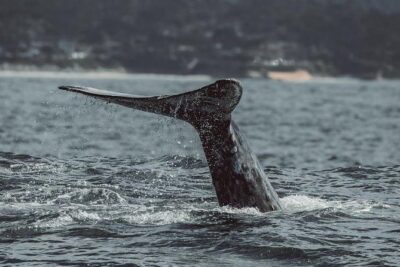
Monterey: Sunset Whale Watching Cruise with A Guide
Read our review →
From San Francisco: Monterey and Carmel Day Tour
Read our review →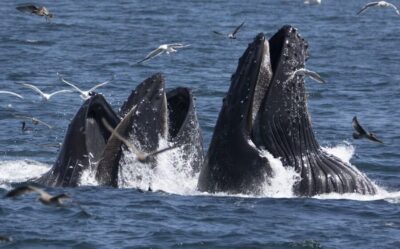
Monterey: Whale Watching Tour with A Marine Guide
Read our review →Browse the lists this tour appears in