
Reviewed · BIG ISLAND OF HAWAII
Big Island: Night Swim with Manta Ray with Hot Chocolate
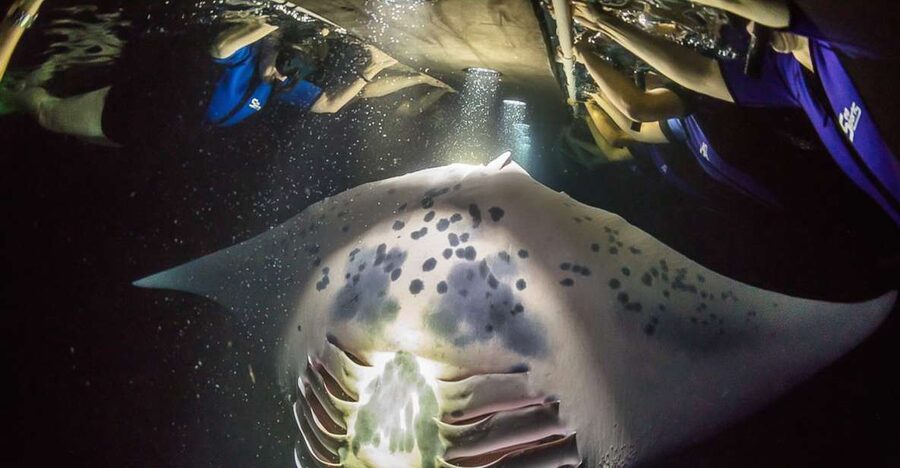
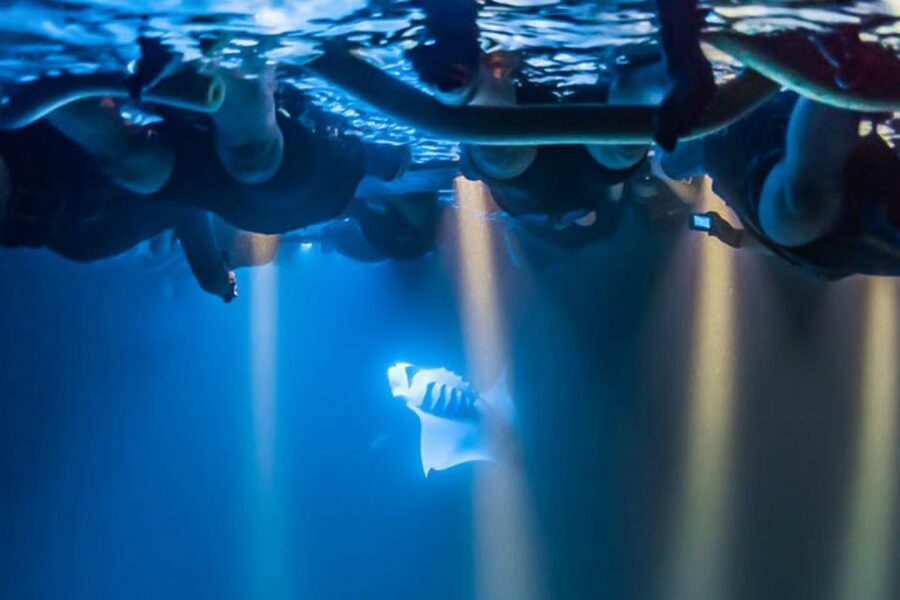
The best part of this 75-minute Kona night swim is the moment the first manta ray turns beneath the light raft. It may glide within inches of you, mouth wide open as it filters plankton from the water. The sight is strange, graceful, and far more powerful than a normal snorkel stop.
I like the short boat ride, which keeps the outing focused, and I like that wetsuits, flotation equipment, prescription masks, and hot chocolate are all provided. The main catch is simple: you must already be a capable swimmer and snorkeler. Holding the raft can tire your shoulders, and anyone prone to seasickness should consider taking medication before setting out.
Key points to know before booking
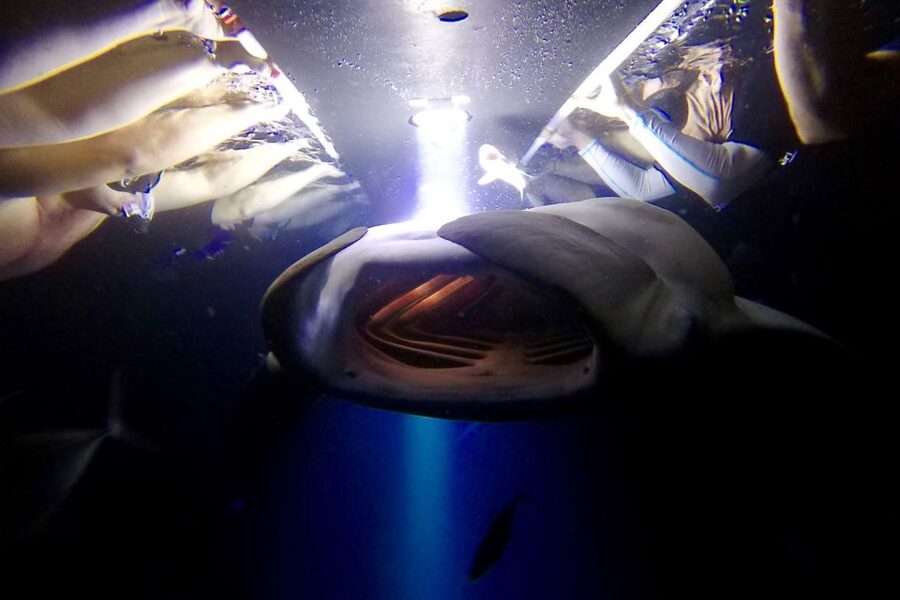
- The manta rays feed at arm’s length: Blue lights under the floating raft attract plankton, which brings the rays close beneath you.
- The outing leaves from Keauhou Bay: Check in at 78-7138 Kaleiopapa Street in Kailua-Kona, near one of the Big Island’s most reliable manta viewing areas.
- The water time can feel demanding: You hold onto the raft for much of the viewing period, so tired shoulders can shorten your time in the water.
- The crew handles the practical details: Sea Quest provides snorkel gear, Rx masks, wetsuits, flotation devices, and a safety briefing.
- Hot chocolate is more than a cute extra: After a night in the water, the warm drink and cookies are a welcome finish.
- Nature sets the schedule: If no manta rays appear, you can return another night or take a confirmed afternoon snorkel outing at no added cost.
Why Kona’s night manta swim feels so different
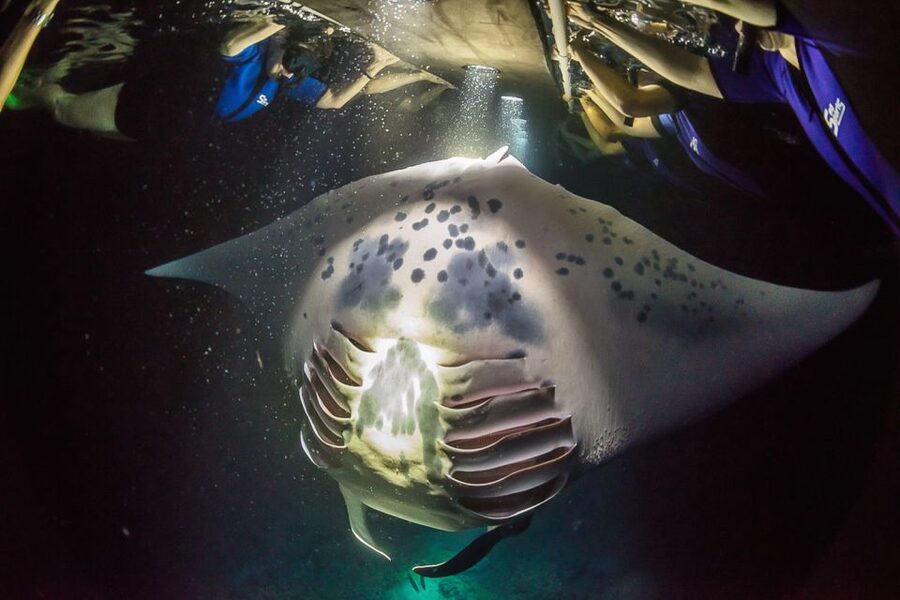
Kona’s manta encounters happen after sunset, when the ocean turns black and the light raft becomes the center of the action. The blue lights attract plankton, and the plankton attracts manta rays. You are not chasing the animals or trying to spot them from a distant boat. You hold onto the raft and watch them sweep below.
That feeding behavior creates the famous manta ballet. The rays make slow barrel rolls, passing under the lights with their broad fins spread wide. Several can circle the raft at once, though the number is never guaranteed. One outing may produce three rays, while another can bring six, ten, or even more.
I appreciate that the setup lets you watch without swimming after the animals. The manta rays come to the light on their own, and the guides explain how to stay still and keep the encounter safe for both you and the animals. You may see other fish and plankton in the illuminated water, but the rays are clearly the main event.
The location near the mouth of Keauhou Bay is important. It is known for steady manta activity, but steady does not mean certain. These are wild animals, and the operator cannot order them to appear. The return option helps take some of the risk out of paying for a nature-based outing.
More Manta Ray Snorkeling in the Big Island of Hawaii:
- Big Island Manta Ray Night Snorkel
★ 5.0 · 5,656 reviews - Big Island: Kona Manta Ray Snorkel Tour in Keauhou Harbor
★ 4.5 · 2,465 reviews - KONA Manta Ray Night Snorkel – FREE re-ride if no Sightings
★ 5.0 · 2,212 reviews
Check-in at Keauhou Bay and the short ride out
You check in at 78-7138 Kaleiopapa Street in Kailua-Kona. The fitting process is described as quick and organized, with the crew helping you select a wetsuit and prepare your snorkel equipment before departure.
The boat ride to the viewing site is short, around five minutes according to the trip details shared by participants. That matters if you are worried about spending a long time on a small boat at night. It also means most of your 75 minutes is tied to getting ready, reaching the raft, watching the manta rays, and returning, not cruising along the coast.
The captain and guides give a safety briefing before you enter the water. Pay attention here. You need to know how to hold the flotation ring or raft, where to place your body, and how to avoid kicking near the manta rays. The guides also explain that manta rays are harmless to people. They do not have teeth or a poisonous tail, but you still need to avoid touching or chasing them.
Some outings begin with a calm wait. The first ray may appear at a distance, then more arrive as the plankton gathers. Other times, the show begins almost at once. I would plan your expectations around the setting rather than a guaranteed number of rays.
What it is like to enter the water at night
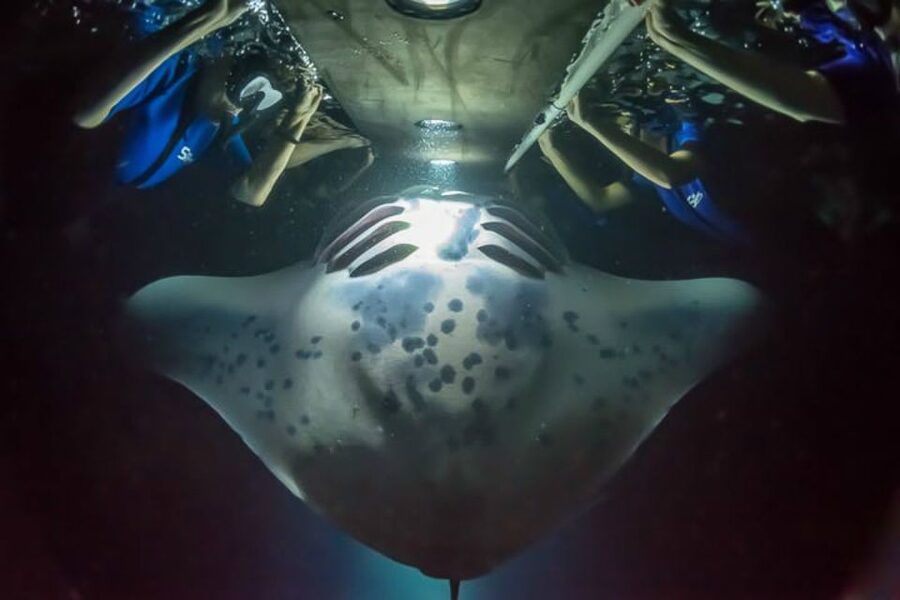
Night snorkeling can feel unnerving at first. You are floating in dark water with only the raft lights and the crew’s instructions to orient you. A wetsuit adds warmth, while flotation gear lets you keep your attention on the water instead of constantly working to stay afloat.
You will generally hold onto the floating raft and look down into the lit water. The method is simple, but it is not completely effortless. One person found that the position put strain on the shoulders, and another noted that staying on the raft required steady energy. If you are not used to snorkeling, the physical side may surprise you.
The tour is limited to experienced snorkelers and swimmers. That rule is worth taking seriously. This is not a first swimming lesson, and it is not designed for a non-swimmer who hopes to stay safely at the edge. Children under seven cannot join, and the activity is not suitable for wheelchair users or people with mobility impairments.
That said, the crew has helped nervous swimmers settle in. Several people described the staff as attentive during each stage, and one first-time snorkeler said the team was helpful and professional. If you are a confident swimmer but uneasy about the dark, the briefing and flotation gear should make the process more manageable. You still need to be comfortable entering the ocean and holding the raft.
The manta show beneath the blue lights
Once you are in position, the action is wonderfully simple. You look down. The light attracts plankton. A manta ray appears from the darkness, rises toward the raft, rolls beneath you, and disappears again.
The rays can come extremely close. Several people saw them pass within an inch, and some reported an occasional gentle brush against the body. That closeness is exciting, but do not reach out. The best viewing comes when you remain still and let the animals control the encounter.
A ray’s enormous mouth can look startling as it approaches. The animal is filtering plankton, not attacking anything. Its broad wings and slow turns make it look almost weightless, even though the size can be impressive at close range.
The guides add useful context while you watch. Michelle was praised for keeping the group safe and explaining the animals, while Kelsie was singled out for her clear information and upbeat approach. Guide quality matters here because the scene can be hard to interpret in the dark. A good guide tells you where to look, keeps the group settled, and explains what the animals are doing without filling every quiet moment with chatter.
Your viewing time may be around 20 to 40 minutes, depending on conditions, the group, and your own energy. If your shoulders become tired, tell the crew. One group spent less time in the water because of fatigue and was helped back aboard. That is a sensible choice, not a failure. The goal is to enjoy the animals without forcing yourself to remain uncomfortable.
A few more the Big Island of Hawaii days worth weighing up
- Big Island in a Day: Volcanoes Waterfalls Sightseeing and History
★ 5.0 · 6,569 reviews - Hilo Shore Excursion: Volcanoes National Park & Black Sand Beach
★ 4.5 · 2,338 reviews - Big Island: Captain Cook Snorkel On A Power Catamaran With Lunch
★ 5.0 · 2,232 reviews - Manta Ray Night Snorkel at Kona, Big Island
★ 5.0 · 1,758 reviews
How much manta action should you expect?
No honest tour review can promise a fixed number of rays. The setting is reliable, but wildlife remains unpredictable. You could see three, as one outing did, or watch six to nine animals circle the raft. Another group counted ten to fifteen after a slow start.
That range is part of the value and part of the risk. If your only acceptable outcome is a huge crowd of rays, you may find the price harder to justify. If you value the chance to watch wild animals in their own environment, even a smaller showing can still be worthwhile.
The operator offers a useful backup if no manta rays appear at all. You can return on another night at no additional cost, or take a confirmed afternoon snorkel trip instead. This does not solve every scheduling problem, but it protects you from paying for a completely empty outing.
Weather can also affect the plan. One group had its original trip moved because of lightning, and the rescheduling process was described as easy. Keep some flexibility in your Big Island plans, especially if this is one of the activities you most want to do.
Equipment, comfort, and the hot chocolate finish
The $146 price includes a guide, night swim, snorkel equipment, Rx masks, wetsuit, flotation devices, hot chocolate, and cookies. You need to bring swimwear and a towel. Transportation to the meeting point is not included, so arrange your own way to Keauhou Bay.
The equipment package improves the value for anyone who did not bring snorkeling gear. Prescription masks are especially useful if you normally wear glasses, though you should confirm the fit when you check in. The wetsuit also matters. Even in warm Hawaiian water, you can feel chilled after lying still for a long period at night.
The hot chocolate and cookies are a small but smart touch. You return to the boat after being wet and exposed to the night air, and the warm drink gives the trip a comfortable finish. It does not transform the price by itself, but it shows that the outing has been planned around how you will feel at the end, not only around the headline animal encounter.
At $146 per person, I would consider this a strong value if manta rays are high on your Big Island list. You are paying for a specialized nighttime setting, boat access, equipment, guides, and a wildlife opportunity that is difficult to arrange on your own. The value is weaker if you dislike open-water snorkeling, tire easily while holding a raft, or want a relaxed boat ride rather than an active water activity.
Who should book this outing?
This is best for a confident swimmer who enjoys unusual wildlife experiences and does not mind getting into the ocean after dark. It suits couples, families with older children, and solo visitors who want a tightly organized activity. One family group included ages from eight to 68 and enjoyed the outing, but the formal minimum age is seven and the swimming requirement still applies.
It can also work for a nervous beginner who is actually comfortable in the water. The crew has helped people manage first-time snorkeling and ocean anxiety. I would not book it for someone who cannot swim, struggles to hold onto a raft, or expects to stay dry.
The outing is less suitable for anyone with limited shoulder strength. Holding the raft for a sustained period can be tiring, even though you are not swimming continuously. If you are prone to motion sickness, take the concern seriously. The boat ride is short, but some people still felt seasick and had to return to the boat early.
Bring a towel, wear swimwear beneath the wetsuit, and leave room in your evening schedule for a possible delay caused by weather. The experience itself lasts 75 minutes, but you will enjoy it more if you arrive calm and unhurried.
Is the manta night swim worth $146?
I would book this tour if seeing manta rays close up is one of your Big Island priorities. The excellent viewing location, short ride, solid equipment package, attentive crew, and no-cost return option make the price easier to defend.
I would skip it if you are a non-swimmer, dislike nighttime water, or cannot comfortably hold onto a raft. Also remember that the number of manta rays can vary. Book for the quality of the opportunity, not a promise of ten animals.
For the right person, this can be the defining activity of a Kona stay. The scene is quiet, strange, and direct: you float under blue lights while enormous rays turn through the plankton-rich water. Then you climb aboard, drink hot chocolate, and try to explain what you just saw.
FAQ
Where does the manta ray night swim meet?
Check-in is at 78-7138 Kaleiopapa Street, Kailua-Kona, Hawaii 96740.
How long does the activity last?
The stated duration is 75 minutes.
How much does the tour cost?
The price is $146 per person.
What equipment is included?
The tour includes snorkel equipment, Rx masks, wetsuits, and flotation devices.
Is a guide included?
Yes. The activity includes a live English-speaking guide.
What should I bring?
Bring swimwear and a towel.
What happens if no manta rays appear?
You can return on another night at no additional cost, or take a confirmed afternoon snorkel outing at no added charge.
Can non-swimmers join?
No. The activity is limited to experienced swimmers and snorkelers, and non-swimmers cannot participate.
Is transportation included?
No. You need to arrange your own transportation to the meeting point.
Just added around the Big Island of Hawaii
- Hilo Shore Excursion: Active Volcano, Lava Tube, Waterfall and Gardens★ 5.0 · 393 reviews
- Volcano Adventure: Hilo Sightseeing w/ Optional Helicopter Tour★ 4.5 · 412 reviews
- Kealakekua Bay Snorkeling Tour – 4 hour Kona Zodiac Adventure★ 5.0 · 508 reviews
- Big Island, Hawaii: Volcanoes National Park Safari★ 4.5 · 545 reviews
- Whale Watching On The Big Island★ 5.0 · 573 reviews
- Zodiac Raft Whale Watching Adventure★ 5.0 · 456 reviews
- Hawaii Volcanoes, Waterfalls, Beaches & Hilo Highlights Day Tour★ 5.0 · 391 reviews
- Manta Ray Night Snorkel Tour in Kailua-Kona, Big Island★ 5.0 · 382 reviews
Big Island of Hawaii Tours, compared.
Big Island in a Day: Volcanoes Waterfalls Sightseeing and History
Read our review →
Kona Manta Ray Snorkel Tour in Keauhou Harbor
Read our review →
Hilo Shore Excursion: Volcanoes National Park & Black Sand Beach
Read our review →
Captain Cook Snorkel On A Power Catamaran With Lunch
Read our review →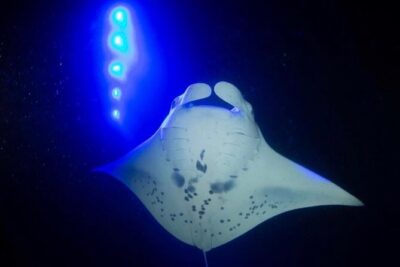
KONA Manta Ray Night Snorkel – FREE re-ride if no Sightings
Read our review →
Big Island GOAT Experience: Mauna Kea Summit, Sunset & Stars
Read our review →Browse the lists this tour appears in