
Reviewed · BIG ISLAND OF HAWAII
Big Island: Mauna Kea Summit and Stars Small-Group Adventure Tour
Mauna Kea gives you two great shows in one evening: sunset above the clouds and a night sky crowded with stars. Hawaii Forest & Trail takes you up in a custom 4×4 van, serves a hot picnic dinner, and sets up an 11-inch Celestron telescope plus a digital astronomy scope.
I like the care given to altitude and cold. Guides such as Jeff, Jason, Wilson, and Eugene keep the pace gentle, explain Hawaii’s geology, culture, and star navigation, and repeatedly check that everyone is comfortable. I also like the move back down to about 9,000 feet for stargazing, where the air is easier on your body than at the summit. The drawback is simple: this is a long, cold, sometimes bumpy evening, and clouds can hide the stars.
Key points to know before booking

- Sunset from roughly 13,000 feet: Watch the Pacific and nearby Maui from above the clouds.
- Two telescope experiences: Use an 11-inch Celestron telescope and a Stellina digital scope for views of stars, planets, and deep-space objects.
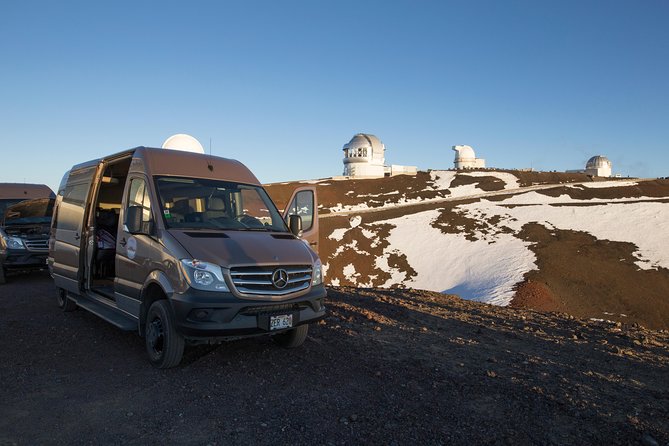
- Small group transport: A custom 4×4 transit van carries no more than 12 people over Mauna Kea’s rough access road.
- Dinner before the summit: Eat a hot picnic meal at the visitor station while your body adjusts to the altitude.
- Cold-weather gear included: Hooded parkas and gloves are provided, though warm layers still matter.
- A serious altitude outing: The trip is not suitable for pregnancy, heart or circulation problems, respiratory conditions, or poor health.
Why Mauna Kea is such a powerful night out
This outing works because it is not just a drive to a viewpoint. You get a gradual change from coastal Hawaii to the high volcanic slopes, then from daylight to darkness.
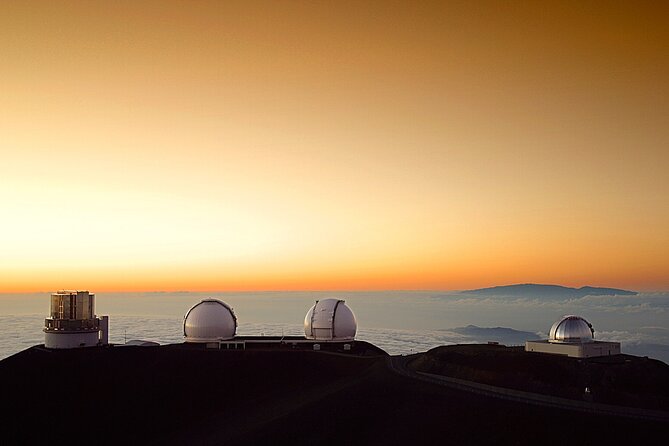
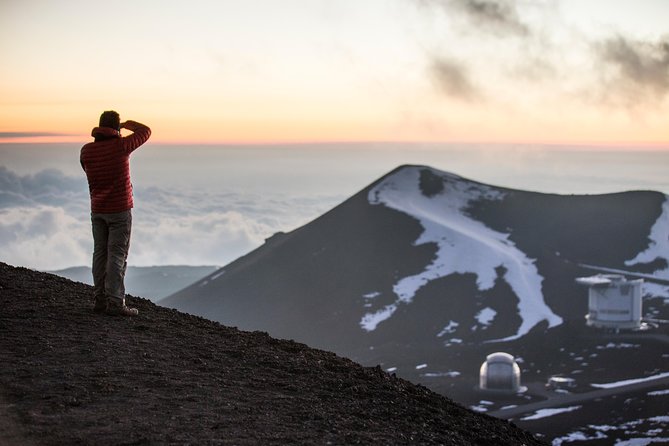
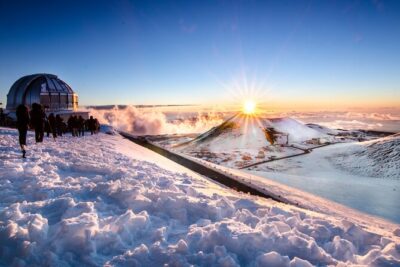
At the top, the Pacific stretches below you and the clouds often form a white blanket beneath the summit. The sunset can be brief, so you want to have your camera ready before the colors begin to change. Clear weather may reveal Maui, a view you cannot get from the Big Island’s beaches or ordinary scenic stops.
After sunset, the group returns to a lower elevation for the main star show. That change matters. The summit is colder and the thin air can make even simple walking feel harder. Around 9,000 feet, you still get a dark sky but with a little more comfort. The guides bring out the telescopes, point out constellations, and explain what you are seeing rather than leaving you to stare at a patch of darkness.
The tour has earned a 4.8 rating from 1,545 ratings, with 97 percent recommending it. That fits the experience described here: the strongest part is the combination of careful driving, strong guide work, warm food, proper clothing, and access to astronomy equipment that you are unlikely to have on your own.
A few more the Big Island of Hawaii days worth weighing up
- Big Island in a Day: Volcanoes Waterfalls Sightseeing and History
★ 5.0 · 6,569 reviews - Big Island Manta Ray Night Snorkel
★ 5.0 · 5,656 reviews - Big Island: Kona Manta Ray Snorkel Tour in Keauhou Harbor
★ 4.5 · 2,465 reviews
Starting in Kona and heading toward the mountain
Pick-up for people staying in Kailua-Kona is at the Courtyard by Marriott King Kamehameha’s Kona Beach Hotel, at the benches near the parking-lot entrance. There can be other central pick-up points along the way, and the actual pick-up time can differ from the tour start time shown during booking.
The trip takes about eight hours, so this is not a quick evening excursion. That length is useful because the group needs time to drive from the coast, eat, adjust to altitude, reach the summit, descend, and set up the telescopes.
The 4×4 van is an important part of the experience. Mauna Kea’s upper access road requires four-wheel drive and can be bumpy. You are not trying to navigate it in an unfamiliar rental vehicle, and your guide can focus on the road, weather, and altitude rather than leaving you to manage the mountain yourself.
The vans can carry up to 12 people. That is small enough for a personal feel, but not private. You will spend a good part of the evening sitting close to the same group, so this suits you if you like shared outings and conversation more than complete solitude.
A warm meal and a slower climb at the visitor station
The first main stop is the Maunakea Visitor Information Station. You receive a hot picnic dinner here while your body adjusts before the final climb.
The meal is practical rather than fancy, but that is exactly what you want on a cold mountain. Chicken stew has been especially well received, and a vegetarian, gluten-free choice is available. You need to provide your meal preference when booking. If you forget, contact the operator directly.
This stop also gives your guide room to explain Hawaiian star navigation, the mountain’s volcanic setting, and the cultural importance of the islands. Guides including Jeff, Jason, Wilson, and Eugene have been praised for explaining astronomy, geology, history, and ecology in a way that makes the drive feel purposeful.
Allow yourself time for the restroom and information center. The meal period is about 45 minutes, and it can feel short once you eat, use the facilities, and look around. Go to the restroom early if needed, since the women’s line can be long.
Altitude is not a minor footnote here. Guides remind you to breathe slowly and take the climb at an easy pace. You should bring your own water bottle, while filtered refill water is provided. Do not treat the dinner stop as a chance to rush around. Sit, eat, drink, and let your body catch up.
Sunset above the clouds at the Mauna Kea summit
The van continues toward the summit after the acclimation stop. This is where the road gets rougher and the cold becomes more serious.
The summit elevation is around 13,000 feet, and the thin air can affect people differently. You may feel short of breath, lightheaded, or simply less energetic than usual. The tour is not suitable for people with respiratory, circulatory, or heart conditions, pregnancy, or poor health. Anyone planning to scuba dive must wait at least 24 hours before going to the summit because of the altitude.
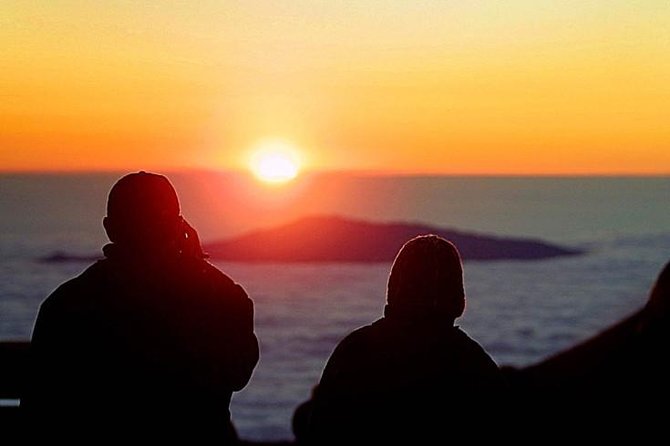
At the summit, you watch the sun drop toward the Pacific from high above the clouds. The actual sunset stop is listed as about 30 minutes, so use the time well. Take pictures, look toward Maui, and listen as your guide points out the mountain’s geology and the islands below.
You will need closed-toe shoes and long pants. Bring a sweatshirt or sweater for layering, along with a warm hat if you have one. The provided hooded parka and gloves are welcome, but they do not replace sensible clothing. Wind can make the summit feel much colder than the temperature suggests.
Snow is seasonal, with the heaviest snow in winter. Weather can also bring fog, mist, clouds, or rain. You cannot control the sky, and the trip can still have value when the stars are hidden because the sunset, mountain drive, and guide’s explanation remain. Still, book this for astronomy only if you can accept the chance of limited visibility.
A different sort of day out, same corner of the Big Island of Hawaii:
- Hilo Shore Excursion: Volcanoes National Park & Black Sand Beach
★ 4.5 · 2,338 reviews - Big Island: Captain Cook Snorkel On A Power Catamaran With Lunch
★ 5.0 · 2,232 reviews - KONA Manta Ray Night Snorkel – FREE re-ride if no Sightings
★ 5.0 · 2,212 reviews - Manta Ray Night Snorkel at Kona, Big Island
★ 5.0 · 1,758 reviews
The star show at about 9,000 feet
After the sunset, the group descends to a more comfortable viewing area near the visitor station. This is the smart part of the evening. You get away from the summit’s strongest cold and some of its altitude effects while staying high enough for a very dark sky.
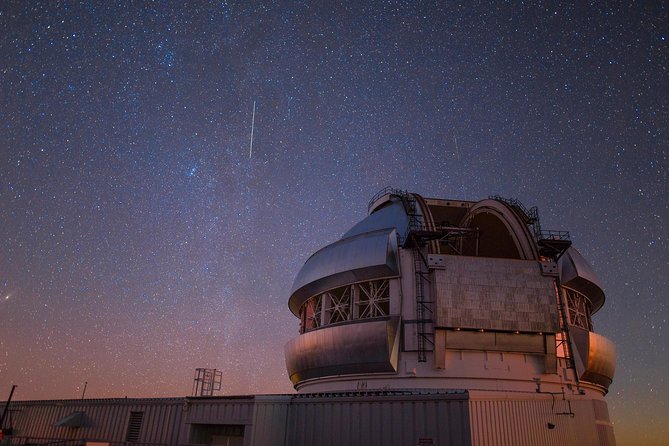
The private star show uses an 11-inch Celestron telescope. The guide may show you planets, stars, and deep-space objects, depending on the season and conditions. A Stellina digital telescope adds another useful feature: it can capture images of the night sky for you to share with family and friends.
This is more satisfying than simply looking up and seeing a field of stars. The guide gives the sky a structure. You learn what you are looking at, how Hawaiian navigators used stars, and how the visible sky changes with the season. Guides such as Jason have been praised for their enthusiasm for astronomy, while Jeff and Wilson have been singled out for pairing star knowledge with careful attention to safety.
The moon phase can shape the experience. A moonless night, especially one close to a new moon, gives the Milky Way and faint stars a better chance to show. Even so, clear skies are never guaranteed. Clouds may move in and out, giving you short windows of stars rather than a perfect view all night.
Hot chocolate and cookies arrive after the temperature drops. It is a small touch, but on a dark mountain it feels well judged. The food, warm drink, parka, and gloves turn the second half from an endurance test into something you can enjoy for longer.
What the guides add to the experience
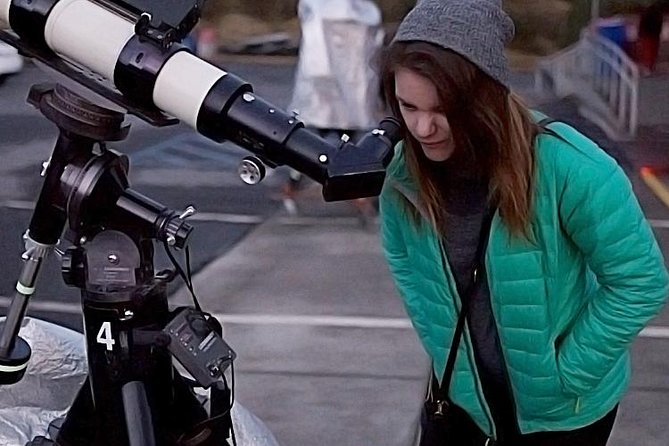
The guide can make or break a mountain trip, and this one depends heavily on that person. The strongest guide reports describe Jeff, Jason, Wilson, and Eugene as careful drivers and clear teachers.
That means more than listing facts. A good guide watches the group for signs of altitude trouble, keeps people moving at a safe pace, answers questions, and adjusts the tone when the weather changes. One guide may spend more time on volcanoes, another on astronomy, and another on Hawaiian culture and navigation.
You also get a driver who knows when the road deserves full attention. The ride can be bumpy, and the upper road is not the place for a casual self-drive experiment. A rental 4×4 may appear cheaper at first, but it does not provide a trained driver, telescopes, warm gear, dinner, or someone monitoring the group’s condition.
Guides sometimes provide photos or help with night-sky images. That is not listed as a guaranteed inclusion, so treat it as a pleasant possibility rather than part of the contract.
Price, group size, and overall value
At $329.84 per person, this is an expensive evening. You are paying for transport from Kona, a custom 4×4 vehicle, a guide, dinner, parkas, gloves, hot cocoa, cookies, telescope access, and roughly eight hours of staff time.
The value improves if you would otherwise rent a four-wheel-drive vehicle and attempt the mountain yourself. Self-driving may remove the tour price, but it also leaves you responsible for the road, altitude, weather, clothing, meal, and astronomy equipment. The tour puts those pieces together and removes much of the planning.
A maximum of 12 people keeps the group from becoming a large coach outing. It does not guarantee a quiet or private experience, but it should give you more access to the guide than a big bus tour. If the price strains your budget, you need to decide how important the summit and telescopes are to your Big Island visit. For a casual sunset, there are cheaper choices. For a guided high-altitude astronomy evening, the fee is easier to justify.
The booking pattern also matters. The outing is often reserved about 68 days ahead, so popular dates can disappear well before arrival. Free cancellation is available up to 24 hours before the start time. If poor weather or insufficient numbers cancel the trip, you receive a different date or a full refund.
Who should book this Mauna Kea evening
I would choose this tour if you want a well-organized introduction to Mauna Kea without handling the drive yourself. It suits couples, friends, and families with children aged 13 or older who can manage a long day, cold temperatures, and high altitude.
It is especially good for you if astronomy is new to you. The telescopes and guide turn the sky into something understandable, not just beautiful. It also suits repeat Hawaii visitors who want a different side of the Big Island beyond beaches and resort towns.
I would hesitate if you dislike long van rides, rough roads, tight schedules, or cold weather. I would also avoid it if you have a medical condition affected by altitude, or if you are pregnant. Bring layers even if the coast feels warm when you leave. The mountain is a different world.
My recommendation
Book this tour if you want the safest and simplest way to combine a summit sunset with serious stargazing. The best reasons are the careful altitude planning, the move down to 9,000 feet for comfort, the two telescope systems, and guides such as Jeff, Jason, Wilson, and Eugene who bring real subject knowledge to the night.
Just keep your expectations realistic. Weather can close the stars, the road can jolt you, and the summit can leave you short of breath. If you accept those limits, the sunset above the clouds and the sight of a truly dark Hawaiian sky can make this one of the most memorable nights on the Big Island.
FAQ
How long does the Mauna Kea summit and stargazing tour last?
The experience lasts approximately eight hours, including transport, dinner, the summit sunset, descent, and stargazing.
Where is pick-up provided?
People staying in Kailua-Kona meet at the Courtyard by Marriott King Kamehameha’s Kona Beach Hotel, at the benches closest to the parking-lot entrance. Additional central meeting points may be used.
How many people can join the tour?
The maximum group size is 12 people.
What food is included?
A hot picnic dinner is provided at the Maunakea Visitor Information Station. Hot cocoa and cookies are served during the star show. You must provide your meal choice when booking.
Is a vegetarian meal available?
Yes. A vegetarian option is available, and it is also gluten-free according to the supplied tour information.
What clothing should I bring?
You must wear closed-toe shoes and long pants. Bring a sweatshirt or sweater for layering. Hooded parkas and gloves are supplied, and a warm hat is also a sensible addition.
Do I need to bring water?
Yes. Bring your own water bottle. Filtered water refills are provided during the experience.
Is the tour suitable for children?
The minimum age is 13. Children under 13 cannot join the tour.
Can I scuba dive before taking this tour?
You should not go to the Mauna Kea summit within 24 hours after scuba diving because of the altitude.
What happens if the weather is poor?
If bad weather cancels the experience, you are offered another date or a full refund. The same applies if the minimum number of participants is not reached.
Just added around the Big Island of Hawaii
- Hilo Shore Excursion: Active Volcano, Lava Tube, Waterfall and Gardens★ 5.0 · 393 reviews
- Volcano Adventure: Hilo Sightseeing w/ Optional Helicopter Tour★ 4.5 · 412 reviews
- Kealakekua Bay Snorkeling Tour – 4 hour Kona Zodiac Adventure★ 5.0 · 508 reviews
- Big Island, Hawaii: Volcanoes National Park Safari★ 4.5 · 545 reviews
- Whale Watching On The Big Island★ 5.0 · 573 reviews
- Zodiac Raft Whale Watching Adventure★ 5.0 · 456 reviews
- Manta Ray Night Snorkel Tour in Kailua-Kona, Big Island★ 5.0 · 382 reviews
- Snorkel with Manta Rays Guaranteed★ 5.0 · 738 reviews
Big Island of Hawaii Tours, compared.
Big Island in a Day: Volcanoes Waterfalls Sightseeing and History
Read our review →
Kona Manta Ray Snorkel Tour in Keauhou Harbor
Read our review →
Hilo Shore Excursion: Volcanoes National Park & Black Sand Beach
Read our review →
Captain Cook Snorkel On A Power Catamaran With Lunch
Read our review →
KONA Manta Ray Night Snorkel – FREE re-ride if no Sightings
Read our review →
Big Island GOAT Experience: Mauna Kea Summit, Sunset & Stars
Read our review →Browse the lists this tour appears in