

Reviewed · BOSTON
Boston’s Freedom Trail: A Revolutionary Walking Tour
Boston’s Freedom Trail is more than a line of red markers through the city. It is a walk through the places where protest, politics, religion, commerce, and violence pushed colonial Boston toward revolution. This tour covers all 16 official sites in about two and a half hours, from the golden-domed Massachusetts State House to the USS Constitution and Bunker Hill Monument.
I like two things here. First, your guide connects famous names such as Paul Revere, John Hancock, and Samuel Adams with less familiar stories about women, African Americans, immigrants, abolitionists, and education. Second, guides such as Rob, Kenneth, Alissa, Charlie R, and Matthew are known for mixing solid history with humor and quick answers. The main drawback is pace: covering the entire trail in one outing means plenty of walking and limited time at each place.
Key points to know before you book
- All 16 official sites in one route: You see the full Freedom Trail, including Park Street Church, Faneuil Hall, the Paul Revere House, Old North Church, the USS Constitution, and Bunker Hill Monument.
- A guide-led history lesson: The tour turns familiar landmarks into connected stories about rebellion, immigration, abolition, and Boston’s changing civic life.
- Mostly an outdoor sightseeing experience: Attraction admission is not included, so expect to view the sites and hear their stories rather than receive an inside tour of every building.
- A lively presentation style: Dad jokes, anecdotes, and questions help keep the history moving, especially with guides such as Rob, Kenneth, Alissa, Charlie R, and Matthew.
- A real city walk: Wear comfortable shoes, bring water, and prepare for two and a half hours on foot.
- A useful first-day orientation: The route gives you a broad sense of central Boston and helps you decide which sites deserve a later, slower visit.
Starting beneath Boston’s golden dome
Meet your guide at The Embrace statue on Boston Common, next to the Visitor’s Center at 139 Tremont Street. The guide will not wear a period costume. Instead, look for a flag bearing the Boston History Company name.
That simple meeting point matters. Boston Common is central, easy to recognize, and a practical place to begin if you are still learning the city. It also sets up the tour’s main theme: Boston’s past is not confined to one museum. It is spread through streets, churchyards, civic buildings, meeting halls, and waterfront locations.
The tour begins with the Massachusetts State House and its famous golden dome. The building is not one of the 16 official Freedom Trail stops listed for the route, but its appearance helps frame Boston’s political center. You get an early reminder that the city’s revolutionary story did not end in 1776. The same streets remain tied to government and public life.
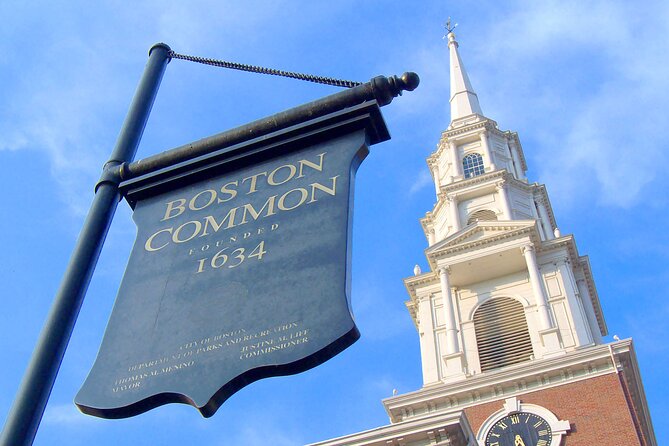
From here, you move toward Park Street Church. Its steeple is especially important because it is associated with the lantern signal that warned Paul Revere and William Dawes that British troops were moving by land or sea. The tour uses this setting to explain the famous Midnight Ride without reducing it to a single heroic tale.
More Walking Tours in Boston
- Boston: Freedom Trail History Small Group Walking Tour
★ 5.0 · 6,450 reviews - Cambridge: Harvard University Student-Guided Walking Tour
★ 4.6 · 3,931 reviews - Harvard University Campus Guided Walking Tour
★ 4.5 · 3,632 reviews
Park Street Church and Granary Burying Ground
Park Street Church gives you one of the trail’s most recognizable views. The steeple rises above the Common, and the site helps place the lantern story in the physical setting of Boston rather than leaving it as a picture-book legend.
Next comes Granary Burying Ground, one of the key stops for anyone interested in the people who shaped the revolutionary period. John Hancock, Paul Revere, and Samuel Adams are among those buried here. You should expect to pause at the cemetery and hear how these men fit into Boston’s political story.
The value of a guided stop here is context. A list of famous names can make the Revolution feel like the work of a few celebrated men. A good guide explains the relationships, rivalries, and public causes behind those names. The tour also makes room for stories involving women, African Americans, and immigrant communities, which gives the cemetery a wider human meaning.
The drawback is that a group moving through a historic cemetery cannot give every marker equal attention. If you want a close study of individual graves or inscriptions, plan to return on your own.
King’s Chapel, Franklin, and Boston’s early book trade
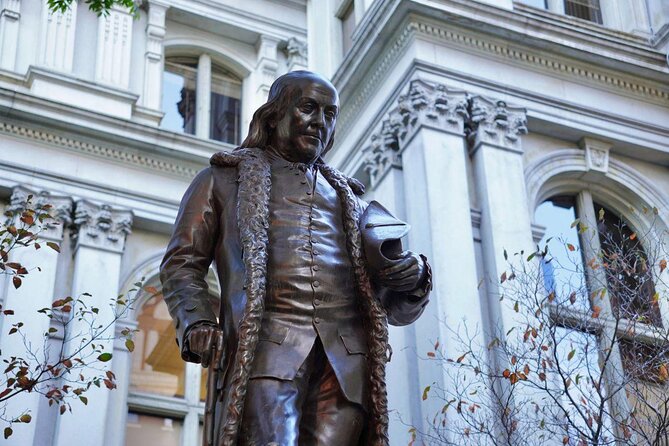
The route continues to King’s Chapel, another place where Boston’s religious and political changes come into view. You also see the Benjamin Franklin Statue and the Old Corner Bookstore.
These stops help broaden the tour beyond battles and protests. Franklin’s presence points to printing, public debate, and education. The Old Corner Bookstore recalls the city’s long connection with publishing and the spread of political ideas. In revolutionary Boston, words mattered. Pamphlets, speeches, newspaper reports, and public meetings helped turn local anger into organized opposition.
You will not be buying an admission ticket to each place as part of this tour. Entry tickets are not included, so the experience works best as a guided outdoor overview. That is useful if you have limited time or want an introduction before choosing which interiors to visit later.
The guide’s delivery makes a difference here. Kenneth is praised for answering questions and for offering practical suggestions about other areas, restaurants, and bars in Boston. That kind of local conversation can make these shorter stops more useful, especially if you are using the walk to plan the rest of your visit.
Old South Meeting House and the Boston Massacre Site
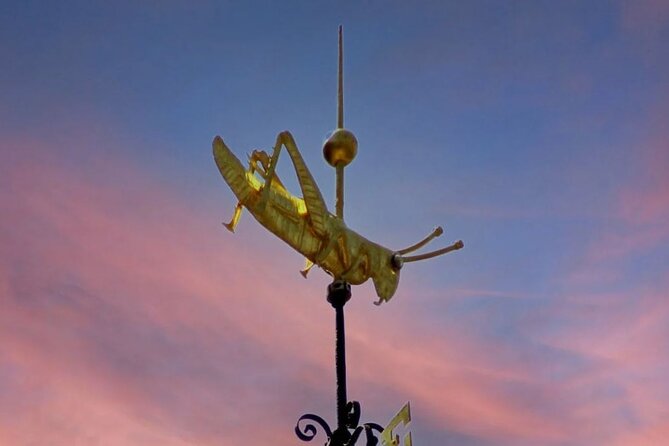
At the Old South Meeting House, the story turns toward the Boston Tea Party. This was where large public gatherings took place, and the site helps explain how colonial residents debated British policies in front of crowds.
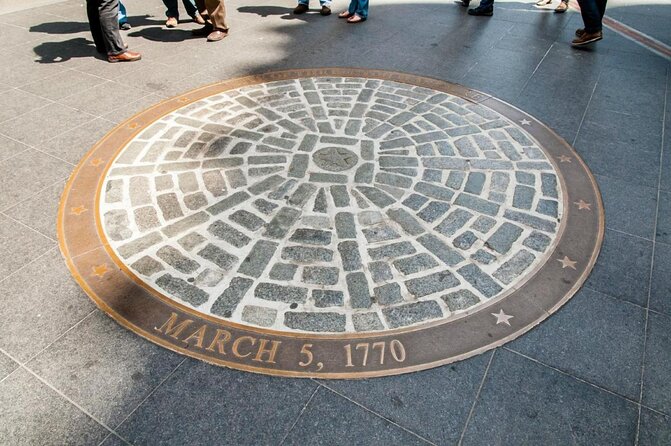
The tour then reaches the Old State House and the Boston Massacre Site. These are among the most important places on the entire walk because they show how political tension became street violence and then public outrage.
The Boston Massacre was not simply a violent incident remembered in isolation. It became a powerful piece of political messaging. The location allows the guide to explain how the event was presented to the public and why it helped sharpen resistance to British authority.
The Old State House adds another layer. You are looking at a building tied to government, law, and public power, while just outside it you encounter one of the best-known flashpoints of the prewar period. I like this section because the buildings are close together, yet each tells a different part of the story.
A guide can also help you avoid a common mistake: treating the Revolution as a clean march from protest to independence. The stories here show confusion, competing loyalties, fear, and disagreement. That makes the past more believable.
More Freedom Trail Tours in Boston:
- Boston Freedom Trail Walking Tour with Costumed Guide
★ 4.5 · 2,531 reviews - Boston Food & History: Pizza, North End & Freedom Trail
★ 5.0 · 1,772 reviews - Boston: Freedom Trail History Small Group Walking Tour
★ 4.9 · 1,590 reviews - Boston’s Freedom Trail: A Revolutionary Walking Tour
★ 5.0 · 1,343 reviews
Faneuil Hall and the public voice of Boston
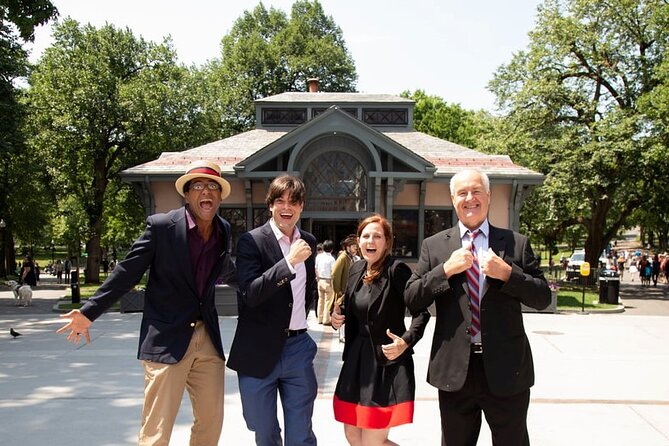
Faneuil Hall is one of the tour’s most familiar stops. It is linked with public meetings and the tradition of political speech that earned it the nickname Cradle of Liberty.
This is a good place to listen for the connection between public space and political action. Boston’s revolutionary movement depended on people gathering, arguing, persuading, and spreading news. Faneuil Hall represents that public side of the conflict.
The stop can also be busy and noisy, since Faneuil Hall sits in a well-used part of central Boston. Your guide may need to project their voice and keep the group together. Still, the setting is valuable because you see the historic site in the middle of the city rather than behind a museum barrier.
If your main goal is a quiet, detailed look inside each building, this tour may feel fast. If your goal is to understand how the sites connect, the pace works better.
Paul Revere House and the North End
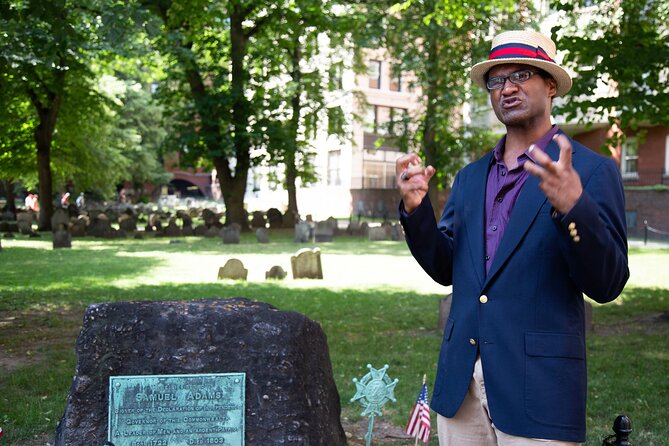
The tour moves into Boston’s North End for the Paul Revere House. Revere is one of the best-known figures on the trail, but the guide places him within a wider network of families, tradespeople, political organizers, and immigrant communities.
That wider frame is important. Paul Revere was not only a rider in a famous story. He was part of a working city shaped by craft, commerce, family life, and political conflict. The house gives you a personal point of contact with that world.
The route then reaches Old North Church, recognized for the lantern signal connected with the Midnight Ride. The church steeple is among the most memorable sights on the walk. You get both the physical landmark and the story behind the signal.
This is also a point where the route’s length becomes clear. The North End adds character and historic detail, but it requires more walking through city streets. Comfortable shoes are not a minor suggestion. They are essential.
Copp’s Hill, the USS Constitution, and Bunker Hill

Copp’s Hill Burying Ground brings the tour to another cemetery with strong links to Boston’s colonial and revolutionary period. Like Granary Burying Ground, it gives you a place to think about ordinary lives alongside famous names.
The route continues toward the USS Constitution. Seeing the ship is a highlight for many people because it shifts the story from Boston’s streets to the wider military conflict. The ship represents the young United States at sea and adds a naval dimension to a tour that has mostly followed political events on land.
Finally, you reach the Bunker Hill Monument. The monument marks the Battle of Bunker Hill, one of the early major clashes of the American Revolution. The site gives the walk a strong closing image: the movement from arguments, meetings, and street violence to open war.
The tour includes the USS Constitution and Bunker Hill Monument in the overall route, but entry tickets to attractions are not part of the $31 price. You should think of this as a guided walk past and around the official sites, not a package of museum admissions.
There is also a practical point to confirm before booking. The information describes the tour as wheelchair accessible, but it also says it is not suitable for people with mobility impairments. Since this is a long city walk, contact the operator directly if you need specific assistance or have concerns about distance and access.
How the guides shape the experience
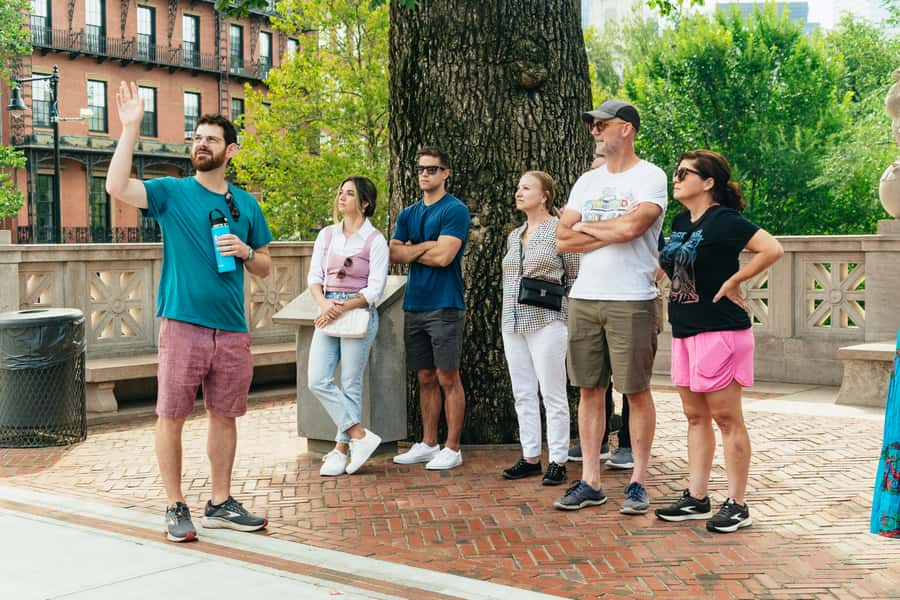
A history walk rises or falls on its guide, and this tour puts that guide at the center. The strongest pattern in the guide feedback is clear delivery, humor, enthusiasm, and the ability to answer questions.
Rob is described as engaging and well prepared. Kenneth combines local suggestions with an easy conversational style. Alissa keeps the group involved for the full two and a half hours, while Charlie R is praised for detailed stories and a strong presentation. Matthew is noted for weaving stories into the places along the route, though his fast English may be difficult for some people who are not native speakers.
Other named guides include Stuart, Noah, Malcolm, Jim, Sam, Jules, Megan, and Julia. Their styles may differ, so you should not expect a completely identical tour every time. That variation is normal for a live walking experience, and it is also why the guide matters so much.
The tone is not a formal lecture. Expect stories about rebels, gangs, Midnight Riders, and civic change, with a few inexpensive dad jokes along the way. That may not suit you if you want a quiet academic talk. For most people, the humor helps keep a long history walk from becoming a list of dates.
What $31 gets you

At $31 per person, the tour offers good value if you want a clear introduction to Boston’s major historic sights. You see all 16 official sites with a live English-speaking guide, and you avoid the time and confusion of piecing the route together yourself.
The value is strongest for first-time visitors, people on a short stay, and anyone using Boston as a layover stop. One participant managed to fit the tour into a Boston layover, which shows how useful the fixed two and a half hour length can be when your schedule is tight.
You are paying for interpretation, route planning, and company, not admission to historic buildings. If you plan to visit several interiors, budget separately for those tickets. The tour can then serve as your orientation, helping you choose where to spend more time.
You can reserve now and pay later, and cancellation is free up to 24 hours before the activity for a full refund. Starting times vary, so check availability when you book.
Who should take this walk?
I would choose this tour if you want the big picture first. It suits adults, families with older children, history fans, and visitors who prefer stories to silent plaques.
It is also a good choice for a staycation in Boston. Even if you already live in the area, a guide can connect familiar streets with facts you have never heard. One local group learned new details after living in Boston for years.
You may want a different plan if you dislike walking, need a slow pace, or want extended time inside each building. The tour covers a lot of ground, and two and a half hours leaves little room for lingering.
Bring water and dress for comfort. Video recording is not allowed. The tour is conducted in English, and the route ends back at the meeting point, according to the supplied tour details.
Should you book Boston’s Freedom Trail tour?
Book it if you want one efficient, lively introduction to Boston’s Revolution-era sites. The full route, the $31 price, and guides such as Rob, Kenneth, Alissa, Charlie R, and Matthew make it a practical first look at the city.
Do not book it expecting a museum visit at every stop or a slow examination of every historic room. You will walk, listen, and keep moving. For many people, that is exactly the point: after this tour, Boston’s streets make more sense, and you can return to the sites that caught your interest.
FAQ
Where does the tour begin?
Meet your guide at The Embrace statue beside the Visitor’s Center on Boston Common, at 139 Tremont Street. Look for a flag with the Boston History Company name.
How long is the Freedom Trail tour?
The tour lasts two and a half hours. Starting times vary, so check availability when booking.
Does the tour visit all 16 Freedom Trail sites?
Yes. The route covers all 16 official sites, including Faneuil Hall, the Paul Revere House, Old North Church, the USS Constitution, and Bunker Hill Monument.
Are attraction entry tickets included?
No. The price includes the live guide and walking tour, but attraction admission tickets are not included.
What language is the tour conducted in?
The live tour is conducted in English.
Can I cancel the tour for a refund?
Yes. You can cancel up to 24 hours in advance for a full refund.
Just added around Boston
- Boston’s Freedom Trail: A Revolutionary Walking Tour★ 5.0 · 1,343 reviews
- Delicious Donuts of Boston: A Sweet History Walking Tour★ 5.0 · 1,038 reviews
- Narrated Sunset Cruise of Boston Harbor★ 4.0 · 532 reviews
- Sunset Sailing Cruise on a Tall Ship in Boston Harbor★ 4.5 · 414 reviews
- Freedom Trail Walking Tour 250★ 4.5 · 1,118 reviews
- Boston’s North End Food and History Walking Tour★ 5.0 · 459 reviews
- Boston North End Food Tour of 6+ Tastings, Cannoli, Lobster Roll★ 5.0 · 1,404 reviews
- Boston’s North End Food Tour: Italian Flavors & Heritage Walk★ 5.0 · 1,322 reviews
Boston Tours, compared.

Boston Duck Boat Sightseeing City Tour with Cruise Along Charles River
Read our review →
Freedom Trail History Small Group Walking Tour
Read our review →
Boston Hop-On Hop-Off Trolley Tour with 13 Stops
Read our review →

Boston Duck Tour: The Original and World-Famous
Read our review →
Cambridge: Harvard University Student-Guided Walking Tour
Read our review →
Harvard University Campus Guided Walking Tour
Read our review →
Boston Fenway Park: Guided Ballpark Tour with Options
Read our review →Browse the lists this tour appears in