
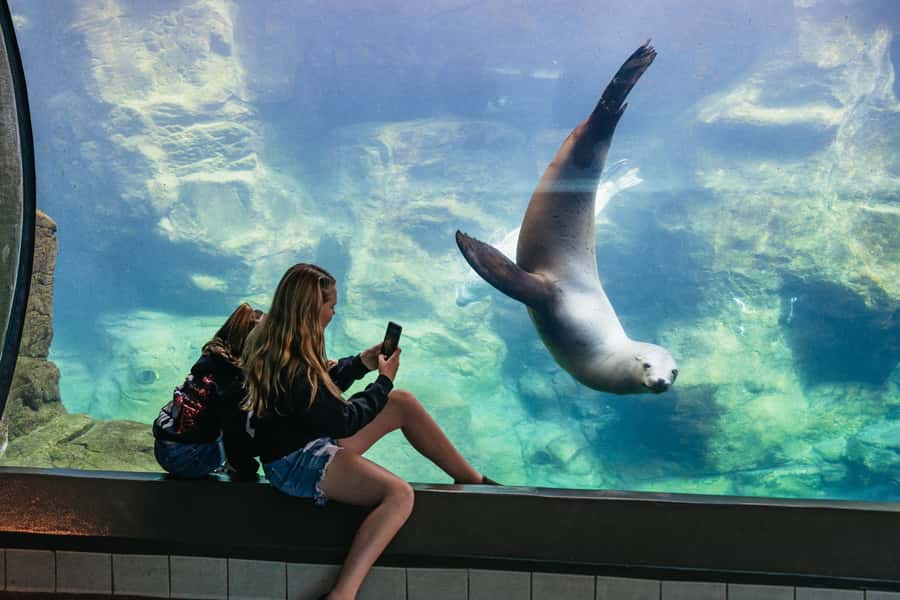
Reviewed · LOS ANGELES
LA: Aquarium of the Pacific Skip-the-Line Entry
The best part of the Aquarium of the Pacific is its range. In one visit, you move from Southern California habitats to cold Northern Pacific waters and then to colorful tropical reefs, with sharks, sea otters, penguins, turtles, and sea jellies along the way. I especially like the hands-on lorikeet feeding and the outdoor Shark Lagoon, two stops that turn a standard aquarium visit into something more active. I also like that the entry is self-guided, so you can set your own pace.
The main drawback is that the aquarium can feel crowded on busy weekends, especially around children’s touch pools and the most popular animal exhibits. The $44 admission is fair if you stay several hours, but less appealing if you plan to see only the headline displays in a quick two-hour visit.
Key points to know before you go
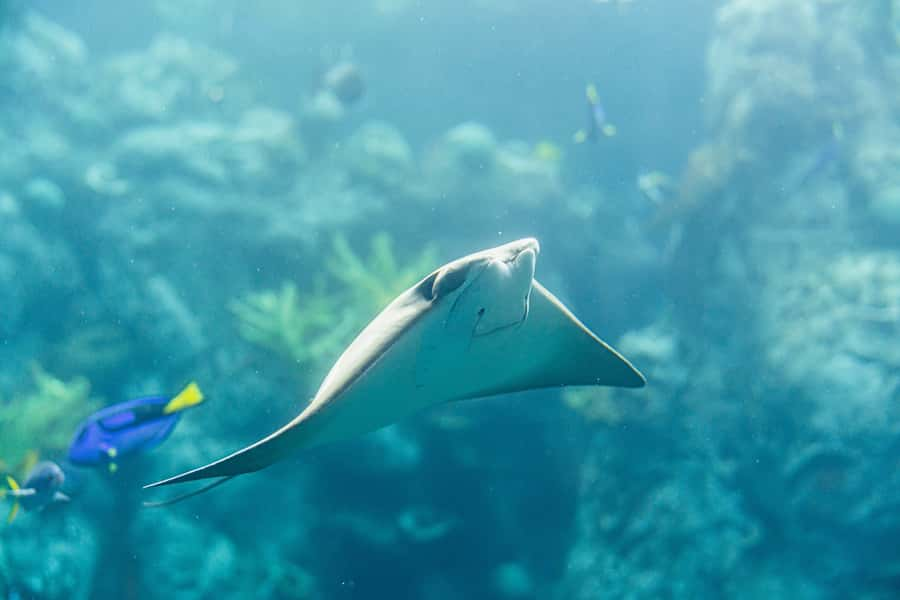
- Skip the ticket booth line: Your ticket is for direct entry at the Aquarium of the Pacific, saving time at the main ticket counter.
- 12,000 Pacific animals: The collection covers Southern California, the Northern Pacific, and the Tropical Pacific.
- Lorikeet Forest is a highlight: You can hand-feed colorful birds that may perch directly on your hands.
- Shark Lagoon is outdoors: It adds fresh air and a close look at some of the ocean’s most imposing predators.
- Pacific Visions is included: The Honda Pacific Visions Theater presents an eight-minute film with a curved 180-degree screen and floor projection.
- Plan around parking: Parking is not included, but the aquarium can provide an $8 all-day parking validation when you bring in your parking ticket.
Start with the animals you came to see
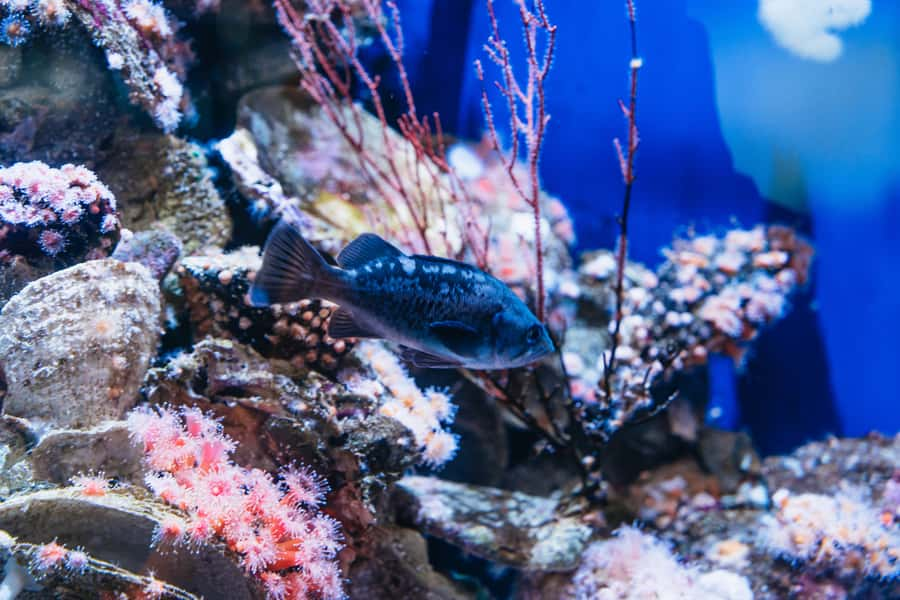
Long Beach’s Aquarium of the Pacific is built for wandering rather than for a fixed guided tour. You enter with a one-day admission ticket, then choose your own order through more than 100 exhibit areas and roughly 500 exhibits.
That freedom matters. You can move quickly through familiar fish displays, slow down at the penguin habitat, or stay for a touch-pool session if younger children are having a good time. The experience works for a short visit, but it also has enough variety to fill most of a day.
The aquarium groups its displays by broad Pacific regions. This gives the visit a useful sense of place. Instead of seeing a random series of tanks, you get a look at how marine life changes from the warm waters of the tropics to the colder northern seas.
You will see more than 12,000 animals. The headline species include sea otters, penguins, sharks, green sea turtles, sea jellies, seals or sea lions, and many smaller fish and invertebrates. Identification signs are generally helpful, which makes the aquarium a good choice if you want your visit to be entertaining and educational rather than just photogenic.
More Aquariums in Los Angeles:
- Skip the Ticketing Line: Aquarium of the Pacific General Admission Ticket
★ 4.5 · 485 reviews - Atlanta: Georgia Aquarium Skip-the-Box-Office Entry Ticket
★ 4.7 · 3,476 reviews - The Florida Aquarium Ticket
★ 4.6 · 979 reviews
Southern California habitats make an easy opening
The Southern California exhibits are a natural place to begin. They introduce you to animals and habitats connected to the coast outside the building, including familiar local species and rocky-shore environments.
This section should appeal to adults who want context, not just color. You can connect what you see inside with the Pacific coast around Long Beach, then compare it with the very different animals found farther north or in tropical waters.
Touch pools add a hands-on element. Depending on the exhibit and the day, you may be able to get close to rays, sharks, starfish, and other animals in shallow water. These displays are particularly useful for children who lose interest in watching animals through glass.
Give younger children clear instructions before you arrive. Touch pools are popular, and crowds can make it difficult for a small child to get a good view. If you are visiting with a baby, one practical suggestion is to use a baby carrier rather than rely entirely on a stroller. That makes it easier to move close to the tanks and avoids some of the trouble of maneuvering through busy exhibit areas.
Northern Pacific waters bring the biggest contrast

The Northern Pacific section changes the mood. Here, the water is colder and the animals feel tied to the rugged coastlines of the north rather than the warmer California shore.
Sea otters are a major draw. They are expressive, active animals, and their displays often hold attention longer than a tank of smaller fish. Seals and sea lions also add movement and personality, giving you a good break from quieter aquarium habitats.
The lighting varies from exhibit to exhibit. Some tanks are deliberately dark to protect the animals and create the right setting, but that can make reading signs or taking photographs harder. If identifying species matters to you, slow down and use the exhibit labels rather than rushing from one tank to the next.
This section works well for adults, too. You get a clearer sense of the differences between marine environments, and the colder-water animals provide a useful counterpoint to the tropical displays later in the visit.
Tropical Pacific reefs provide color and variety
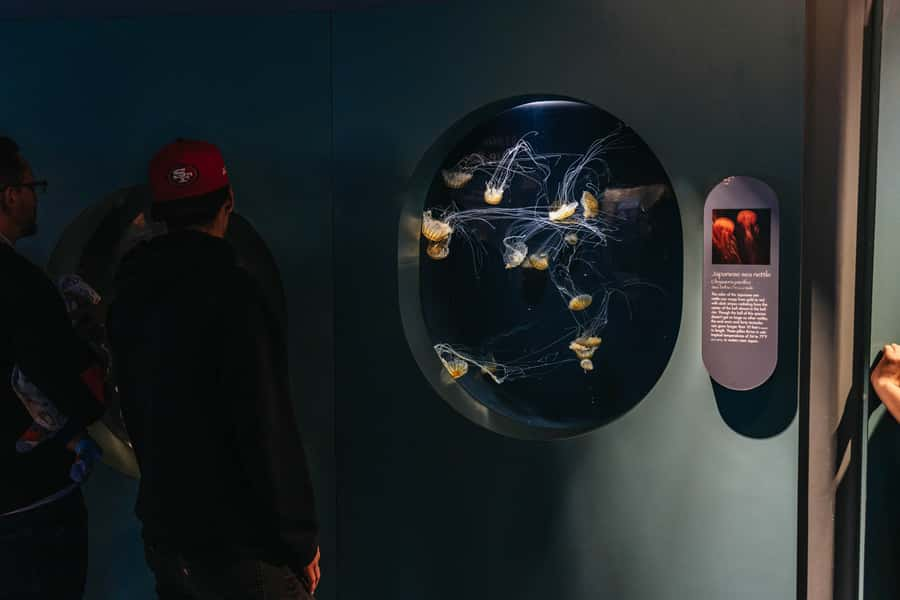
The Tropical Pacific displays are the most colorful part of the aquarium. Expect warm-water fish, coral reef settings, and bright sea life that gives this section a completely different feel from the Northern Pacific rooms.
These exhibits are especially effective for families because the variety keeps the visit moving. One tank may hold a large green sea turtle, while another is full of small fish or drifting sea jellies. The animals are not all large or dramatic, so children may need occasional encouragement to look closely.
I recommend treating this part as a slower walk. The small details are easy to miss if you focus only on large animals. You may find the best experience comes from stopping at a few tanks rather than trying to read every sign in the building.
A few more Los Angeles days worth weighing up
- Skip the Line: Express Ticket at Universal Studios Hollywood
★ 4.5 · 1,144 reviews - NYC: One World Observatory Skip-the-Line Ticket
★ 4.7 · 12,329 reviews - NYC: Circle Line 1-Hr Statue of Liberty Skip-The-Line Cruise
★ 4.5 · 3,342 reviews - San Francisco: Skip-the-Line 1-Hour Bay Cruise by Boat
★ 4.6 · 1,483 reviews
Penguin watching at the June Keyes Penguin Habitat
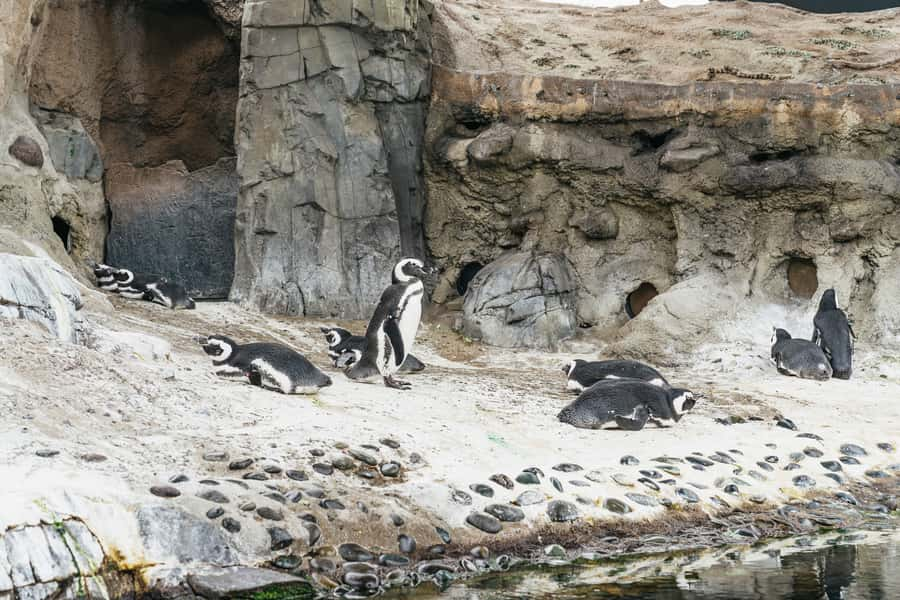
The June Keyes Penguin Habitat is one of the most dependable stops for families. It features Magellanic penguins, whose movements are easy to follow and whose compact size makes them appealing to young children.
Penguins also give the aquarium visit a welcome change of pace. After large tanks and wide Pacific displays, this habitat feels focused and personal. You can watch the birds move through the water, gather on land, and interact with one another.
It is worth checking the habitat even if you have already seen penguins elsewhere. The setting is included with admission, and it gives children an animal they can understand quickly. The penguins are also a good anchor point if your group is splitting up and meeting again later.
Shark Lagoon is the outdoor crowd-pleaser
Shark Lagoon takes you outside and shifts the visit from observation to a more direct encounter with large predators. The exhibit is designed for close viewing, and touch-pool areas add another chance to get near rays and smaller sharks.
The outdoor setting is useful after spending time in darker indoor rooms. It gives you a change of air and a more open view, while still keeping the aquarium experience focused on Pacific wildlife.
This is one of the places where crowds can slow you down. Stand back for a moment if the rail is packed, then move in when space opens. Children may want to rush straight to the animals, but you will get a better look by taking a few minutes to find a clear position.
Shark Lagoon is not just a photo stop. It helps explain why sharks and rays are important parts of marine ecosystems, and it gives you a sense of their size that photographs often fail to capture.
Lorikeet Forest adds a memorable hands-on moment
Lorikeet Forest is one of the aquarium’s most distinctive experiences. You can hand-feed colorful lorikeet birds, and they may perch directly on your hands.
This activity feels different from a conventional aquarium display because the animal comes to you. It is likely to be a favorite for children, but adults often enjoy it just as much. The birds make the visit more interactive without requiring a long scheduled tour or special guide.
Keep your expectations sensible. This is a popular exhibit, so you may need patience if several people are waiting to feed the birds. It is also worth keeping your hands steady and following the staff’s instructions, especially if a child is nervous about having a bird land nearby.
If you are choosing only a few stops, I would put Lorikeet Forest near the top of the list, along with the penguins and Shark Lagoon.
Pacific Visions offers an eight-minute change of pace
Pacific Visions is included with admission and adds a short multimedia presentation to the animal exhibits. The centerpiece is the Honda Pacific Visions Theater, where an eight-minute film plays across a massive 180-degree curved screen with projection on the floor.
The theater is meant to surround your field of view. Multisensory effects add another layer, so this is more than sitting in front of a standard flat screen.
The short running time works in your favor. You can fit it into your visit without giving up a large block of time, and it offers a pause after walking through the galleries. It also broadens the subject beyond individual animals, looking at underwater environments and possible futures for the ocean.
Do not treat it as the main reason to buy the ticket. The animals are the heart of the visit, while Pacific Visions works best as a useful extra between exhibit areas.
How much time should you allow?

The aquarium can be done in about two to three hours if you focus on the main animals and move steadily. That shorter visit suits families with very young children or anyone combining the aquarium with other Long Beach plans.
If you want to read signs, spend time at touch pools, watch the penguins, feed lorikeets, visit Shark Lagoon, and see Pacific Visions, allow much longer. One family with children aged three and six stayed from around noon until closing and still had plenty to do.
That range is helpful when judging the $44 price. At two hours, the ticket may feel expensive, especially if you skip the interactive areas. At four hours or more, the variety makes the cost easier to justify.
The aquarium is mostly indoors, with outdoor exhibits included in the visit. That makes it a practical choice when you want a weather-resistant activity, though you should still be ready for the outdoor sections around Shark Lagoon and Lorikeet Forest.
Food, parking, and the small costs
Parking is not included in the $44 admission. If you drive, bring your parking ticket into the aquarium and you can receive an $8 all-day parking validation.
This is an important detail because parking can change the real cost of a family visit. Factor it in before you book, especially if several people are sharing one car and you are comparing the aquarium with other Long Beach activities.
Food is available, but it costs more than an ordinary quick meal. Portions have been described as generous, and the food can be convenient if you plan to stay until closing. You can also keep the visit shorter and eat elsewhere, which may make better sense if you are watching your budget.
The aquarium has a guide book, and the exhibit signs help identify species. Still, I would take a moment at the entrance to plan a rough route. The building offers so much to see that it is possible to miss one of the areas, particularly if you follow children from one appealing tank to the next.
When to visit and who will enjoy it most
Skip-the-ticket-line entry is useful when the ticket counter is busy. It does not turn the aquarium into a private visit, so the exhibit areas can still be crowded once you enter. The benefit is saving time before the visit starts.
Saturday crowds can affect the mood, especially around interactive exhibits. If you want a quieter experience, choose a less busy time when your schedule allows. During the Long Beach Grand Prix, parking is described as very limited, so driving becomes less convenient during that event.
The aquarium suits:
- Families with young children who enjoy touch pools and close animal encounters
- Adults who want an easy, self-guided marine life visit
- Couples looking for a relaxed indoor activity with outdoor sections
- Anyone interested in Pacific habitats rather than a single specialty collection
- Visitors who prefer to choose their own pace instead of joining a fixed tour
It may be less suitable if you want a very large, all-day zoo-style attraction or a quiet museum with few children. The Aquarium of the Pacific is manageable in size, but popular areas can feel lively and crowded.
Booking value and practical flexibility
The admission price is $44 per person for one day. The ticket includes the aquarium’s exhibits, Shark Lagoon, Lorikeet Forest, the June Keyes Penguin Habitat, and the Pacific Visions theater.
The strongest value comes from using the full day. If you are building a Long Beach itinerary, the aquarium can anchor several hours without requiring a guide or a tightly timed schedule. You can also reserve now and pay later, which helps if your plans are still shifting.
Cancellation is allowed up to 24 hours in advance for a full refund. English and Spanish host or greeter support is available, though the visit itself is self-guided.
The digital ticket is designed for a quick scan at entry. Keep it ready on your phone, then head directly to the Aquarium of the Pacific rather than joining the regular ticket-buying line.
Should you book the Aquarium of the Pacific?
I would book this experience if you want a flexible family activity with a strong mix of animals, hands-on exhibits, and indoor space. The lorikeets, penguins, and Shark Lagoon give the visit memorable anchors, while the three Pacific regions keep it from feeling like a collection of unrelated tanks.
I would hesitate only if your schedule allows less than two hours, or if you are visiting on a very crowded day and dislike busy family attractions. For most people, the $44 price makes sense when you stay long enough to see the animal habitats, touch pools, outdoor exhibits, and Pacific Visions rather than treating it as a quick photo stop.
FAQ
Where is the Aquarium of the Pacific?
The Aquarium of the Pacific is in Long Beach, California. You should go directly to the aquarium for entry.
How long is the ticket valid?
The ticket is valid for one day. Check availability for the available starting times when booking.
What does skip-the-ticket-line entry mean?
It lets you avoid the regular ticket booth line. You still enter the aquarium and explore the exhibits on your own.
How much does admission cost?
Admission is listed at $44 per person. Parking is not included.
Can I receive a parking discount?
Yes. Bring your parking ticket into the aquarium and you can receive an $8 all-day parking validation.
What animals can I see?
The aquarium has more than 12,000 animals, including sea otters, penguins, sharks, sea jellies, green sea turtles, seals or sea lions, lorikeets, and many Pacific fish species.
Is Pacific Visions included with admission?
Yes. The Honda Pacific Visions Theater is included and features an eight-minute film with multisensory effects, a 180-degree curved screen, and floor projection.
Just added around Los Angeles
- Malibu: Guided Vineyard Hike with Photo Stops and Wine★ 5.0 · 391 reviews
- Guided Whale Watching Tour from Long Beach★ 4.5 · 335 reviews
- Universal Studios Hollywood General Admission Ticket, California★ 4.0 · 1,489 reviews
- The Ultimate LA Tour: Full Day Sightseeing Tour On Electric Bike★ 5.0 · 478 reviews
- City Tour of Los Angeles, Hollywood and Beverly Hills★ 5.0 · 444 reviews
- The VIP Experience at Universal Studios Hollywood in California★ 4.5 · 551 reviews
- Skip the Line: Express Ticket at Universal Studios Hollywood★ 4.5 · 1,144 reviews
- Los Angeles Original 90-Minute Walking Tour to The Hollywood Sign★ 5.0 · 693 reviews
Los Angeles Tours, compared.


Full-Day Iconic Sights of LA, Hollywood, Beverly Hills, Beaches and More
Read our review →

Hollywood, Beverly Hills & Celebrity Homes Tour by Open Air Bus
Read our review →
Hollywood Sign 2.5-Hour Tour with Comedians and Their Dogs
Read our review →
Full-Day LA Tour: Santa Monica, Hollywood and Beverly Hills
Read our review →
The Mentalist at Planet Hollywood Hotel and Casino
Read our review →
Browse the lists this tour appears in