
Reviewed · MONUMENT VALLEY
Monument Valley: Backcountry Jeep Tour with Navajo Guide
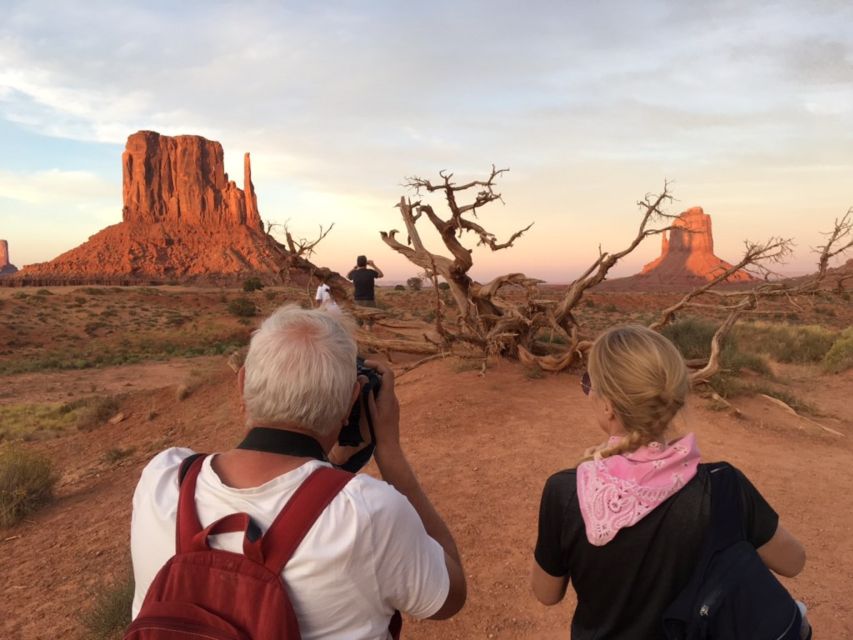
Monument Valley’s famous road shows you the headline views. This 150-minute backcountry Jeep tour takes you farther, into areas you cannot visit alone, with a Navajo guide explaining what the stone formations and sacred places mean. You’ll see the Mittens, Totem Pole, arches, petroglyphs, and several less obvious corners of the valley.
I like two things right away: the access to restricted backcountry and the personal touch from guides such as Travis, Larry, Carole, and Comasheena. Traditional flute, drum, song, or a ceremonial performance can turn a photo stop into a quiet cultural moment. The main drawback is the rough ride, and cloudy weather can soften the views.
Key points
- Restricted backcountry access: Reach areas beyond Monument Valley’s standard 17-mile scenic drive.
- Navajo-led interpretation: Hear stories about Dineh culture, family traditions, petroglyphs, and the meaning of the land.
- Iconic rock formations: See West and East Mitten Buttes, Totem Pole, Three Sisters, John Ford Point, and more.
- Traditional music: Guides may perform on flute, drum, or voice in places chosen for their natural acoustics.
- Small vehicle groups: Warm-weather tours carry up to 12 people in an open-air safari vehicle; colder or very hot conditions use an SUV for up to 7.
- Good value for a half-day visit: The $80 price includes the guide, backcountry access, water, tax, and operating fees, but not the $8 park entry pass.
Why the backcountry changes Monument Valley
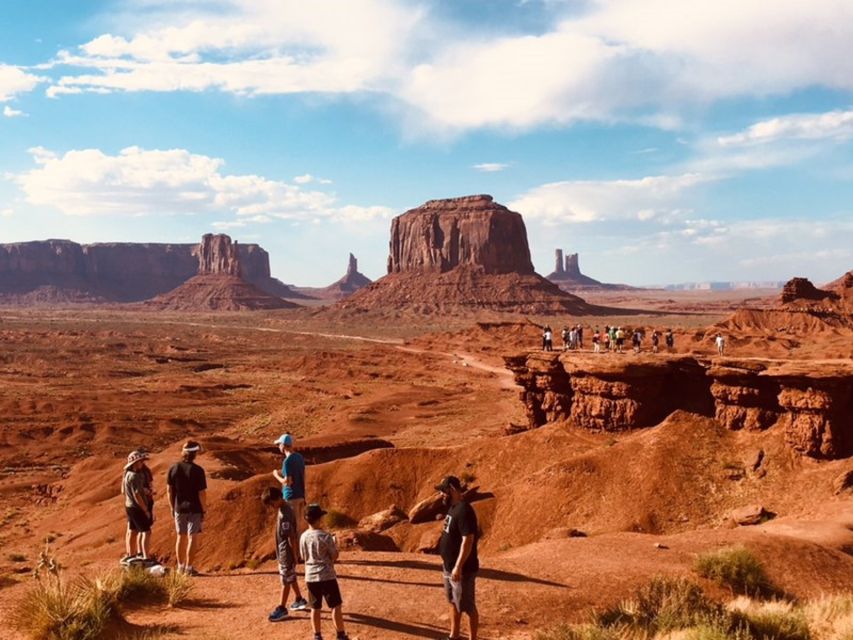
You can drive the public scenic route and see plenty of Monument Valley. The red buttes and wide views are impossible to miss. Still, the road only gives you one version of this place.
The backcountry route adds narrow tracks, arches, petroglyphs, and rock formations that require a Navajo guide. You are not simply paying for a ride over rough ground. You are paying for access, local interpretation, and a chance to understand why certain sites matter beyond their appearance.
That distinction matters here. Monument Valley is part of the Navajo Nation, and the rocks are not just movie scenery or convenient photo backdrops. A local guide can explain family connections, cultural traditions, spiritual meaning, and the practical story of life in this part of the desert.
The quality of that explanation depends partly on your guide. The strongest accounts describe guides who shared personal family stories, answered questions, helped with photo angles, and treated the valley with care. Travis is often singled out for flute, drum, and song performances, while Carole, Larry, Comasheena, Sabrina, Marjorie, and others are praised for clear explanations and warm storytelling.
You should not expect the same guide every time. That is normal for a tour operation, and the experience can vary in tone. The common thread is a Navajo-led visit rather than a drive with a generic commentary track.
More Native American Tours in Arizona:
- Page: Lower Antelope Canyon Entry and Navajo Guided Tour
★ 4.7 · 7,801 reviews - Page: Lower Antelope Canyon Tour with Trained Navajo Guide
★ 4.7 · 2,552 reviews - Monument Valley: Sunset Tour with Navajo Guide
★ 4.8 · 1,467 reviews
Meeting at The View Hotel
The meeting point is the Navajo loading area outside The View Hotel. Give yourself extra time to find the correct vehicle because several tour groups may use the same parking area. One visitor specifically found the signs confusing, so do not wait until the last minute.
Time deserves special care here. The tour runs on Utah time, which is one hour ahead of Arizona from March through November. Monument Valley follows Mountain Daylight Time during that period. If you are driving from Arizona, leave an hour earlier than your phone or navigation app might suggest.
The tour costs $80 per person, with the 6 percent tax and 3 percent operating fees already included. You must still pay the Monument Valley Tribal Park entry pass, listed as $8 per person. Food is not included, but bottled water is.
For a 150-minute experience, that is a fair price if you want the restricted areas and cultural context. A self-drive visit may seem cheaper, but it cannot take you into the guided backcountry. The comparison is not simply Jeep versus car. It is public access versus a broader route with a local guide.
The Jeep ride and the practical side of comfort
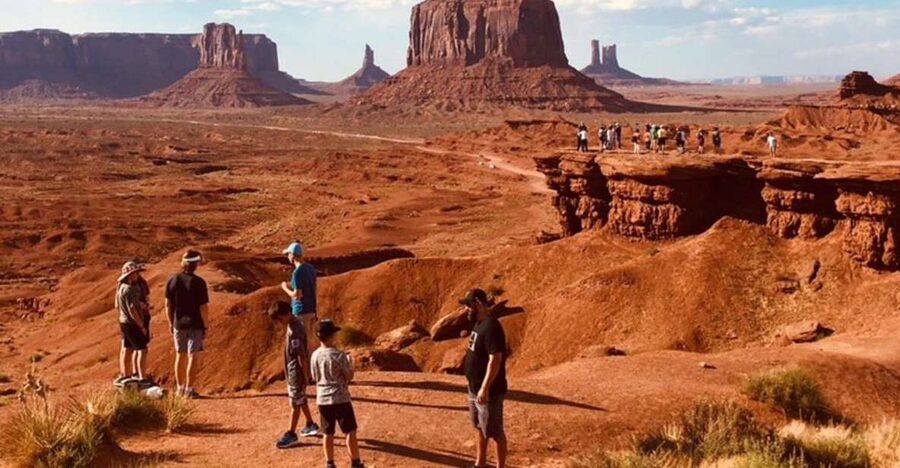
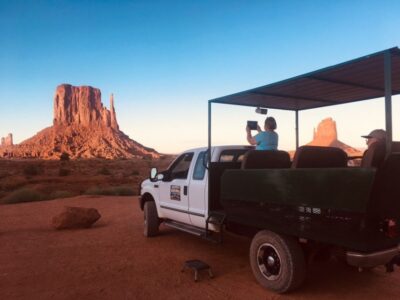
In warm weather, you ride in an open-air safari vehicle with a maximum of 12 passengers. This gives you broad views and a good chance to photograph without a window between you and the buttes.
The tradeoff is exposure. You will feel sun, wind, dust, and the jolt of the road. Wear comfortable shoes, sunglasses, a hat, sunscreen, and a headscarf. The headscarf is especially useful when the vehicle kicks up dust.
During cold or very hot weather, the operator uses an enclosed SUV with a maximum of 7 people. That may reduce the open-air feel, but it offers more shelter and a smaller group. A winter tour can still be worthwhile, and one cold-weather visit used a van instead of an open vehicle.
The road is rough enough to matter. One account called the ride jarring, though the extra access made it worthwhile. The tour is not suitable for infants under one year old or for women more than five months pregnant. If you have concerns about the ride, ask the operator before booking.
The Mitten Buttes and the first big views
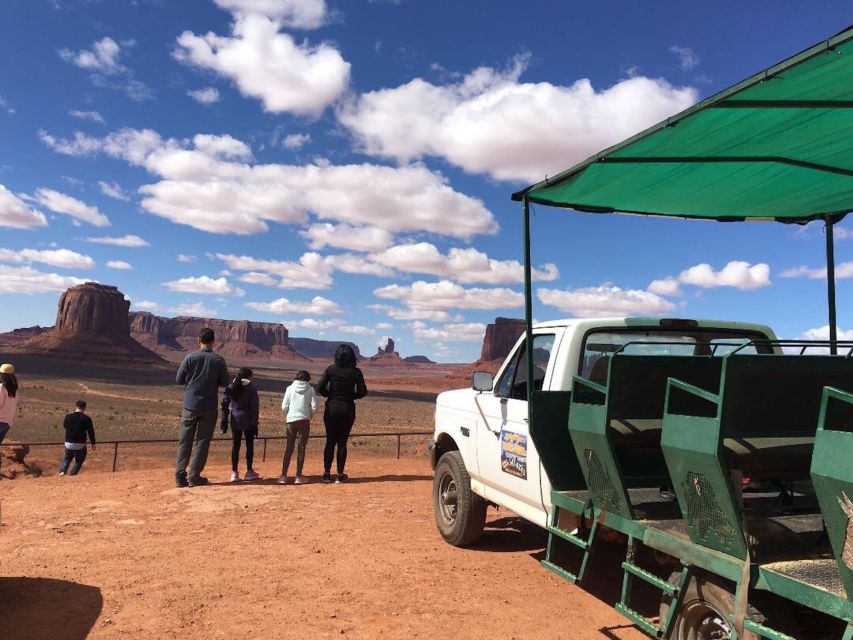
West and East Mitten Buttes are among Monument Valley’s most recognizable forms. Their shapes rise sharply from the flat desert floor, making them easy to identify in photographs and films.
The guide gives you more than a quick stop and a name. You can expect time to look, take photographs, and hear how the formations fit into Navajo culture and local storytelling. Guides may also offer suggestions for panoramic photos, a useful skill if your phone tends to crop out the scale of the scene.
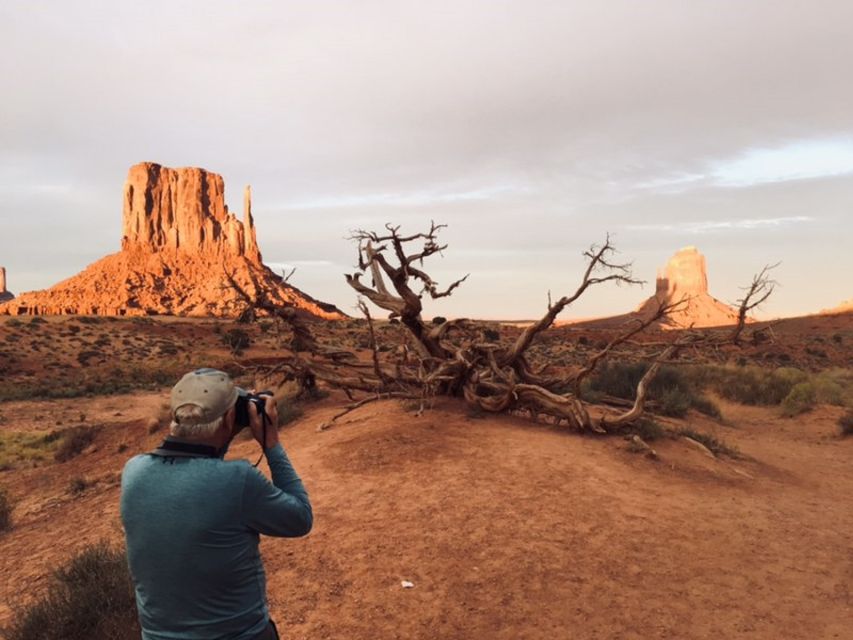
The views can change quickly with the weather. Clear skies bring strong contrast between red rock and blue sky. Cloud cover can make the colors softer and the photographs less dramatic. One visit had almost complete cloud cover, a reminder that no tour can arrange the sky for you.
Still, the valley remains impressive in changing light. A sunset departure can bring gold, pink, and deep red across the buttes, though sunset timing depends on the date and the selected departure. Confirm the available start time when booking.
More Jeep Tours in Arizona:
- Sonoran Desert Jeep Tour at Sunset
★ 5.0 · 2,650 reviews - Grand Canyon Village: Helicopter Tour & Hummer Tour Options
★ 4.7 · 2,586 reviews - Explore Sedona’s Vortexes: 2.5 Hour Jeep Tour of Mysticism
★ 5.0 · 1,834 reviews - Grand Canyon Signature Hummer Tour with Optional Sunset Views
★ 5.0 · 1,662 reviews
Three Sisters, John Ford Point, and the movie country
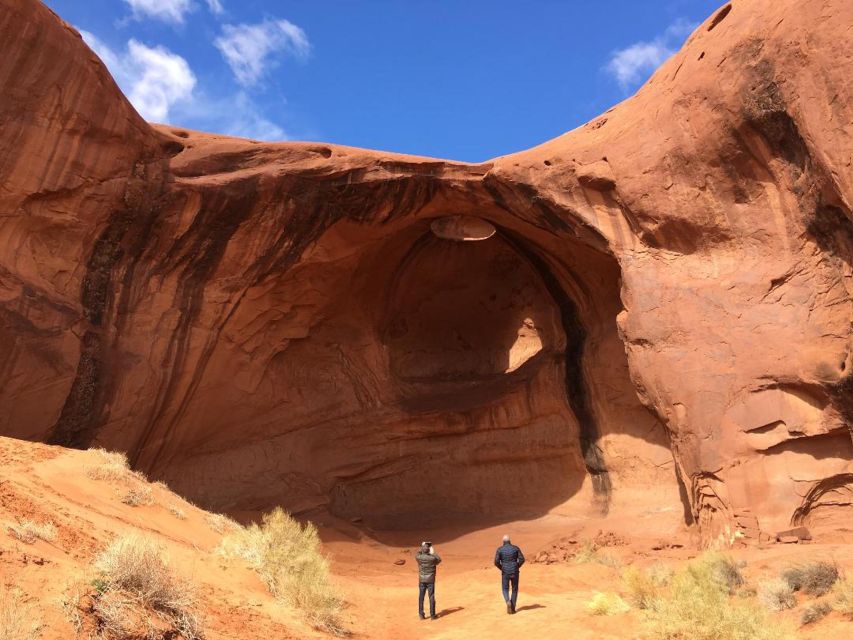
The route includes several famous formations, including the Three Sisters and John Ford Point. These stops connect the physical valley with its role in Western films and popular images of the American Southwest.
John Ford Point is especially appealing if you want a classic Monument Valley view. The name refers to the director who used the area for Western movies, and the stop helps explain why the valley became so familiar to people who have never visited Utah.
I would not let the movie connection dominate the tour. The better reason to stop is the scale and character of the rock itself. Films give you a framed view. From the valley floor, you see the formations stretch across open space, with changing shadows and smaller details that a screen cannot show.
The Three Sisters offer another striking group of stone towers. Your guide may point out shapes that you would otherwise pass without noticing. That is one of the quiet benefits of a local guide: you spend less time guessing what you are looking at and more time seeing it.
Arches, windows, and the Totem Pole
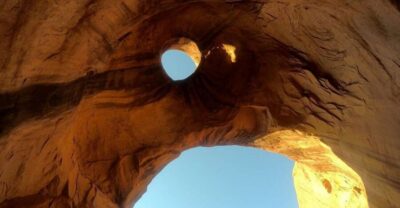
The tour reaches several natural structures that are easy to miss from the main road. Moccasin Arch, Big Hogan, Sun’s Eye, and North Window each create a different frame for the desert beyond.
Big Hogan and the other arches are not just photo stops. Their openings show how wind and weather have worn away the sandstone over time. The shapes also create shade, echo, and a closer sense of the rock’s texture.
The Totem Pole is one of the most distinctive formations in the valley. Its tall, narrow shape contrasts with the broad buttes and mesas around it. North Window and Sun’s Eye offer another kind of view, using openings in the stone to frame the surrounding desert.
At some stops, the guide may perform music in a natural cave or beneath an overhang. The rock can create striking acoustics. Flute, drum, and voice sound different in that setting than they would in a hotel or performance hall, and the moment works best when the group gives it quiet attention.
Petroglyphs, Hogan visits, and Navajo culture
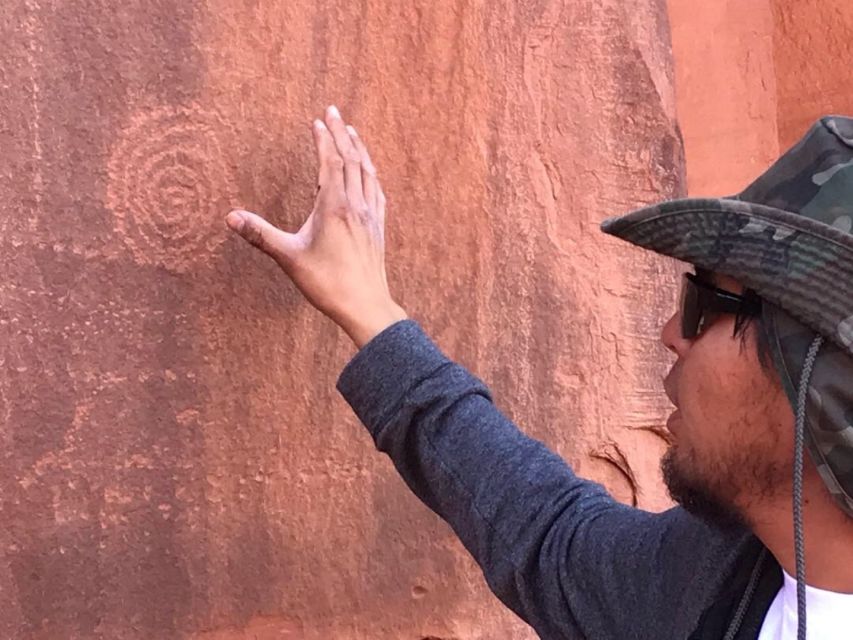
The cultural part of the tour is not an add-on. It is what separates this trip from a scenic drive.
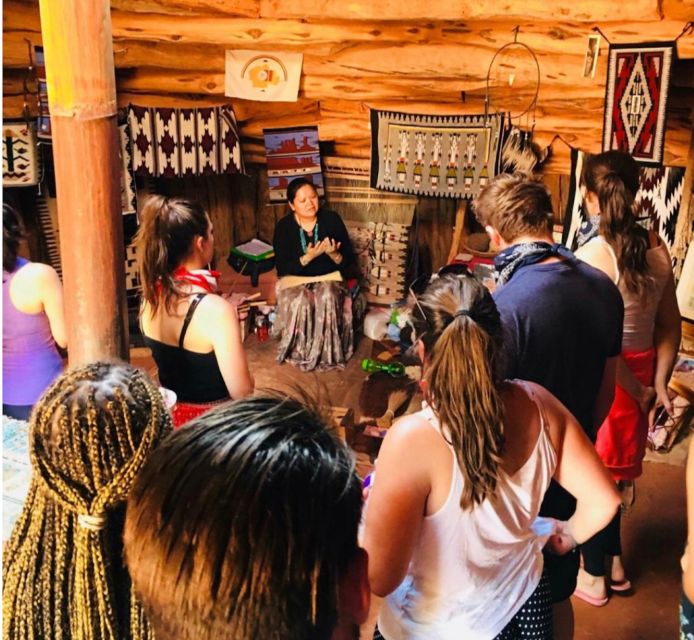
Guides explain Navajo traditions, family history, and the meaning of the area in their own words. Some have discussed petroglyphs and offered interpretations that you would not get from a roadside sign. Others have shared personal stories about their tribe and family.
A stop at a Hogan may be included. The Hogan is a traditional Navajo dwelling, and a visit can give you a practical sense of how a home and daily life are connected to the surrounding area. One account describes hearing a woman explain her way of living inside a Hogan. Another mentions a grandmother sharing information with the group.
The exact cultural stops may vary. A rug-weaving demonstration can be canceled because of unforeseen circumstances, so do not treat that element as guaranteed. The traditional music performance is included, but the form can differ by guide. You might hear flute, drum, singing, or a ceremonial blessing.
These moments call for respect. Listen carefully, ask questions politely, and avoid treating a sacred place as a stage set. The best part of the tour comes when you allow the guide to set the tone.
Music that gives the tour its emotional center
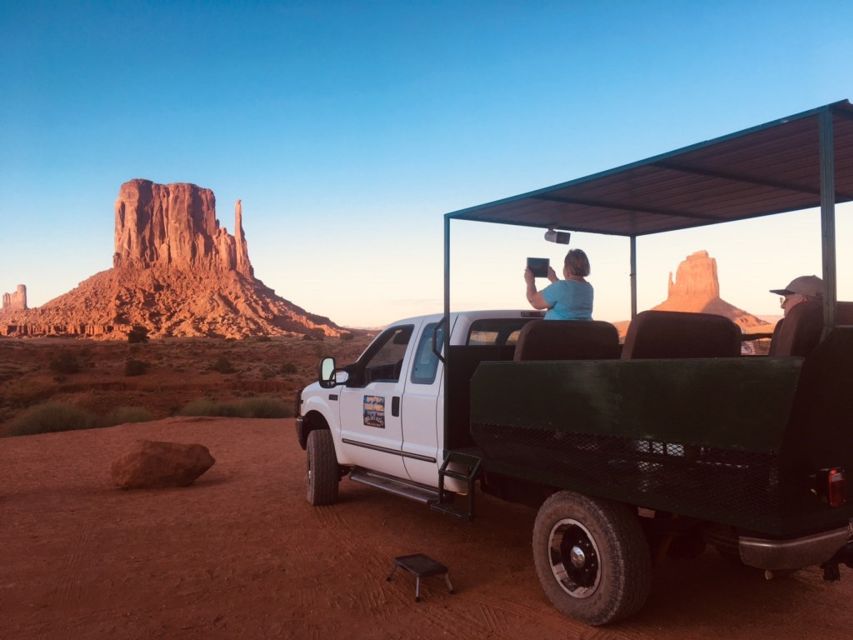
Music is the feature that most clearly changes the pace of the visit. After the vehicle moves from one viewpoint to another, a guide may stop and play a flute, drum, or song in the open desert or inside a rock shelter.
Travis is repeatedly praised for his flute and drum performances, including music in a cave with strong acoustics. Other guides have offered songs, blessings, and traditional pieces. One guide performed a blessing for families and safe travel, while another shared music at Hogan Rock.
You should not expect a long concert. This is a short cultural performance within a sightseeing tour. That is precisely why it can work. The music creates a pause, gives you time to look around, and connects the surroundings with Navajo tradition.
I would value this part more than another rushed photo stop. The buttes will still be there when you return to your camera. A song performed by your guide in a place chosen for its meaning or sound is less replaceable.
Photography, weather, and what to bring
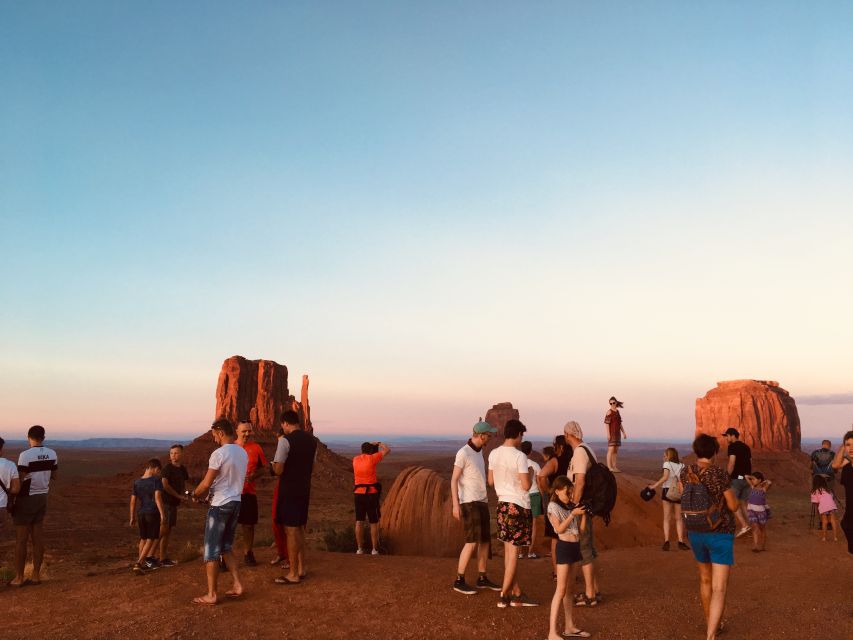
You will have many chances to photograph the major formations, but the rough route and short duration mean you should keep your equipment simple. A phone or small camera is enough for most people.
Bring:
- Comfortable shoes with secure soles
- Sunglasses
- A hat
- Sunscreen
- A headscarf
- Water, although bottled water is provided
Ask your guide for help with panoramic images. Several guides have shown people how to compose wider shots, and that advice can help for the rest of your trip.
The vehicle type depends on the weather, not just your preference. Open air is pleasant in mild warmth, but sun and dust can become tiring. An enclosed SUV offers more protection in difficult conditions, though you lose some of the unobstructed view.
Clouds can be a benefit as well as a drawback. They may reduce the bright red-and-blue contrast in photographs, but they can soften harsh desert light. A tour is still worth taking in less-than-perfect weather if your main goal is access and cultural interpretation.
Who will enjoy this tour most
I would choose this tour if you want more than the standard Monument Valley drive. It suits first-time visitors who want to see the major formations, photographers looking for different angles, and anyone interested in Navajo culture.
It is also a strong choice for people who do not want to drive rough desert roads themselves. You can focus on the view, ask questions, and let the guide handle the route. Families with older children may enjoy it, but the rough ride is not suitable for infants under one year old.
The experience may be less suitable if you dislike bumpy roads, dust, heat, or close group travel. The warm-weather vehicle can carry up to 12 people, so this is small-group travel, not a private tour. The SUV limit of 7 feels more intimate, but you cannot count on that vehicle in advance.
Mobility needs deserve a conversation before booking. A guide may offer extra help reaching photo spots, but the information does not promise step-free access or a specific vehicle arrangement. Ask the operator directly if you need detailed assistance.
Is $80 a good value?
For a 150-minute tour, $80 is reasonable because it includes the Navajo guide, restricted backcountry access, bottled water, tax, and operating fees. The separate $8 park entry pass raises your actual cost, and you still need to arrange food outside the tour.
The value rests on two things: access and interpretation. If you only want a quick look at the Mittens from a public road, you may not need this experience. If you want backcountry arches, petroglyphs, Hogan visits, personal stories, and traditional music, the price makes more sense.
The guide also affects the value. The strongest guides make the same rock formations feel new by adding family history, cultural meaning, photo help, and music. The route matters, but the human element is the reason to book a guided visit instead of simply driving through.
Booking advice and final call
Book this tour if restricted access and Navajo-led storytelling matter to you. It gives you the major Monument Valley sights while adding arches, petroglyphs, cultural stops, and a rough-road adventure that the public route cannot provide.
Before you go, confirm the Utah time zone, arrive at the Navajo loading area outside The View Hotel early, and prepare for sun, dust, or cold. If you want the most open vehicle experience, mild weather is your best chance, while cold or extreme heat may mean a smaller enclosed SUV.
I recommend it for most first-time visitors who have at least two and a half hours available. Skip it only if you need a smooth ride, want complete control of your schedule, or prefer to see Monument Valley from the public road alone.
FAQ
How long does the Monument Valley backcountry Jeep tour last?
The tour lasts 150 minutes, or two and a half hours.
Where does the tour meet?
Meet your driver outside The View Hotel at the Navajo loading area.
What time zone does Monument Valley use?
The tour operates on Utah time, or Mountain Daylight Time. From March through November, this is one hour ahead of Arizona.
How many people fit in the tour vehicle?
In warm weather, the open-air safari vehicle carries up to 12 passengers. In cold or very hot weather, an enclosed SUV carries up to 7 people.
Is the Monument Valley entry fee included?
No. The Monument Valley Tribal Park entry pass costs $8 per person and is not included in the tour price.
Is traditional Navajo music part of the experience?
Yes. A traditional musical performance by the guide is included. Depending on the guide, this may involve flute, drum, singing, or a ceremonial performance.
What should I bring?
Bring comfortable shoes, sunglasses, a hat, sunscreen, and a headscarf. Bottled water is included, but food is not.
Just added around Arizona
- Grand Canyon West Rim Luxury Helicopter Tour from Las Vegas★ 4.5 · 1,283 reviews
- Grand Canyon West Rim by Coach with Helicopter Tour and Meals★ 4.0 · 751 reviews
- Grand Canyon Helicopter and Western Ranch Adventure Landing Tour★ 5.0 · 401 reviews
- Sunset Grand Canyon Helicopter Tour from Las Vegas★ 5.0 · 425 reviews
- Extended Grand Canyon West Rim Air-Only Helicopter Tour★ 4.5 · 650 reviews
- Grand Canyon West Rim Helicopter Tour with Champagne Toast★ 4.5 · 962 reviews
- Grand Canyon, Bryce, Zion, Antelope Canyon, Monument Valley 3 Day Tour★ 5.0 · 374 reviews
- Small Group Tour: Grand Canyon West Rim, Skywalk & Hoover Dam★ 5.0 · 1,092 reviews
Monument Valley Tours, compared.
2.5 Hours of Monument Valley’s Backcountry 4×4 Tour
Read our review →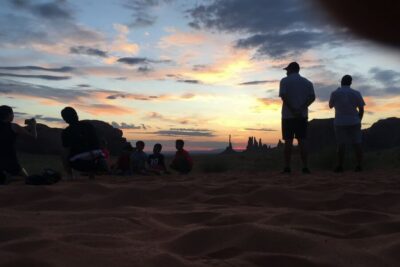
Monument Valley: Sunset Tour with Navajo Guide
Read our review →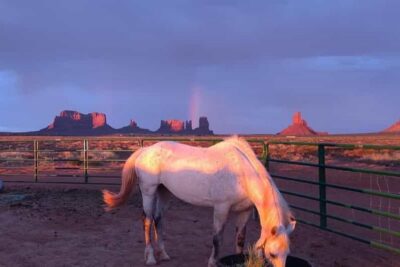
Monument Valley: Highlights Tour with Backcountry Access
Read our review →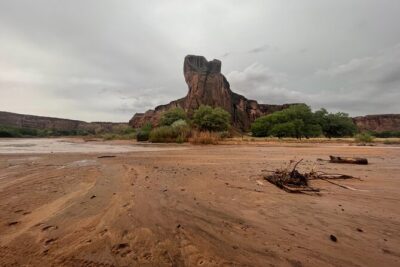
3-Day Tour: Zion, Bryce Canyon, Monument Valley and Grand Canyon
Read our review →Browse the lists this tour appears in