
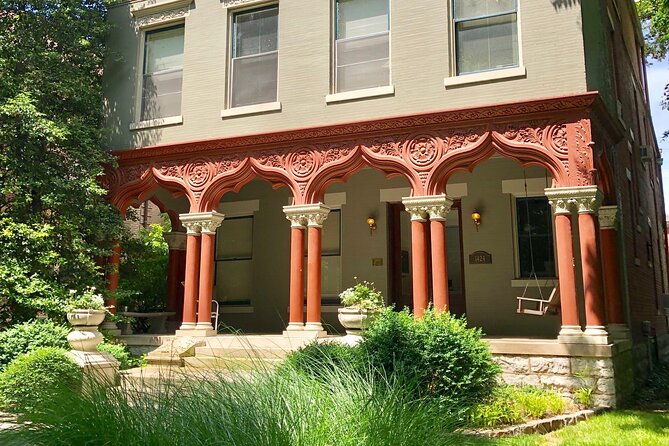
Reviewed · LOUISVILLE & LEXINGTON
ORIGINAL Old Louisville Walking Tour seen in The New York Times!
Old Louisville is a neighborhood where the houses do much of the talking. On this walking tour, you see grand Victorian facades, leafy streets, old mansions, and the famous Witches’ Tree while guides connect the buildings to the people who paid for them. The architecture is the main event, but the local stories give it a human scale.
I like the way the tour brings you to corners you might miss on your own, especially St. James Court, Millionaires Row, and Floral Terrace. I also like the range of guides, including David, Gabe, Angelique, Frances, and Brenda, since the experience can include personal knowledge of the neighborhood along with standard city history. The tradeoff is simple: this is a serious walk, with no indoor visits and no scheduled bathroom break for about 90 minutes.
Old Louisville in one focused walk

- More than 1,000 historic structures: The district covers about 40 square blocks, giving you a broad look at its buildings rather than a single mansion.
- Stories behind the stone and brick: Guides explain former owners, builders, local characters, and the forces that shaped the neighborhood.
- A famous local legend: The Witches’ Tree adds a bit of folklore to an otherwise architecture-heavy outing.
- A Frederick Law Olmsted park: Central Park offers a shady green pause and a link to Louisville’s wider city design.
- A small group format: The tour accepts no more than 20 people, which should make it easier to hear and ask questions.
- An outdoor-only experience: You see private homes from the street. The Conrad-Caldwell House can be toured separately for an extra fee.
Why Old Louisville is worth your walking shoes
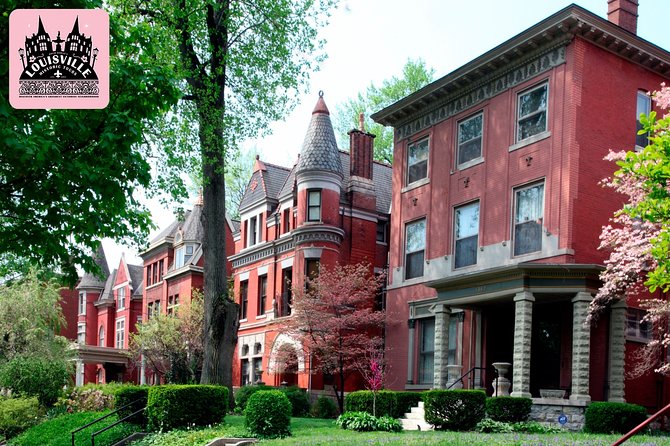
Old Louisville is one of the largest historic districts in the United States. Its size matters. You are not simply walking past three or four photogenic houses, then heading back to the bus. You move through a whole neighborhood of historic residences, public spaces, and streets built for a wealthier era of Louisville life.
The name Millionaires Row hints at the old social order. Wealthy business owners and civic figures built large homes here, often using ornate stonework, towers, arches, stained glass, and elaborate trim to announce their success. A guide helps you read those details instead of treating every house as just another pretty facade.
That is the real value of this tour. You could walk Old Louisville alone and enjoy the architecture. With a guide, you get names, dates, legends, and connections between the houses. Several guides, including David and Gabe, are praised for keeping a clear pace while explaining a great deal without losing the group.
The tour is also useful early in a Louisville visit. It gives you a sense of how the city grew, who held power, and how the old neighborhood fits into present-day Louisville. One especially useful feature is the mix of architecture and personal stories. If you love buildings, you get plenty to study. If you prefer people and odd local tales, the tour does not leave you staring at cornices for two hours.
More Walking Tours in the USA:
- History and Hauntings of Salem Guided Walking Tour
★ 5.0 · 14,564 reviews - New Orleans Premier Ghost, Voodoo and Vampire Walking Tour
★ 4.5 · 12,856 reviews - Little Havana Food and Walking Tour in Miami
★ 5.0 · 8,882 reviews
Meeting at Fourth Street and Ormsby Avenue
The walk begins at West Ormsby Avenue and South Fourth Street, near the north edge of Old Louisville. The tour returns to this same meeting point, so you do not need to arrange a second pickup location at the end.
The starting area is described as transitional. You may encounter panhandlers, homeless people, and others who make the area feel less polished than the grand streets farther south. That context is worth knowing before you arrive. Old Louisville is a real urban neighborhood, not a sealed historic park, and the experience includes some of the ordinary conditions of a larger city.
The group size is capped at 20 people. That is large enough to keep the tour affordable but small enough that a guide should be able to answer questions and keep the group together. Some guides use a microphone, which is helpful when street noise or a larger group makes it hard to hear.
Plan on about 1 hour 40 minutes to 2 hours. The tour is offered in English, and a mobile ticket is used. You should arrive ready to walk outdoors for at least 90 minutes without a bathroom break. Comfortable shoes, water, and weather-appropriate clothing are practical choices.
St. James Court and the grand residential streets
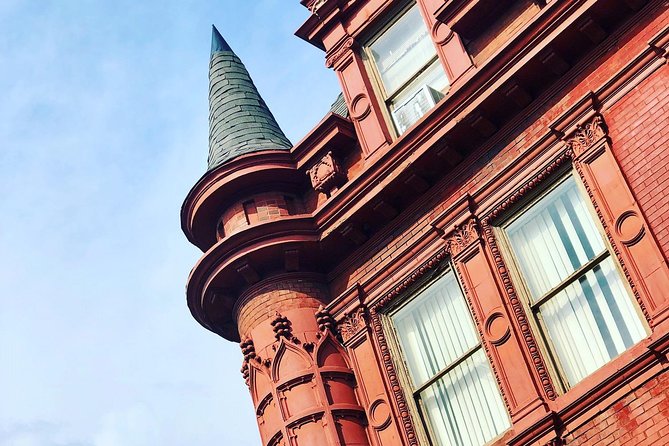
Much of the tour takes place within Old Louisville itself, including St. James Court, Ormsby Avenue, Floral Terrace, and the former Millionaires Row. The appeal is not one single attraction. It is the steady change in building styles, details, gardens, and street views as you move through the district.
St. James Court is one of the places where Old Louisville’s formal side comes into view. The homes were designed to impress, but the guide’s stories keep the route from becoming an architecture lecture. You hear about the wealthy people who lived here and how the neighborhood reflected Louisville’s ambitions.
The route also gives you time to notice smaller features. Look for stone carvings, elaborate porches, towers, arches, and decorative figures. The Bernheim Mansion, for example, has green men arranged around a triple Roman-arched porch. That detail is easy to miss when walking alone, yet it tells you something about the imagination and expense that went into these homes.
The houses are private residences. You do not go inside them, and that is important when setting expectations. The experience is about streetside architecture, public views, and storytelling rather than rooms, furniture, or preserved interiors.
The Witches’ Tree and Old Louisville folklore
The Witches’ Tree is a short stop, but it gives the tour a welcome change of mood. A gnarled tree now rises where an earlier tree was associated with local witches. According to the tale, when the city removed the original tree, the witches responded by sending a tornado to punish Louisville.
The story is folklore, not a substitute for the neighborhood’s documented past, and that is precisely why it works here. A walking tour should show you more than dates and building materials. Local legends reveal how people have chosen to remember a place, and the offerings left at the twisted trunk show that the story still has a hold on the public imagination.
You need only about five minutes at the tree. It is a compact stop, but it often becomes one of the tour’s most memorable details. If you enjoy a little mystery mixed into a history walk, this is a welcome break from millionaire mansions and architectural terms.
A few more the USA days worth weighing up
- Half-Day Thoroughbred Horse Farm Tour in Kentucky
★ 5.0 · 1,924 reviews - Old Louisville Ghost Tour as Recommended by The New York Times @ 4th and Ormsby
★ 5.0 · 1,201 reviews - Unique Horse Farm Tours with Insider Access to Private Farms
★ 5.0 · 1,192 reviews - Kentucky Derby Museum – General Admission and Guided Track Visit
★ 4.5 · 866 reviews
Conrad-Caldwell House, Louisville’s castle-like mansion
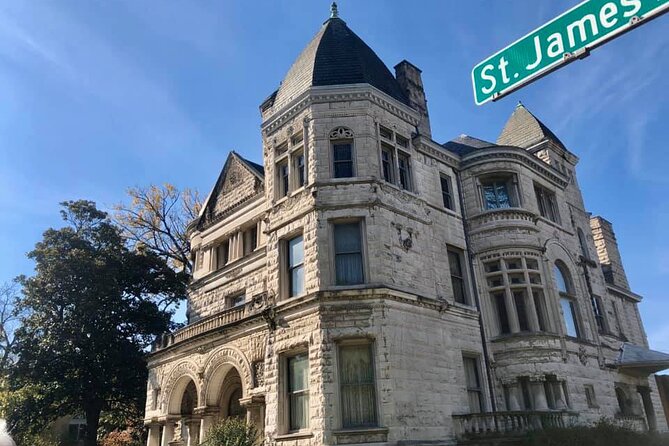
The Conrad-Caldwell House Museum is one of the route’s major visual highlights. Often called Conrad’s Castle, the mansion has the kind of elaborate exterior that makes the nickname easy to understand.
The tour stops outside for about five minutes. You do not enter as part of the walking experience, since the houses in Old Louisville are mostly private residences and the tour is designed for outdoor sightseeing. If you want to see the interior, you can arrange a separate visit with the museum for an additional fee.
This split can be useful. The walking tour gives you neighborhood context, while a separate museum visit lets you spend more time with one mansion. If you only have time for one Old Louisville activity, the walk offers greater range. If you are especially interested in interiors and decorative arts, budget extra time and money for the house museum.
Millionaires Row and the Bernheim Mansion
The Bernheim Mansion sits in the old Millionaires Row area and offers a fine example of Richardsonian Romanesque design. Its green men and triple Roman-arched porch are the sort of details that reward a slow look.
The stop itself is brief, about two minutes, but it is part of a larger rhythm. You are not stopping for long at every building. Instead, the guide uses key homes to explain the district, then lets the architecture continue around you as you walk.
That pacing helps cover a lot of ground in a short tour. It also means you should not expect a detailed architectural study of every mansion. The experience works better as a lively overview, with selected buildings used as examples.
The Filson Historical Society and the Ferguson Mansion
The Filson Historical Society occupies the Ferguson Mansion, built in 1905. The building was once considered the grandest home in Louisville and is a Beaux Arts example within the neighborhood.
The tour pauses outside for about five minutes. Visits to the society can be arranged separately, but admission is not part of this walk. If you have an interest in Kentucky documents, regional history, or historic collections, you may want to return at another time.
For most people, the value of this stop is the connection between private wealth and public memory. A mansion built to display status now houses an organization devoted to preserving the past. That change gives the building another layer beyond its impressive facade.
Central Park, Olmsted design, and Shakespeare
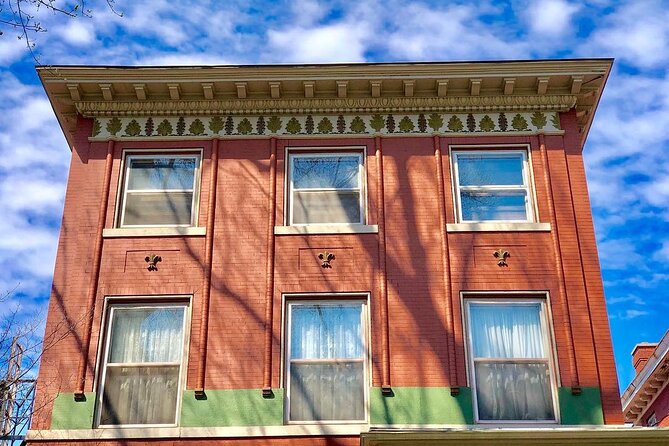
Central Park provides the route’s greenest pause. Frederick Law Olmsted, who also designed New York City’s famous Central Park, planned this Louisville park. It covers 14 acres and includes native trees and shaded walkways.
The park occupies four city blocks and serves as Old Louisville’s open center. After a long stretch of looking at buildings, the trees and paths give your eyes a rest. The guide may also point out its role as the home of Shakespeare in the Park, which has been presented here each summer since 1961.
That event is the nation’s oldest free outdoor Shakespeare program. The detail adds cultural depth to the park and helps explain why it remains more than a patch of lawn between historic homes.
The stop lasts about five minutes, so you will not have time for a full park visit during the tour. If you like the setting, return later and explore at your own speed.
What the $25 price really buys you
The listed price is $25 per person, with a suggested gratuity of $5 per person. That puts the practical cost at about $30 if you follow the recommendation.
For that price, you get a certified guide, a structured route through a large district, and access to stories that would be difficult to assemble from plaques or a self-guided map. You are paying less for admission to a single sight and more for interpretation, pacing, and local context.
The value is strongest if you are new to Louisville, care about architecture, or want a useful orientation before exploring on your own. It is also a good choice for families with older children, couples, solo visitors, and locals who want to learn more about a familiar neighborhood. One local took the tour more than once, which says something about the amount of material a good guide can bring to the route.
The value is weaker if you dislike walking, want to tour historic interiors, or prefer a short drive-by overview. There are no included mansion entries, no indoor attractions, and no promise of a bathroom during the main stretch.
Which guide style may suit you
The guide roster varies. David is repeatedly singled out for an entertaining, personal approach, and he has written a book connected with Old Louisville. Gabe is noted for a steady pace, clear speaking, and concise explanations. Angelique is known for covering a wide range of local subjects, including trees, flowers, people, and neighborhood cats.
Frances has been praised for making a multigenerational family group feel included, while Brenda used a microphone and brought extra energy to the Witches’ Tree story. You cannot choose a guide based on the information provided, but the range of names and strengths suggests that the experience is not dependent on one single personality.
The most consistent qualities are clear explanations, humor, and the ability to answer questions. That matters on a walking tour, where poor delivery can make even beautiful streets tiring.
Practical limits before you book
This is not recommended for people with mobility issues. You need a moderate level of physical fitness and must be able to walk for about 90 minutes without a bathroom break. The group does not enter buildings, so the route remains outdoors from start to finish.
The tour requires good weather. If poor weather causes cancellation, you are offered another date or a full refund. Your own cancellation is different: the booking is non-refundable and cannot be changed for any reason, so choose your date carefully.
Service animals are allowed, and the meeting point is near public transportation. The activity is conducted in English. Because the route passes through a lived-in urban neighborhood, stay aware of your surroundings and expect conditions that vary from block to block.
Should you book this Old Louisville walk?
Book it if you want architecture with stories attached. The tour gives you a broad look at one of Louisville’s most distinctive districts, plus memorable stops at the Witches’ Tree, Conrad-Caldwell House, Bernheim Mansion, Filson Historical Society, and Central Park.
Skip it if you need frequent bathroom breaks, cannot comfortably walk for 90 minutes, or mainly want to enter historic buildings. For everyone else, $25 is a fair price for a guided introduction to Old Louisville, especially at the start of a Louisville visit. Wear good shoes, arrive prepared for a full outdoor walk, and leave room in your schedule to revisit the Conrad-Caldwell House or Central Park afterward.
FAQ
How long does the Old Louisville Walking Tour last?
The tour lasts approximately 1 hour 40 minutes to 2 hours. You should be prepared to walk for at least 90 minutes without a bathroom break.
Where does the tour begin and end?
It begins at West Ormsby Avenue and South Fourth Street in Louisville. The tour ends back at the same meeting point.
Does the tour enter the historic mansions?
No. The walk stays outdoors because most Old Louisville homes are private residences. You stop outside the Conrad-Caldwell House Museum, and separate mansion admission is not included.
What is included in the $25 price?
A certified guide is included. The listed price is $25 per person, and a $5 per-person gratuity is not included.
Is the tour suitable for people with mobility issues?
No. The tour is not recommended for visitors with mobility issues and requires a moderate level of physical fitness.
What happens if bad weather cancels the tour?
If the provider cancels because of poor weather, you can choose another date or receive a full refund. If you cancel or request an amendment yourself, the booking is non-refundable and cannot be changed.
Just added around the USA
- Maui: Molokini Crater and Turtle Town Snorkeling From Kihei★ 5.0 · 765 reviews
- Maui: 2-Hour Molokini Snorkel Trip★ 5.0 · 816 reviews
- Maui -PRIVATE- Air Tour FUN: 3 Islands: (2-5 people): SEE it ALL!★ 5.0 · 559 reviews
- Best of Martha’s Vineyard 3 hour Full-Island Tour★ 4.5 · 406 reviews
- 2 Tank Lanai Cathedral Scuba Dive Via Boat for Certified Divers★ 5.0 · 548 reviews
- Malibu: Guided Vineyard Hike with Photo Stops and Wine★ 5.0 · 391 reviews
- Mackinaw City Sunset Cruise★ 5.0 · 347 reviews
- Whale Watching Maui: 2-Hour Small Group Raft Tour from Lahaina★ 5.0 · 661 reviews
Louisville & Lexington Tours, compared.

Half-Day Thoroughbred Horse Farm Tour in Kentucky
Read our review →
Old Louisville Ghost Tour as Recommended by The New York Times @ 4th and Ormsby
Read our review →
Unique Horse Farm Tours with Insider Access to Private Farms
Read our review →
Kentucky Derby Museum – General Admission and Guided Track Visit
Read our review →

Secrets of Louisville: Food & History Walking Tour in NuLu
Read our review →

Phantoms of Prohibition: Ghosts Cocktails & Bites Walking Tour
Read our review →Browse the lists this tour appears in