
Reviewed · BOSTON
Boston’s Freedom Trail: A Revolutionary Walking Tour
The best part of this tour is its sweep. In about two and a half hours, you move from The Embrace beside Boston Common through burial grounds, churches, meeting halls, Paul Revere’s neighborhood, and the North End. The American Revolution is the main story, but the route also reaches abolition, women’s rights, education, and immigration.
I like that you check off all 16 official Freedom Trail sites in one outing, and I like the guides’ knack for turning brick and stone into human stories. Guides including Kenny, Jim, Alissa, Alfred, Noah, and Sam have been praised for clear explanations, humor, and strong storytelling.
The catch is simple: this is a lot of Boston in 2.5 hours. You will walk several miles, sometimes at a brisk pace, and a large group can make it hard to hear. Comfortable shoes, a good weather forecast, and a spot near the guide matter.
Key points at a glance
- Follow the entire official trail: Cover all 16 sites, from The Embrace to the North End.
- Hear the Revolution in place: Visit the Old State House, Boston Massacre site, Faneuil Hall, and Paul Revere’s home.
- See more than 1776: Learn about abolition, civic life, women’s rights, education, and immigration.
- Expect a real walking tour: The route lasts about 2 hours and 30 minutes and calls for moderate fitness.
- Small enough to feel organized: Groups are capped at 25 people, though some stops can still be noisy.
- Strong value at $31: A single fee gives you a guide, a clear route, and context you would likely miss on your own.
Why this Boston walk works so well
Boston’s Freedom Trail is easy to follow on your own. A red line leads through the city, and the major sites are well marked. But the trail is not a museum with one entrance and one exit. It is a string of streets, graveyards, churches, and public buildings spread across central Boston.
That is where this tour earns its $31 price. You are not paying simply to be led from one red-brick building to the next. You are paying for the connections between them: how a church’s congregation shaped public debate, how a burial ground reflects Boston society, and how a speech or riot helped push the colonies toward war.
The route also gives you a better sense of Boston as a working city. The Revolution did not happen in a neat historic district sealed off from modern life. You will cross active streets and move through busy parts of downtown and the North End. Your guide’s job is to help you read the old Boston beneath the traffic and office buildings.
The strongest guides add humor without turning the subject into a costume show. Kenny has been praised for handling questions and holding together a large group. Jim is known for clear explanations and a good pace. Alissa brings quick wit and energy, while Alfred has a gift for mixing facts with personal warmth. Your guide will vary, but the company has several names that appear again and again in strong feedback.
More Walking Tours in Boston
- Boston: Freedom Trail History Small Group Walking Tour
★ 5.0 · 6,450 reviews - Cambridge: Harvard University Student-Guided Walking Tour
★ 4.6 · 3,931 reviews - Harvard University Campus Guided Walking Tour
★ 4.5 · 3,632 reviews
Starting beside The Embrace
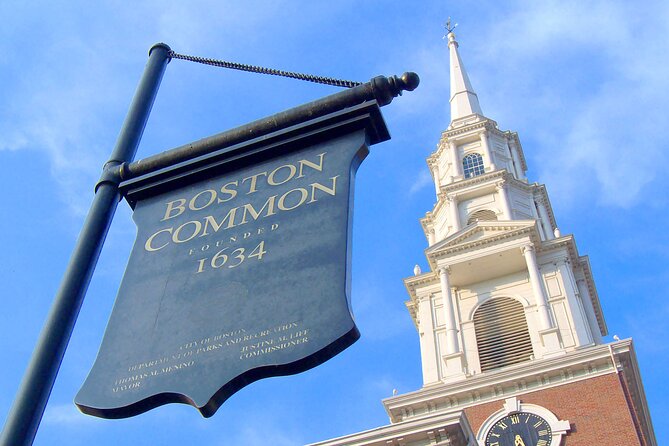
The tour begins at The Embrace, the recent monument to Martin Luther King Jr. and Coretta Scott King. It is beside the Boston Common Visitor Information Center at 139 Tremont Street.
This is a thoughtful place to begin. The Freedom Trail often gets presented as a straight march toward independence, but Boston’s public story did not end in 1776. Starting with The Embrace places the Revolution beside later struggles for civil rights and reminds you that American freedom has always been an unfinished argument.
Allow about ten minutes here before the historic core of the walk begins. The meeting point is central and near public transportation, which helps if you are coming from another part of Boston. Look for the tour at the monument near the visitor center rather than assuming the walk starts at the first red-brick colonial building.
From the State House to an abolitionist church
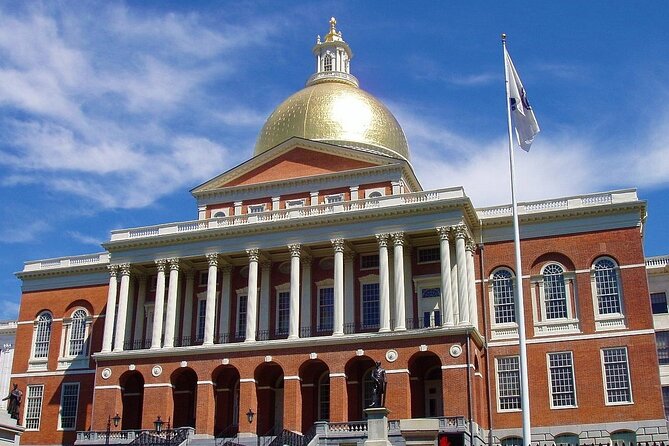
The Massachusetts State House is next. Its golden dome makes it one of Boston’s easiest buildings to recognize, but the useful part of the stop is the political context. Samuel Adams laid the cornerstone of the building in 1795, placing it just after the Revolutionary era and at the start of the new state government.
From there, the route reaches a red-brick church built in 1809. The congregation was linked with abolition, and the guide explains the forceful anti-slavery speeches delivered inside. This stop widens the tour beyond Paul Revere and the Redcoats. Boston’s political voice was used for causes that came long after the war for independence.
You may find this portion less cinematic than the Revere stops, but it gives the walk needed balance. The city’s past includes protest over slavery, debates about rights, and arguments that did not end when the British left.
Three burial grounds and Boston’s famous names
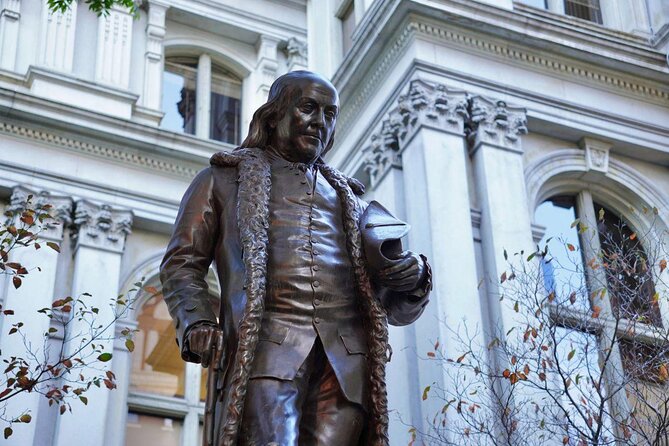
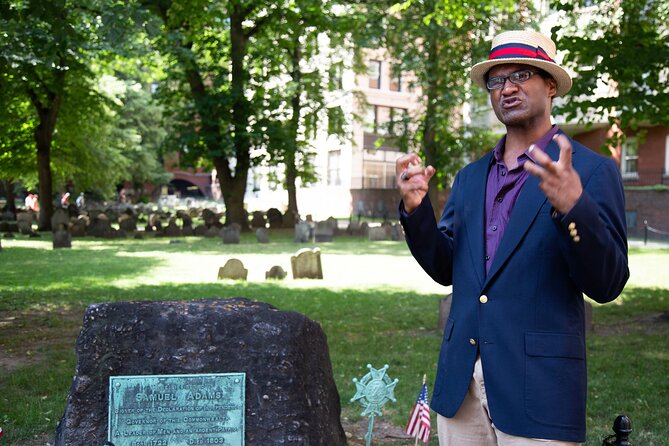
The first graveyard dates to 1660 and includes the graves of John Hancock, Paul Revere, and Samuel Adams. Your guide can make this more than a quick roll call of famous names by explaining who these men were, how their public roles differed, and how memory has shaped the way Boston presents them.
King’s Chapel, built in 1754, follows. It was Boston’s first Anglican church, and the stop includes its neighboring burial ground and the crypts beneath the church. Even if you do not enter every building, the placement of church, graves, and street gives you a feel for how tightly packed colonial Boston was.
The cemetery stops can be especially good for history fans. They can also affect the pace. One person found that too much time in a cemetery left the rest of the walk rushed, and that is a fair concern. If you use a walking stick or have trouble keeping up, tell the guide early and stay near the front, where it is easier to hear and follow the group.
More Freedom Trail Tours in Boston:
- Boston Freedom Trail Walking Tour with Costumed Guide
★ 4.5 · 2,531 reviews - Boston Food & History: Pizza, North End & Freedom Trail
★ 5.0 · 1,772 reviews - Boston’s Freedom Trail: A Revolutionary Walking Tour
★ 4.9 · 1,748 reviews - Boston: Freedom Trail History Small Group Walking Tour
★ 4.9 · 1,590 reviews
The meeting house behind the Boston Tea Party
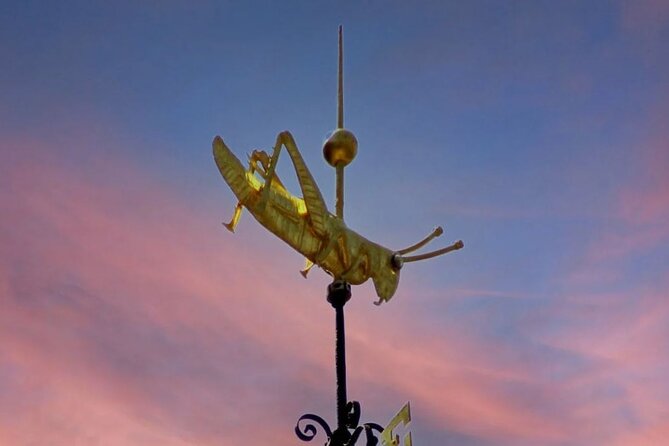
The route then reaches the Puritan meeting house built in 1729. This is where the Boston Tea Party began, and the stop gives your guide a chance to explain how a public meeting became a famous act of resistance.
The value here is the setting. You are not just hearing that colonists disliked a tax. You are standing at the kind of civic meeting place where residents gathered, argued, and made decisions in public. Ask questions if your guide leaves time, especially if you want more detail about what happened that evening or how many people took part. That level of detail may vary with the guide and the group’s schedule.
This is one of the stops where the tour format helps. On your own, it is easy to take a photograph and move on. A guide gives the building a role in the chain of events that led to open rebellion.
From Ticknor and Fields to the Old State House
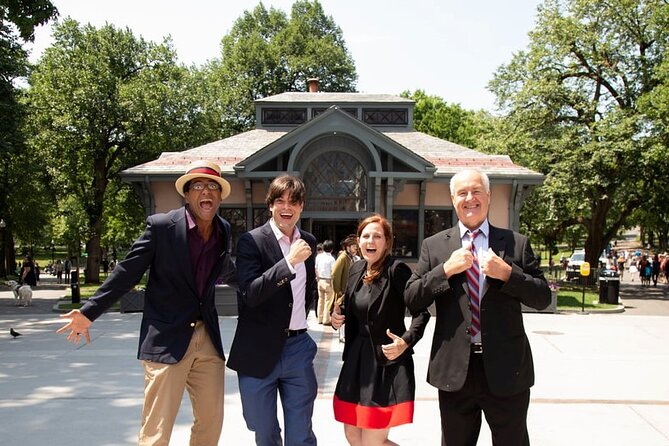
A 1718 brick building once served as a colonial apothecary and later housed the publishing firm Ticknor and Fields. Its literary connection brings in a different side of Boston. The guide discusses the major writers published there, showing that the city’s public identity was shaped by books and ideas as much as by battles and political speeches.
Then comes the Old State House, built in 1713. The building once housed the center of British government in Massachusetts and still carries symbols of the Crown, including a lion and unicorn. It is a compact, vivid reminder that the Revolution was first a local fight over authority.
Here, you hear about speeches, confrontations, and the pressure building between colonists and British officials. The building’s location is important too. The old government center stood amid ordinary commercial life, so political conflict unfolded in the middle of the city rather than in some distant capital.
The Boston Massacre and Faneuil Hall
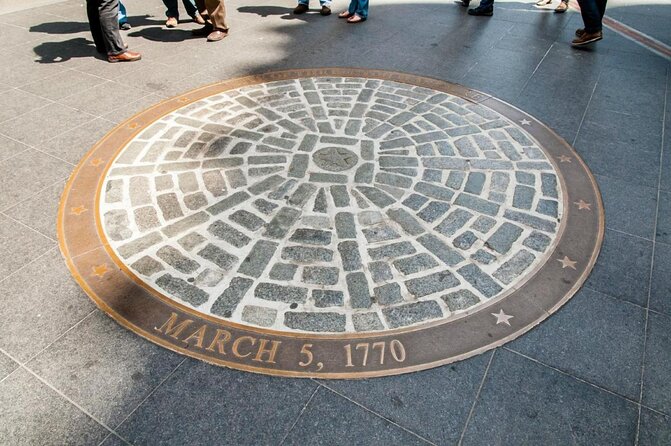
A circle of stones marks the site of the Boston Massacre. Your guide gives a step-by-step account of the night in 1770 when British soldiers fired into a crowd and killed five colonists.
This stop is valuable because it slows down a famous phrase. The event was immediately used by colonial leaders as proof of British oppression, while the facts on the ground were more tense and complicated. Hearing the sequence at the actual site helps you understand why the incident became such a powerful political tool.
Faneuil Hall comes next. Built as a marketplace in 1743, its meeting hall became more important than the market below. The guide explains the speeches delivered in what became known as the Cradle of Liberty.
You will likely spend time outside among pedestrians and other groups. If the guide is not facing you, voices can get lost in the street noise. A portable speaker would help, especially with a group near the 25-person limit, so stay close and ask for a repeat when needed.
Paul Revere’s house and the midnight signal
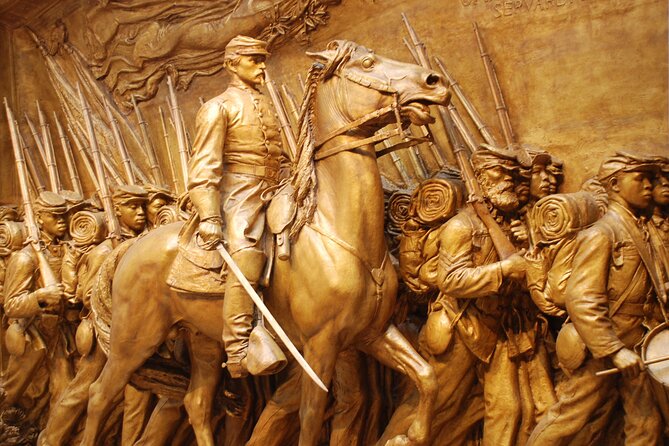
Paul Revere’s House is one of the most personal stops. The wooden building dates to 1680 and is Boston’s oldest building. It was home to the Revere family, and the guide explains Revere’s life there before connecting the house to his political and military role.
This is where the tour moves the Revolution out of public halls and into family life. Revere was not only a heroic rider in a famous story. He was also a working man, a father, and a resident of a crowded neighborhood. That added context helps you see the person behind the legend.
Old North Church is the next major highlight. Built in 1723, it is linked to the famous signal of April 18, 1775: two lanterns in the steeple meant the British were coming by sea. The guide explains how Paul Revere arranged the signal and why it mattered on the eve of open war.
The church is one of the most memorable places on the route, but construction or heavy crowds can change what you see on a given day. One guide handled those conditions by moving the group around the work and nearby crowds while continuing the story. Expect flexibility rather than a perfectly quiet stop.
Copp’s Hill, Bunker Hill, and Old Ironsides
The walk ends at Copp’s Hill Terrace in Boston’s North End. This 1660 burying ground was used for British cannon positions during the Battle of Bunker Hill. Your guide also points out notable Bostonians buried there and explains how the battle unfolded.
From the terrace, you can see the 221-foot Bunker Hill Monument. The view connects the final stop with the larger military story. Colonial forces defended a hastily built earthwork and repelled two British attacks before retreating. The scene makes clear that the Revolution was not only about speeches and symbolic protests.
You can also see the masts and rigging of USS Constitution in Charlestown. Known as Old Ironsides, the ship won major battles in the War of 1812 and is the oldest warship afloat anywhere in the world.
The stated end point is Copp’s Hill Terrace at 520 Commercial Street, while the meeting details also identify 7 Jackson Avenue in the North End. Check the exact map pin after booking so you know where to meet and where the walk finishes. The practical benefit of this ending is that you are left in a lively historic neighborhood, with views toward Charlestown and easy options for continuing your day.
Pace, group size, and comfort
The tour runs about 2 hours and 30 minutes and has a maximum of 25 people. That is a reasonable group size for city walking, though it is not a private tour. You will get more personal attention than with a huge bus group, but you may still need to position yourself near the guide.
The route requires moderate physical fitness. Several miles of walking are covered, and the pace can feel brisk because the tour must reach all 16 sites within the time limit. Most of the walking happens between short stops, but the overall distance adds up.
I would wear shoes you can walk in for an afternoon and bring water. Boston’s weather can shift, and the tour requires good weather. If poor weather cancels the experience, you are offered another date or a full refund. You can also cancel for a full refund up to 24 hours before the start time.
Service animals are allowed. The experience is offered in English, and you receive confirmation when booking.
Is $31 a fair price?
Yes, if you want a guided introduction rather than a self-guided checklist. At $31, the main value comes from the guide’s storytelling and the time saved planning a route through downtown, Beacon Hill, and the North End.
The tour does not appear to include admission into every historic building, so do not treat the price as an all-access ticket. Think of it as a guided outdoor history walk with stops at major sites. You get orientation, context, and a sensible sequence. You can then decide which buildings deserve a separate visit.
It is especially good value on a first Boston trip. You cover the city’s major colonial and Revolutionary sites in one morning or afternoon, then return later to explore the places that caught your interest. If you already know Boston well and dislike group walking, you may prefer a slower self-guided visit.
Who should book this walk?
I would choose it for first-time visitors, families with teenagers, history fans, and anyone who wants Boston’s major sites explained rather than simply photographed. Noah has kept teenagers engaged, and guides such as Sam and Julia have handled groups with a lively mix of facts and humor.
It also suits people who want more than a Revolution-only story. The stops on abolition, civic debate, literature, immigration, and later American struggles give the walk a broader frame.
I would be cautious if you have limited mobility, tire quickly, or need every stop to be quiet and unhurried. The company does its best to keep a workable pace, but the route is long and the schedule is fixed. Ask about the pace at the beginning, stay close enough to hear, and do not hesitate to tell the guide if you need a moment.
Should you book Boston’s Freedom Trail walk?
Book it if you want to cover the full trail in one organized outing and enjoy history told by a lively guide. The strongest part is not simply the number of stops. It is the way the route links the Boston Massacre, the Tea Party, Paul Revere, abolition, burial grounds, and Bunker Hill into one city story.
Skip it if you prefer to wander alone, enter each building at your own speed, or avoid several miles of walking. For everyone else, $31 is a sensible way to get your bearings and give Boston’s old streets a human voice.
FAQ
How long does the Freedom Trail walking tour last?
The tour lasts approximately 2 hours and 30 minutes.
Where does the tour begin?
It begins at The Embrace, beside the Boston Common Visitor Information Center at 139 Tremont Street, Boston, Massachusetts.
Where does the tour end?
The tour ends at Copp’s Hill Terrace in Boston’s North End, with views of Bunker Hill Monument and USS Constitution in Charlestown. The listed street details include 520 Commercial Street and 7 Jackson Avenue, so check the exact map point after booking.
How many Freedom Trail sites are included?
The tour covers all 16 official sites of Boston’s Freedom Trail.
How much walking is involved?
The tour covers several miles and requires a moderate level of physical fitness. Comfortable walking shoes are recommended.
What happens if the weather cancels the tour?
The experience requires good weather. If it is canceled because of poor weather, you are offered a different date or a full refund. You can also cancel at least 24 hours before the start time for a full refund.
Just added around Boston
- Delicious Donuts of Boston: A Sweet History Walking Tour★ 5.0 · 1,038 reviews
- Freedom Trail Walking Tour 250★ 4.5 · 1,118 reviews
- Narrated Sunset Cruise of Boston Harbor★ 4.0 · 532 reviews
- Sunset Sailing Cruise on a Tall Ship in Boston Harbor★ 4.5 · 414 reviews
- Boston’s North End Food and History Walking Tour★ 5.0 · 459 reviews
- Boston North End Food Tour of 6+ Tastings, Cannoli, Lobster Roll★ 5.0 · 1,404 reviews
- Boston’s North End Food Tour: Italian Flavors & Heritage Walk★ 5.0 · 1,322 reviews
- Boston Harbor Sunset Cruise★ 4.5 · 632 reviews
Boston Tours, compared.
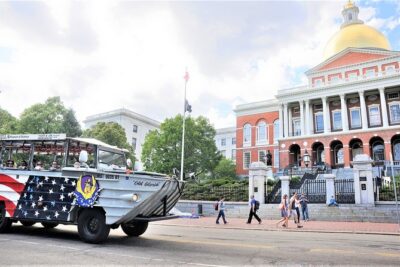
Boston Duck Boat Sightseeing City Tour with Cruise Along Charles River
Read our review →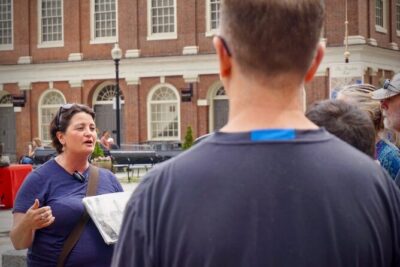
Freedom Trail History Small Group Walking Tour
Read our review →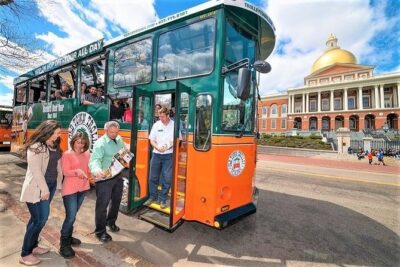
Boston Hop-On Hop-Off Trolley Tour with 13 Stops
Read our review →
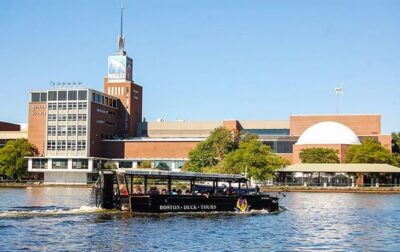
Boston Duck Tour: The Original and World-Famous
Read our review →
Cambridge: Harvard University Student-Guided Walking Tour
Read our review →
Harvard University Campus Guided Walking Tour
Read our review →
Boston Fenway Park: Guided Ballpark Tour with Options
Read our review →Browse the lists this tour appears in