
Reviewed · PHILADELPHIA
Revolution and the Founders: History Tour of Philadelphia
Philadelphia’s revolutionary story is packed into a small area, and this two-hour walking tour gives you a fast, lively introduction to it. You move from the Liberty Bell and Independence Hall to Franklin Court, Carpenters’ Hall, Congress Hall, and several less familiar sites tied to the country’s founding.
I like two things here: every guide has a history degree, and the route gives you useful orientation before you decide which museums and interiors deserve more of your day. The main consideration is that this is largely an outdoor tour, so cold, rain, crowds, or long periods standing still can affect your comfort.
Key points at a glance
- See the essential Old City sights in two hours, including the Liberty Bell, Independence Hall, Congress Hall, and Franklin Court.
- Walk with a history-trained guide, with guides such as Josh, Kyle, Ted, Joseph, and Vince known for strong storytelling and lively delivery.
- Learn the backstory behind the landmarks, including the Liberty Bell’s inscription, French aid during the Revolution, and Philadelphia’s years as the national capital.
- Use the tour as a first-day orientation, then return on your own for Independence Hall, the Liberty Bell pavilion, or other museums.
- Expect an outdoor experience, with no included interior admission to Independence Hall or the Liberty Bell pavilion.
- Pay $29 per person for a compact overview that keeps the rest of your day open.
Why Philadelphia’s founding story works on foot
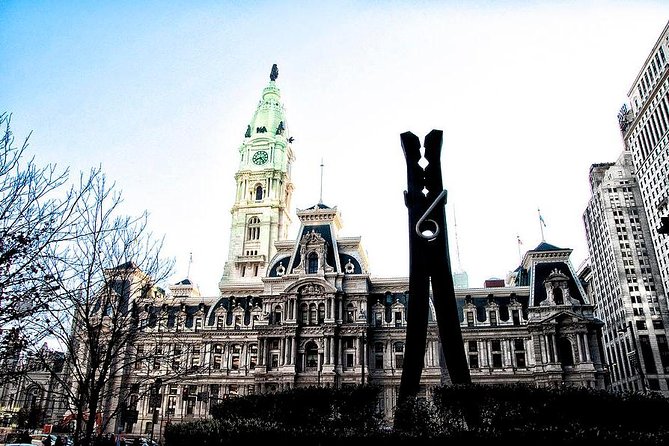
Philadelphia’s historic center is unusually suited to walking. Within a fairly compact area, you can move from the symbol of American liberty to the room where independence was debated, then on to the homes, meeting places, banks, libraries, and offices that shaped the new nation.
That physical sequence matters. You are not only hearing names such as Franklin, Washington, Adams, Hamilton, Madison, and Jefferson. You are seeing how close their workplaces and meeting halls were to one another. The tour turns a list of famous people into a walk through an actual neighborhood.
Your guide begins with a check-in and a short introduction to the Revolution. From there, the group moves through Old City at a brisk sightseeing pace. The tour is offered in the morning and afternoon, runs in rain or shine unless weather forces cancellation, and has a maximum of 24 people.
That group size is large enough to offer energy and questions, but small enough for a guide to keep the group moving together. It is still worth arriving ready to listen outdoors. This is not a vehicle tour, and you will spend much of the two hours on foot or standing near historic buildings.
More History Tours in Pennsylvania:
- 2-Hour Gettysburg Battlefield Guided History Bus Tour with a National Park Guide
★ 4.5 · 2,201 reviews - Philadelphia Old City Historic Walking Tour with 10+ Top Sites
★ 5.0 · 2,020 reviews - Philadelphia: Revolution and The Founders History Tour
★ 4.6 · 450 reviews
The Liberty Bell without losing an hour in line
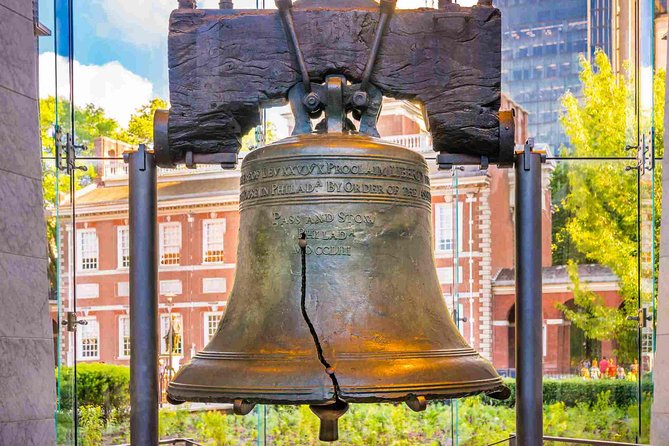
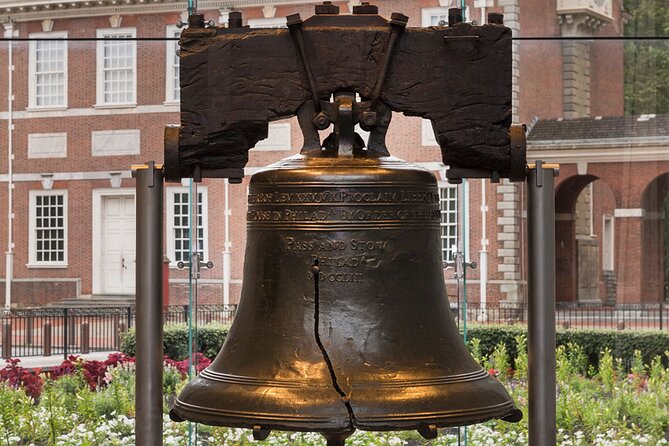
The Liberty Bell is usually the first major sight on the route. The tour discusses the bell from outside the Liberty Bell pavilion, covering its creation, its early crack, and the later process that turned it into a national symbol.
Commissioned in 1752, the bell cracked during its initial test ring. Local workmen John Pass and John Stow recast it two years later. Its famous inscription refers to liberty throughout the land and comes from the King James Bible, with a connection to the biblical jubilee when enslaved people were freed and debts were forgiven.
The practical advantage is clear: you get the essential story without spending the tour time in the pavilion queue. During busy periods, the line can take close to an hour. Your guide gives directions for returning later if you want to see the bell inside. Admission to the pavilion is free, but that visit is not included in the tour and may require about an additional hour.
This arrangement suits visitors who want to cover a lot of ground. If seeing the bell at close range is your top priority, plan a separate return visit and allow extra time.
Independence Hall and the birth of the new government
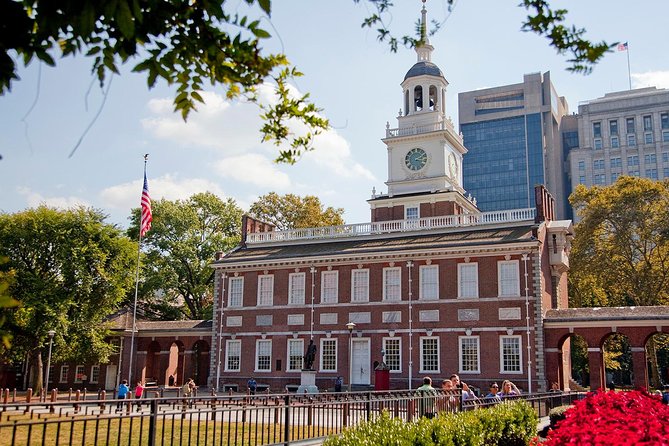
Independence Hall is the central stop. This is where the Declaration of Independence and the United States Constitution were debated and adopted, making it one of the most important buildings in American political history.
The tour focuses on the key facts and the exterior setting, with a quick stop inside the East Wing when crowds and closures allow. That wing is described as the oldest and most historic part of the complex, and it later served as the Supreme Court Chambers when Philadelphia was the national capital.
You should understand the ticket distinction before booking. Entry to Independence Hall requires a free timed ticket, and the tour does not include that ticket or a full interior visit. The company recommends allowing about two additional hours to explore the complex more fully.
I see this as a strength for a first visit, not a flaw. A guide can explain what you are looking at, then you can return with a timed ticket and spend your attention inside. Still, if you want a detailed room-by-room visit, this two-hour walk is only the beginning.
Washington, Adams, and Philadelphia’s first presidential residence
The route continues to the site of America’s first White House. George Washington and John Adams lived and worked in Philadelphia when it served as the country’s capital from 1790 to 1800.
The stop also brings in less polished parts of the era. Foreign diplomats, members of Congress, and senators used the residence for formal and informal business. Benedict Arnold lived there as military governor of Philadelphia after the British left the city during the Revolutionary War.
This is a useful reminder that the new government did not begin in Washington, D.C. Philadelphia was the working capital, and the people making national policy lived, argued, entertained, and conducted business in the same compact district you are walking through.
A few more Pennsylvania days worth weighing up
- Dark Philly Adult Night Tour
★ 5.0 · 4,241 reviews - From New York City: Washington and Philadelphia 1-Day Tour
★ 4.5 · 2,877 reviews - Philadelphia Hop-On Hop-Off City Tour
★ 4.0 · 2,347 reviews - Philadelphia: Eastern State Penitentiary Admission
★ 4.7 · 894 reviews
Congress Hall and the early presidency
Congress Hall gives the capital story more shape. The building housed Congress from 1790 to 1800 and hosted the inaugurations of Washington and Adams.
The stop is especially helpful if your knowledge of the early republic is limited to the names of the first presidents. You hear how the young government functioned before Washington became the permanent capital, and why Philadelphia’s buildings carry such importance beyond their age.
Because the tour moves quickly, you should not expect a long interior visit here. Think of Congress Hall as one part of a connected story about how the federal government found its footing.
Franklin Court and the many lives of Benjamin Franklin
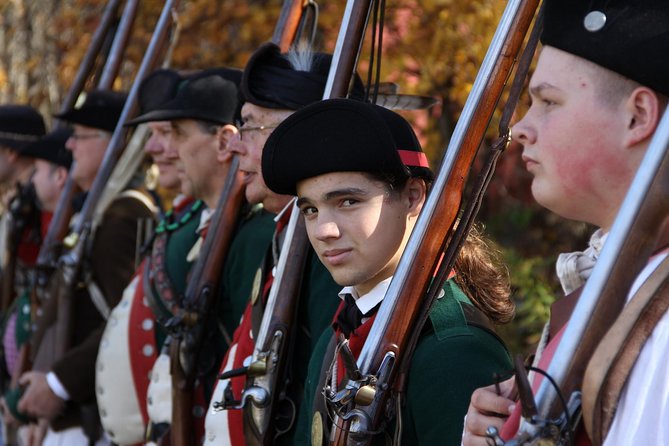
Franklin Court brings the tour’s most versatile character into focus. Benjamin Franklin was a printer, publisher, inventor, scientist, diplomat, civic organizer, and statesman. His connection to the Constitutional Convention and the Revolution gives the guide a chance to link personal ambition with public work.
The tour discusses Franklin’s electrical experiments, printing career, and political service. It also presents his role in building institutions, rather than treating him only as the man on the hundred-dollar bill.
You may hear the famous idea that the founders needed to hang together or hang separately. The point is less about a clever line than about the fragile cooperation required among colonies with different interests.
Franklin Court is a good place to slow down mentally, even though the walking pace remains steady. You are moving through a district where private homes, printing businesses, government offices, and political meeting places stood close together.
The first military headquarters and the practical side of war

Another stop marks the location of America’s first Pentagon, where military strategy and intelligence were formulated during the Revolution.
This part of the walk adds needed balance. Revolutionary Philadelphia was not only a place of speeches and grand principles. It was also a center for planning, intelligence, supplies, and military decisions.
The tour gives you a broad view rather than a full military history. That works well for a short introduction, especially if you want to understand how political ideals were tied to the difficult work of fighting a war.
Franklin’s post office and a surviving colonial detail
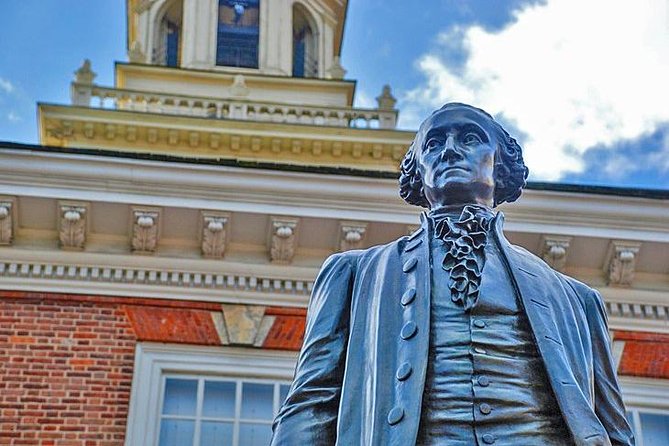
The Benjamin Franklin Post Office and Museum offers one of the tour’s more unusual stops. It is described as the only Colonial-themed post office operated by the United States Postal Service, and it remains an active post office.
The building does not fly the American flag because Franklin became postmaster general in 1775, before there was an American flag in the later national sense. Its postmark, B. Free Franklin, is still used to cancel stamps. A museum on the second floor presents postal history and related objects.
This stop is valuable because it connects a famous founder to ordinary systems that made colonial life work. Mail, printing, and information were not background details. They helped people organize, argue, trade, and coordinate political action.
Carpenters’ Hall and the search for French support

Carpenters’ Hall is one of the route’s strongest political stops. The building hosted the First Continental Congress in 1774 and later became linked to secret meetings involving Benjamin Franklin, John Jay, Francis Daymon, and the French agent Julien Achard de Bonvouloir.
Those December 1775 meetings helped lead to negotiations for French support. The French alliance was crucial to the American war effort, so this stop shows that victory depended on diplomacy as well as battlefield courage.
The building also survived the British occupation of Philadelphia during the winter of 1777. That detail makes the site feel less like a frozen memorial and more like a place caught in the conflict.
If you enjoy the international side of the Revolution, pay close attention here. The tour does not treat independence as a purely American achievement. It shows the overseas alliances and negotiations that helped make the result possible.
The First and Second Banks of the United States
The route then shifts from war and independence to the financial structure of the new country.
The First Bank of the United States was championed by Alexander Hamilton, the first Secretary of the Treasury. The tour also points out its architectural importance and discusses its founding in the early national period.
The Second Bank of the United States provides a useful comparison. It was modeled on Hamilton’s First Bank, chartered under President James Madison in 1816, and later lost its charter during Andrew Jackson’s presidency in 1834.
These stops widen the tour beyond 1776. You hear about the disagreements that followed independence, including the competing views of Hamilton, Madison, and Jackson. The guide also discusses famous duels connected with major figures of the era.
For visitors who think a Revolution tour ends when the British leave, this is one of the best parts. The walk shows that the country’s early arguments continued through banking, presidential power, and the proper role of the federal government.
Philosophers, libraries, and the machinery of ideas
The American Philosophical Society was founded by Franklin in 1743 and remains connected with the University of Pennsylvania. Early members included Washington, Adams, Jefferson, Hamilton, Thomas Paine, David Rittenhouse, and James Madison.
The guide discusses Franklin, the university, and America’s first surgical center as the group walks nearby. You get a sense of Philadelphia as a center for experiments, education, medicine, and civic debate.
The Library Company adds another layer. Founded by Franklin in 1731, it is described as the first institution in the world to lend materials to members of the public. The stop helps explain how books and shared knowledge shaped the city’s political culture.
I especially like this portion for visitors who want more than military dates. The Revolution grew from institutions that helped people read, argue, test ideas, and organize together.
Dolley Todd House and the human scale of history
The former home of Dolley Madison, then Dolley Todd, gives the walk a more personal angle. She lived there with her first husband, John Todd, from 1791 to 1793.
The house site reflects the life of a middle-class Philadelphian in the eighteenth century. That is a useful change of scale after so many discussions of presidents, banks, Congress, and national policy.
You see how the founding era affected ordinary homes and relationships, not only famous men in public rooms. The tour also connects Dolley’s later place in national life with her early years in Philadelphia.
One guide, Kyle, has been known to use character and emotion when discussing this period, including the relationship between Dolley and James Madison. If you prefer a quiet, strictly academic presentation, that style may feel theatrical. If you enjoy storytelling and acted scenes, it can make the people easier to remember.
What the guides add to the experience
The strongest feature of this tour is the guide-led storytelling. The company says every guide has a history degree, and its guides include history teachers and American history professors.
Names associated with recent departures include Josh, Kyle, Ted, Joseph, and Vince. Their styles vary. Josh is often energetic, funny, and strong at keeping children and adults involved. Kyle has been described as especially animated, sometimes taking on the manner of a founder. Ted works hard to keep the group engaged in difficult weather, while Joseph brings a natural storytelling style. Vince is particularly comfortable answering questions and adjusting the pace when discussion runs long.
You cannot assume you will receive a specific guide unless the company allows you to request one. Still, the pattern is useful: this is not a silent march between plaques. You should expect questions, anecdotes, dramatic delivery, and a guide who may shape the route around the group’s interests.
One caution: a highly theatrical guide will not suit everyone. One poor rating objected to a guide focusing too much on acting. Most of the available feedback praises the energy, but your preference matters. If you want a formal lecture with little performance, ask at the start for a more direct historical approach.
Price, pace, and what you get for $29
At $29 per person, the tour is reasonably priced for a two-hour guided introduction in Philadelphia’s historic center. You are paying for a history-trained guide, a carefully linked route, and a quick explanation of many sites that can otherwise seem disconnected.
The value is best if you are visiting Philadelphia for the first time. You can identify the places worth revisiting, learn how the neighborhood fits together, and keep the rest of your day free for museums, meals, or independent exploration.
The price does not cover timed entry to Independence Hall or admission to the interior of the Liberty Bell pavilion. Both require extra time, even though the entries themselves are free. Treat the tour as an orientation and outdoor overview, not as a complete ticketed visit to every landmark.
The meeting point is at 523 Market Street. The walk ends at the Merchant Exchange Building at 143 South Third Street, behind City Tavern and the Merchants Exchange. The ending area is tied to the Continental Congress and Alexander Hamilton’s Philadelphia connections, so you finish near more historic ground rather than at a transport hub.
You receive confirmation when booking. Children must be accompanied by an adult, service animals are allowed, the route is near public transportation, and most people can participate. Free cancellation is available up to 24 hours before the start time. Within 24 hours, refunds are not offered, and weather or minimum-group cancellations may lead to a new date or full refund.
How to prepare for the two-hour walk
Wear comfortable shoes and dress for the forecast. The tour runs outdoors and can involve long stretches of standing, a point that matters in winter. Cold conditions have not stopped guides from trying to keep groups moving, but you should not count on indoor shelter at every stop.
If you want to visit Independence Hall or the Liberty Bell pavilion inside, plan that separately. The guide can explain how to return, but the extra visits require their own time and, in the case of Independence Hall, a free timed entry pass.
I would choose the morning departure if you want to use the guide’s route as your day plan. Choose the afternoon if you prefer a slower start or want to visit another attraction first. Since the tour covers many sites quickly, carry a short note on the places you want to revisit rather than trying to remember every detail.
Who should book this Philadelphia history tour?
Book it if you want a fast first look at Old City, enjoy stories about the founders, and prefer seeing the city on foot. It is particularly useful for first-time visitors, families with school-age children, solo visitors who want a clear route, and history fans who like connecting buildings with people and events.
It is also a good choice if you want to save your museum time for the sites that interest you most. The guide gives you enough context to make those later choices with purpose.
Skip it if you want a long interior visit at Independence Hall, a quiet museum-style presentation, or a tour that avoids standing outdoors. You will get the most from the $29 price when you see it as a lively orientation to Philadelphia’s revolutionary district, then spend more time on your own at the sites that catch your attention.
FAQ
How long does the Revolution and the Founders tour last?
The tour lasts approximately two hours.
What sites are included on the walking route?
The route includes the Liberty Bell, Independence Hall, the former President’s House, Congress Hall, Franklin Court, the site of America’s first Pentagon, the Benjamin Franklin Post Office and Museum, Carpenters’ Hall, the First and Second Banks of the United States, the American Philosophical Society, the Library Company, and the Dolley Todd House site.
Are Independence Hall and the Liberty Bell visited inside?
The tour mainly covers these sites from outside. The group may make a quick stop inside the East Wing of the Independence Hall complex if crowds and closures allow. Timed entry to Independence Hall and interior access to the Liberty Bell pavilion are not included.
Does the tour run in the morning and afternoon?
Yes. Morning and afternoon departures are available, and the tour runs every day in rain or shine unless poor weather causes cancellation.
How large is the group?
The maximum group size is 24 travelers.
What is the cancellation policy?
You can cancel at least 24 hours before the start time for a full refund. Cancellations or changes made within 24 hours are not refunded or accepted. If poor weather or an insufficient number of bookings cancels the tour, you will be offered another date or experience, or a full refund.
Just added around Pennsylvania
- Authentic Tour & Meal with the Amish!★ 5.0 · 394 reviews
- Amish Experience Visit-In-Person Tour★ 5.0 · 501 reviews
- Unique Amish Immersion in Lancaster★ 5.0 · 473 reviews
- Ghost Tour: History and Haunts – Family Friendly – Best in Gettysburg★ 4.5 · 378 reviews
- Gettysburg: Ghost Hunt Tour with Ghost Hunting Equipment★ 4.5 · 589 reviews
- Echoes of War All Ages Ghost Tour★ 5.0 · 658 reviews
- Philadelphia: Revolution and The Founders History Tour★ 4.6 · 450 reviews
- Philadelphia: Double-Decker Hop-on Hop-off Sightseeing Tour★ 4.4 · 868 reviews
Philadelphia Tours, compared.
From New York City: Washington and Philadelphia 1-Day Tour
Read our review →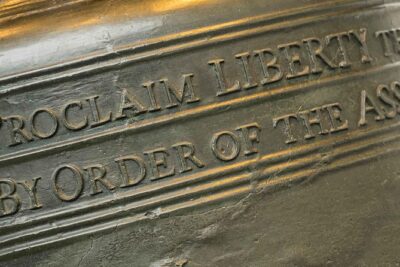
Philadelphia Old City Historic Walking Tour with 10+ Top Sites
Read our review →
From NYC: Day Trip to Philadelphia and Amish Country
Read our review →
Philadelphia and Amish Country, 1-Day Tour from NYC
Read our review →Browse the lists this tour appears in