
Reviewed · GETTYSBURG
Echoes of War All Ages Ghost Tour
Gettysburg’s ghost stories work best when they stay tied to real people, and this walking tour does just that. You move through the old town where soldiers died, families hid, and Abraham Lincoln prepared the Gettysburg Address. The supernatural tales add atmosphere, but the Civil War stories give the tour its backbone.
I like the way the route combines Tillie Pierce’s wartime story with the famous homes linked to the battle. I also like the family-friendly tone: children can enjoy the ghost tales without facing a horror show. The main drawback is that the tour is almost entirely outdoors, so poor weather, uneven walking, and a less dramatic guide can affect the evening.
Key points to know before booking
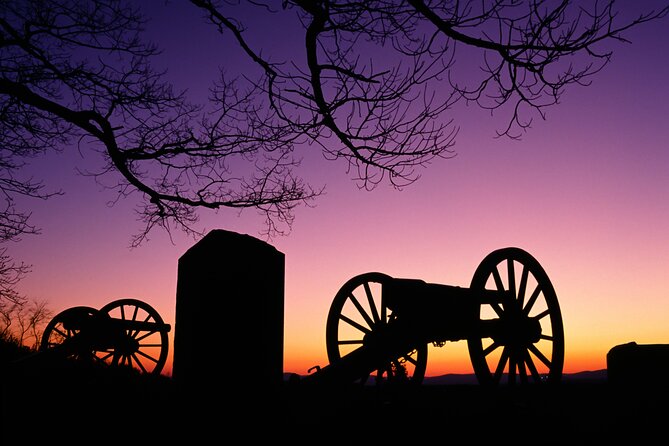
- The route covers eight historic stops in about 90 minutes, ending near the Farnsworth House Inn.
- Civil War history comes first, with ghost stories used to make the people and buildings memorable.
- Families with older children fit the tour well, since the stories are spooky but generally not too frightening.
- Guides make a major difference, with Allison, Ted, and Major Finn praised for energy, humor, and storytelling.
- You walk the full time, so wear comfortable shoes and prepare for changing weather.
- The $29.99 price is fair if you want a compact introduction to Gettysburg after the museums and battlefield.
Gettysburg’s ghosts are tied to real wartime lives
Many ghost tours rely on a string of unrelated scares. This one has a clearer setting. The route follows the old town through places linked to the Battle of Gettysburg, the local families caught in the fighting, and soldiers who died far from home.
That connection gives the tour more weight. You are not simply asked to imagine a shadow in an old building. You hear why the building mattered in 1863, who used it, and how the battle changed the town. The ghost stories then become a way to think about memory, grief, and the people who never left Gettysburg, at least in local legend.
The tour is designed for all ages. It can entertain children, teenagers, parents, and older adults in the same group. An 8-year-old reportedly enjoyed it without finding it too scary, while older children appreciated the historical detail. Still, the tone is spooky, so consider your child’s comfort with death, war, and ghost stories before booking.
The best guides add humor without making light of the battle. Major Finn has been praised for his lively delivery, while Allison is noted for her energy and command of the material. Ted has also been described as interesting and informative. Guide quality can vary on any scheduled walking tour, but this experience clearly depends on the person carrying the lantern.
More Ghost Tours in Pennsylvania:
- Civil War Ghosts: Echoes of the Fallen Gettysburg Ghost Tour
★ 4.5 · 913 reviews - Gettysburg: Ghost Hunt Tour with Ghost Hunting Equipment
★ 4.5 · 589 reviews - Civil War Ghosts: Echoes of the Fallen Gettysburg Ghost Tour
★ 4.3 · 480 reviews
Starting at Lincoln Square and the Wills House
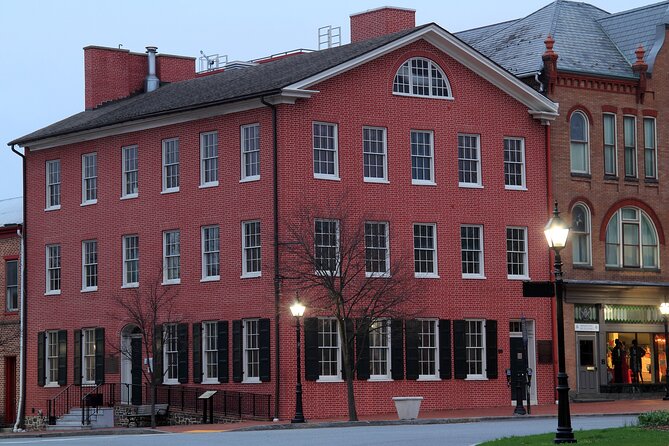
The meeting point is the Ghost City Tours of Gettysburg storefront at 10 Lincoln Square, though the starting point can change with the route. You receive a short introduction before heading into the historic center.
The first formal stop is the Lincoln statue near the Wills House. It is a quick orientation point, helping you connect the modern town with the man whose visit made Gettysburg famous far beyond the battlefield. The stop lasts about 10 minutes and includes the statue and the surrounding square.
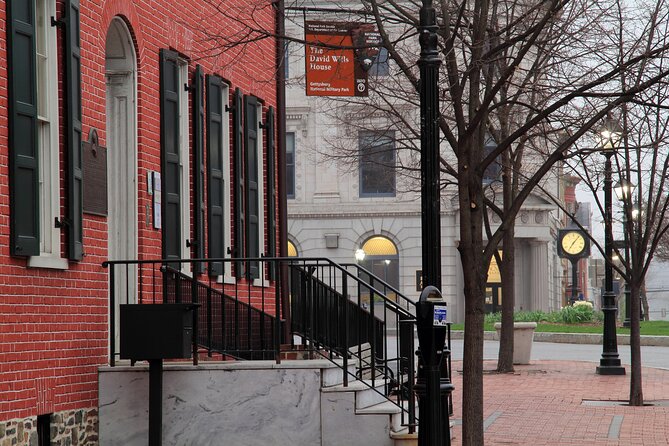
The David Wills House receives a longer visit. Abraham Lincoln stayed here when he came to Gettysburg and finished much of the Gettysburg Address. That fact gives the building unusual importance: a house in an ordinary town became part of one of the most remembered speeches in American history.
This is where the tour’s method becomes clear. You get a short lesson in the building’s past, then the story turns toward what may linger there. If you already know the Gettysburg Address by heart, the ghost angle adds a different mood. If you know little about the battle, this stop gives you useful context before the route moves to wartime homes and inns.
Hotel Gettysburg and the town caught in battle
Hotel Gettysburg is presented as a building that was operating during the Battle of Gettysburg and is linked with haunted stories. The stop takes about 12 minutes. The building helps you picture Gettysburg as a working town, not just a battlefield marked by monuments.
That matters because the battle did not happen in an empty field. Residents watched troops arrive, buildings changed purpose, and ordinary streets became part of a military crisis. A ghost story at a hotel can feel more personal than one at a distant battlefield because you are standing where daily life continued under extreme pressure.
The tour does not replace a full battlefield visit. It gives you the town’s perspective, especially the effect on homes, businesses, and local families. If this is your only Gettysburg activity, you will get a useful overview, but you should not expect a detailed account of troop movements or battlefield tactics.
Tillie Pierce and the civilian view of 1863
The Tillie Pierce House Inn is one of the more meaningful stops. The guide discusses Tillie Pierce, a 15-year-old girl who endured the battle. Her story brings the conflict down to a human scale.
A young person witnessing the battle helps you understand how frightening the event must have been for local residents. The tour uses her experience to shift attention away from famous generals and toward people who had no choice but to live through the fighting.
This stop is especially effective for families. Children and teenagers may connect more quickly with a young person’s story than with a list of commanders and dates. It also keeps the ghost tales grounded in real suffering rather than treating the town as a stage for cheap scares.
The building itself is part of the appeal, but you should remember that the tour discusses the site from the street and does not promise an interior visit. Admission is not listed as included for the paid historic properties along the route.
A few more Pennsylvania days worth weighing up
- 2-Hour Gettysburg Battlefield Guided History Bus Tour with a National Park Guide
★ 4.5 · 2,201 reviews - Gettysburg Battlefield Self-Guided Driving Audio Tour
★ 4.5 · 910 reviews - Gettysburg: Horse-Drawn Carriage Battlefield Tour
★ 4.8 · 896 reviews - Gettysburg: Licensed Guided Battlefield Horseback Tour
★ 4.9 · 419 reviews
Shriver House, a home changed by war
The Shriver House Museum was built in 1860 for George Washington Shriver and his family. Before the war, it was a family home with a hopeful future. During the Battle of Gettysburg, it was used as a Confederate hospital and sniper position.
That change in purpose tells you a great deal about the battle’s effect on private property. A home could become a medical station, a lookout, or a place where wounded men were treated. The contrast between domestic life and wartime use is one of the strongest ideas in the tour.
The Shriver House also serves as a memorial to the soldiers who fought and died in Gettysburg. The ghost stories here are easier to appreciate after hearing the building’s wartime history. You may not accept every haunting claim, and you do not have to. The value is in understanding why people associate the house with pain, fear, and unusual activity.
One practical point: the tour is a walking discussion of the site, not a full museum admission. If you want to see the interior and learn more about the house’s furnishings and restoration, plan a separate visit.
Jennie Wade House and the civilian cost of battle
The Jennie Wade House is linked to the only civilian casualty of the Civil War. Jennie Wade was killed in Gettysburg during the battle, and the house is now one of the town’s best-known historic sites.
This is among the most important stops for understanding what made Gettysburg different from a distant military camp. Civilians were not safely removed from the action. The battle reached kitchens, bedrooms, and family routines.
The ghost stories connected with the house can be intense for some children, though the tour is not designed as an extreme scare event. One family even noticed what appeared to be a woman’s face in a window while visiting. Treat such moments as personal impressions rather than proof, but they show why the site has such a strong emotional pull.
The Jennie Wade House is one of the locations where admission is not included. The walking tour still gives you the historical setting from outside, while a separate paid visit may take you farther into the building’s story.
Farnsworth House Inn and the route’s final legends
The Farnsworth House Inn is the final listed stop and a natural place to end. The house is said to have seen more action during the battle than any other home in the city. Local stories also connect it with 16 spirits.
The building’s wartime role makes it an effective finale. By this point, you have heard about soldiers, residents, hospitals, civilians, and buildings pressed into military service. The Farnsworth House gathers those themes into one last set of ghost stories.
The tour ends at 401 Baltimore Street, near the inn, although the route can change. Ending here is practical if you want to continue exploring the historic center, find dinner, or consider another visit to the inn. The tour does not include admission to every building, so check your plans if you want to go inside afterward.
The Farnsworth House stories may be the most traditionally ghostly part of the route. If you want a serious battlefield lecture, this section may feel theatrical. If you want a memorable final stop with a strong local legend, it fits the tour well.
What the 90-minute walk feels like
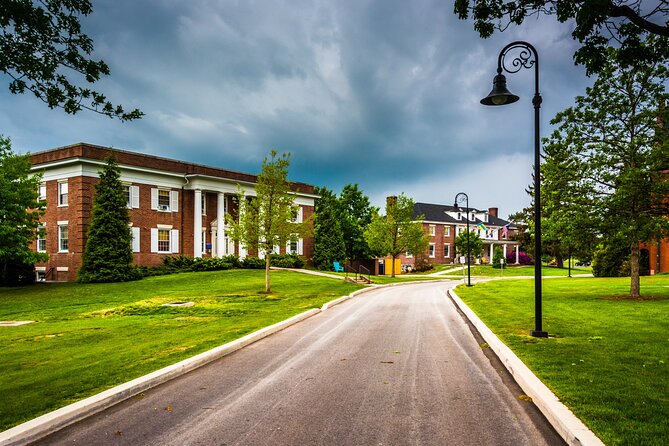
The advertised duration is about one hour and 30 minutes. With eight stops, the pace is steady rather than rushed. You spend roughly 10 to 12 minutes at most major locations, with short walks between them.
This is not a bus tour. You remain on foot for the full route, and one family specifically described it as a full 1.5 hours of walking. The guide did not leave anyone behind, but you should still wear supportive shoes and bring water if needed.
A moderate level of physical fitness is recommended. The route takes place through town, so the main challenge is the duration rather than strenuous exertion. Weather matters as well. The tour requires good conditions and may be rescheduled or refunded if poor weather cancels it.
Groups can reach 25 people. That is small enough for a guide to address the group directly, though a full group may make it harder to hear at busy street corners. Staying near the guide is wise, especially during evening walks.
How much value you get for $29.99
At $29.99 per person, this tour is priced like a compact evening activity rather than a full historical program. I think the value is good if you want a guided introduction to Gettysburg’s old town and enjoy ghost stories as a way to remember the sites.
You are paying for about 90 minutes of live storytelling, a route through several notable buildings, and an overview of how the battle affected civilians. You are not paying for museum admission, a battlefield excursion, transportation, or a detailed military lecture.
The strongest value comes from the blend. A basic ghost walk might offer scares but little context. A standard town walk might explain the buildings but lack the evening atmosphere. This tour tries to do both, and the better guides make the combination work.
If you have already taken several Gettysburg ghost tours, some legends may feel familiar. The experience may also be less satisfying if you want firm historical proof for every haunting. The guide’s presentation matters a great deal, so the same route can feel more vivid with an energetic storyteller than with someone who relies heavily on a set script.
Free cancellation is available until 24 hours before the start time. Cancellations within 24 hours are not refunded. The minimum group requirement also means a scheduled tour could be canceled, in which case you are offered another date or experience, or a full refund.
Which guide style suits you best
The strongest guide feedback centers on energy, humor, and storytelling. Major Finn is repeatedly praised for creating vivid scenes and mixing facts with ghost tales. Allison is described as enthusiastic and well informed, while Ted is noted for holding attention with interesting details.
You should expect a guide-led performance, not a quiet audio walk. Some guides may dress for the part, and the tone can include jokes alongside stories of war and death. That makes the tour accessible to families and groups with mixed interests.
The tradeoff is that a theatrical approach is not for everyone. One poor experience described a guide as weak in presentation and historical delivery. Another concern was that some stories did not match what the person had learned on other tours. The company says it researches stories with local historians, but haunting traditions can vary from one guide and tour company to another.
My advice is simple: choose this if you enjoy a lively storyteller and are happy to treat paranormal claims as local tradition. Choose a battlefield-focused program instead if you want precise military history, maps, and troop movements.
Who should book the Echoes of War tour
This tour suits families with older children, couples looking for an evening walk, and first-time visitors who want an easy introduction to Gettysburg’s historic center. It also works well after a museum or battlefield visit, when you already have the basic facts and want a more personal look at the town.
It is particularly useful for anyone who wants to hear about local residents, not only generals and soldiers. Tillie Pierce, the Shriver family, and Jennie Wade give the tour a civilian focus that many battle summaries lack.
You may want to skip it if you dislike ghost stories, need an indoor activity, or have difficulty walking for 90 minutes. It is also not the best single choice for a detailed study of the battle itself. Think of it as an atmospheric town walk with historical substance, not a replacement for Gettysburg National Military Park.
Should you book it?
I would book the Echoes of War All Ages Ghost Tour if you want a manageable, family-friendly walk that connects Gettysburg’s haunted reputation with the real people affected by the battle. The price is reasonable for 90 minutes, and the route covers several important town sites without requiring a car.
Book it especially if Allison, Ted, or Major Finn is scheduled and you enjoy lively storytelling. Go in expecting local legends, not courtroom evidence, and wear shoes suited to a full evening on foot. If your priority is military detail or indoor museum access, spend your money elsewhere first. For a first look at Gettysburg after dark, this is a sensible choice.
FAQ
How long does the Echoes of War All Ages Ghost Tour last?
The tour lasts approximately one hour and 30 minutes.
How much does the tour cost?
The listed price is $29.99 per person.
Where does the tour begin?
It begins at the Ghost City Tours of Gettysburg storefront at 10 Lincoln Square, Gettysburg, Pennsylvania. The starting point may change depending on the route.
Where does the tour end?
The listed ending point is the Farnsworth House Inn at 401 Baltimore Street, Gettysburg, Pennsylvania.
Is the tour suitable for children?
Yes. It is designed for all ages, and the stories are intended to be spooky without being too frightening for many older children. Individual comfort with war and ghost stories can vary.
Is the tour entirely on foot?
Yes. The experience involves about 90 minutes of walking through Gettysburg’s historic center. A moderate level of physical fitness is recommended.
Are building admission fees included?
The tour includes the ghost walk, but admission is not included for some properties, including Hotel Gettysburg and the Jennie Wade House. The tour does not promise interior access to every stop.
Can I cancel for a full refund?
You can cancel for a full refund at least 24 hours before the scheduled start time. Cancellations or changes made within 24 hours are not refunded. If poor weather or an insufficient number of participants cancels the tour, you are offered another date or experience, or a full refund.
Just added around Pennsylvania
- Authentic Tour & Meal with the Amish!★ 5.0 · 394 reviews
- Amish Experience Visit-In-Person Tour★ 5.0 · 501 reviews
- Unique Amish Immersion in Lancaster★ 5.0 · 473 reviews
- Ghost Tour: History and Haunts – Family Friendly – Best in Gettysburg★ 4.5 · 378 reviews
- Gettysburg: Ghost Hunt Tour with Ghost Hunting Equipment★ 4.5 · 589 reviews
- Philadelphia: Revolution and The Founders History Tour★ 4.6 · 450 reviews
- Philadelphia: Double-Decker Hop-on Hop-off Sightseeing Tour★ 4.4 · 868 reviews
- Philadelphia: Eastern State Penitentiary Admission★ 4.7 · 894 reviews
Gettysburg Tours, compared.
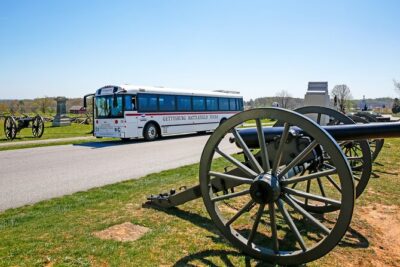
2-Hour Gettysburg Battlefield Guided History Bus Tour with a National Park Guide
Read our review →
Civil War Ghosts: Echoes of the Fallen Gettysburg Ghost Tour
Read our review →
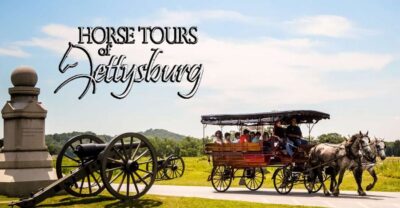
Gettysburg: Horse-Drawn Carriage Battlefield Tour
Read our review →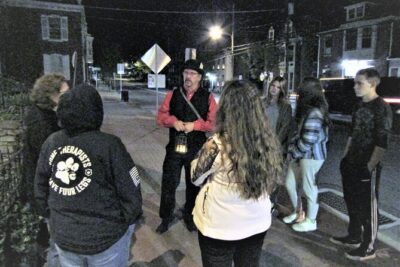
Gettysburg: Ghost Hunt Tour with Ghost Hunting Equipment
Read our review →Civil War Ghosts: Echoes of the Fallen Gettysburg Ghost Tour
Read our review →
Gettysburg: Licensed Guided Battlefield Horseback Tour
Read our review →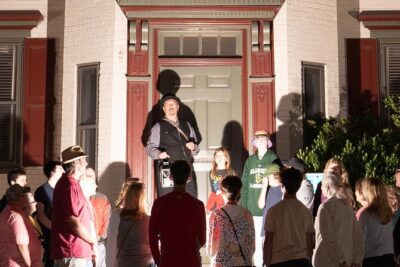
Ghost Tour: History and Haunts – Family Friendly – Best in Gettysburg
Read our review →Browse the lists this tour appears in