
Reviewed · FARMS
Alpaca and Llama Farm Tour
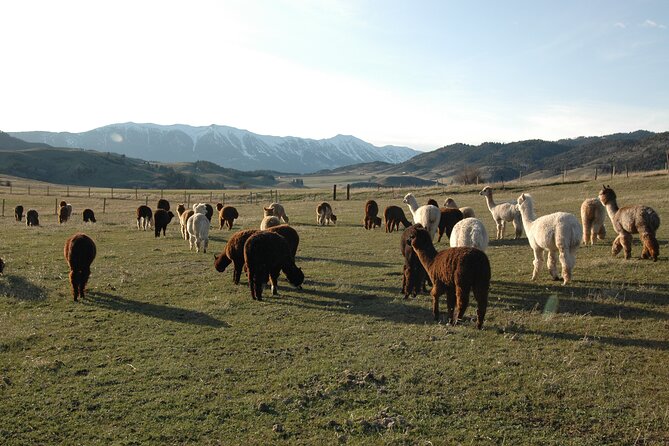
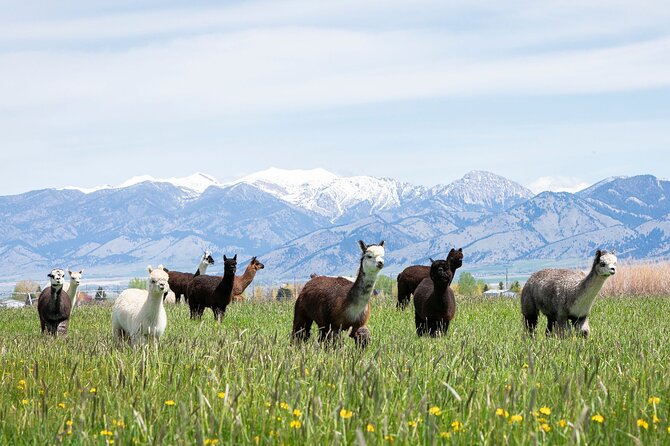
If you want more than a quick petting-zoo stop, this small-group farm visit gives you real time with alpacas and llamas. You may feed them, walk one on a lead, help with watering or bathing, and learn how the animals live on a working Montana farm.
I like the personal scale, with a maximum of four people, and the chance to meet more than camelids. The three Anatolian guard dogs, chickens, seasonal horses, cat Jill, and possible wildlife sightings add life to the visit. I also like the practical souvenir: you choose a keychain or ornament at the end.
The main consideration is the farm setting. You will be outside on gravel, dirt, and uneven ground, with no public restroom. Wear old closed-toe shoes, bring water, and remember that this is a working farm, not a staged animal show.
Quick reasons to choose this Bozeman farm visit
- Feed and walk your own alpaca or llama: The animal interaction is hands-on, not just a photo stop.
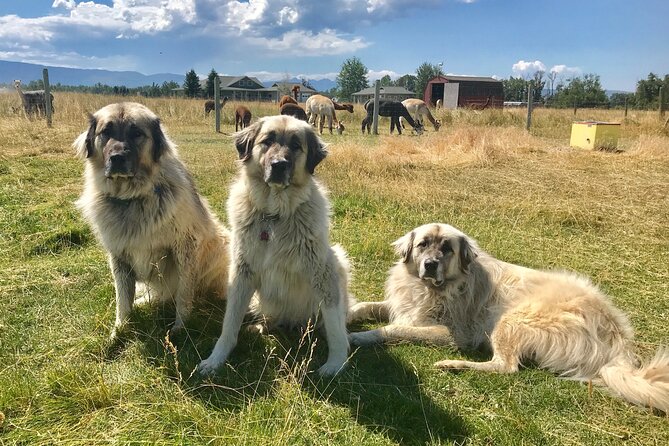
- Meet the farm’s Anatolian guard dogs: Chili, Hazel, and Finn are litter-mates and best friends who help protect the herd.
- Small groups make a difference: With no more than four people, you can ask questions and get time with the animals.
- Guides bring the farm to life: Sarah, Jenna, and Fiona are among the guides praised for clear explanations and warm, attentive hosting.
- A useful short stop in Bozeman: The visit takes about an hour to an hour and a half, making it easy to fit between other plans.
- You get a keepsake: A keychain or ornament is included, so you leave with more than photos.
What this Alpaca and Llama Farm Tour is really like
This is a friendly, hands-on farm activity near Bozeman, offered in English. The published timing is approximately one hour and 30 minutes, while the main animal tour is described as about an hour. I would set aside 90 minutes so you are not rushing before or after the visit.
The experience begins and ends at 8255 South Cottonwood Road. Private transportation is not included, so you need to arrange your own way to the farm. Once there, the pace is relaxed. You are not being pushed through a large attraction with a crowd behind you. The small group gives the guide room to answer questions and let you spend time with the animals.
Guides may include Sarah, Jenna, or Fiona, depending on the day. The strongest part of their role is not simply naming the animals. They explain alpaca and llama behavior, farming routines, camelid history and biology, and the work involved in keeping the herd healthy and socialized.
That last point matters. Calm interaction helps the animals stay comfortable around people during routine care, such as shearing and veterinary work. You get a pleasant outing, but the handling also has a useful purpose for the farm.
More Farm Visits in the USA:
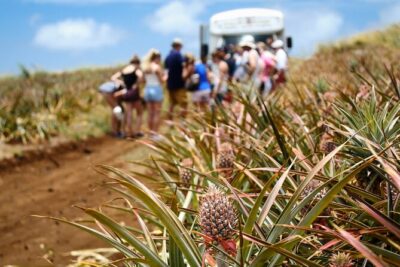
- Maui Pineapple Farm Tour in Haliimaile
★ 5.0 · 2,855 reviews - Half-Day Thoroughbred Horse Farm Tour in Kentucky
★ 5.0 · 1,924 reviews - Premium Amish Country Tour including Amish Farm and House
★ 4.5 · 1,306 reviews
Meeting alpacas and llamas up close
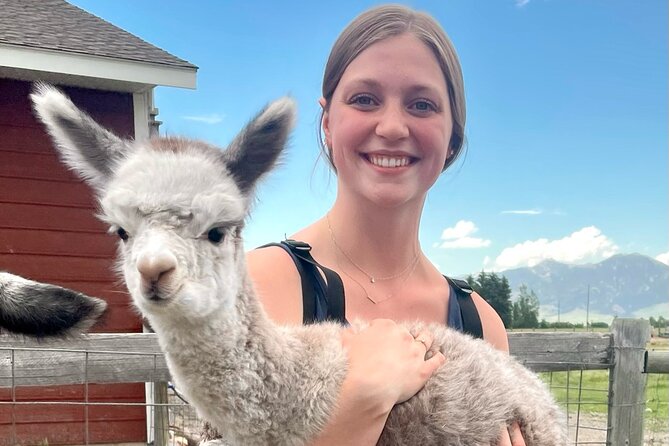
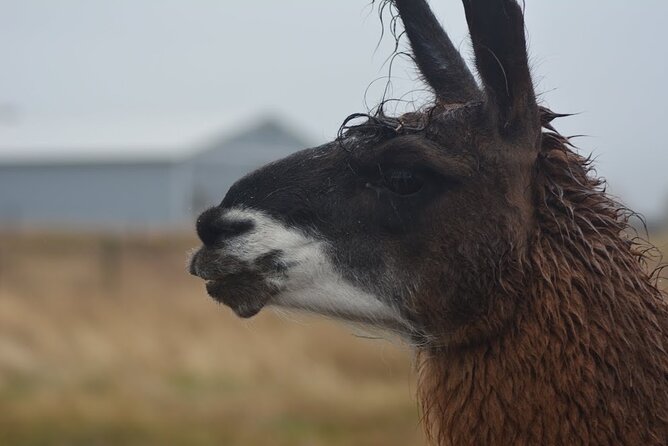
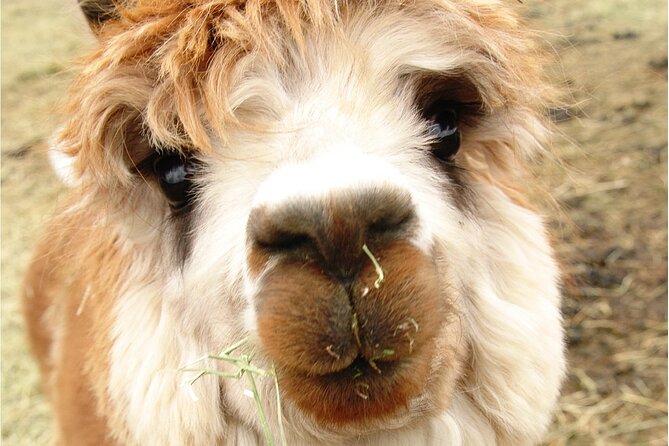
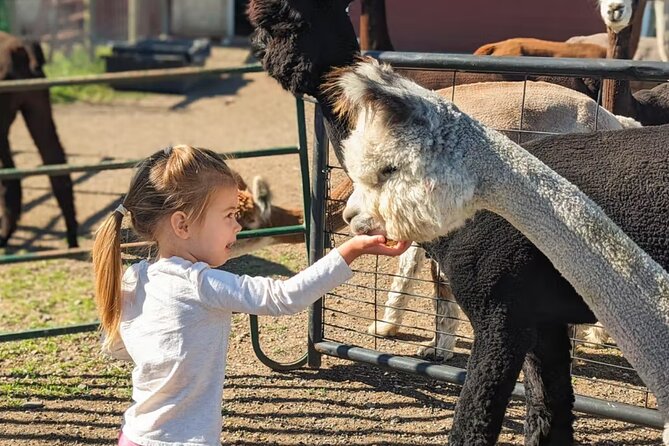
The central part of the visit is the time with the alpacas and llamas. You can expect opportunities to feed them, pet them, walk them, and take photos. Some visits may include watering or helping with a bath, depending on the animals and the farm’s needs that day.
Walking an alpaca on a lead is more engaging than simply standing beside a fence. You have to pay attention to the animal’s pace and direction, while the guide shows you how to interact in a calm and respectful way. It is a simple activity, but it helps you understand that these are working farm animals with their own habits and moods.
The feeding time is also a favorite part for many people. Alpacas are appealingly gentle and photogenic, though you should follow the guide’s instructions and avoid treating the animals like toys. The point is to make contact without crowding or startling them.
Bathing can be part of the visit, too. You may not get every activity on every booking, since this is a working farm and animal care changes from day to day. Still, the possibility of feeding, walking, watering, and bathing gives this tour more substance than a standard animal encounter.
Photos are encouraged. You can take pictures with your favorite alpaca, and the setting provides plenty of natural moments. If you are visiting with children, an adult should stay close and guide every interaction. The farm recommends at least one adult for every two young children, a sensible rule when animals, uneven ground, and excited hands are involved.
The other animals: Chili, Hazel, Finn, and Jill
The alpacas and llamas are the stars, but the supporting cast makes the farm feel like a real home and workplace.
You will meet Chili, Hazel, and Finn, three Turkish Anatolian Guard Dogs. They are litter-mates and best friends, and their job is to protect the herd. Their presence gives you a useful look at how a farm manages animal welfare and security, rather than treating the alpacas as isolated photo props.
Chickens and seasonal horses may also welcome you. They are happy to accept extra treats, so be ready for more than one kind of animal encounter. Cat Jill sometimes makes an appearance, though the wording is clear: she decides when to join the program.
You may also see ground squirrels, deer, or bald eagles around the property. These sightings are not guaranteed, and they are not a formal part of the tour. Still, they add to the sense that you are visiting a living farm environment rather than a fixed exhibit.
The setting can be especially pleasant for people who enjoy quiet outdoor places. You are likely to spend the full visit outside, with views and open space around the farm. The tradeoff is that weather matters, and the tour may be canceled in poor conditions.
What you learn, beyond the cute faces
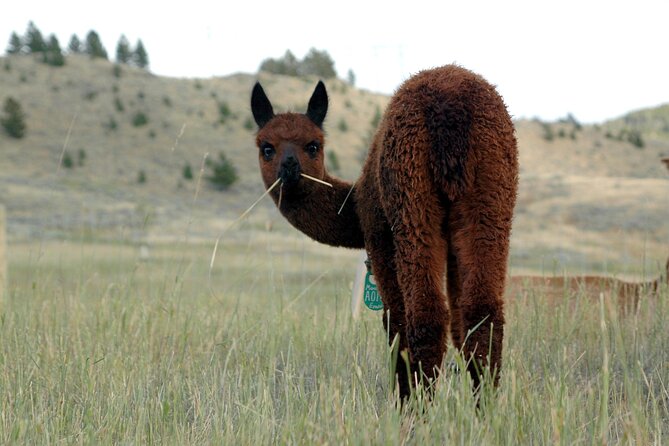
A good animal visit should teach you something, and this one aims to do that. The guide covers the background of alpacas and llamas, their biology, and the farm’s daily work.
If you have never spent time around livestock, the practical details are useful. You learn how the animals behave, how they respond to people, and why gentle handling matters. You also get a better sense of the difference between visiting a farm and simply seeing an animal in a display enclosure.
Guides such as Jenna, Sarah, and Fiona have been praised for explaining details clearly and answering questions. Jenna, in particular, is frequently singled out for her upbeat manner and ability to make the animal care feel personal. Fiona is also noted for making time for questions and sharing fun facts, while Sarah has led tours that include background on alpaca history and hands-on activities.
The visit may also show you the farm at different stages of its cycle. You could see mothers and babies, and the farm notes that breeding and live births can occur. That is an important warning, especially for families. This is not a polished attraction where every sight is arranged for public viewing. You may see ordinary, and sometimes intense, parts of farm life.
A different sort of day out, same corner of the USA:
- NYC: SUMMIT One Vanderbilt Tickets
★ 4.7 · 51,195 reviews - NYC: 9/11 Memorial & Museum Timed-Entry Ticket
★ 4.8 · 31,428 reviews - NYC: Empire State Building Tickets – Observatory & Museum
★ 4.7 · 25,757 reviews - NYC: Empire State Building Observation Deck Tickets
★ 4.7 · 22,072 reviews
Why the four-person limit improves the visit
A maximum of four people is one of the strongest practical features. It gives the guide more freedom to match the pace to the group, and it reduces the competition for time with the animals.
If you want to ask about feeding, shearing, guard dogs, or camelid behavior, you should have room to do so. A small group also helps during photos, since you are less likely to wait behind a large line for a turn with an alpaca.
This format suits couples particularly well. It also works for a family or a small group of friends, provided everyone understands that the visit includes outdoor walking and animal care. The experience is not built around a large crowd or a long presentation. It works best when you are willing to take part.
The limited group size may also explain why the activity receives strong marks for personal attention. You are not paying only for access to the property. You are paying for a guide who can spend time with you and help you interact safely.
Planning your clothing, timing, and comfort
Wear closed-toe shoes that you do not mind getting dirty. Old, sturdy shoes are the smart choice, especially if the ground is damp or rough. One past visitor noted that the farm had extra shoes available during a rainy visit, but you should not depend on that. Bring your own footwear suited to a working farm.
Long pants are a good idea. Flies can be a nuisance in warm weather, and long trousers offer more protection than shorts. Sunscreen is important because the tour takes place outdoors for its full duration.
Bring drinking water. There is no public restroom on site, so plan ahead before arriving. That point is easy to overlook and can affect how comfortable the visit feels, especially for families with young children.
The weather policy also matters. This activity requires good weather, and poor conditions can lead to cancellation. If that happens, you can receive a different date or a full refund. If you need to cancel your own booking, do it at least 24 hours before the start time for a full refund. Cancellations or changes made inside that window are not refunded or accepted.
Mobility and access on a working farm
The property includes gravel, dirt roads, and natural rocks. It is not a paved attraction, so the ground may be difficult for some people with mobility concerns.
The farm does offer a thoughtful option. If you can walk about 100 yards from the parking area to the barn, there is a shaded swinging chair where you can rest and enjoy the views. Staff can also bring alpacas over to you for close interaction, which may allow you to take part without covering the entire route.
Contacting the farm before booking is wise if you have concerns about walking distance or uneven ground. The pace is described as relaxed, and the staff will try to accommodate individual needs, but this remains a working farm rather than a fully accessible facility.
Is the tour good value?
The supplied information does not include a ticket price, so I cannot judge the exact cost against other Bozeman activities. I can still assess what you receive.
Your admission includes the guided farm experience and a keychain or ornament souvenir. More important, the visit includes active animal contact, instruction, and a group size capped at four. If you value personal attention and want to do more than take a quick picture, those features add real value.
The tour also fills a useful place in a Bozeman itinerary. It is short enough to pair with other sightseeing, yet long enough to feel like a proper activity. Morning and afternoon start times make it easier to fit around meals, drives, or other plans.
The value is weaker if you want a fully indoor activity, a guaranteed baby animal encounter, or a polished attraction with restrooms and paved paths. You are paying for access to a working farm and the time of a guide, not for perfect conditions or a fixed sequence of animal appearances.
Who will enjoy this most?
I would recommend it to animal lovers, families with attentive adults, couples, and anyone looking for something different from standard Bozeman sightseeing. It is especially good for people who enjoy learning by doing. Feeding and walking an animal creates a stronger memory than simply reading a sign.
It can also suit honeymooners or small groups looking for a gentle shared activity. The farm setting, photo opportunities, and relaxed pace make it easy to enjoy without turning the day into a major physical undertaking.
Families should prepare children before arrival. Explain that alpacas, llamas, dogs, horses, and chickens are living animals, not stuffed toys. Children need close supervision at all times, and the farm’s suggested adult-to-child ratio is worth following.
I would hesitate to recommend it to someone who dislikes dirt, insects, uneven ground, or outdoor weather. I would also think twice if you need a public restroom on site or require a fully paved route.
The small souvenir at the end
At the end of the tour, you can choose a keychain or ornament. It is a modest inclusion, but it works well for this kind of outing. You have photos, memories, and a small physical reminder of the farm visit.
The gift shop has also been described as attractive, adding a few minutes for browsing if you want to linger. The main value remains the animal time, but the souvenir gives children and first-time farm visitors a clear finish to the experience.
Should you book the Alpaca and Llama Farm Tour?
I would book it if you want genuine hands-on time with animals and can accept the limits of a working farm. The best reasons are the four-person maximum, the chance to feed and walk an alpaca or llama, the patient guides, and the mix of farm animals beyond the main herd.
Choose a morning or afternoon slot that leaves room for a flexible schedule, wear clothes for dirt and sun, and contact the farm ahead of time if walking is a concern. Skip it if you need indoor facilities, guaranteed animal encounters, or a completely smooth path.
For most people who enjoy animals, this is a memorable and practical stop near Bozeman. It gives you something to do with your hands, something to learn, and a good reason to slow down for an hour or so.
FAQ
Where does the Alpaca and Llama Farm Tour begin?
The tour begins at 8255 S Cottonwood Road, Bozeman, Montana 59718. It ends back at the same meeting point.
How long does the farm tour last?
The experience lasts approximately one hour and 30 minutes. The main tour is also described as about one hour, so allow up to 90 minutes in your schedule.
What animals can I meet?
You can meet alpacas and llamas, plus the farm’s three Turkish Anatolian Guard Dogs named Chili, Hazel, and Finn. Chickens and seasonal horses may also be present. Ground squirrels, deer, bald eagles, and the farm cat Jill may be seen as well.
What should I wear and bring?
Wear closed-toe shoes that you do not mind getting dirty, and consider long pants because flies can be present. Bring sunscreen and water. There is no public restroom on site.
Is the tour suitable for children?
Yes, children are welcome, but they must be supervised at all times. For families with young children, the farm recommends at least one adult for every two children.
Can people with mobility concerns take part?
The farm has uneven ground, including gravel, dirt roads, and natural rocks. If you can walk about 100 yards to the barn, you can rest in a shaded swinging chair, and staff may bring alpacas to you for close interaction. Contact the farm before visiting to discuss your needs.
Just added around the USA
- Maui -PRIVATE- Air Tour FUN: 3 Islands: (2-5 people): SEE it ALL!★ 5.0 · 559 reviews
- Maui: Molokini Crater and Turtle Town Snorkeling From Kihei★ 5.0 · 765 reviews
- Maui: 2-Hour Molokini Snorkel Trip★ 5.0 · 816 reviews
- Best of Martha’s Vineyard 3 hour Full-Island Tour★ 4.5 · 406 reviews
- 2 Tank Lanai Cathedral Scuba Dive Via Boat for Certified Divers★ 5.0 · 548 reviews
- Malibu: Guided Vineyard Hike with Photo Stops and Wine★ 5.0 · 391 reviews
- Mackinaw City Sunset Cruise★ 5.0 · 347 reviews
- Whale Watching Maui: 2-Hour Small Group Raft Tour from Lahaina★ 5.0 · 661 reviews
Farms, compared.
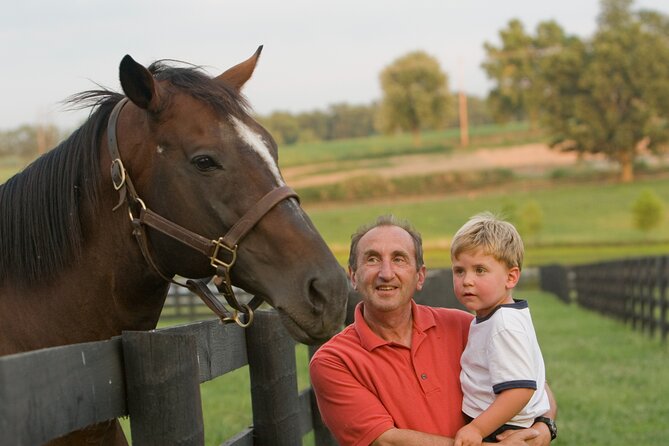
Half-Day Thoroughbred Horse Farm Tour in Kentucky
Read our review →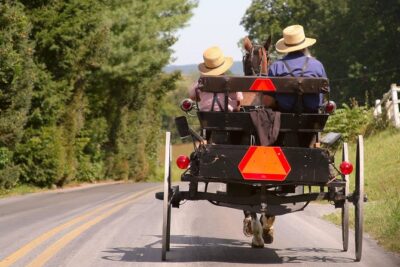
Premium Amish Country Tour including Amish Farm and House
Read our review →
Unique Horse Farm Tours with Insider Access to Private Farms
Read our review →

Award Winning Farm Tour: Coffee, Chocolate and Unique Gifts
Read our review →
Browse the lists this tour appears in