
Reviewed · WALKING TOURS
Birmingham Civil Rights Tour- Riding & Walking
Birmingham’s civil rights story is spread across churches, parks, neighborhoods, schools, and street corners. This tour connects those places in about three hours, pairing an air-conditioned vehicle with walks through Kelly Ingram Park and the Civil Rights District. Guides such as Mike and Clay add the names, dates, and personal stories that a self-guided visit can easily miss.
I like the small-group format, which gives you room to ask questions and hear a guide explain difficult events with care. I also like the mix of van time and walking, especially in Birmingham’s heat. The main drawback is clear: you will walk more than a mile, sometimes in temperatures from 40 to 100 degrees Fahrenheit, so this is not a good fit if you need frequent sitting or struggle in hot or cold weather.
Key points to know before booking
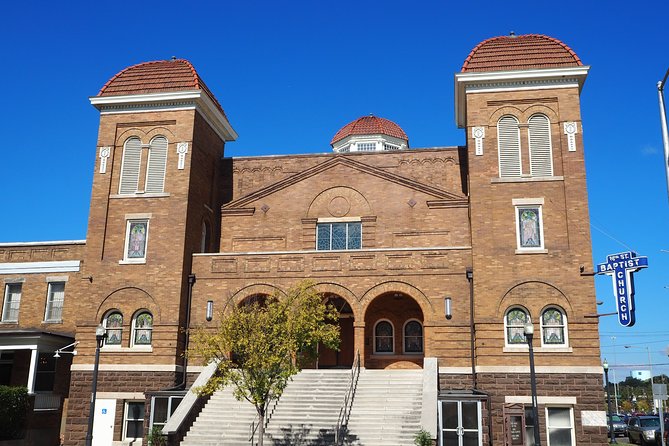
- Kelly Ingram Park and 16th Street Baptist Church: Begin with Birmingham’s best-known civil rights sites and the story of the church bombing that killed four girls.
- A wider view of Birmingham: The route reaches Dynamite Hill, Bethel Baptist Church, the old Black business district, and the Freedom Riders attack site.
- Mike and Clay as guides: Their approach centers on clear storytelling, local knowledge, photographs, artifacts, and thoughtful answers to questions.
- Ride and walk in one tour: An air-conditioned vehicle links the sites, while walking gives you time to look closely at monuments and streets.
- Small groups of up to 14: The group limit supports conversation and can make the experience feel personal.
- Serious history, handled directly: Expect painful facts, emotional moments, and stories of courage rather than a softened version of the past.
Why Birmingham’s history works best as a moving tour
Birmingham is not a place where one museum or monument tells the whole story. The movement unfolded across churches, parks, schools, commercial streets, homes, and protest routes. Seeing those locations in sequence helps you understand how connected the events were.
This tour also solves a practical problem. The core sites are close enough to seem walkable on a map, but the wider story reaches neighborhoods and locations that are not part of a simple downtown stroll. The vehicle lets you cover that ground without turning the day into a long, tiring march.
I value the way the route links famous names with less familiar places. You hear about Fred Shuttlesworth and Bull Connor, but you also see where ordinary families, business owners, students, church members, and activists faced pressure and danger. That wider view keeps the story from becoming a short list of well-known events.
The tone is serious. You will hear about bombings, attacks, segregation, school integration, and the deaths of four children. The guide’s job is not to make the subject comfortable. The strongest part of the experience is the effort to explain what happened plainly while still showing the courage and hope that pushed the movement forward.
More Walking Tours in the USA:
- History and Hauntings of Salem Guided Walking Tour
★ 5.0 · 14,564 reviews - New Orleans Premier Ghost, Voodoo and Vampire Walking Tour
★ 4.5 · 12,856 reviews - Little Havana Food and Walking Tour in Miami
★ 5.0 · 8,882 reviews
Starting in the Civil Rights District
The tour begins at 512 16th Street North at 9:45 a.m. The first part takes place around Birmingham’s Civil Rights District, where you begin to connect the physical setting with the events that made the city a major center of the movement.
The area includes Kelly Ingram Park and 16th Street Baptist Church. Your guide sets the scene before the tour moves farther across the city, giving you a foundation for the stops that follow.
The opening walk lasts about 30 minutes. That is enough time to see the setting without using up all your energy at the start. Wear shoes that can handle pavement and bring water, since the day includes more walking later.
Kelly Ingram Park and the power of public space
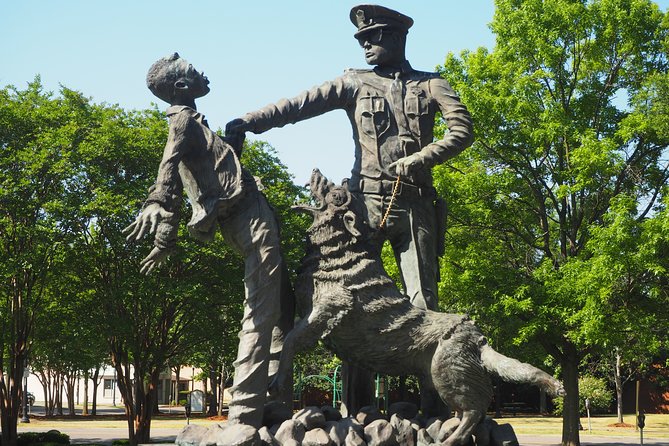
Kelly Ingram Park is one of the most important stops because its statues and memorials give physical form to the demonstrations held in Birmingham. As you walk through the park, the guide explains the people who marched, the forces opposing them, and the role the park played in public protest.
This is a place where details matter. A guide can point out what the statues represent and explain how the demonstrations fit into the larger struggle. Without that context, you might see a pleasant city park and miss why it became such a charged place.
Plan on about 30 minutes here. Some of the tour’s most emotional moments may come during this walk, so give yourself time to pay attention rather than treating the park as a quick photo stop.
16th Street Baptist Church and the four girls
The church is one of the central sites on the tour. You learn about its role as a meeting place during the civil rights movement and about the bombing that killed four girls.
The stop is scheduled for about 30 minutes. The supplied details do not promise a full interior visit, so you should think of this as a guided historical stop rather than assume a particular church access arrangement. The value comes from understanding why the church mattered and how the bombing affected Birmingham and the wider movement.
I appreciate that this part of the tour is not treated as a dramatic story detached from real people. The history is painful, and the guide’s ability to explain it with care matters. Several guides, including Mike and Clay, are praised for handling hard subjects with tact while still speaking plainly.
A different sort of day out, same corner of the USA:
- NYC: SUMMIT One Vanderbilt Tickets
★ 4.7 · 51,195 reviews - NYC: 9/11 Memorial & Museum Timed-Entry Ticket
★ 4.8 · 31,428 reviews - NYC: Empire State Building Tickets – Observatory & Museum
★ 4.7 · 25,757 reviews - NYC: Empire State Building Observation Deck Tickets
★ 4.7 · 22,072 reviews
Linn Park and Boutwell Auditorium
At Linn Park, you see where protest marches ended and learn about the groups fighting for civil rights in Birmingham. This stop lasts about 15 minutes, so expect a concise explanation rather than a long walk.
The next stop is Boutwell Auditorium, also about 15 minutes. Here, the focus turns to Bull Connor and his clashes with people seeking civil rights. The pairing of these locations helps you see both sides of the city’s public conflict: the people marching for change and the officials resisting them.
These shorter stops keep the tour moving. They may not have the visual impact of Kelly Ingram Park, but they add political and civic context. I like that the route does not limit the story to memorials. It also shows where decisions, confrontations, and public protests played out.
Dynamite Hill and Birmingham’s bombed neighborhoods
In Smithfield, the tour visits Dynamite Hill. You see homes and churches that were bombed during the civil rights era and learn why this neighborhood became associated with racial violence.
This is one of the stops that makes the tour broader than a standard downtown history walk. It takes you beyond the best-known landmarks and into residential Birmingham, where the effects of intimidation were felt in daily life.
The scheduled visit lasts about 15 minutes. You will be riding between many of these locations, which is important here. A self-guided visitor might not know where to go, how the sites connect, or what to look for. A local guide can provide that link while you remain in the vehicle between stops.
Bethel Baptist Church and Fred Shuttlesworth
The Historic Bethel Baptist Church is tied to Rev. Fred Shuttlesworth, who led the movement from there. The stop lasts about 20 minutes and gives the tour a chance to focus on leadership, organizing, and the role of Black churches in the movement.
This church is especially useful for understanding that Birmingham’s civil rights campaign did not happen by accident. It required planning, persistence, meetings, faith communities, and people willing to keep working after violence and setbacks.
The tour’s focus on Shuttlesworth also helps balance the familiar national names with a closer look at Birmingham’s own leaders. If you already know the broad outline of the civil rights movement, this stop may add local detail that you would not get from a general history book.
Eddie Kendrick Memorial Park and the Black business district

Eddie Kendrick Memorial Park is a brief five-minute stop connected to Birmingham’s Black business district. The guide explains Black life in Birmingham during its heyday, giving you a view of the community beyond protests and confrontations.
This is a small stop, but it has an important purpose. Civil rights history is not only a record of oppression. It is also a story about businesses, neighborhoods, churches, families, and institutions that supported community life.
Because the visit is short, do not expect an extended walking tour of the district. Instead, treat it as a compact piece of the larger story, one that shows what Black Birmingham built and protected.
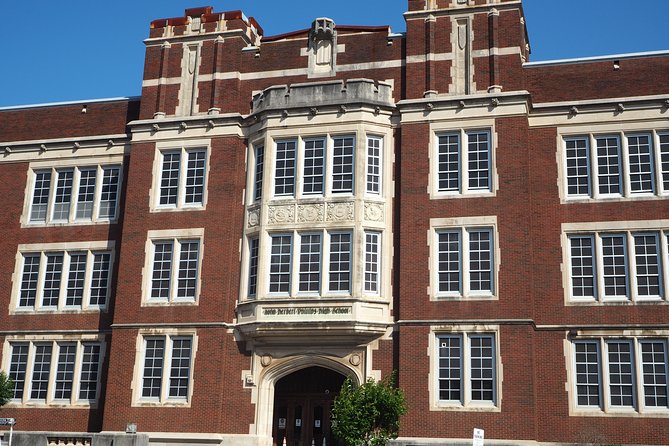
John Herbert Phillips Academy and the fight over schools
At John Herbert Phillips Academy, you learn about Fred Shuttlesworth’s attempt to integrate Birmingham schools. The stop lasts about 15 minutes and adds education to the tour’s focus on churches, streets, and public demonstrations.
This stop is useful because school integration was not a side issue. It touched children, families, local government, and the basic question of who could receive equal public services. Seeing the school site helps connect those legal and political struggles to a real place.
The short visit also gives the route variety. You are not simply moving from one monument to another. You are seeing how the movement reached into education, neighborhoods, business districts, worship spaces, and public streets.
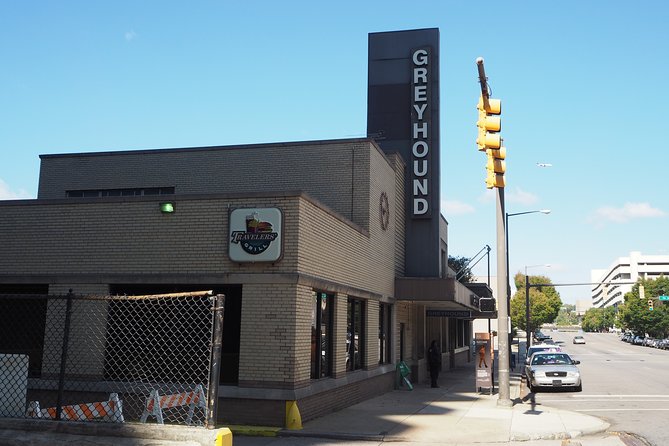
The Freedom Riders attack site
The final listed stop is near a Wells Fargo ATM, identified as the site where Freedom Riders were attacked in Birmingham. The visit lasts about 10 minutes.
The modern surroundings may look ordinary, which is part of the point. Major events do not always happen at places marked with grand monuments. A guide helps you picture the scene and understand why the location mattered during the Freedom Rides.
This is another stop where storytelling carries much of the experience. You are not promised a large exhibit or a formal memorial at the site. You are getting the location, the historical explanation, and the chance to place the event on Birmingham’s map.
The guide makes or breaks this experience
The most important feature is the guide. Reviews of this tour repeatedly single out Mike and Clay for their storytelling, clear chronology, local detail, and willingness to answer questions. Mike is described as a Birmingham native who can explain both the major events and the less familiar people involved.
That matters because the route contains a lot of information. Without a clear thread, ten stops could feel scattered. The strongest approach is chronological and connected, showing how one event, location, or leader relates to the next.
The guides also use photographs and artifacts, according to the supplied details from the experience. Those additions can help you visualize the period instead of hearing only dates and names. The tour is also reported to work well for teenagers and school-age children, though parents should prepare young people for disturbing material.
The family-run character of Red Clay Enterprises adds a personal feel. One guide is described as the owner’s father, and the company has also been praised for donating a percentage of proceeds to feed people experiencing homelessness in Birmingham. That contribution is worth confirming at booking if it matters to your decision, since charitable arrangements can change.
Walking, weather, and group size
The tour lasts about three hours and includes more than a mile of walking. You need to walk unassisted at a reasonable pace. The walking is broken up by rides in an air-conditioned vehicle, but this is not a drive-by tour.
The mix works well in warm weather because you can cool off between outdoor stops. Guides have also been described as allowing shade and restroom breaks when possible. Still, plan for sun, heat, or cold. The tour runs rain or shine, and transportation is available if rain becomes an issue, but significant weather such as a hurricane, tornado, or ice can lead to cancellation and a choice of another date or a full refund.
The group limit is 14 people. A smaller group makes it easier to hear the guide and ask questions, and it may give the experience a more personal rhythm. If fewer people book on your date, the tour may feel close to private, though that is not guaranteed.
Service animals are allowed. Children must be accompanied by an adult, and the activity calls for a moderate level of physical fitness.
Is the tour a good value?
No price is provided here, so I cannot judge the exact dollar value. I can say what you are paying for: transportation between widely separated sites, a live guide, commentary, the walking portions, and the work of connecting locations that would be difficult to interpret on your own.
The value is strongest if you want context rather than a list of addresses. You could visit Kelly Ingram Park and 16th Street Baptist Church independently, but you would miss much of the route’s wider geography unless you researched it carefully and arranged your own transportation.
All taxes, fees, handling charges, activities, and air-conditioned transportation are included. There are no separate admission charges listed for the stops. That makes the cost easier to assess when comparing it with a self-guided day, particularly if you would otherwise need parking, a rental car, or several rides across Birmingham.
You can cancel for a full refund up to 24 hours before the 9:45 a.m. start time. Cancellations or changes within 24 hours are not refunded.
Who should book this Birmingham tour?
I would choose this tour if you want a serious introduction to Birmingham’s civil rights history and prefer a guide to connect the places. It suits first-time visitors, families with older children, history students, teachers, and anyone who wants to understand more than the downtown highlights.
It is also a good choice for a short Birmingham visit. Three hours gives you a substantial look at the city without taking an entire day, and the return to the starting point keeps the logistics simple.
I would think twice if you cannot walk at least a mile, dislike outdoor stops, or are strongly affected by hot or cold weather. The subject matter is also emotionally heavy. You should come ready to listen to painful history, not expecting a light sightseeing ride.
Should you book it?
Yes, if Birmingham’s civil rights story is one of your reasons for visiting. The combination of Kelly Ingram Park, 16th Street Baptist Church, Dynamite Hill, Bethel Baptist Church, the school integration site, and the Freedom Riders attack site gives you a wider picture than a short downtown walk.
Book it especially if you want a guide such as Mike or Clay to explain the people behind the events and answer questions as you go. Skip it only if the walking, weather, or serious subject matter would make three hours uncomfortable. For most visitors who can manage those demands, this is a focused and worthwhile way to understand Birmingham.
FAQ
How long does the Birmingham Civil Rights Tour take?
The tour lasts approximately three hours.
Where does the tour begin?
It begins at 512 16th Street North, Birmingham, Alabama 35203.
What time does the tour start?
The scheduled start time is 9:45 a.m.
Where does the tour end?
The activity ends back at the meeting point.
How much walking is involved?
You will walk more than one mile during the tour. You must be able to walk unassisted at a reasonable speed.
Is transportation included?
Yes. Transportation in an air-conditioned vehicle is included, along with a driver and live commentary.
What happens if the weather is bad?
The tour runs rain or shine, and transportation is available if rain becomes an issue. If significant weather such as a hurricane, tornado, or ice causes cancellation, you will be offered another date or a full refund.
Can I cancel for a full refund?
Yes. You must cancel at least 24 hours before the experience start time for a full refund. Cancellations or changes made less than 24 hours before the start time are not refunded.
Just added around the USA
- Maui: Molokini Crater and Turtle Town Snorkeling From Kihei★ 5.0 · 765 reviews
- Maui: 2-Hour Molokini Snorkel Trip★ 5.0 · 816 reviews
- Maui -PRIVATE- Air Tour FUN: 3 Islands: (2-5 people): SEE it ALL!★ 5.0 · 559 reviews
- Best of Martha’s Vineyard 3 hour Full-Island Tour★ 4.5 · 406 reviews
- 2 Tank Lanai Cathedral Scuba Dive Via Boat for Certified Divers★ 5.0 · 548 reviews
- Malibu: Guided Vineyard Hike with Photo Stops and Wine★ 5.0 · 391 reviews
- Mackinaw City Sunset Cruise★ 5.0 · 347 reviews
- Whale Watching Maui: 2-Hour Small Group Raft Tour from Lahaina★ 5.0 · 661 reviews
Walking Tours, compared.
History and Hauntings of Salem Guided Walking Tour
Read our review →
New Orleans Premier Ghost, Voodoo and Vampire Walking Tour
Read our review →
Freedom Trail History Small Group Walking Tour
Read our review →
Historic Charleston Guided Sightseeing Walking Tour
Read our review →
New Orleans Food Walking Tour of the French Quarter with Small-Group Option
Read our review →
St. Louis Cemetery No. 1 Official Walking Tour
Read our review →Browse the lists this tour appears in