
Reviewed · CHARLESTON
Charleston Horse-Drawn Carriage Tour: Explore Historic Charleston
Charleston’s old streets make more sense from a slow-moving carriage. You’ll pass grand homes, churches, gardens, and palmetto-lined lanes while your driver-guide connects the buildings to pirate raids, plantation life, the Revolutionary War, the Civil War, and Reconstruction. It is a pleasant way to get your bearings fast without walking every block.
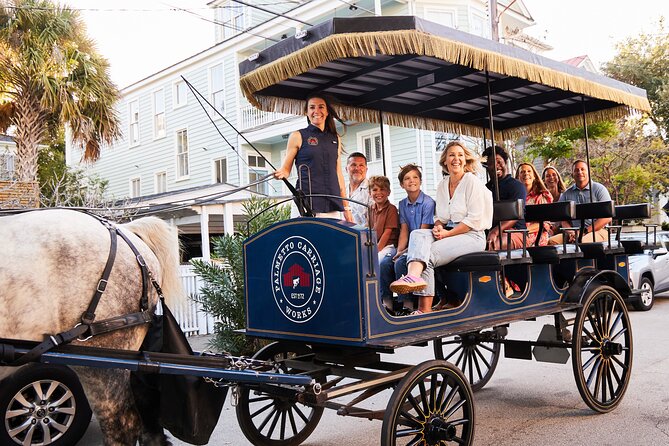
I like the certified local guides, whose style can range from Jim’s easy storytelling to the humor associated with Jason Looney and Luke. I also like the practical comfort: the covered carriage gives shade, the open sides give you clear views, and the ride works well for families and people who cannot walk long distances.
The main catch is the city-assigned route. You may pass St. Philip’s Church and the U.S. Custom House, or you may spend more time among residential streets and gardens. The city lottery decides the zone, so do not book this expecting a guaranteed checklist of landmarks.
Key points to know before you book
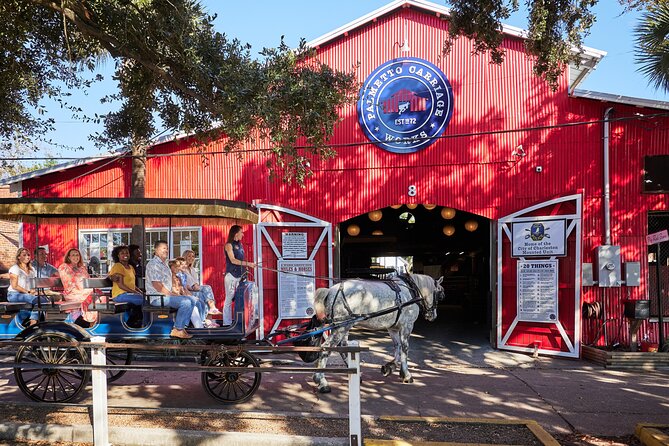
- The Big Red Barn is one block from City Market: Start and finish at Palmetto Carriage Works, 8 Guignard Street.
- Your route is assigned by lottery: The carriage covers about 30 blocks, but specific sights are not promised.
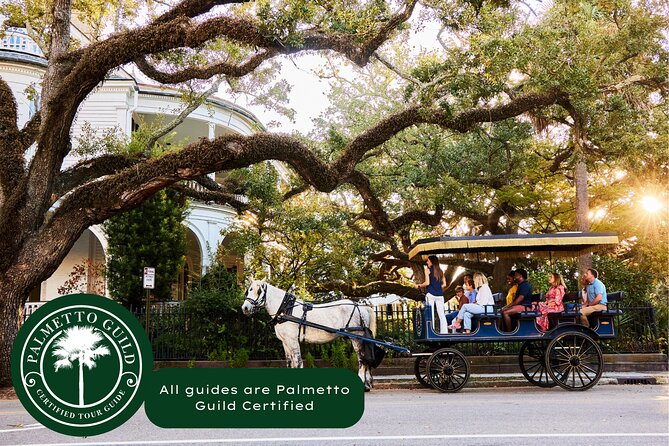
- Certified guides carry the experience: Guides must pass a City of Charleston test and attend recertification classes every three years.
- The carriage is covered but open-sided: You get shade and some rain protection, but wet weather can still reach you.
- A good choice for mixed-age groups: Families, couples, solo visitors, and people with mobility limits can all take part.
- Book early in busy periods: The tour is often reserved about 16 days ahead, and public carriages can carry up to 16 people.
A gentle way to meet Charleston’s old streets
At $49.95 per person, this is not the cheapest way to see Charleston. It is also not simply a short horse ride. You are paying for a certified guide, a moving view of about 30 historic blocks, and a compact lesson in how the city developed.
I see the tour as an orientation ride, not a full survey of Charleston. The historic district is large, and one hour cannot cover every church, house, garden, and public building. Still, the carriage pace gives you time to look up at cornices, ironwork, porches, and church spires instead of rushing past them on foot.
The rating is 4.8 from 3,561 posted ratings, with 95 percent recommending the experience. The strongest praise centers on the guides’ delivery, the amount of local information packed into an hour, and the gentle handling of the horses. That matters here because the tour rises or falls on the person holding the reins.
Guides named in individual experiences include Brianna, Jim, Luke, Jenny, Jason Looney, Mike C, Bill, and Brandon. You cannot request a particular guide from the information provided, but the range of comments suggests a company with a broad bench of guides who mix facts with jokes and questions.
More Carriage Rides in Charleston
- Charleston’s Old South Carriage Historic Horse & Carriage Tour
★ 5.0 · 10,023 reviews - Haunted Evening Horse and Carriage Tour of Charleston
★ 4.5 · 3,678 reviews - Charleston: Historical Downtown Tour by Horse-drawn Carriage
★ 4.8 · 1,009 reviews
Meeting the horses at the Big Red Barn
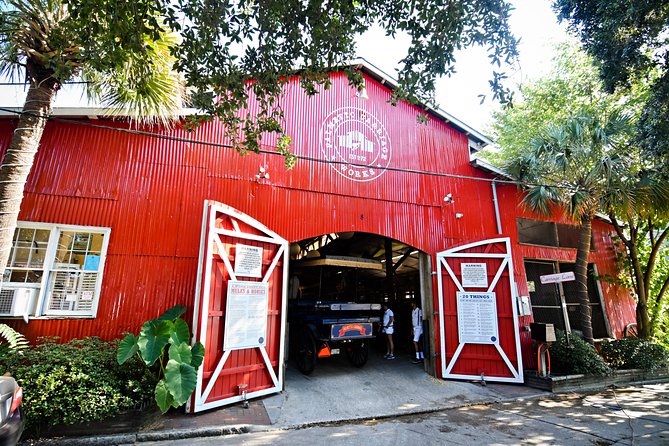
Your visit begins at Palmetto Carriage Works, also called the Big Red Barn, at 8 Guignard Street. It is just off Charleston City Market, which makes the meeting point easy to pair with a walk through the market area.
Allow time for a roughly 15-minute orientation before the carriage leaves. You can look around the barn, meet the guide, and settle into the rhythm of the operation. The barn also sells drinks and snacks, and you may bring your own nonalcoholic refreshments. Open alcohol containers are not allowed.
The boarding setup is a useful detail for anyone with limited mobility. The carriage pulls beside a raised platform that is nearly level with the carriage, though there is still a small gap to step over. A ramp leads to the platform, and staff can assist when needed.
Walkers, wheelchairs, scooters, and strollers cannot ride inside the carriage, but they can be stored safely at the barn while you are out. Strollers are therefore manageable, though you will need to leave them behind for the hour. Service animals are allowed with advance notice, and dogs may also be accommodated if you arrange it ahead of time.
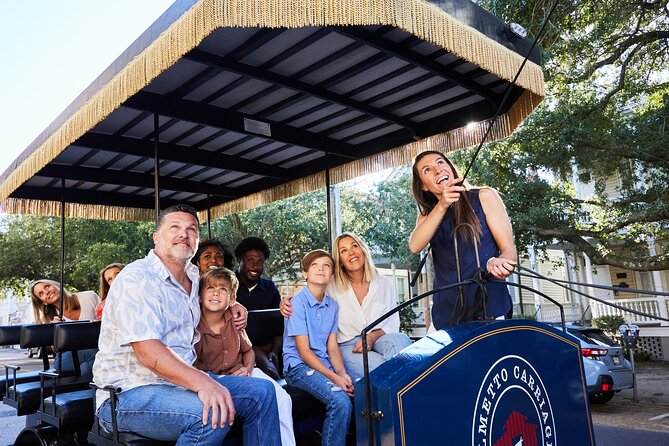
Public carriages seat up to 16 people, not counting the driver, who stands at the front. Smaller carriages seat up to four or eight people. If you want more elbow room on a large carriage, the operator says you can buy an extra seat.
What the city lottery means for your sightseeing
Charleston controls carriage routes through a lottery system. The city uses five possible zones, and your assigned zone determines which portion of the historic district you see.
This system protects the streets, buildings, and horses from having every carriage crowd the same few blocks. It also keeps the ride from becoming a guaranteed attraction list. You may see a fine stretch of historic homes and gardens, while another carriage receives a route with more churches or public buildings.
The route covers about 30 blocks. That is enough for a useful look at Charleston’s character, but not enough to see the whole district. I would book this tour early in your visit, then return on foot to the buildings that catch your attention.
If a particular sight matters to you, set expectations carefully. St. Philip’s Church and the U.S. Custom House are included among the possible landmarks, but neither is guaranteed. You might pass both, one, or neither, depending on the assigned route.
St. Philip’s Church and the old market area
One possible route passes St. Philip’s Church on Church Street, just off the market. The congregation is described as the oldest in the United States south of Virginia, giving the church weight beyond its appearance.
From a carriage, you can take in the building as part of the street scene rather than as an isolated museum stop. That is one of the tour’s strengths. Your guide can connect the church, market, homes, and nearby streets into a broader picture of Charleston’s civic and religious life.
The drawback is that a passing view is not a visit inside. This tour is about orientation and storytelling, not detailed interior access. If you want to study St. Philip’s closely, mark it for a later walk.
More History Tours in Charleston
- Historic Charleston Guided Sightseeing Walking Tour
★ 5.0 · 6,216 reviews - Charleston Harbor History Day-Time or Sunset Boat Cruise
★ 4.5 · 2,788 reviews - Hidden Alleyways and Historic Sites Small-Group Walking Tour
★ 5.0 · 2,335 reviews - Charleston: Daytime or Sunset Historic Harbor Cruise
★ 4.5 · 1,352 reviews
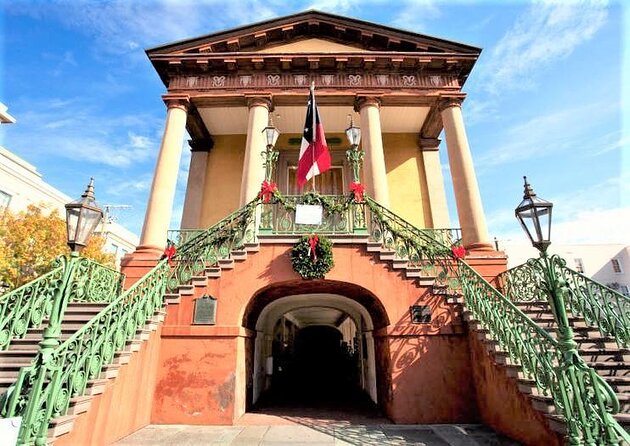
The U.S. Custom House and Charleston’s unfinished plans
Another possible sight is the U.S. Custom House. Construction began in 1852, then stopped as South Carolina considered secession from the Union. The building was completed in 1879, after the Civil War.
That pause gives your guide a useful opening to explain how national conflict affected Charleston’s streets and public buildings. You see more than a grand facade. You see a building whose construction was interrupted by the country’s crisis.
Again, the route lottery controls access. The Custom House is an important possible stop, not a promised one. The honest way to approach this tour is to enjoy the zone you receive rather than spend the ride waiting for one landmark.
Stories that give the architecture a human scale
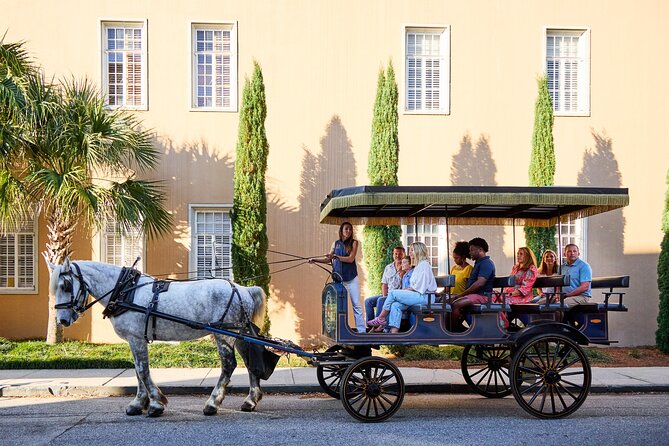
The scenery includes antebellum architecture, elegant mansions, lush gardens, shaded porches, and palmetto-lined streets. In warm weather, jasmine may scent the air. The open sides of the carriage make it easy to photograph details that disappear when you are walking in a crowd.
The guide’s narration supplies the reason to look. Stories range from pirate raids and plantation life to Revolutionary War battles, the Civil War, and Reconstruction. The subject matter is broad, and the tone is meant to be light and entertaining rather than academic.
That balance works well for a first visit. A guide such as Jenny may mix humor with quick facts, while Jason Looney has been singled out for an especially funny and entertaining presentation. Luke has also been praised for combining jokes with clear local information. Individual guides vary, but the format gives each one room to make the past lively.
There is one point to watch. Some passengers may find repeated discussion of horse care more interesting than others. The company uses part of its presentation to explain what the horses eat, drink, and how they are looked after. For many people, this adds reassurance and a closer connection to the animals. If you want a nonstop list of buildings, that material may feel like it takes time away from sightseeing.
Why the horses are part of the experience
The horses are not just transportation. They set the pace, shape the mood, and make it possible to notice small features along the street.
Individual horses mentioned in tour experiences include Admiral, Duke, Marley, Donald, Howard, Teddy, and Charlie. These names are not a promise about your own carriage, but they show that the company introduces passengers to the animals as individuals. Some people particularly appreciate the calm handling between driver and horse.
The company says animal care is central to its operation and has worked in Charleston for more than 50 years. The city regulates the routes, partly to protect the animals as well as the historic streets. You should still make your own judgment about the experience, but the information provided gives you a clear sense of how the operator presents its responsibilities.
For a family, this can add a second layer to the outing. Children get the novelty of the carriage and horse, while adults get architecture and local history. You may also be allowed to pet a horse at the barn, depending on staff guidance and the circumstances that day.
Timing, weather, and the best seat strategy
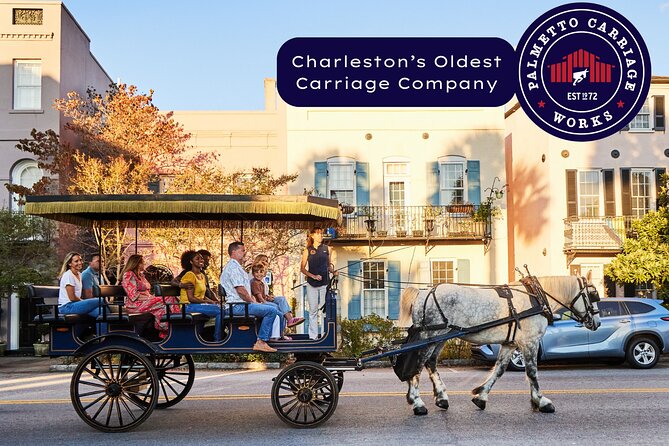
Several daytime departures make it easier to fit the ride around meals, shopping, or a walking tour. Early morning is a smart choice if you want a calmer start and potentially lighter traffic. It also gives you more time afterward to revisit the streets and landmarks you noticed from the carriage.
The ride itself lasts about one hour, preceded by the roughly 15-minute barn orientation. The activity ends where it begins, so you do not have to arrange a separate pickup.
The carriages are covered, which helps with sun. They are also open on the sides, so rain can blow in. The operator goes out in rain unless conditions are dangerous, and umbrellas are not allowed. Bring a rain jacket or poncho rather than counting on the carriage roof to keep you dry.
The experience is described as operating in all weather conditions, but dangerous weather can lead to a cancellation, another date, or a full refund. Dress for the forecast, and remember that Charleston’s heat, humidity, or cool air will be part of an open-sided ride.
Seat choice may depend on how you board and the carriage layout. If someone in your group has mobility trouble, tell the operator in advance so staff can help with boarding and place that person where it works best. One family reported that a parent with mobility issues was helped into a front seat, but arrangements should be discussed before departure.
What you receive for $49.95
The price buys the carriage ride, the guide, the barn orientation, and access to a route through roughly 30 blocks of the historic district. It does not include entry into the churches or buildings you pass.
I consider the price fair if you want a low-effort introduction and value live storytelling. A private carriage or a longer walking tour would cost more, while walking alone costs less but gives you no guide and requires more time and stamina.
For a couple, the total is close to $100 before any additional booking costs. That is a meaningful spend, especially if you are traveling on a tight budget. The experience makes the most sense when you use it as a starting point, then explore on foot afterward instead of treating it as your only Charleston sightseeing.
The high satisfaction level suggests strong value for people who receive a lively guide and a route filled with appealing homes and landmarks. The lower-value scenario is clear too: if you want guaranteed views of specific buildings or a dense stream of historical detail every minute, the lottery system and occasional pauses in residential areas may disappoint.
Who should choose this carriage ride
I would recommend it for:
- Families who want an easy activity with a clear time limit
- Couples looking for a relaxed way to see old Charleston
- Solo visitors who want context before exploring alone
- People with mobility limits who cannot manage a long walking route
- First-time visitors who want to identify streets and buildings for later visits
- Anyone who enjoys local stories more than a rigid sightseeing checklist
I would be more cautious if your main goal is to photograph specific landmarks. The city decides the route, and the carriage may pass ordinary residential streets as well as grand public buildings.
It also may not satisfy someone seeking a full architectural study. You get a broad introduction, not a specialist lecture or a building-by-building tour. The best approach is to treat the hour as a friendly primer.
Should you book the Charleston carriage tour?
Book it if you want a relaxed first look at Charleston, a guide who can turn buildings into stories, and a family-friendly ride that avoids a long walk. The covered carriage, certified guides, accessible boarding setup, and return to the Big Red Barn make the outing simple to manage.
Book early during a busy visit, since the experience is often reserved about 16 days ahead. Choose an early departure if you want a quieter start, and keep your expectations flexible about the route.
Skip it if you need guaranteed access to St. Philip’s Church, the U.S. Custom House, or any other specific landmark. For most first-time visitors, though, this is a pleasant and useful way to begin. Take the ride, note the streets that catch your eye, then explore those places at walking speed afterward.
FAQ
Where does the carriage tour begin?
It begins at Palmetto Carriage Works, also called the Big Red Barn, at 8 Guignard Street in Charleston. The barn is one block from City Market.
Where does the tour end?
The carriage returns to the Big Red Barn at 8 Guignard Street.
How long does the experience last?
The carriage ride lasts approximately one hour. Allow about 15 additional minutes for the orientation and barn visit before departure.
How much does the tour cost?
The listed price is $49.95 per person.
How many people can ride in the carriage?
Large public carriages can seat up to 16 people, not including the driver. Smaller carriages are available for groups of up to four or eight people.
Is the tour narrated?
Yes. The guides are members of the Palmetto Guild of Certified Tour Guides. Certification requires passing a City of Charleston test and attending recertification classes every three years.
Which landmarks will the carriage pass?
Possible sights include St. Philip’s Church, the U.S. Custom House, historic homes, churches, gardens, and other parts of the old district. The city lottery assigns the route, so particular landmarks are not guaranteed.
Can children join the tour?
Yes. The experience is described as suitable for families, including young children.
Are the carriages covered?
Yes. The carriages have covers that provide shade and some protection from rain, but the sides are open. You may get wet during heavy rain, and umbrellas are not allowed.
What happens if the weather is bad?
The tour generally operates in rain unless conditions are dangerous. If the operator cancels because of poor weather, you can choose another date or receive a full refund. You can cancel for a full refund up to 24 hours before the start time, but cancellations within 24 hours are not refunded.
Just added around Charleston
- Charleston Ghosts of Liberty Guided Walking Tour★ 4.5 · 473 reviews
- Charleston’s Best Highlights: History, Culture & Architecture★ 5.0 · 422 reviews
- Charleston Harbor Sunset Cruise★ 5.0 · 905 reviews
- Undiscovered Charleston: Half Day Food, Wine & History Tour with Cooking Class★ 5.0 · 948 reviews
- Private Daytime Horse-Drawn Carriage Tour of Charleston★ 5.0 · 340 reviews
- Afternoon Schooner Sightseeing Dolphin Cruise on Charleston Harbor★ 4.5 · 620 reviews
- 2-Hour Guided Kayak Eco Tour in Charleston★ 5.0 · 954 reviews
- Savor the Flavors of Charleston Walking Food Tour★ 4.5 · 881 reviews
Charleston Tours, compared.
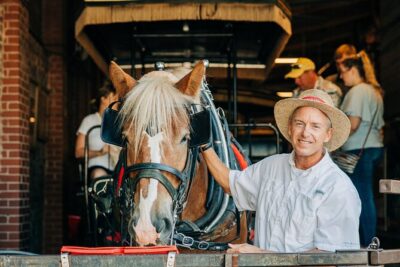
Charleston’s Old South Carriage Historic Horse & Carriage Tour
Read our review →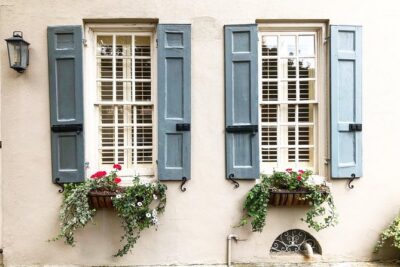
Historic Charleston Guided Sightseeing Walking Tour
Read our review →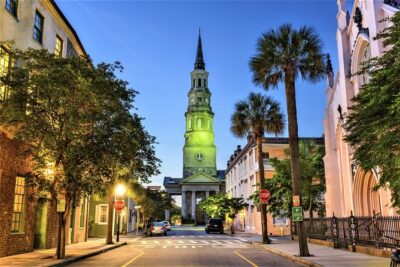
Haunted Evening Horse and Carriage Tour of Charleston
Read our review →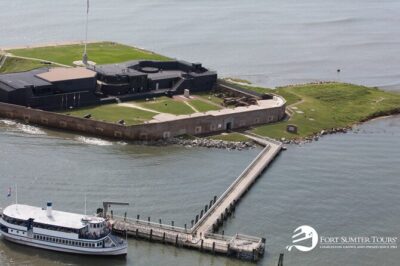
Fort Sumter Admission and Self-Guided Tour with Roundtrip Ferry
Read our review →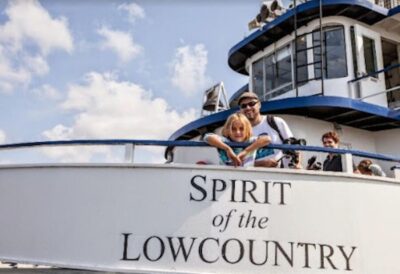
Fort Sumter Entry Ticket with Roundtrip Ferry
Read our review →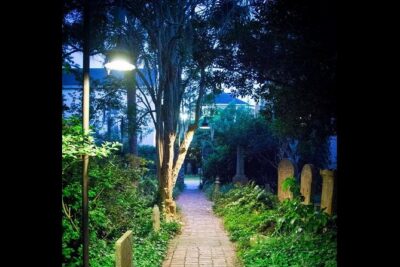
Ghosts of Charleston Night-Time Walking Tour with Unitarian Church Graveyard
Read our review →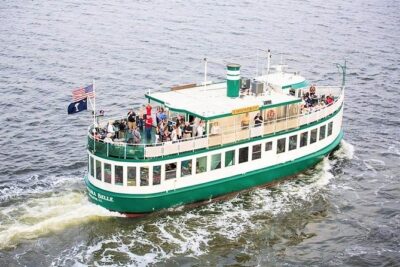
Charleston Harbor History Day-Time or Sunset Boat Cruise
Read our review →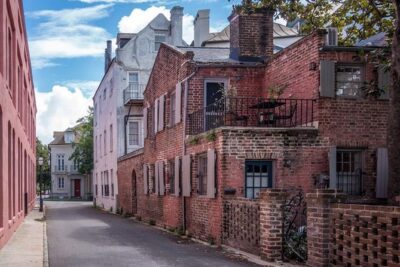
Hidden Alleyways and Historic Sites Small-Group Walking Tour
Read our review →Browse the lists this tour appears in