
Reviewed · CHARLESTON
Charleston: Historical Downtown Tour by Horse-drawn Carriage
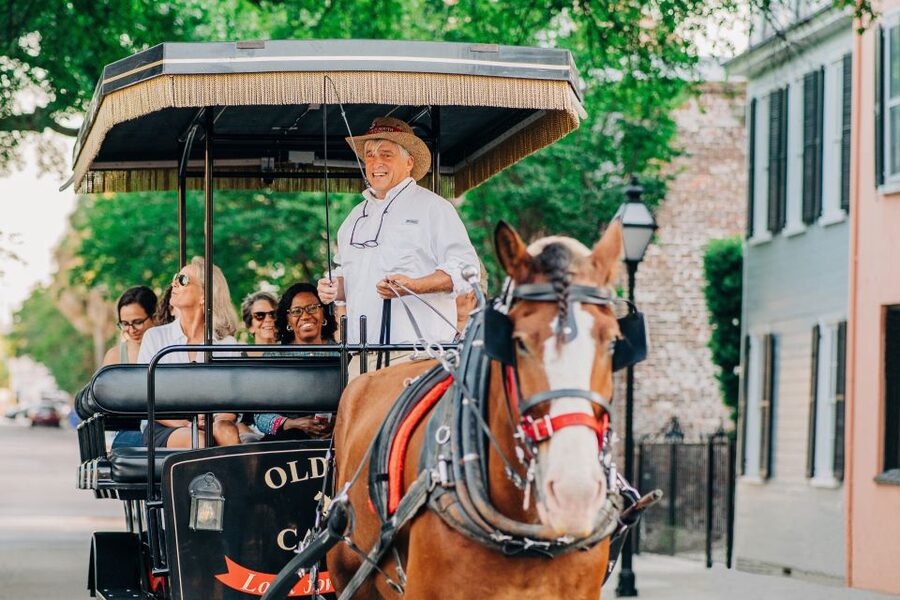
Charleston’s historic center makes more sense from a slow-moving carriage. You pass the harbor, old homes, church steeples, and leafy streets while your guide fills in the story behind them. I like the easy pace and the chance to cover more ground than on foot. I also like that the guide can point out places you may want to revisit later.
The main catch is that your route is not fully chosen by the carriage company. Charleston assigns routes through a bingo-style system, so you may not see every listed sight on one ride. Four adults sharing a bench can also feel tight, and traffic noise may make the guide harder to hear.
Key points to know before booking
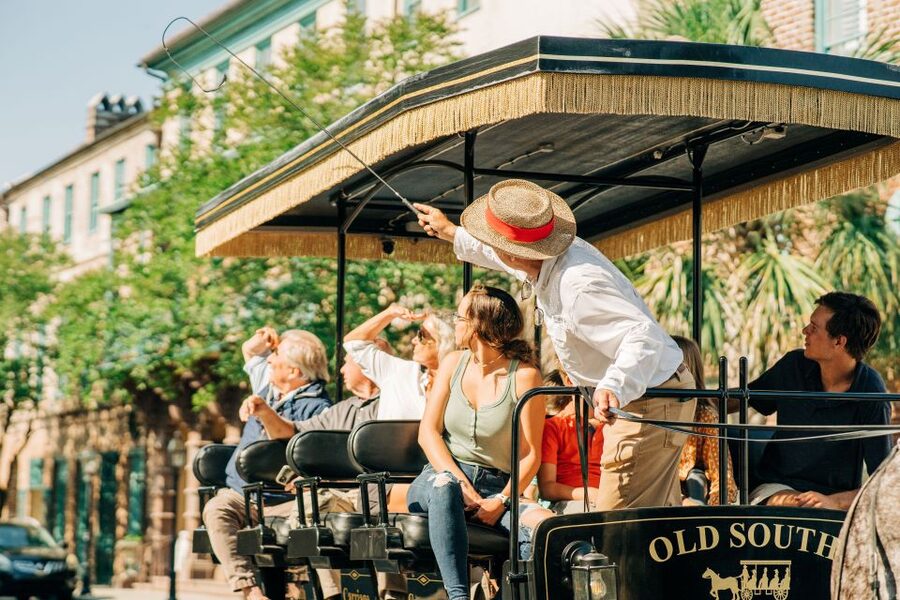
- A city-assigned route: Charleston’s carriage system determines which section of the historic district you see.
- A one-hour introduction: The ride gives you a useful first look before you explore on foot.
- Strong live guiding: Guides such as Carol, Donald, Terry, Christina, and Michael H have been praised for clear facts, humor, and storytelling.
- Major sights along the way: Possible highlights include Rainbow Row, King Street, Charleston Harbor, White Point Gardens, the Battery, and the 4 Corners of Law.
- Horse and carriage experience: The custom-built carriage offers a relaxed way to see the city, with horses such as Jesse, Ace, Milo, Mac, Roger, and Buddy working with their guides.
- Practical timing: Check in at least 10 minutes before departure, and cancellation is free up to 24 hours ahead.
Why a carriage is a smart first look at Charleston
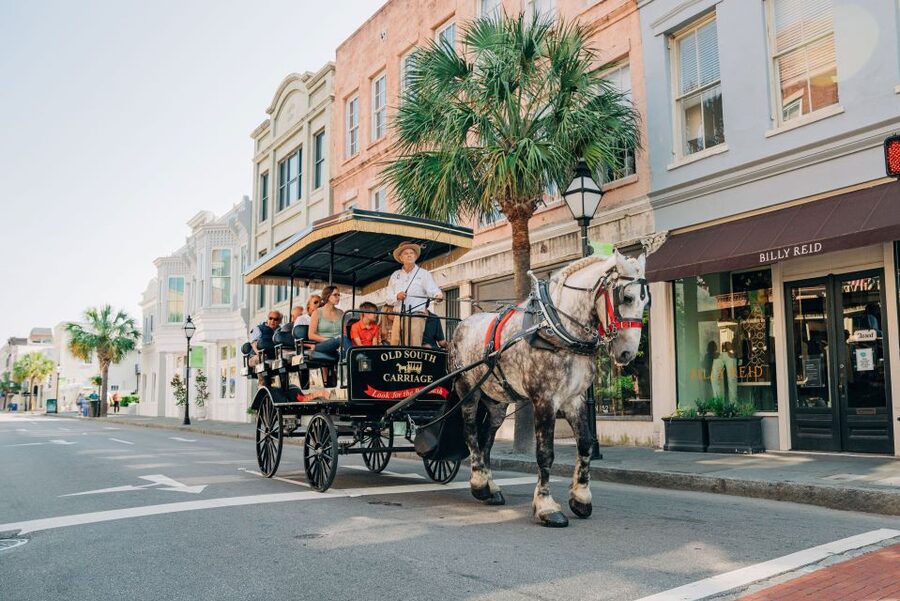
At $50 per person for an hour, this is not the cheapest way to move through Charleston. It is a sightseeing experience, not transportation from one address to another. The value comes from combining a short city orientation, live interpretation, and a distinctive ride in one package.
I like the way the carriage slows the city down. You are not rushing between stops or staring at a map. You can look up at balconies, gates, gardens, and facades while the guide explains how Charleston developed over about 350 years.
A walking tour can take you closer to individual buildings, but it asks you to cover the ground yourself. A carriage lets you see more of the residential district without tiring your feet. That makes this a good choice early in a visit, especially if you want to learn the layout before deciding where to return.
The experience also suits mixed-age groups. Families can sit together, older visitors can avoid a long walk, and anyone with limited energy gets a broad look at downtown. The activity is listed as wheelchair accessible, though you should still confirm your specific needs when booking.
More Carriage Rides in Charleston
- Charleston’s Old South Carriage Historic Horse & Carriage Tour
★ 5.0 · 10,023 reviews - Haunted Evening Horse and Carriage Tour of Charleston
★ 4.5 · 3,678 reviews - Charleston Horse-Drawn Carriage Tour: Explore Historic Charleston
★ 5.0 · 3,561 reviews
Checking in at the Old South Carriage Co. stables
The tour begins at Old South Carriage Co. Enter through the front door and check in at the reception desk in the main lobby. Customer service staff handle the arrival process, and the lobby has seating, water, and restrooms.
Arrive with time to spare. If you have not checked in 10 minutes before departure, you can lose your scheduled reservation and be moved to the next available carriage. That is a simple rule, but it matters if you are coming from a restaurant, parking garage, or another downtown activity.
Parking is not included. One recurring practical complaint concerns the cost of parking, so build that expense into the $50 ticket price if you are driving. The check-in process itself is described as organized and friendly, but the parking question is worth solving before you arrive.
From the stables, you board a custom-built carriage and head toward the city gate at the Old City Market. The ride begins with a sense of occasion: you are leaving the barn in a traditional vehicle rather than stepping onto a bus or joining a large walking group.
A route decided by Charleston’s carriage system
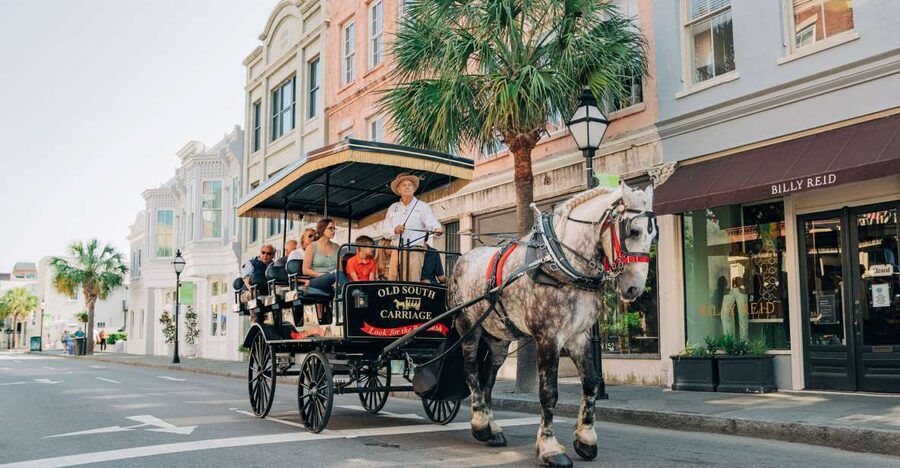
The unusual part of this tour is the route selection. Charleston uses a bingo-style system to spread carriage traffic across different sections of the historic district. The carriage company does not simply promise one fixed circuit.
This has two effects. First, it keeps the tour from becoming exactly the same every time. Second, you cannot guarantee that you will pass every named highlight during your hour. The list of possible sights includes Charleston Harbor, Rainbow Row, King Street, White Point Gardens, the Charleston Battery, and the 4 Corners of Law, but the assigned route controls what you see.
I consider this a fair trade for a general introduction, but not for a visitor seeking one precise building or street. If Rainbow Row is your top priority, ask at check-in how route assignments work that day and be ready to visit the area separately.
The route system also means this tour works best as an overview. Think of it as a moving orientation rather than a checklist. The guide can help you spot areas worth exploring later, but the ride is not designed for extended stops at each landmark.
What you see from the carriage
The carriage moves through Charleston’s historic residential district, where the view is as important as the commentary. You will see elegant buildings, old streets, gardens, and neighborhoods from a seated position, with more time to look around than you would have while walking through a crowded block.
Charleston Harbor gives the tour a wider sense of place. The water connects the city to its port history and helps explain why Charleston grew into such an important coastal center. Views near the harbor can also provide a welcome break from the close-packed streets of downtown.
Rainbow Row is one of the city’s most recognizable stretches of houses. Its colored facades make a quick visual impression, but the guide adds value by placing the buildings within Charleston’s architectural and commercial past. Depending on the assigned route, you may pass by rather than stop, so keep your camera ready.
King Street brings a different feel. It is one of the city’s best-known commercial streets, and seeing it from a carriage helps connect the residential district with the shops, restaurants, and city life you may explore later. The carriage gives you a quick look, not a shopping stop.
White Point Gardens offers open space and grand views near the southern end of the peninsula. It is a useful place to return on foot if you want shade, waterfront scenery, or a slower look at the surrounding homes.
The Charleston Battery is another major highlight. The waterfront defensive line and broad views make it one of the clearest places to understand Charleston’s position beside the harbor. A guide can point out the relationship between the Battery, the water, and the old residential streets.
The 4 Corners of Law gives the tour a civic angle. The name refers to four buildings connected with different forms of law and government, and it helps explain how public institutions shaped the center of Charleston. As with the other landmarks, your guide provides the context while the carriage keeps moving.
More History Tours in Charleston
- Historic Charleston Guided Sightseeing Walking Tour
★ 5.0 · 6,216 reviews - Charleston Harbor History Day-Time or Sunset Boat Cruise
★ 4.5 · 2,788 reviews - Hidden Alleyways and Historic Sites Small-Group Walking Tour
★ 5.0 · 2,335 reviews - Charleston: Daytime or Sunset Historic Harbor Cruise
★ 4.5 · 1,352 reviews
The guide makes or breaks the hour
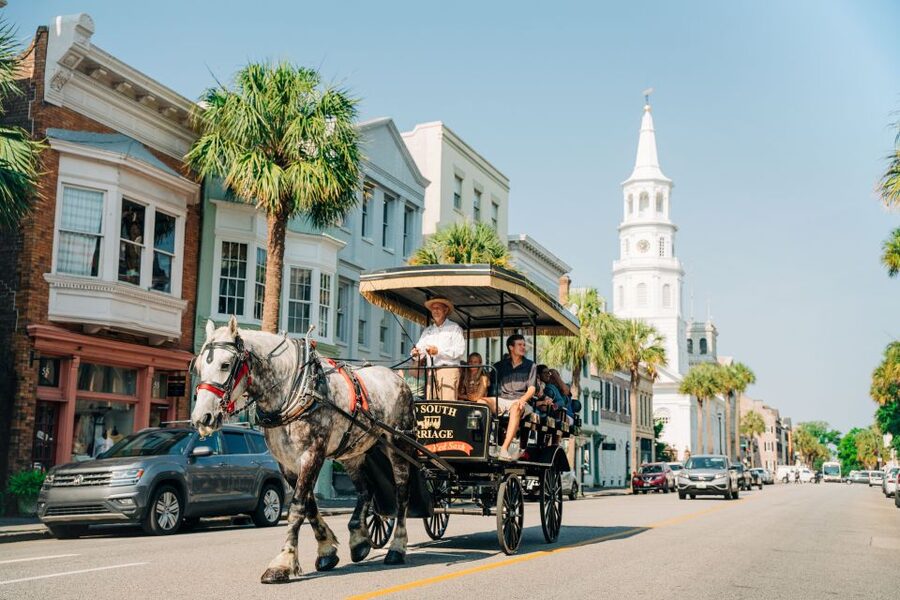
The horse is memorable, but the guide determines how much you take away. This is a live, English-language tour, and the best guides mix dates and facts with local stories, architectural details, and humor.
Guides named in feedback include Michael H, Carol, Donald, Terry, Christina, Madison, Scott, Hunter, Skylar, Billy, and McKenzie. You are not guaranteed a particular guide, but the range of praise points to a central strength of the experience: the staff can make a standard route feel personal.
Donald, for example, is known for a humorous delivery as well as a large store of information. Terry has been praised for making the French Quarter engaging, while Carol is noted for discussing landmarks, architecture, flooding, trees, vines, and seasonal flowers. These examples show the kind of commentary you may receive: not only dates and names, but details that help you notice the city itself.
A good guide also adjusts to the group. One account describes a guide keeping younger children engaged and avoiding unsuitable material. That makes the ride useful for families, though the amount of detail and humor will depend on the person leading your carriage.
The main weakness is sound. Street traffic can make the commentary difficult to catch, and one ride was described as needing a portable microphone. If hearing every word matters to you, try to sit where you can face the guide and ask questions during quieter stretches.
The horses and the pace of the ride
The pace is leisurely, which is exactly what makes the carriage useful for sightseeing. You have time to look at upper stories, ironwork, trees, and doorways that you could miss from a faster vehicle.
The horses are part of the experience, not just a means of pulling the carriage. Names such as Jesse, Buddy, Ace, Jordan, Milo, Roger, Mac, Winston, Henry, Cooper, and Wayne have been associated with especially enjoyable rides. Guides often talk about the horse, handle the animal in traffic, and work as a two-person storytelling and driving team when conditions require it.
Repeated comments describe the horses as calm, attractive, and well cared for. You should still remember that this is an animal-powered activity, so the ride can have a natural pace rather than a perfectly timed schedule. The horse may pause or move more slowly, and that is part of the setting.
The carriage itself is comfortable for many people, but seating deserves attention. Four average-size adults across one bench can feel cramped, especially on a full carriage. If you are booking for a group of four adults, expect close quarters rather than generous personal space.
What the hour can and cannot do
One hour is a good length for a first look. It is long enough to see several parts of downtown without turning into an all-day commitment. Families and visitors with limited time can learn the broad shape of the city and then choose what to explore on foot.
The limit is detail. You will not study every house, enter historic buildings, or spend long periods at the Battery or Rainbow Row. One comment specifically wished for more discussion of the houses, which is useful if architecture is your main interest.
To get the most from the ride, use it as a planning tool. Pay attention to streets and landmarks you want to revisit. Make a note of the names of neighborhoods, restaurants, or buildings the guide points out. Then walk back through the areas that caught your eye.
The experience is also weather dependent. If poor weather prevents departure, the company offers a refund or a new date. Charleston heat, rain, and street noise can affect comfort, so a morning departure may be worth considering when available, though the exact starting times vary.
Is $50 a fair price?
The $50 price makes sense if you value the guide and the unusual setting. You are paying for a licensed guide, the carriage ride, access to the stables’ restrooms, and a compact introduction to a city with centuries of stories packed into a small downtown area.
It is less compelling if you only want a ride past a few famous buildings. You can see parts of Charleston on foot for free, and a walking tour may offer more detail at individual sites. The carriage earns its price by saving your energy and adding live explanation as you cover more ground.
For a couple or family that wants a relaxed overview, I think the price is reasonable. Add the cost of parking if you drive, and remember that your route may not include every desired landmark. The strongest value comes when you book it near the start of your stay and use the information to shape the rest of your visit.
Free cancellation is available up to 24 hours before departure, and you can reserve now and pay later. Those terms help if your schedule is still changing.
Who should book this carriage tour?
I would recommend it to first-time visitors, families, older adults, and anyone who wants a gentle introduction before walking downtown. It also suits people who enjoy local storytelling more than a purely visual sightseeing ride.
It is a good match for visitors who want to hear about Charleston’s buildings, public life, harbor, flowers, trees, floods, and changing neighborhoods in one hour. The guide’s personality adds a human touch that recorded audio cannot provide.
I would be more cautious if you need a guaranteed route, dislike close seating, or have trouble hearing in traffic. You may also prefer a walking tour if you want to enter buildings or focus closely on architecture.
Final verdict: book it for orientation and atmosphere
I would book this tour early in a Charleston visit, with realistic expectations. You are not buying a private route or a detailed house-by-house study. You are buying a calm ride through the historic center, a live guide, a horse-and-carriage experience, and a useful first sense of where the city’s major areas fit together.
The route lottery is the key detail. Accept that you may see one section rather than every listed sight, and the ride becomes a pleasant way to get your bearings. If you arrive early, listen closely, and treat the hour as a starting point for further exploring, $50 is a fair price for the experience.
FAQ
How long is the Charleston carriage tour?
The tour lasts one hour.
What landmarks might the carriage tour include?
The route may include Charleston Harbor, Rainbow Row, King Street, White Point Gardens, the Charleston Battery, and the 4 Corners of Law.
Can I choose the exact route?
No. Charleston assigns carriage routes through a bingo-style system, so the carriage company does not control the exact route.
What language is the tour in?
The tour is conducted in English with a live guide.
Where do I check in?
Check in at the Old South Carriage Co. reception desk in the main lobby. Enter through the front door.
How early should I arrive?
You must check in at least 10 minutes before departure. If you miss that cutoff, you may lose your scheduled reservation and be placed on the next available carriage.
Is the tour wheelchair accessible?
Yes, the activity is listed as wheelchair accessible.
What happens if bad weather cancels the tour?
If poor weather prevents the tour from departing, you can receive a refund or choose a new date.
Can I cancel my booking?
Yes. You can cancel up to 24 hours in advance for a full refund.
Just added around Charleston
- Charleston Ghosts of Liberty Guided Walking Tour★ 4.5 · 473 reviews
- Charleston’s Best Highlights: History, Culture & Architecture★ 5.0 · 422 reviews
- Charleston Harbor Sunset Cruise★ 5.0 · 905 reviews
- Undiscovered Charleston: Half Day Food, Wine & History Tour with Cooking Class★ 5.0 · 948 reviews
- Private Daytime Horse-Drawn Carriage Tour of Charleston★ 5.0 · 340 reviews
- Afternoon Schooner Sightseeing Dolphin Cruise on Charleston Harbor★ 4.5 · 620 reviews
- 2-Hour Guided Kayak Eco Tour in Charleston★ 5.0 · 954 reviews
- Savor the Flavors of Charleston Walking Food Tour★ 4.5 · 881 reviews
Charleston Tours, compared.

Charleston’s Old South Carriage Historic Horse & Carriage Tour
Read our review →
Historic Charleston Guided Sightseeing Walking Tour
Read our review →
Haunted Evening Horse and Carriage Tour of Charleston
Read our review →
Charleston Horse-Drawn Carriage Tour: Explore Historic Charleston
Read our review →
Fort Sumter Admission and Self-Guided Tour with Roundtrip Ferry
Read our review →
Fort Sumter Entry Ticket with Roundtrip Ferry
Read our review →
Ghosts of Charleston Night-Time Walking Tour with Unitarian Church Graveyard
Read our review →
Charleston Harbor History Day-Time or Sunset Boat Cruise
Read our review →Browse the lists this tour appears in