
Reviewed · CHICAGO
Chicago: Gangsters and Ghosts Walking Tour
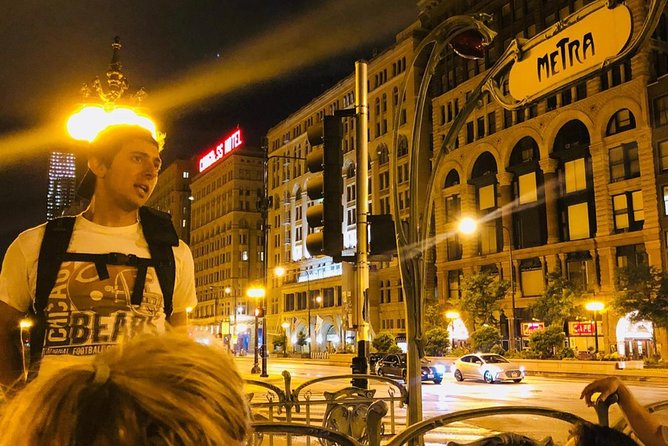
Chicago’s Loop becomes a different place when you hear about its old speakeasies, bootlegger tunnels, gangster headquarters, and reported hauntings. This two-hour walking tour connects major sights with darker stories, including Al Capone’s Chicago base, the Palmer House, Death Alley, and the Congress Plaza Hotel.
I like the historian-led storytelling and the way the route mixes famous landmarks with lesser-known corners. I also like the practical pace: about 1.5 miles, frequent stops, and a break at the Palmer House. The main drawback is that much of the experience takes place outdoors, so cold, wind, rain, and city noise can affect the evening.
Key points to know before you book
- About 1.5 miles on foot: Frequent stops make the walk manageable, but you should still be comfortable walking through city streets.
- A history tour with ghost stories: The tone is more campfire storytelling than theatrical performance.
- Major Loop sights included: You see Millennium Park, the Chicago Riverwalk, the Chicago Theatre, and two historic hotels.
- Al Capone remains a central figure: The route includes places tied to his headquarters and reported ghost sightings.
- Small group size: The tour allows a maximum of 20 people, which helps the guide keep the group together.
- Optional minibus version: The bus upgrade follows the same general theme and includes one stop at Harry Caray’s Italian Steakhouse.
Why Chicago’s Loop makes such a good setting
The Loop gives this tour a useful sense of place. You are not hearing old crime stories in a distant museum. You are walking through the streets where Chicago’s Prohibition-era nightlife, political power, hotels, theaters, and organized crime overlapped.
The focus is the 1920s and 1930s, when speakeasies and bootlegging shaped the city’s public image. The tour also reaches beyond gangster lore. Ghost accounts, tragic events, historic hotels, and stories such as the SS Eastland disaster add a broader human side to Chicago’s past.
That mix matters. A tour devoted only to Al Capone could become repetitive, especially if every stop leads back to the same gangster. Here, the subject changes as you move. One story may concern mob activity, the next a hotel haunting, and another a disaster connected to the city’s waterways.
The setting also gives you plenty to look at between stories. You pass modern Chicago landmarks while hearing about earlier versions of the same streets. That contrast is one of the best reasons to take this tour early in your Chicago visit. It gives you a historical frame for places you may otherwise see only as photo stops.
More Walking Tours in Chicago
- Chicago Favorites Ultimate Food and Walking Tour
★ 5.0 · 1,962 reviews - Chicago: Gangsters and Ghosts Guided Walking Tour
★ 4.7 · 1,697 reviews - Chicago in a Day: Food, History & Architecture Walking Tour
★ 5.0 · 1,153 reviews
Meeting near Wacker Drive and starting in the Loop
The tour begins at 71 East Wacker Drive, a central location near public transportation. You meet your guide and group there before setting off through the Loop.
The group can include up to 20 people. That is large enough to create energy, but smaller than a mass sightseeing walk. The guide’s ability to project clearly matters in downtown Chicago, where traffic, pedestrians, and general city noise can swallow a quiet voice.
The guides named in the supplied information include Taka, Sophia, Tanner, Avery, and Willis. Their approaches vary slightly, but the strongest common feature is clear delivery. Taka is particularly good at keeping a larger group together while speaking loudly and plainly. Sophia brings a more theatrical style to the stories, while Tanner is well suited to a mixed-age group.
Do not expect a formal theater show. The stories are presented in a conversational, around-the-campfire manner. The ghost accounts are meant to be spooky, but the tour also has humor and ordinary city history. That balance helps keep the experience enjoyable for teenagers, adults, and Chicago residents who already know the main sights.
The Loop, where crime stories meet city history
The first major part of the walk covers the Loop, the area most closely tied to the tour’s gangster and haunting themes. During the Roaring Twenties and 1930s, this district was associated with vice, hidden drinking places, and organized crime.
Your guide explains how bootleggers used secret routes and underground tunnels, and how prominent gangsters established places of influence in downtown Chicago. Al Capone receives much of the attention, including stories about where he set up his personal headquarters.
This is the point where the tour’s storytelling does most of the work. Many of the locations are now ordinary city spaces. Without context, you might walk past them without noticing anything unusual. The guide supplies the older layer of the neighborhood and explains why these blocks mattered.
The route is not a museum visit with displays or indoor exhibits. Most of the information comes while you are standing on public streets. That makes the walk feel connected to the city, but it also means you need to listen carefully and stay close enough to hear.
The pace includes frequent stops, so you are not walking continuously for two hours. Still, the full route covers around 1.5 miles. Comfortable shoes are a sensible choice, and you should plan for the weather rather than assume the city will be mild.
Millennium Park and the other face of Chicago
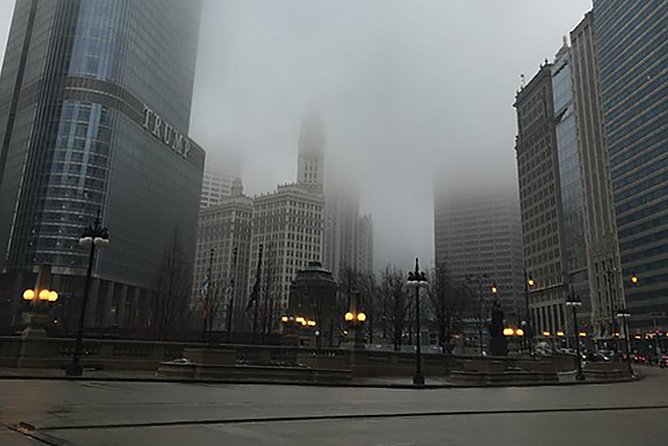
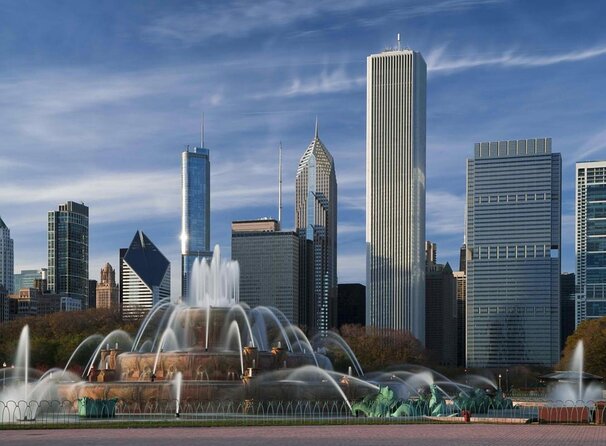
Millennium Park provides a change in mood. The park is home to Cloud Gate, the polished sculpture many people call the Bean, and it is one of Chicago’s best-known landmarks.
The stop is useful because it places the darker stories beside a modern public space. You get a familiar photo opportunity while the guide continues to connect present-day Chicago with earlier chapters of the city.
You should not expect a long, private visit inside the park. The stop lasts about 15 minutes, and the tour remains focused on the larger route. If Cloud Gate is high on your personal must-see list, you may want to return later for more time and photos.
For first-time visitors, this part of the walk helps the tour feel like more than a crime-themed outing. You are also getting oriented around central Chicago, with a guide who can point out how the Loop’s landmarks fit together.
More Mob Tours in Chicago:
- Chicago Gangster and Food Walking Tour
★ 5.0 · 471 reviews - New York City: Gangsters and Ghosts 2-Hour Walking Tour
★ 4.7 · 615 reviews - The Vegas Mob Tour
★ 5.0 · 366 reviews
A break inside the Palmer House
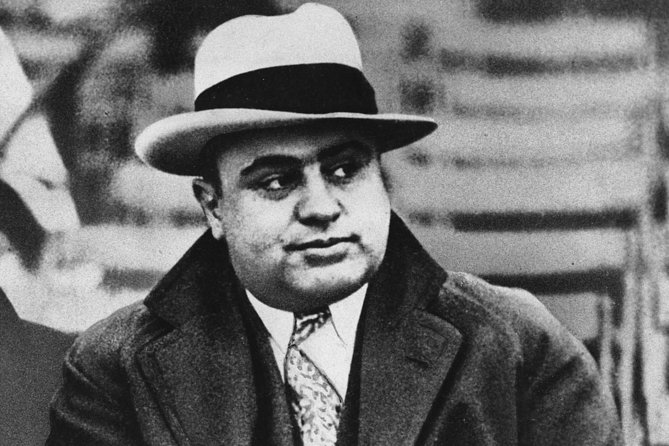
The Palmer House Hilton is one of the most useful stops on the route. The group pauses in the hotel lobby, giving you a chance to rest and use the restroom while hearing about one of Chicago’s oldest hotels.
The hotel is described as the oldest hotel in Chicago and the oldest continuously operating hotel in the United States. It is also considered haunted, so it fits both sides of the tour’s theme: established Chicago history and reported supernatural activity.
A hotel lobby is a better setting for this part of the tour than a windy sidewalk. You get a short indoor break and a chance to absorb the guide’s story without competing as much with traffic noise.
The stop lasts about 20 minutes. That is enough to make the tour easier on your feet, especially in cold weather. It does not turn the experience into an indoor hotel tour, however. The focus remains the lobby and the stories connected with the building.
If you are mainly interested in seeing the interiors of Chicago’s historic hotels, keep your expectations measured. The Palmer House stop is a pause and storytelling location, not a full architectural visit.
The Riverwalk and stories told beside the water
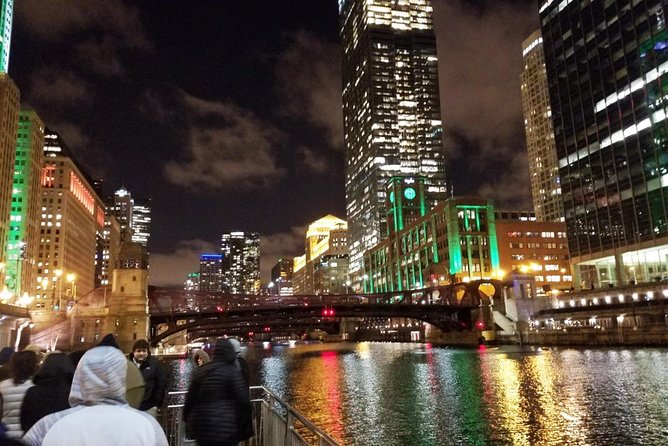
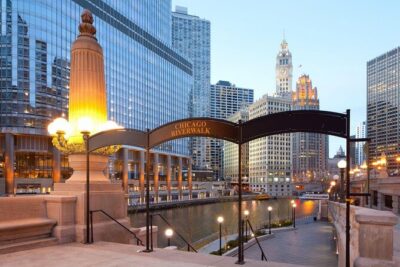
The Chicago Riverwalk adds another setting shift. You walk along the river while the guide tells more ghost stories and discusses famous gangster hangouts.
The atmosphere works well here. Water, old buildings, evening light, and the movement of the city can make the ghost stories feel more immediate. At the same time, the guide keeps the tone grounded rather than presenting the tour as a haunted attraction.
The tour describes its ghost stories as spooky and verified accounts, but you should understand that the experience depends on the guide’s narration rather than a supernatural demonstration. You will hear stories about reported hauntings and tragic events, not see a staged apparition.
The Riverwalk section lasts about 15 minutes. Depending on conditions, this may be one of the more exposed parts of the route. Wind from the river can make a cold evening feel colder, so a warm layer is worth bringing even if the temperature looks moderate.
This section also shows why the tour is best viewed as a city history walk with a darker theme. The river is not only a backdrop for ghost tales. It helps explain how Chicago’s transportation, commerce, and tragedies shaped the city.
The Chicago Theatre and Death Alley
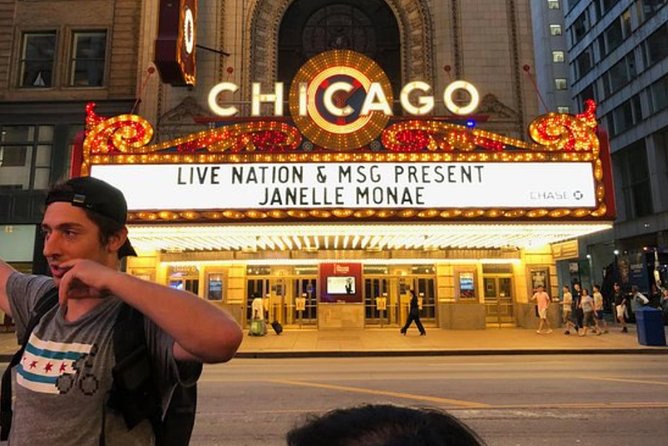
The Chicago Theatre is another photo stop. Its familiar sign gives the group a chance to pause while the guide adds more context to the downtown route.
The nearby stories include Death Alley, one of the more unsettling names connected with the tour. You hear about the location as part of the Loop’s darker past, alongside tales of gangsters, public danger, and reported hauntings.
This part of the walk is more about looking, listening, and imagining the earlier city than entering a historic site. You should not book the tour expecting access to backstage areas or private interiors. The appeal is standing in the same downtown setting while the guide supplies the story.
A guide with strong projection makes a real difference here. Taka, in particular, is praised for speaking clearly enough for a larger group to hear on loud city streets. That practical skill can matter more than a dramatic performance, especially when the group pauses near busy roads.
Ending at the Congress Plaza Hotel
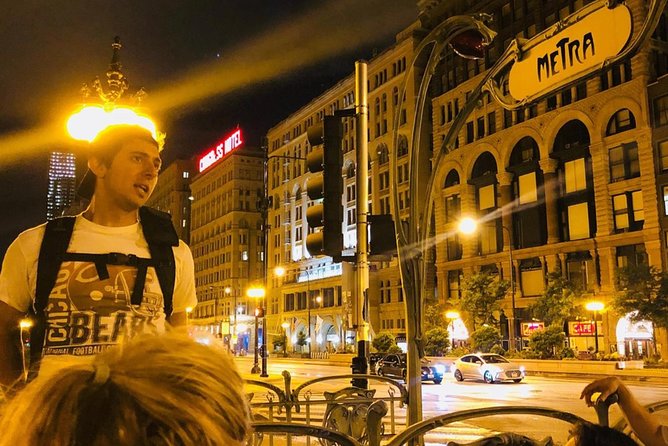
The tour ends at the Congress Plaza Hotel and Convention Center at 520 South Michigan Avenue. The hotel is described as one of the most haunted places in Illinois, and it provides a fitting final chapter.
Al Capone is tied to the hotel through a former headquarters, with his old suite on the eighth floor connected to reported sightings of his ghost. The guide closes the tour near this setting, giving the experience a clear ending rather than simply stopping in the middle of downtown.
The final stop lasts about five minutes, so it is brief. You are not promised a long indoor exploration of the hotel or a visit to the eighth-floor suite. The value comes from the location and the story attached to it.
The ending is also practical. South Michigan Avenue puts you near other central attractions and public transportation. You can continue sightseeing, find a meal, or return to your hotel without needing a separate transfer arranged by the tour.
The minibus option and what it changes
You can upgrade to a minibus version of the experience. It follows the same general gangster and ghost theme and includes one stop at Harry Caray’s Italian Steakhouse for an immersive portion of the bus tour.
The bus option may suit you if two hours of outdoor walking is a concern. It can also be useful in poor walking conditions, though the experience still requires appropriate weather because the activity can be canceled when conditions are unsuitable.
The walking tour offers more direct contact with the Loop. You move between buildings, streets, the Riverwalk, and public spaces at the same pace as the city. The minibus gives you more shelter and less physical effort, but it may reduce the feeling of following the old stories on foot.
If seeing the city at street level matters most to you, I would choose the walking version. If your group includes people who cannot comfortably cover 1.5 miles, compare the minibus option before booking. The supplied details do not describe a full accessibility program, and the standard tour asks for a moderate level of fitness.
What the $52 price gets you
At $52, this is not a bargain-priced stroll, but the value depends on what you want from a Chicago tour. You are paying for about two hours with an expert guide, a planned route through several central locations, and a blend of history and ghost stories.
The price makes more sense if you want interpretation rather than a list of landmarks. You could walk past Millennium Park, the Chicago Theatre, the Riverwalk, and the hotels on your own. You would not get the same sequence of stories or the connection between each place.
The tour is also a useful choice for a short Chicago visit. It covers a fair amount of ground without taking a full day, and it begins and ends in central areas. The Palmer House break helps the pace, while frequent stops keep the walk from feeling like a long march.
The value is weaker if you want extensive building access, museum exhibits, or a purely factual architectural tour. Much of the experience happens outside, and the ghost material is presented as stories and reported hauntings rather than as a physical attraction.
Weather, group size, and timing tips
This experience requires good weather. If poor conditions cancel the tour, you are offered another date or a full refund. The weather rule is important in Chicago, where wind and cold can change the feel of an outdoor walk quickly.
Dress for standing outside, not just walking. Warm layers will help on cold evenings, and comfortable shoes are essential. The tour includes a refreshment and restroom break, but you should not expect constant indoor shelter.
The maximum group size is 20 people. That keeps the walk fairly personal, though the city environment can still make listening difficult at times. Stay near the guide at stops and pay attention when the group is moving between locations.
The tour receives a 4.8 rating from 7,155 reviews, with 95 percent recommending it. The most praised qualities are the guides’ clear voices, strong storytelling, good time management, and ability to keep both adults and teenagers interested. Taka, Sophia, Tanner, Avery, and Willis are specifically named among the guides who bring different styles to the route.
Who should book this Chicago walking tour
I would recommend it to first-time visitors who want a city walk with a strong theme. It is also a good fit for Chicago residents who know the main sights but want new stories about familiar streets.
Families with older children and teenagers can enjoy it, especially if they like crime stories, ghost tales, or unusual local history. The experience is not presented as a frightening attraction, so it can work for people who want spooky material without a haunted-house format.
You should think twice if you dislike outdoor walking, need frequent seating, or want to spend most of the time inside historic buildings. The route is manageable, but it is still a 1.5-mile city walk with standing stops.
Free cancellation is available if you cancel at least 24 hours before the start time. Changes or cancellations inside that window are not accepted for a refund. That policy gives you room to adjust plans early, but you should check the weather before the deadline.
Should you book it?
Book this tour if you want Al Capone, Prohibition, haunted hotels, tragic Chicago stories, and major downtown sights in one compact outing. The guides are the main reason to choose it, with clear delivery and a storytelling style that keeps the route moving.
I would choose the walking option for the best connection to the Loop, the Riverwalk, and the buildings tied to the stories. Choose the minibus upgrade if outdoor walking is a serious concern. At $52, it offers fair value when you want interpretation and atmosphere, but less value if you are looking for long indoor visits or a strictly academic history lesson.
FAQ
How long is the Chicago Gangsters and Ghosts Walking Tour?
The tour lasts approximately two hours.
How far do you walk?
The walking route covers about 1.5 miles, with frequent stops and a refreshment and restroom break.
Where does the tour begin?
The tour begins at 71 East Wacker Drive, Chicago, Illinois 60601.
Where does the walking tour end?
The tour ends at the Congress Plaza Hotel and Convention Center, 520 South Michigan Avenue, Chicago, Illinois 60605.
What landmarks are included?
The route includes the Loop, Millennium Park and Cloud Gate, the Palmer House Hilton lobby, the Chicago Riverwalk, the Chicago Theatre, and the Congress Plaza Hotel.
Is the tour mainly about Al Capone?
Al Capone is an important part of the tour, but the experience also covers other gangsters, bootlegging, speakeasies, reported hauntings, Death Alley, and tragic Chicago stories.
Is there a bus version?
Yes. You can choose a minibus upgrade that follows the same general theme and includes one stop at Harry Caray’s Italian Steakhouse.
What happens if bad weather cancels the tour?
If the tour is canceled because of poor weather, you are offered a different date or a full refund.
More Ghost Tours in Chicago
- Medieval Torture Museum Ticket with Audio Guide and Ghost Hunting
★ 5.0 · 962 reviews - New Orleans Premier Ghost, Voodoo and Vampire Walking Tour
★ 4.5 · 12,856 reviews - Adults-Only New Orleans Ghost, Crime, Voodoo, and Vampire Tour
★ 5.0 · 6,545 reviews - Salem’s Best Ghost Tour
★ 4.5 · 4,186 reviews
Just added around Chicago
- BYOB Spray Paint and Sip at Studio W.I.P.★ 5.0 · 401 reviews
- Delicious Donuts & City Sights: Chicago’s Original Donut Tour★ 5.0 · 1,389 reviews
- Bikes, Bites & Views: Chicago’s Signature Dishes Bike Tour-Adults★ 5.0 · 732 reviews
- Original Chicago Architecture Interiors Tour: Dazzling Interiors★ 5.0 · 1,489 reviews
- Chicago Loop District Food Tour with Deep Dish & Beef Sandwich★ 5.0 · 870 reviews
- Field Museum of Natural History Admission Tickets★ 4.5 · 489 reviews
- City Cruises Chicago: Signature Lunch Cruise on Lake Michigan★ 4.0 · 348 reviews
- Chicago Sightseeing River and Lake Cruise★ 4.5 · 509 reviews
Chicago Tours, compared.

Chicago River: 1.5-Hour Guided Architecture Cruise
Read our review →
Chicago Architecture Center River Cruise aboard First Lady
Read our review →
Architecture River Cruise Skip-the-Ticket Line
Read our review →
Browse the lists this tour appears in