
Reviewed · CHICAGO
Chicago Architecture Center River Cruise aboard First Lady
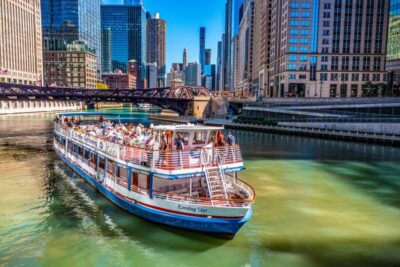
Chicago reveals itself best from the river, where skyscrapers rise directly from the water and their odd shapes suddenly make sense. This 90-minute architecture cruise gives you a moving lesson in how Chicago grew, rebuilt, and kept experimenting with height, steel, glass, and concrete.
I like the excellent docent guides, who bring in bridge design, city planning, engineering, and local stories rather than simply naming buildings. I also like the choice between the open top deck and a heated, windowed salon. The main drawback is that the boat stays close to the central river corridor, so you see a concentrated slice of Chicago rather than a broad tour of the whole city.
Key points to know before you board
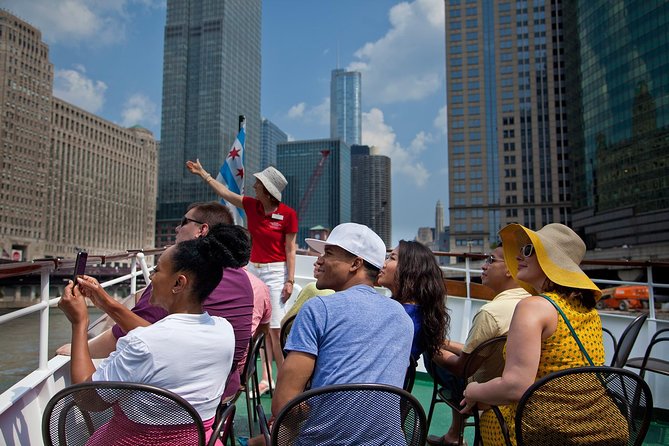
- A docent-led tour, not just a sightseeing ride: Chicago Architecture Center guides such as Cynthia, Laura, Amy, Russell, Nick, and Mark explain why the buildings look and work the way they do.
- The river is the real classroom: You see how industry, transportation, bridges, offices, housing, and recreation shaped Chicago around the water.
- Open-air and indoor seating are both available: The upper deck offers the clearest views, while the climate-controlled lower salon helps on cold, hot, or rainy days.
- General admission affects your arrival plan: Seating is first come, first served, so arrive at least 30 minutes early if you want a strong viewing position.
- The $57 price pays for context as much as scenery: You get a 90-minute cruise and a well-prepared guide, not simply a boat ride past tall buildings.
- Pack light and dress for the weather: There is no luggage storage, and all sailings operate in rain or shine.
Why the Chicago River makes such a good classroom
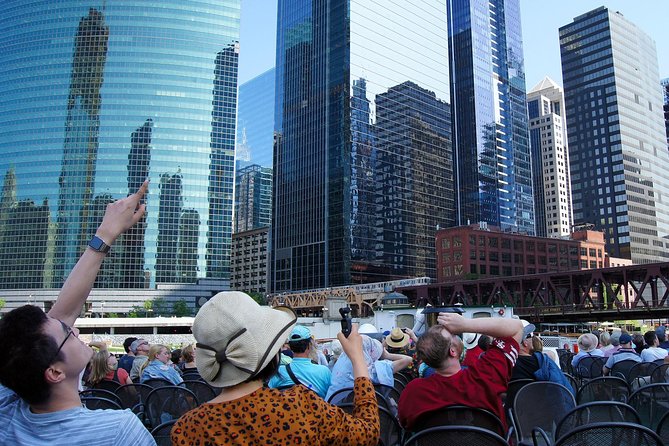
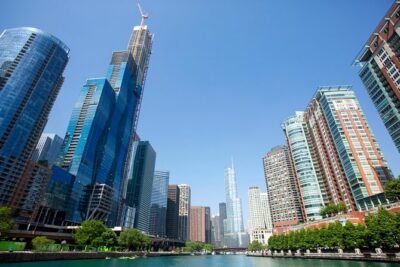
The Chicago River is more than a waterway below the skyline. It tells the city’s story in a compact form. Industry and shipping once defined its edges. Later, offices, housing, public paths, and recreation changed the riverfront. The buildings you see from the boat are part of that long shift.
From street level, skyscrapers can feel like separate objects. From the water, you can compare them side by side. A low warehouse, a slender glass tower, a concrete apartment building, and a polished office block may all appear within the same turn of the river. The guide helps you understand why each one occupies its particular place.
That is the chief value of this tour. You are not only collecting skyline photographs. You are learning how the city’s buildings respond to one another, to the river, and to changing ideas about urban life.
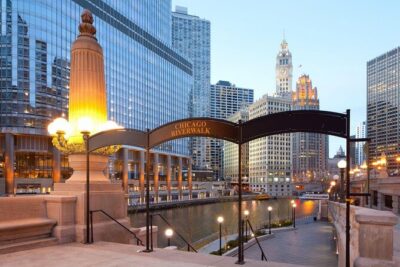
The boat departs from 112 East Wacker Drive, at the Chicago Riverwalk. The entrance is at street level near the northeast corner of Michigan Avenue and Wacker Drive, around three blocks north of Millennium Park and close to the Magnificent Mile. There is no elevator access to the boat dock, so allow extra time if stairs are difficult for you.
More Architecture Tours in Chicago
- Chicago Architecture River Cruise
★ 5.0 · 15,756 reviews - Chicago River 90-Minute Architecture Tour
★ 4.5 · 9,629 reviews - Chicago River: 1.5-Hour Guided Architecture Cruise
★ 4.8 · 8,046 reviews
What the 90 minutes actually covers
The route focuses on the central Chicago River and the major buildings lining it. Specific boats, schedules, and routes can change, but the tour is designed to cover a substantial collection of architectural landmarks within its hour and a half.
The first stretch gives you a feel for the river itself. The guide places the waterway in the context of transportation, industry, and later renewal. That opening matters because it keeps the tour from becoming a simple contest to spot the tallest building.
You will pass under or near several bridges and see the city from angles that are hard to find on foot. The boat moves slowly enough for photographs and commentary, yet the 90 minutes passes quickly. If you want a detailed look at every facade, you may find the route too brief. If you want an organized first look at central Chicago, the length is about right.
The views are strongest from the upper deck, especially when the sun is behind you and you can turn freely toward both riverbanks. Still, the open deck can be cold in the shade. In cool weather, the indoor salon is more than a backup plan. It has large windows, climate control, and a clear view of the buildings without forcing you to stand outdoors for the whole trip.
Navy Pier and the changing riverfront
Navy Pier is one of the first major landmarks placed in the wider story of adaptive reuse. Its past includes naval service, a university campus, shipping, and entertainment. From the river, you see it as part of Chicago’s working waterfront rather than only as a place for rides, restaurants, and lake views.
This is a good example of what the guide does well. The building or site is easy to recognize, but the background gives it meaning. Chicago has repeatedly found new uses for old infrastructure, and Navy Pier helps explain that habit.
Do not expect the boat to stop for a long visit there. You are viewing the landmark from the water, so this is a quick architectural and historical reference rather than a Navy Pier tour.
Marina City, the city within the city
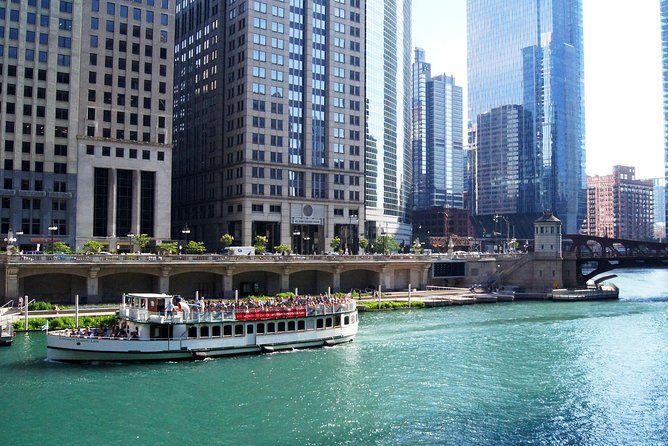
Marina City is one of the most memorable sights on the route. Bertrand Goldberg designed the twin cylindrical towers as an urban experiment at a time when many middle-class residents were leaving city centers for the suburbs.
The towers were meant to pull daily life back toward downtown. Their distinctive shapes make them easy to identify, but the more useful lesson concerns purpose. This was not architecture designed only to look unusual. It was part of a plan for housing, work, parking, and city living in one complex.
From the river, the rounded forms are especially clear. You get a better sense of their relationship to the water than you do from nearby streets. The guide may also connect Marina City to the wider question of how Chicago tried to keep residential life close to its commercial core.
More Boat Tours in Chicago
- Chicago: Architecture River Cruise Skip-the-Ticket Line
★ 4.8 · 4,325 reviews - Chicago: 45-Minute Family-Friendly Architecture River Cruise
★ 4.7 · 2,304 reviews - Chicago: 1.5-Hour Lake and River Architecture Cruise
★ 4.7 · 2,050 reviews - Chicago River 90-Minute Architecture Boat Tour
★ 5.0 · 1,635 reviews
Trump Tower and the idea of architectural conversation
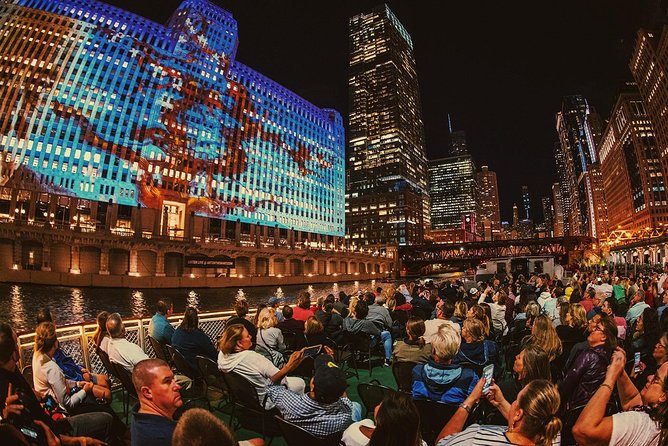
Trump International Hotel & Tower gives the guide a chance to discuss how one building responds to its surroundings. Its glass and steel exterior is only part of the story. The tower occupies a prominent riverfront location, so its shape, height, and reflective surface affect the buildings around it.
The useful point here is not simply the name of the architect or owner. It is the idea that a new tower changes the view of older towers, bridges, and river walls. You begin to look at the skyline as a group composition rather than as a row of isolated landmarks.
The river view also helps you compare the tower’s materials with older stone, brick, and steel buildings nearby. If architecture usually feels abstract to you, these comparisons make the subject easier to follow.
Mies van der Rohe and the power of restraint
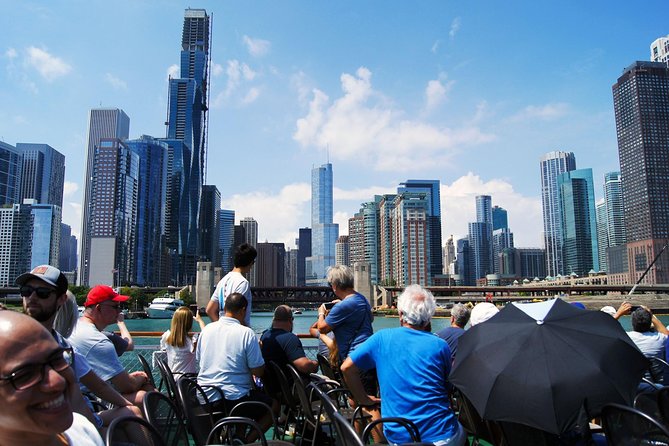
One of the last American projects designed by Ludwig Mies van der Rohe occupies a prominent position along the Chicago River. Its strong Modernist form offers a useful change of pace after the expressive curves of Marina City and the reflective surfaces of newer towers.
Mies is associated with disciplined structure and a pared-back approach. From the boat, you can see how proportion, repetition, and the relationship between frame and glass can create a powerful building without elaborate decoration.
This part of the route rewards careful listening. The facade may seem quiet compared with more dramatic buildings, but the guide shows why that restraint matters. Chicago architecture is not one style. It is a conversation between bold experiments, strict Modernism, historic references, and new engineering.
150 North Riverside and the engineering show
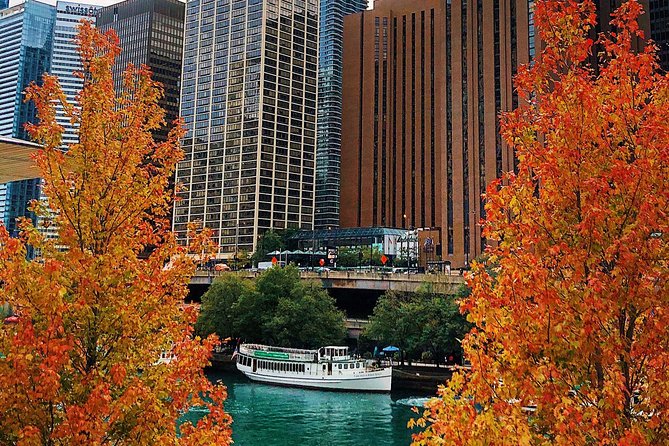
150 North Riverside is one of the route’s most striking newer buildings. Its narrow base and broad upper floors create the impression that the tower is balancing above the riverfront.
The guide uses this building to explain the engineering behind a form that appears to defy gravity. It is an important reminder that architecture depends on structure, not only appearance. The building’s shape is not a visual trick added after the fact. Its design responds to the site and the need to support a tall tower on a limited footprint.
You will also view the Boeing International Headquarters at 100 North Riverside Plaza. These buildings help widen the tour beyond famous older landmarks and show how recent development has reshaped the river corridor.
Willis Tower and the race for height
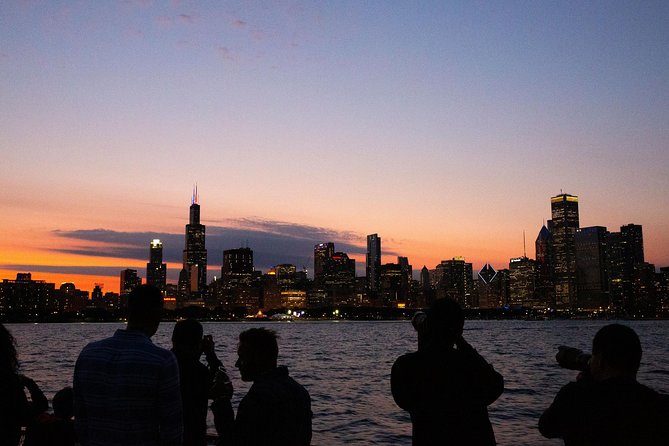
Willis Tower, formerly called the Sears Tower, held the title of the world’s tallest building for nearly 25 years. Seeing it from the river gives you a useful sense of its scale, even when nearby towers compete for attention.
The guide places the tower in its proper period. It was not merely a tall building built to impress. Its height reflected Chicago’s role as a center of commerce, architecture, and engineering. From the boat, you can study how its stacked form differs from the smooth glass towers that came later.
This is one of the stops where the river angle helps. On land, Willis Tower can disappear behind other structures depending on where you stand. From the water, the skyline opens up and the tower becomes part of a larger sequence.
Merchandise Mart and Chicago’s commercial muscle
Size mattered in Chicago, and the Merchandise Mart made that plain when it opened in 1930. At the time, it was the largest building in the world. It served as Marshall Field’s wholesale warehouse, allowing retailers to buy merchandise in one large commercial center.
The building connects architecture with business. Its bulk was not simply an exercise in scale. It supported a system of buying and distribution that helped make Chicago a major commercial hub.
The river view shows the building’s mass particularly well. You can see why its size was so important and why it remains a landmark even beside much taller towers. Height is only one measure of architectural impact.
Wacker Drive and the Chicago Mercantile Exchange
The Chicago Mercantile Exchange Building at 20 South Wacker Drive appears near the end of the route. This part of the tour returns your attention to the commercial city, where finance, trade, and business helped drive the demand for large downtown buildings.
The guide may connect the exchange and nearby offices to Chicago’s broader economic history. Again, the value is in the connection between use and design. These are not just facades along the water. They were built to serve specific institutions and working systems.
The Chicago Tribune Freedom Center also comes into view. Together, these sites round out the route with examples of publishing, finance, wholesale trade, and corporate life.
The guides are the heart of the experience
The boat, views, and comfortable seating matter, but the guide determines how much you take away. The Chicago Architecture Center uses volunteer docents, and the strongest guides add interpretation rather than reciting dates.
Cynthia has been praised for making Chicago history, bridges, and buildings easy to follow. Laura brings strong background in architecture, engineering, and city history. Amy is a good choice for an evening departure if you want the ride to feel lively as the light changes. Russell, Nick, and Mark have also been singled out for clear, engaging presentations.
Guide assignments can change, so you should not book expecting one particular person. The useful pattern is consistent: the tour works best when the docent explains why a building was made, who it served, and how it relates to its neighbors.
I especially like the way this approach helps you use the rest of your Chicago visit. After the cruise, you can walk past buildings you saw from the river and understand them more clearly. Starting your trip with this ride can give you a practical sense of direction and a set of landmarks to recognize as you explore downtown.
Seating, weather, and the small practical details
All seating is general admission, even if a ticket shows a seat number. Boarding is first come, first served, so arriving 30 minutes before departure is sensible. Allow more time during summer, when the dock area can be busy.
The upper deck is best for unobstructed photographs and a full view upward. Bring sunglasses, a cap, or a visor, since bright sun can make it hard to look toward the buildings. The shade can also make cool days feel colder than expected.
The lower salon is climate controlled and surrounded by large windows. You can stay there during rain or cold weather and still follow the skyline. The tour runs in all weather, so dress for conditions rather than assuming a sunny day.
There is a restroom onboard, though it closes 15 minutes before the tour ends. A full bar sells drinks, and light snacks are available for purchase. WiFi is not available.
Leave luggage at your hotel. There is no onboard luggage storage and no dockside storage area. Service animals are allowed, but other pets are not. Strollers can come onboard, but children must be removed during boarding and the stroller folded for storage in the salon.
The boat can hold up to 250 people. That is large enough for a proper sightseeing vessel, but the open deck can feel competitive on a popular departure. If a particular photo angle matters to you, early arrival is worth more than hoping to find an empty seat at the last minute.
Is $57 a fair price?
At $57 per person, this is not the cheapest way to see Chicago from the water. You are paying for more than transportation, though. The cost includes a 90-minute river cruise, live commentary, a Chicago Architecture Center docent, onboard restrooms, and access to indoor seating when the weather turns unpleasant.
The price makes the most sense if you enjoy buildings, city history, or guided sightseeing. A basic boat ride might give you similar views with less explanation, but you would lose much of the context that makes the river worthwhile.
You can also receive $5 admission to the Chicago Architecture Center across Wacker Drive by showing your cruise ticket. That makes a useful pairing if you want to continue with models, exhibits, and additional background after the boat ride.
I would consider the tour good value at the start of a Chicago visit, especially for a first trip or a short stay. If you have little interest in architecture and only want a casual ride, the price may feel high.
Who should book this cruise?
I would recommend it to first-time Chicago visitors, couples, friends, solo travelers, families with older children, and anyone who wants a clear introduction to the city. It is also a smart choice for people with limited time because you see many central landmarks without walking several miles.
Children are allowed, but the experience is not recommended for children younger than 12. The commentary is built around architecture, engineering, city planning, and history, so younger children may find 90 minutes long.
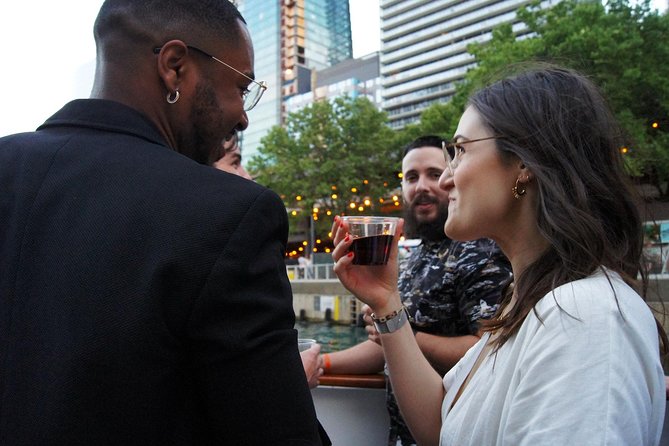
You should also book it if you like guided experiences that leave you with useful context. The tour is not a party cruise, though the onboard bar adds a relaxed option for a drink. It is a focused sightseeing ride with room for photographs and conversation.
Skip it if you need a fully flexible schedule, cannot manage stairs to the dock, or want to explore buildings from inside. The boat stays on the river, and the route, vessel, and schedule can change without notice.
Should you book the Chicago Architecture Center River Cruise?
Yes, if you want one of Chicago’s best orientation experiences and you are willing to pay for a strong guide. The river gives you views that streets cannot, while the docents explain the buildings in a way that helps you notice more during the rest of your trip.
Book an earlier departure if you want daylight for photographs and a useful introduction at the start of your visit. Choose an evening sailing if you prefer softer light and city views after dark. Arrive 30 minutes early, dress for wind and shade, and treat the indoor salon as a comfort feature rather than a consolation prize.
The chief reason to choose this cruise is simple: it turns Chicago’s skyline into a story. You will see Marina City, Willis Tower, Navy Pier, the Merchandise Mart, 150 North Riverside, and other landmarks, but you will also understand why they were built and how they fit together.
FAQ
Where does the cruise depart?
The cruise departs from the Chicago Riverwalk at 112 East Wacker Drive. The street-level entrance is near the northeast corner of Michigan Avenue and Wacker Drive, close to the Magnificent Mile and north of Millennium Park.
How early should I arrive?
Arrive at least 30 minutes before your scheduled departure. Allow extra time in summer. Boarding is first come, first served, and all seating is general admission.
Is seating assigned?
No. Seating is general admission. Any seat numbers printed on your ticket are not valid, so choose a seat after boarding.
Does the cruise operate in bad weather?
Yes. Sailings operate in all weather conditions. The boat has an open-air upper deck and an enclosed, climate-controlled lower salon with large windows.
Can I buy food or drinks onboard?
Yes. A full bar is available, and drinks and light snacks can be purchased onboard.
Can I bring luggage or a pet?
No luggage storage is available onboard or at the dock, so leave luggage at your hotel. Service animals are allowed, but pets are not.
Just added around Chicago
- BYOB Spray Paint and Sip at Studio W.I.P.★ 5.0 · 401 reviews
- Delicious Donuts & City Sights: Chicago’s Original Donut Tour★ 5.0 · 1,389 reviews
- Bikes, Bites & Views: Chicago’s Signature Dishes Bike Tour-Adults★ 5.0 · 732 reviews
- Original Chicago Architecture Interiors Tour: Dazzling Interiors★ 5.0 · 1,489 reviews
- Chicago Loop District Food Tour with Deep Dish & Beef Sandwich★ 5.0 · 870 reviews
- Field Museum of Natural History Admission Tickets★ 4.5 · 489 reviews
- City Cruises Chicago: Signature Lunch Cruise on Lake Michigan★ 4.0 · 348 reviews
- Chicago Sightseeing River and Lake Cruise★ 4.5 · 509 reviews
Chicago Tours, compared.

Chicago River: 1.5-Hour Guided Architecture Cruise
Read our review →
Architecture River Cruise Skip-the-Ticket Line
Read our review →
Browse the lists this tour appears in