
Reviewed · CHICAGO
Field Museum of Natural History Admission Tickets
SUE the T. Rex is the main event, but the Field Museum is far bigger than its famous dinosaur. This ticket gives you a full day indoors with Egyptian mummies, Ice Age hunters, Inca and Aztec temples, Chinese jade, giant sloths, and animal skeletons from around the world. SUE is the star, yet you can easily spend four hours finding your own favorites.
I like the freedom to set your own pace, and I like that free docent-led tours add extra context without forcing you into a group schedule. The museum also makes a smart Chicago backup plan when the weather turns cold, wet, or oppressively hot.
The main drawback is simple: this is a very large museum. You may see only two of its three floors in three hours, and some visitors find the amount of taxidermy and ancient material less exciting than a hands-on science museum. Advance admission is convenient, but one booking experience cost $5 more per person than buying at the museum.
Key points for planning your Field Museum visit

- SUE the T. Rex is the headline exhibit: See one of the largest and most complete T. Rex fossils ever found.
- Four hours is a starting point: The collection is large enough to fill most of a day, especially if you stop to read the displays.
- Free docent tours add value: Daily tours can help you make sense of the museum without paying extra.
- The museum covers far more than dinosaurs: Egyptian mummies, ancient American cultures, gems, jade, mammals, and underground ecology all have their own appeal.
- Special exhibits may cost extra: Ticketed exhibits are included with this admission, while 3D movies require a separate charge.
- Use the Museum Campus setting: Before or after your visit, take in views of Lake Michigan and Chicago’s downtown skyline.
Why SUE is only the beginning
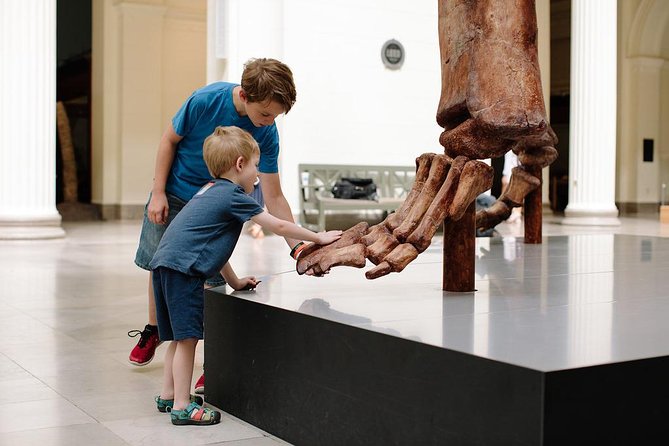
The Field Museum’s most famous resident is SUE, a T. Rex skeleton displayed as the centerpiece of the dinosaur experience. Seeing the fossil assembled at full scale gives you a better sense of the animal than a photograph ever could. The display is especially effective for families, but adults who enjoy natural history will find plenty of detail to study too.
The dinosaur collection continues well beyond SUE. The renovated Evolving Planet hall brings together dinosaurs, woolly mammoths, and giant sloths, showing how animal life changed over long stretches of time. If you have come specifically for fossils, plan to spend a good portion of your visit here rather than treating it as a quick stop.
I would not rush straight to the exit after seeing SUE. The Field Museum’s strength is the way it places dinosaurs beside other parts of the natural world. You can move from fossil skeletons to modern animal specimens, then shift to human cultures and ancient societies. That range makes the museum feel like several museums under one roof.
More Attraction Tickets in Chicago
- Chicago: Willis Tower Skydeck and The Ledge Ticket
★ 4.6 · 4,350 reviews - Chicago: Architecture River Cruise Skip-the-Ticket Line
★ 4.8 · 4,325 reviews - Chicago: 360 CHICAGO Observation Deck Ticket
★ 4.5 · 3,173 reviews
Entering the Museum Campus
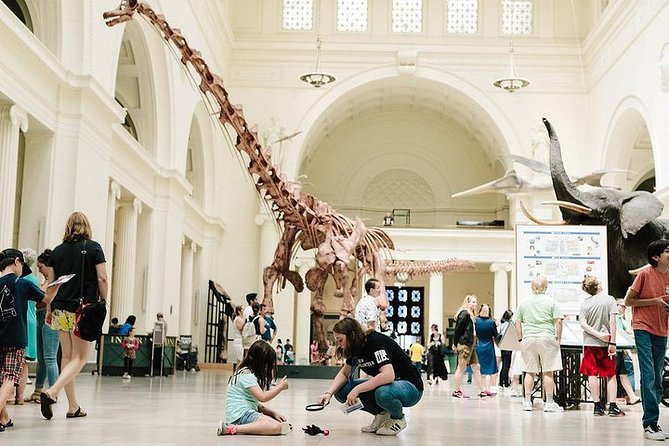
The Field Museum sits on Chicago’s Museum Campus, with Lake Michigan and the downtown skyline nearby. The setting gives your visit a pleasant beginning and ending. Take a few minutes outside before entering, especially if you have come by public transportation and need to get your bearings.
Inside, you are free to choose your route. There is no required order and no fixed guided itinerary. That matters because the museum is too large for most people to see every display carefully in one visit.
The ticket guarantees admission in advance, which can be useful on a busy Chicago day. Still, advance booking is not automatically the cheapest choice. One customer found the online ticket cost $5 more per person than buying at the museum and did not save time at the entrance. I would book ahead for certainty, not on the assumption that it always saves money.
13,000 years in the Ancient Americas
The Ancient Americas galleries cover about 13,000 years, beginning with Ice Age mammoth hunters and continuing through the societies of the Incas and Aztecs. This section is a good choice if you want the museum to move beyond animals and fossils.
You will see objects connected with different cultures and periods, including temples and artifacts that show how people organized religious, civic, and daily life. The displays give you a chance to compare the scale and ideas of ancient societies instead of treating each culture as an isolated stop.
This area rewards patience. A quick walk gives you impressive objects, but reading the labels and interactive material adds the human story behind them. If your children are eager to reach the dinosaurs, consider saving this section for later, when you can give it proper attention.
Egyptian mummies and ancient writing
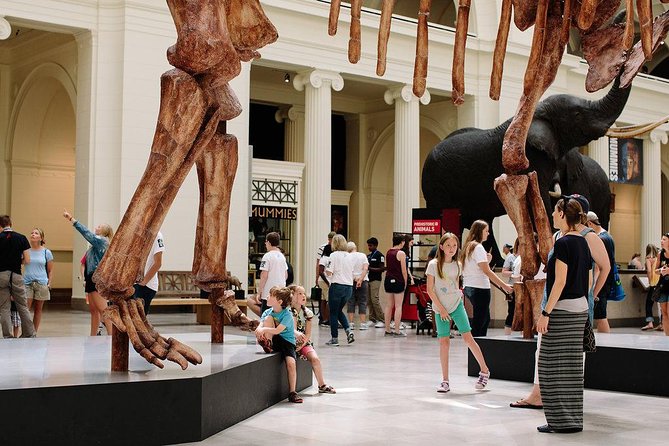
Inside Ancient Egypt brings together 23 Egyptian mummies and hieroglyphics dating back 5,000 years. The mummies are the strongest visual draw, while the writing and artifacts provide clues about beliefs, daily life, and the treatment of the dead.
For many people, this is one of the most memorable parts of the building. It has the kind of direct visual impact that makes ancient history feel less remote. At the same time, the subject matter may be intense for very young children, so you can decide how much detail to discuss as you go.
I recommend pairing this gallery with the Ancient Americas section. Together, they show two very different ways societies recorded beliefs, built monuments, and understood the world around them.
More Museums in Chicago:
- Medieval Torture Museum Ticket with Audio Guide and Ghost Hunting
★ 5.0 · 962 reviews - Chicago: Field Museum of Natural History Ticket or VIP Tour
★ 4.7 · 717 reviews - Museum of Ice Cream Chicago Admission Ticket
★ 3.5 · 396 reviews - 2-Hour Chicago Lakefront & Museum Campus Segway Tour
★ 5.0 · 345 reviews
Gems, jade, and objects made to stop you
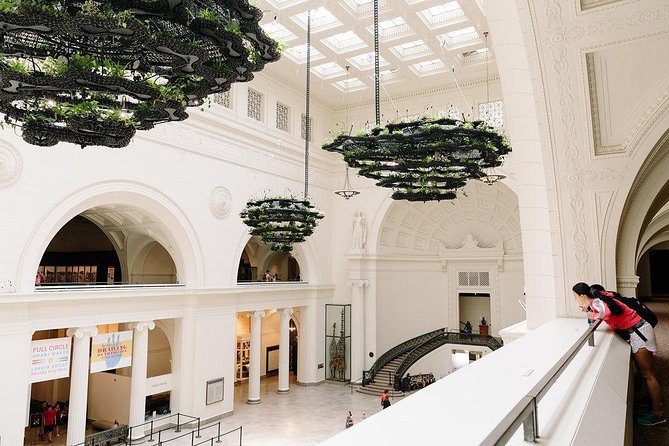
The Hall of Gems is a change of pace after the large animal skeletons and ancient ruins. You can examine stones, jewelry, and mineral specimens at a closer scale. The appeal here is visual, but the displays also show the natural forms and human craftsmanship behind the finished pieces.
The Hall of Jades focuses on one of the largest collections of Chinese jade in North America. This is a quieter gallery, and it suits anyone who enjoys close looking rather than grand displays. The material is beautiful, but the more important point is the cultural value placed on jade and the skill needed to shape it.
These halls also offer a useful break for your feet and your attention. The Field Museum can feel visually crowded because so much is on display. Smaller galleries give you a chance to slow down and take in individual objects.
Underground Adventure and live animals

Underground Adventure changes the scale of the experience. Visitors are presented as if they have shrunk to one one-hundredth of their normal size, entering a subterranean world from the viewpoint of tiny creatures. It is one of the more playful sections and can work well for children who need something interactive after several traditional galleries.
The museum also includes live reptile displays and nature exhibits. These areas add movement to a building filled with fossils, preserved animals, and artifacts. A young child may connect with these displays more quickly than with a case of ancient objects.
Animal exhibits remain a major part of the Field Museum’s appeal. The Tsavo lions receive particular attention, and the skeletons of different animals can change how you see their bodies and movement. If you prefer living creatures to cultural collections, make a point of finding the reptile and nature displays rather than spending your entire visit in the dinosaur halls.
How to manage four hours
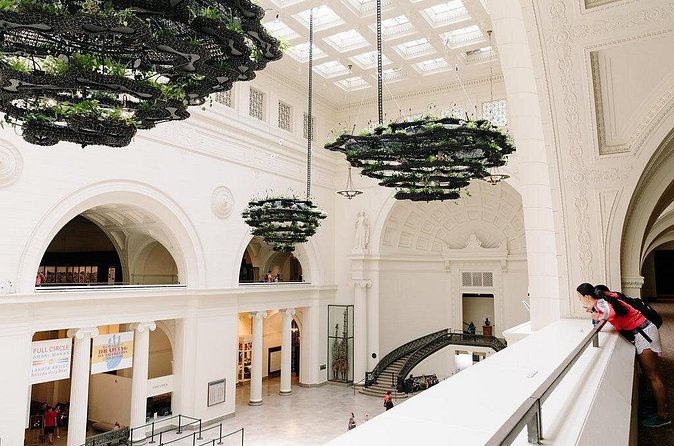
The listed duration is about four hours, but I would treat that as a practical minimum for a strong first visit, not a hard limit. Some people spend three hours and leave satisfied, while others need longer than four hours and still do not reach every floor.
A useful plan is to choose three priorities before you begin:
- SUE and Evolving Planet
- Ancient Egypt and the Ancient Americas
- Hall of Gems, Hall of Jades, or Underground Adventure
Then add nearby exhibits as your energy allows. This approach is better than trying to march through every room. The museum is large, and fatigue can make the last hour less rewarding than the first.
Wear comfortable shoes. That advice matters here because the building contains multiple floors and a great deal to see. You can pace yourself and choose less crowded areas when possible. Restrooms are well located, according to the supplied practical feedback, but food is described as merely so-so, so do not build your entire day around the museum’s dining facilities.
Museum maps are available in English, Spanish, French, German, Italian, Mandarin Chinese, Japanese, Korean, Polish, and Portuguese. That can make it easier to plan your route and find a particular hall without wandering through the full building.
Free tours, special exhibits, and 3D films
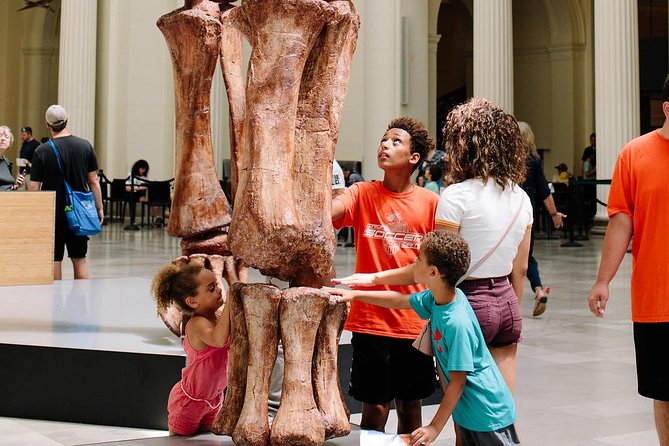
Free docent-led tours run daily and are one of the best extras included with admission. They give you a way to add explanation and direction without paying a separate tour fee. Since the exact tour schedule can affect your route, check what is available when you arrive.
Special ticketed exhibits are included with this admission when listed as part of the ticket. They can add a stronger focus to your visit. One family particularly enjoyed an exhibit called After the Dinosaurs, praising its detail, timeline, and storytelling. The museum changes some topics over time, so the special exhibit lineup may not be identical on every visit.
The two 3D theaters cost extra and depend on availability. If you want a particular film, arrive early, ideally between 9 a.m. and noon, to reserve a time. Do not assume the standard admission includes a movie. It does not.
Is the $29 ticket good value?
At $29 per person, the ticket is reasonably priced if you plan to stay several hours and use the included exhibits and docent tours. You are paying for access to a very large collection, not for a short attraction that takes 45 minutes. Families, students, dinosaur fans, and anyone who likes natural or cultural history can get solid value from the price.
The value drops if you only want to see SUE and leave. In that case, the admission may feel high for one display, even though SUE is exceptional. The museum makes more financial sense when you use it as a half-day or full-day activity.
Remember to budget separately for food, drinks, and 3D films. Special exhibit pricing can vary, so check what your ticket includes before you arrive. The included free docent tours help offset those extra costs.
One booking concern is worth noting. Advance admission offers peace of mind, but it may not always be cheaper than buying at the door, and it may not speed up entry. Compare the current price before booking if your schedule is flexible.
Who will enjoy the Field Museum most?
I would recommend this experience to families with children, students, dinosaur enthusiasts, nature lovers, and anyone who enjoys museums with many subjects under one roof. It is also an excellent rainy-day, cold-weather, or very hot-day choice because you can spend hours indoors.
You should also come if you enjoy learning at your own pace. Touch screens and short labels let you get an overview, while additional information is available when you want more detail. Staff members can help with questions, and the free docent tours provide another way to understand the displays.
The museum may be less satisfying if you want a highly interactive science center or a compact attraction you can finish quickly. Some displays rely on taxidermy, skeletons, cases, and written information. If lifelike preserved animals and ancient artifacts do not interest you, the experience may feel like a long school field trip.
Practical details before you go
The museum is open from 9 a.m. to 5 p.m. Last general admission is at 4 p.m., while last admission to special exhibits is at 3:30 p.m. Arrive earlier if you want a 3D movie or need time for several special exhibits.
Admission includes the Field Museum and ticketed exhibits listed with your booking. Food and drinks are not included. Service animals are allowed, the museum is near public transportation, and most people can participate.
Free cancellation is available up to 24 hours before the experience start time for a full refund. Changes or cancellations made within 24 hours are not accepted and are not refunded. Cutoff times use Chicago local time.
Should you book the Field Museum ticket?
Book it if you want a substantial Chicago museum visit rather than a quick attraction. SUE, the mummies, Evolving Planet, and the Ancient Americas give you several strong reasons to go, and free docent tours add useful context without raising the base price.
Plan on at least four hours, wear walking shoes, and choose a few priority halls before you enter. If you are unsure about the subject matter, remember that the museum is broad: you can focus on dinosaurs, animals, ancient cultures, gems, or interactive exhibits instead of trying to see everything.
I would skip it only if your interests run strongly toward modern technology and hands-on experiments, or if you have less than two hours in Chicago. For everyone else, the Field Museum is a dependable, weather-proof way to spend a large part of the day, with enough variety to keep a family group from following just one person’s interests.
FAQ
How long should I plan for the Field Museum?
The suggested duration is about four hours, but you can stay as long as you like during the visit. The collection is large enough that some people need more than four hours to see everything.
What are the main highlights?
Major highlights include SUE, the remarkably complete T. Rex skeleton, Evolving Planet, 23 Egyptian mummies, Ancient Egypt, the Ancient Americas, the Hall of Gems, the Hall of Jades, and Underground Adventure.
Are docent-led tours included?
Yes. Free docent-led tours are offered daily and are included with admission.
Are 3D movies included in the ticket?
No. 3D movies cost extra and are subject to availability. If you want to reserve a time, it is recommended that you arrive between 9 a.m. and noon.
What are the museum’s opening hours?
The museum is open from 9 a.m. to 5 p.m. Last general admission is at 4 p.m., and last admission to special exhibits is at 3:30 p.m.
Are food and drinks included?
No. Food and drinks are not included in the admission ticket.
Can I cancel for a refund?
Yes. You can cancel at least 24 hours before the experience start time for a full refund. Cancellations or changes made less than 24 hours before the start time are not refunded.
More History Tours in Chicago
- Chicago in a Day: Food, History & Architecture Walking Tour
★ 5.0 · 1,153 reviews - Chicago Walking Tour: Historic Treasures of Chicago
★ 5.0 · 362 reviews - New York City: American Museum of Natural History Ticket
★ 4.5 · 15,447 reviews - History and Hauntings of Salem Guided Walking Tour
★ 5.0 · 14,564 reviews
Just added around Chicago
- BYOB Spray Paint and Sip at Studio W.I.P.★ 5.0 · 401 reviews
- Delicious Donuts & City Sights: Chicago’s Original Donut Tour★ 5.0 · 1,389 reviews
- Bikes, Bites & Views: Chicago’s Signature Dishes Bike Tour-Adults★ 5.0 · 732 reviews
- Original Chicago Architecture Interiors Tour: Dazzling Interiors★ 5.0 · 1,489 reviews
- Chicago Loop District Food Tour with Deep Dish & Beef Sandwich★ 5.0 · 870 reviews
- City Cruises Chicago: Signature Lunch Cruise on Lake Michigan★ 4.0 · 348 reviews
- Chicago Sightseeing River and Lake Cruise★ 4.5 · 509 reviews
- Chicago Architecture Tour: Underground Pedway and the Loop★ 5.0 · 388 reviews
Chicago Tours, compared.



Chicago River: 1.5-Hour Guided Architecture Cruise
Read our review →

Chicago Architecture Center River Cruise aboard First Lady
Read our review →

Architecture River Cruise Skip-the-Ticket Line
Read our review →
Browse the lists this tour appears in