
Reviewed · CHICAGO
Chicago Architecture Tour: Underground Pedway and the Loop
Chicago’s Pedway is one of those city features you can walk past for years without fully understanding. This two-hour tour takes you below the Loop, through tunnels, stairways, commercial buildings, and public spaces that help connect downtown. It also brings you back above ground for the Picasso, Macy’s on State Street, and other architectural stops.
I like two things right away: you learn a practical way to get around Chicago in bad weather, and you see parts of the city that most standard architecture tours skip. Guides such as Heath, Adam, Kaylee, Colleen, and Hillary have earned praise for turning building details and local stories into an entertaining walk.
The main consideration is physical. You should expect plenty of walking and stairs, even though an elevator may be available when needed. Some interiors also vary by day, so a weekend tour offers a slightly different route from a weekday outing.
Key points to know before you book
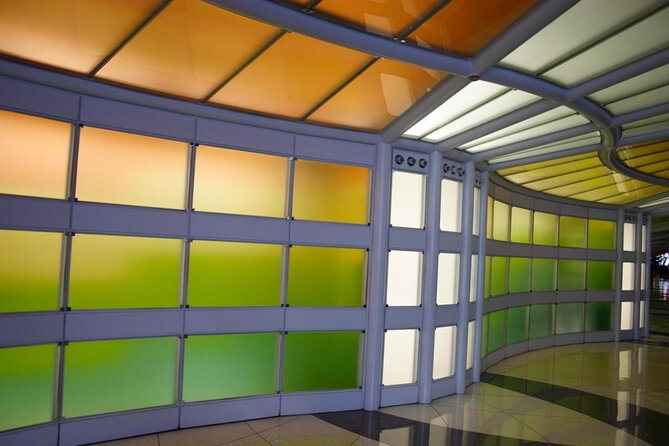
- The Pedway is the main event: Follow underground passages beneath several Loop blocks, with access to buildings such as City Hall.
- Weekend and weekday routes differ: Weekend tours include the Chicago Cultural Center interior and may show more of Macy’s interior; weekday tours use a different interior stop.
- Small groups keep the tour personal: The maximum group size is 15 people.
- Cold-weather insurance: Much of the experience is indoors or underground, making it useful in Chicago’s winter and on rainy days.
- The guides make the difference: Heath, Adam, Kaylee, Colleen, Hillary, Jessica, and others are praised for city history, architecture, humor, and practical navigation tips.
- You finish near Millennium Park: The tour begins at 120 N LaSalle Street and ends at Aqua, just north of Millennium Park.
Why Chicago’s Pedway is worth two hours
Chicago’s downtown grid is easy to understand from above. Streets run in straight lines, the Loop is compact, and major landmarks are close together. Below street level, things get less obvious. The Pedway is not one perfectly continuous tunnel with one master entrance. It is a patchwork of connected walkways, stairs, building passages, and signs.
That is what makes this tour useful. You are not simply walking through an underground corridor. You are learning how separate parts of downtown connect, where to look for entrances, and how the system can help when wind, rain, snow, or heavy crowds make street-level walking unpleasant.
The route also gives you a new way to think about Chicago architecture. Above ground, you may focus on famous towers and facades. Below ground, you see how office buildings, shops, public institutions, and transportation routes fit together. The result is part city orientation, part architecture walk, and part urban puzzle.
The tour costs $35 per person, which is a fair price for two hours with a local guide and a maximum of 15 people. You are not paying for an admission-heavy attraction. You are paying for access, interpretation, and the ability to understand a place that is difficult to navigate on your own.
More Architecture Tours in Chicago
- Chicago Architecture River Cruise
★ 5.0 · 15,756 reviews - Chicago River 90-Minute Architecture Tour
★ 4.5 · 9,629 reviews - Chicago River: 1.5-Hour Guided Architecture Cruise
★ 4.8 · 8,046 reviews
Starting at LaSalle Street
The meeting point is 120 N LaSalle Street, in the heart of the Loop. This is a practical starting point because the tour can move quickly into downtown’s public and commercial buildings rather than spending much of its time on a long introduction.
Your guide provides the local context as the group moves. The best part of this format is that facts arrive in the places where they matter. A building detail, a tunnel entrance, or an unexpected staircase becomes easier to remember when you are standing beside it.
The small-group limit matters here. In a group of 15 or fewer, you should be able to hear the guide in enclosed spaces and ask questions without shouting across a crowd. It also suits the route, since narrow corridors and stairs would be awkward with a much larger party.
Following the Pedway beneath the Loop
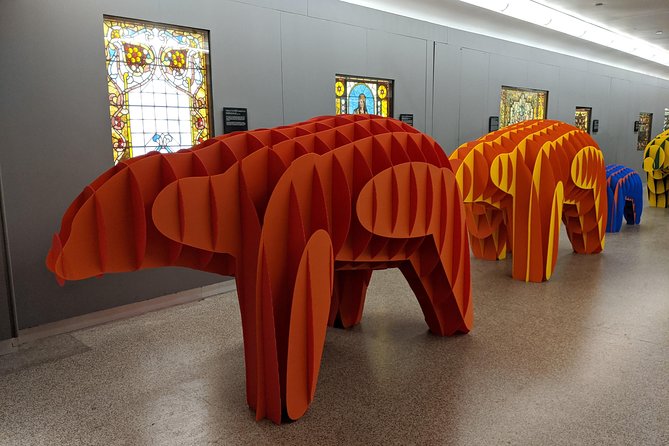
The first major section lasts about 45 minutes. You follow tunnels and stairs beneath several blocks of downtown, with access to buildings such as City Hall and its interior details.
This is where the tour earns its price. A map can show you that underground routes exist, but it cannot explain which passages are useful, how the pieces fit together, or what you are looking at inside the buildings. Your guide helps turn an easy-to-miss passage into part of Chicago’s story.
Expect a walk rather than a stationary lecture. You may stop for architecture, hear how the Pedway functions, then continue through another entrance or stairwell. The pace is described as manageable, but there are lots of stairs. One family specifically found the walk not overly strenuous while still noting the stairs, with elevators sometimes available as an alternative.
The underground setting is especially helpful in winter. Several people used the tour during bitter cold, including days when temperatures fell well below freezing. It is not completely indoors, since you move between buildings and street-level points, but much of the route protects you from the worst weather.
The Picasso and Chicago’s public art
The tour pauses for about 10 minutes at the Picasso, the large public artwork gifted by Pablo Picasso to Chicago. You get a close view before returning below street level.
This stop adds an important contrast. The Pedway is mainly about movement and connection, while the Picasso is an unmistakable public statement in the open city. Seeing it within the same tour helps you connect Chicago’s civic spaces with its architecture and public art.
The stop is brief, so do not expect a long art lecture or a separate museum-style presentation. Its value is in the close-up view and the story of how the artwork became part of Chicago’s public realm. If you have already seen the Picasso from a distance, this is a chance to examine it with a guide nearby.
A different sort of day out, same corner of Chicago:
- Chicago: Gangsters and Ghosts Walking Tour
★ 5.0 · 7,155 reviews - Chicago Architecture Center River Cruise aboard First Lady
★ 5.0 · 5,536 reviews - Chicago: Willis Tower Skydeck and The Ledge Ticket
★ 4.6 · 4,350 reviews - Chicago: Architecture River Cruise Skip-the-Ticket Line
★ 4.8 · 4,325 reviews
Macy’s and the old Marshall Field’s interior
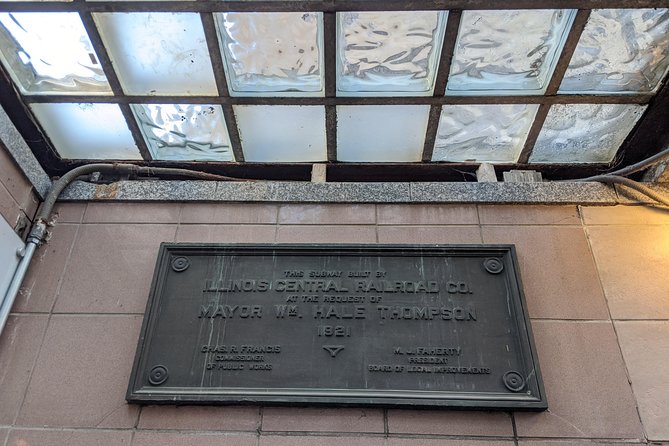
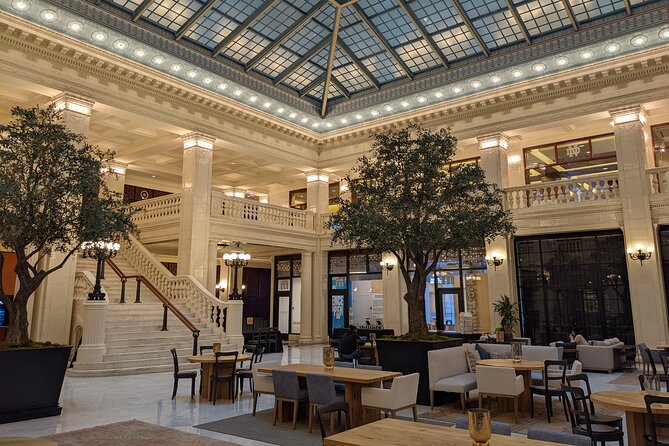
Next comes Macy’s on State Street, in the building once associated with Marshall Field’s. The tour spends about 10 minutes walking through one of the favorite sections of the Pedway under the store.
This is a particularly good stop for people who enjoy grand commercial architecture. The building is not treated simply as a place to shop. Its history and interior details help show how department stores once served as major civic destinations, not just retail spaces.
The exact experience depends on your day. On weekends, the tour may include more of the store’s interior. On weekdays, the group skips that interior and uses a different one instead. That does not make weekday tours a poor choice, but you should book a weekend if seeing more of Macy’s interior is a priority.
The short stop also keeps the tour moving. You will not spend half an afternoon inside the store, and that is sensible for a route that covers several different parts of downtown.
The Chicago Cultural Center on weekends
Weekend tours include the interior of the Chicago Cultural Center, a beautiful 19th-century building near Millennium Park. This is one of the clearest above-ground architectural moments on the route.
The Cultural Center gives you a break from the functional character of the Pedway. Underground passages are built to move people from one place to another. The Cultural Center is designed to make you stop and look. Its decorative interior brings a different mood and gives the guide more material to explain.
The visit lasts about 10 minutes. That is enough to see the main interior details, but not enough for a full building tour. If you want a longer look, you can return on your own after the tour, depending on opening hours. The important point is that the weekend schedule provides an extra interior highlight near the end of the route.
Block 37 and the commercial side of downtown
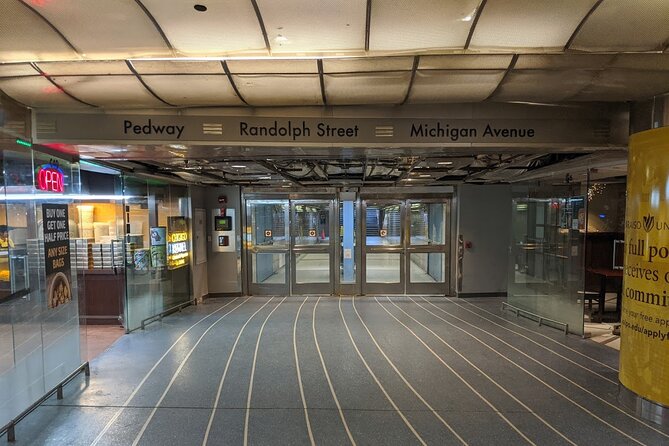
The route also enters Block 37 through the Pedway. This large commercial complex is not as visually historic as the Cultural Center or old Marshall Field’s, but it shows how the underground system remains part of modern downtown life.
Your guide checks out a few favorite spots inside the complex, giving you another example of how the Pedway links different types of buildings. Chicago’s underground routes are not preserved ruins. They are working passages used by people going to offices, shops, public buildings, and transit connections.
This stop may be most useful to first-time visitors who want to understand the shape of the Loop. It can also help locals who have spent years above ground without learning how the connected spaces work below.
The guides are a major part of the experience
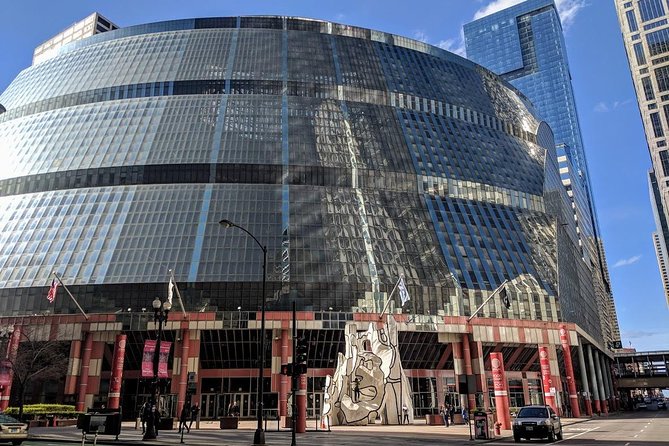
The route is unusual, but the guide determines how much you get from it. The strongest descriptions of the tour center on enthusiasm, clear explanations, local pride, and an ability to make architecture feel approachable.
Heath is described as especially lively, with a gift for Chicago history and the details of the underground system. Adam is praised for being funny, informative, and proud of his city. Kaylee is noted for her energy and love of Chicago’s lesser-known places, while Colleen is singled out for explaining both the Pedway and the architecture along the route.
Other guides named in the feedback include Hillary, Jessica, and Henry. Their styles may differ, but the common thread is an interest in helping you understand the city rather than simply pointing at buildings. One guide even used sketches on a folder to explain architectural ideas, a useful trick when a building’s structure is difficult to describe with words alone.
The overall rating is 4.9 from 388 ratings, with 97 percent of people recommending the experience. That is unusually strong, but one poor experience is also recorded, involving a guide who did not provide clear context and behaved inappropriately. The company apologized, refunded the booking, and described the incident as an isolated situation. It is fair to keep that in mind without letting one unusual case outweigh the much stronger pattern of praise.
Who will enjoy this tour most
This is a good choice if you like architecture but have already seen the usual Chicago landmarks. It also works well as a first Chicago tour because you learn downtown geography while hearing about buildings and public art.
I would especially consider it for:
- Architecture and urban design fans
- Repeat Chicago visitors
- Locals who want a new view of downtown
- Families with older children or young teens
- Anyone visiting during cold, wet, or windy weather
- People who want practical orientation before exploring the Loop alone
The tour is less suitable if you want a long visit inside each building or a relaxed walk with very little stair climbing. It is also not a replacement for a dedicated river architecture cruise or a full architectural interior tour. Its strength is the unusual route and the way it connects many smaller pieces of downtown.
Timing, weather, and practical details
The experience lasts about two hours and operates in all weather. Dress for the conditions because portions take place outdoors between buildings. Chicago’s weather can change quickly, and even an indoor-focused tour is not completely protected from wind or rain.
Wear comfortable shoes. You will walk, use stairs, and move through different buildings. A moderate level of physical fitness is recommended. If stairs are a concern, ask about elevator options, since an elevator was available at times for one family on the tour.
The tour is offered in English and includes a mobile ticket and local guide. It is near public transportation, which makes the LaSalle Street starting point practical. The finish at Aqua, 225 N Columbus Drive, puts you just north of Millennium Park, close to more downtown sightseeing.
You can cancel free of charge up to 24 hours before the start time for a full refund. Last-minute cancellations or changes are not accepted for a refund.
Is $35 good value?
At $35, this is a sensible buy if you value explanation more than admission tickets. The Pedway is free to enter in its various public sections, but finding a coherent route and understanding what you are seeing is much harder without a guide.
You also get a small group, several stops, and a route that would be difficult to reproduce on your own in two hours. The practical navigation tips alone can be useful if you plan to spend more time downtown.
The value is lower for someone who only wants famous exterior views. You will see the Picasso and some notable interiors, but the tour is not built around long photo stops or grand panoramic views. Its payoff comes from learning how the Loop works at street level and below it.
Should you book the Chicago Pedway tour?
Book it if you want an unusual Chicago experience, enjoy architecture and city history, or need a mostly indoor activity in poor weather. I would choose a weekend if the Chicago Cultural Center and more of Macy’s interior matter to you.
Skip it if stairs are difficult, you dislike walking through commercial buildings, or you want a single landmark explained in great depth. For everyone else, the $35 price and two-hour length make this an easy addition to a Chicago itinerary, especially early in your stay. You will leave with a better sense of downtown, plus the practical skill of spotting the Pedway entrances you might otherwise walk past.
FAQ
How long does the Chicago Pedway and Loop tour last?
The tour lasts approximately two hours.
Where does the tour begin?
It begins at 120 N LaSalle Street, Chicago, Illinois 60602.
Where does the tour end?
The tour ends at Aqua, 225 N Columbus Drive, just north of Millennium Park.
What language is the tour offered in?
The tour is offered in English.
How large is the tour group?
The tour has a maximum of 15 people.
Does the tour operate in bad weather?
Yes. It operates in all weather conditions, so you should dress appropriately. Much of the route is indoors or underground, but some movement takes place outside.
Are there many stairs?
Yes, the route includes many stairs. An elevator may be an option at some points, but the tour recommends a moderate level of physical fitness.
What is included in the $35 price?
The price includes the guided experience and a local guide. The listed stops do not require separate admission fees.
Just added around Chicago
- BYOB Spray Paint and Sip at Studio W.I.P.★ 5.0 · 401 reviews
- Delicious Donuts & City Sights: Chicago’s Original Donut Tour★ 5.0 · 1,389 reviews
- Bikes, Bites & Views: Chicago’s Signature Dishes Bike Tour-Adults★ 5.0 · 732 reviews
- Original Chicago Architecture Interiors Tour: Dazzling Interiors★ 5.0 · 1,489 reviews
- Field Museum of Natural History Admission Tickets★ 4.5 · 489 reviews
- City Cruises Chicago: Signature Lunch Cruise on Lake Michigan★ 4.0 · 348 reviews
- Chicago Loop District Food Tour with Deep Dish & Beef Sandwich★ 5.0 · 870 reviews
- Chicago Sightseeing River and Lake Cruise★ 4.5 · 509 reviews
Chicago Tours, compared.

Chicago River: 1.5-Hour Guided Architecture Cruise
Read our review →

Chicago Architecture Center River Cruise aboard First Lady
Read our review →

Architecture River Cruise Skip-the-Ticket Line
Read our review →
Browse the lists this tour appears in