
Reviewed · CHICAGO
Chicago: Secret Interiors Architecture Walking Tour
Chicago’s best architectural surprises are often indoors. This two-hour walk takes you from Union Station into the Loop, where grand lobbies, domes, mosaics, carved details, and clever engineering are easy to miss if you only admire the city from the sidewalk. I especially like the way the tour connects design to ambition, money, technology, and the colorful people who shaped Chicago.
I also like the route’s variety: the Rookery and Marquette Building offer old-world decoration, while the Chicago Cultural Center and other Loop landmarks show how the city kept changing. Guides such as Grant, Talia, Annie, and Angel are praised for clear storytelling and friendly answers. The main drawback is practical: much of the tour is outside, and some buildings involve stairs, so cold weather and mobility concerns deserve attention.
Key points to know before you book
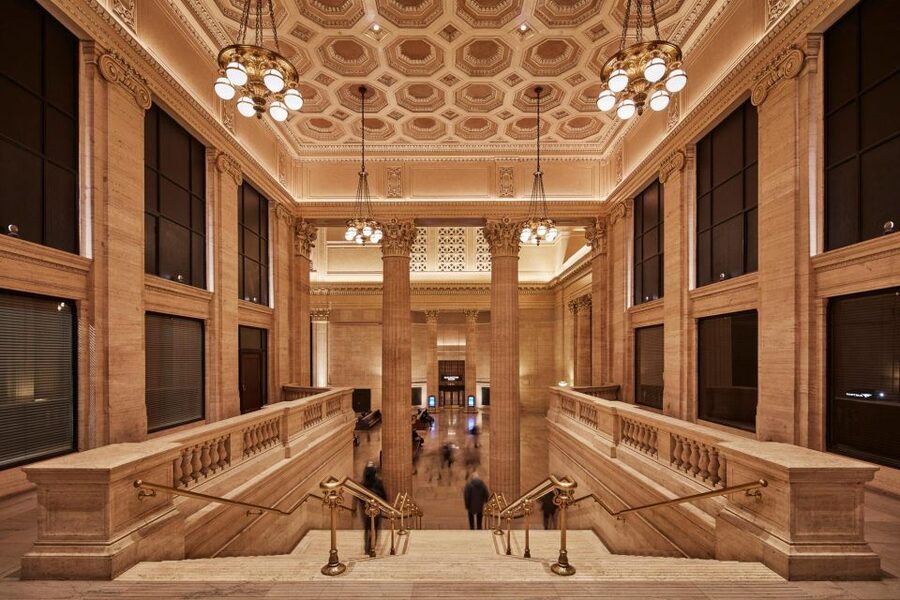
- Grand interiors normally hidden in plain sight: Enter buildings such as the Rookery, Field Building, Marquette Building, and Palmer House rather than simply photographing their facades.
- A history lesson told through design: Learn how architects handled light, structure, decoration, and the pressure to create taller, more impressive buildings.
- A compact Loop route: The walk lasts two hours and covers a broad area at a generally manageable pace, though some people find it brisk.
- Excellent guide-led experience: Grant, Talia, Annie, Angel, Matthew, and other guides are praised for humor, clarity, and strong knowledge of Chicago.
- Mostly an outdoor activity: Bring comfortable shoes and dress for the weather, especially in winter when about 90 percent of the time may be outside.
- Good value at $35: The price is reasonable if you want access, context, and interpretation rather than a self-guided walk past closed doors.
Why Chicago’s interiors tell the bigger story
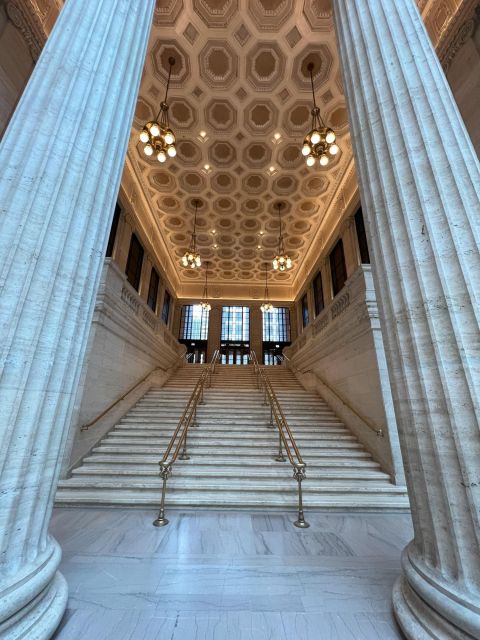
Chicago architecture is often presented as a story of skyscrapers. That is only half the picture. The real sense of place appears when you step inside the buildings and see how owners, architects, engineers, artists, and builders wanted people to feel.
This tour focuses on those interior moments. You may look up at a dome, notice a mosaic, study a doorway, or spot decorative work that would blur into the background on a normal city walk. Your guide explains why those details exist and how they relate to the building’s purpose.
The stories also reach beyond architecture. The route recalls industrial magnates, notorious figures, and famous personalities connected with the Loop during the Gilded Age and Roaring Twenties. That gives the buildings a human edge. You are not just learning dates and styles. You are seeing the rooms where power, commerce, fashion, and public life crossed paths.
The 4.9 rating from 498 ratings reflects a strong pattern: visitors value the guides most. Grant is often singled out for his clear explanations and historical range. Talia is praised for warmth, humor, and care with different group members. Annie is known for engaging commentary and useful Chicago suggestions, while Angel brings enthusiasm and personal discoveries to the walk.
More Architecture Tours in Chicago
- Chicago Architecture River Cruise
★ 5.0 · 15,756 reviews - Chicago River 90-Minute Architecture Tour
★ 4.5 · 9,629 reviews - Chicago River: 1.5-Hour Guided Architecture Cruise
★ 4.8 · 8,046 reviews
Starting inside Union Station’s Great Hall
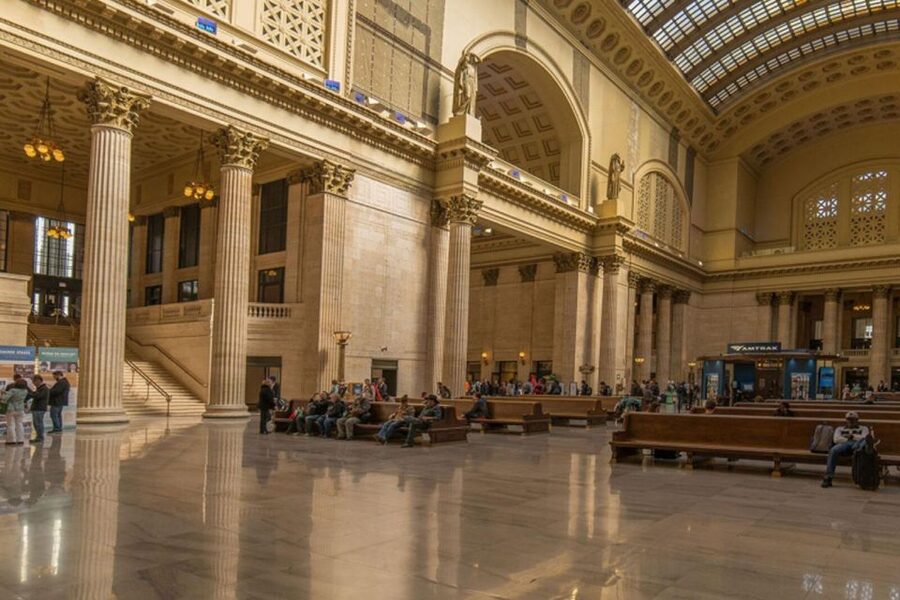
The meeting point is inside Union Station’s Great Hall, under the Clinton Street sign. This is a smart place to begin. The station itself offers a grand architectural setting, and arriving by train makes the meeting point easy to reach for many people.
Give yourself enough time to find the Great Hall. The tour begins on foot, so you will want to use restrooms and adjust your clothing before setting off. Comfortable shoes matter more than stylish ones. The route covers a sizable portion of the Loop, and even people who describe the pace as comfortable note that there is plenty of ground to cover.
From Union Station, the tour moves into the Chicago Loop. You will spend time looking up and stopping often, but this is not a slow indoor museum visit. It is an active city walk with repeated transitions between sidewalks, building entrances, lobbies, and public spaces.
South LaSalle Street and the making of the Loop
South LaSalle Street provides the first wider view of the architectural setting. Here, the point is not one single interior but the relationship between the street, the towers, and the older commercial buildings around them.
Your guide uses this part of the route to explain how Chicago became an architectural center. The discussion includes the innovations that helped create a new kind of city skyline and the engineering problems that came with height, weight, and limited daylight.
I like this opening because it gives you a framework for the stops ahead. Instead of seeing a series of handsome buildings, you begin to understand why Chicago’s architects had to experiment. Light had to reach interiors. Structures had to support more floors. Decorative design had to help companies project success.
This is also where a good guide makes a difference. Grant, Matthew, and Angel are praised for telling stories in a conversational way rather than delivering a dry lecture. You can ask questions as the tour progresses, and the guides are described as happy to discuss details that catch your eye.
The Rookery Building and its changing architectural language
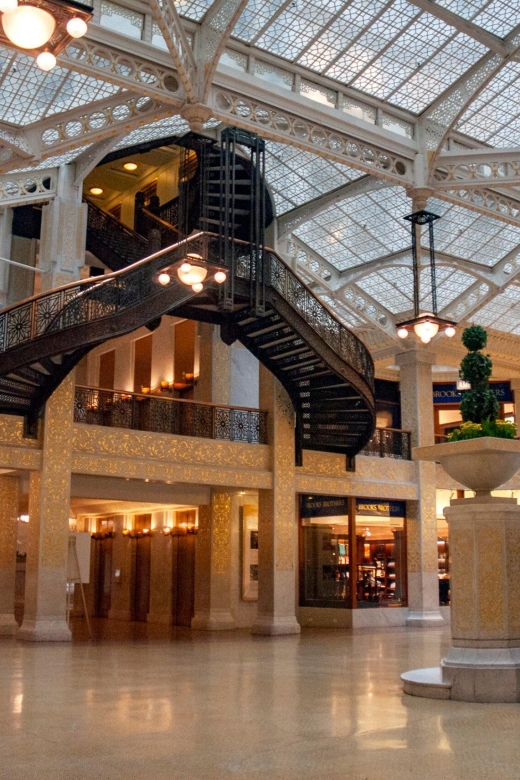
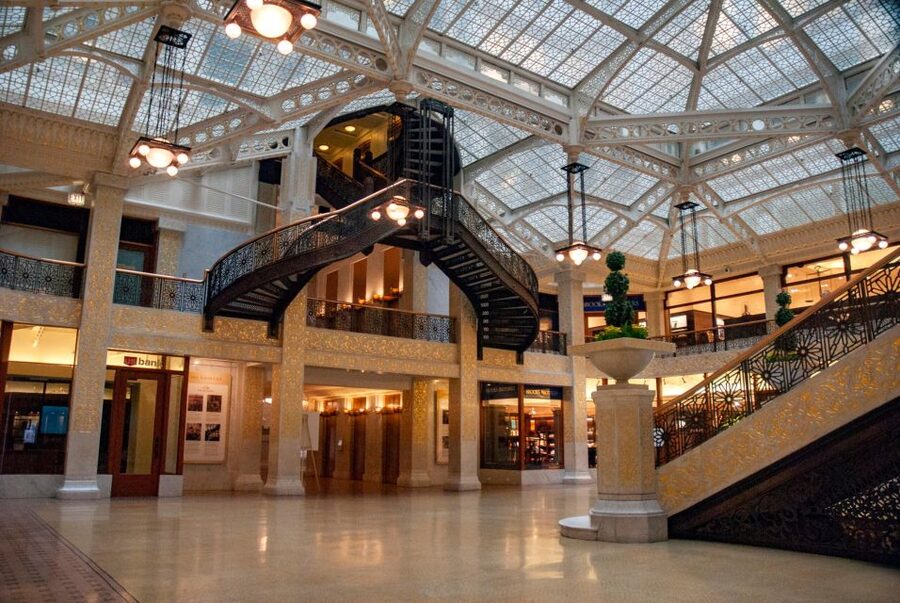
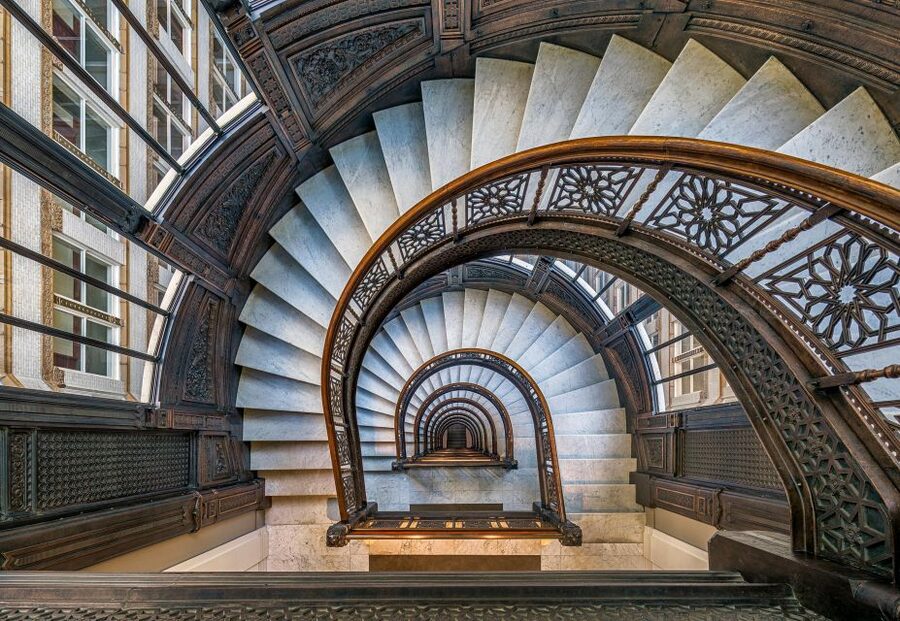
The Rookery is one of the main reasons to take this tour. Its interior is known for elaborate craftsmanship and the contrast between historic decoration and later architectural thinking. The building gives you a clear look at how Chicago design could preserve a grand past while adapting to new ideas.
Inside, pay attention to the way light, ornament, and structure work together. The tour explains how architects addressed illumination and structural integrity, two problems that shaped the development of tall urban buildings.
The Rookery stop is especially useful for people who might otherwise walk past the entrance without realizing what lies inside. You are given time to look at the decorative surfaces and hear why particular elements matter. The stories turn architectural details into evidence of changing taste and technology.
There is one important scheduling point. The Rookery is closed on Sundays, so the tour uses an alternative stop that day. If this building is your main reason for booking, choose a day other than Sunday and confirm the available starting time before you pay.
More Walking Tours in Chicago
- Chicago: Gangsters and Ghosts Walking Tour
★ 5.0 · 7,155 reviews - Chicago Favorites Ultimate Food and Walking Tour
★ 5.0 · 1,962 reviews - Chicago: Gangsters and Ghosts Guided Walking Tour
★ 4.7 · 1,697 reviews - Chicago in a Day: Food, History & Architecture Walking Tour
★ 5.0 · 1,153 reviews
Field Building and the commercial city
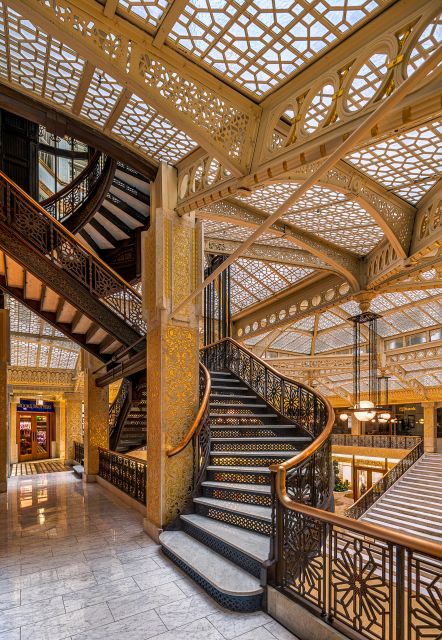
The Field Building continues the tour’s look at Chicago’s working and commercial architecture. This stop helps show how major buildings were designed not only to impress but also to support the daily business of a growing city.
You will hear about the building’s style, its design features, and the practical challenges behind its construction. The focus is on how architects combined appearance with function, including the need to bring light into deep interiors and support a large, vertical structure.
The value here comes from seeing the building in context. Chicago architecture can seem like a parade of unrelated facades if you explore alone. With a guide, the Field Building becomes part of a larger story about competition, innovation, and the desire to make a lasting mark.
The Marquette Building’s detail and decoration
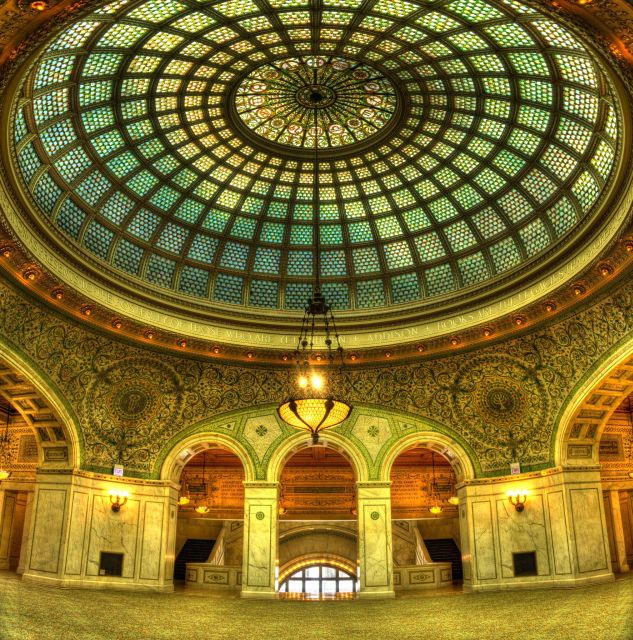
The Marquette Building is one of the stops where the tour’s title makes the most sense. Its interior details reward a slower look. You may notice mosaics, crafted surfaces, decorative entrances, and other elements that are easy to miss when you are simply crossing the Loop.
Your guide explains the meaning and purpose of the design rather than asking you to admire it without context. That distinction matters. A mosaic becomes more interesting when you understand what it communicates, who commissioned the building, and how it fit the period’s ideas about civic and commercial success.
This is also a good point to ask questions about details you pass between formal stops. One visitor wished the guide had volunteered more about every doorway and decoration along the route, though the guide was happy to respond when asked. I would take that as practical advice: if a carved entrance or ceiling catches your eye, speak up.
Palmer House and the social side of architecture
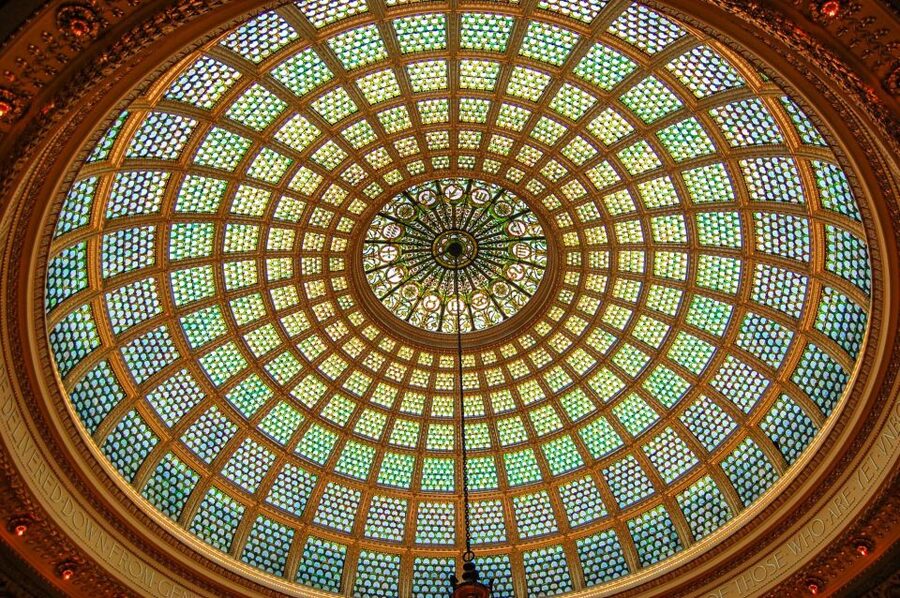
The Palmer House adds a different mood. This is a hotel, so its architecture is tied not only to offices and business but also to hospitality, status, and public life.
The tour uses the building to connect design with the people who moved through Chicago during the Gilded Age and the Roaring Twenties. The stories of famous personalities and influential figures make the spaces easier to imagine as active places rather than preserved shells.
Look for the way a hotel interior manages movement and impression. Entryways, ceilings, decorative surfaces, and grand public areas all help shape the visitor’s experience. Your guide can explain how those choices served both practical needs and social expectations.
The Palmer House also gives the route a welcome change of pace. After seeing commercial buildings, you encounter architecture designed to make a stay feel memorable. That variety helps keep the two hours moving.
Chicago Cultural Center and public grandeur
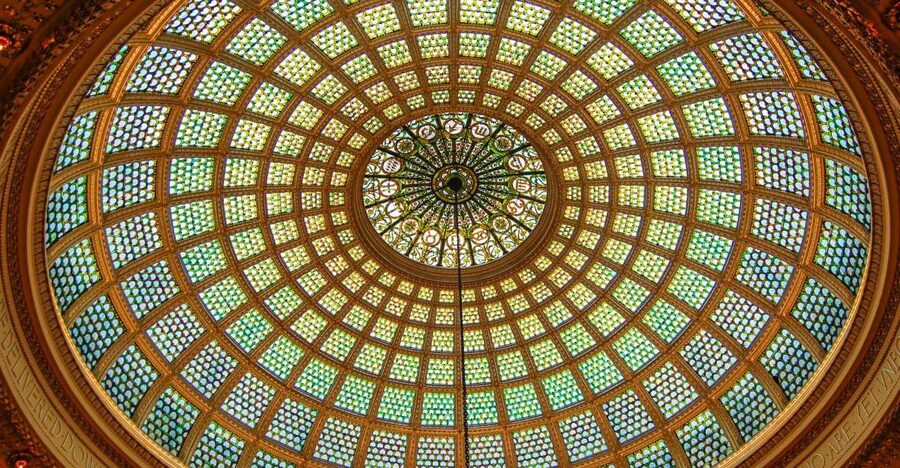
The Chicago Cultural Center is one of the most visually rewarding stops. Its domes and mosaics show how public architecture can use decoration on a large scale without becoming merely flashy.
Here, look upward. The lighting is part of the experience, and your guide discusses how architects and engineers worked with available light and structural limits. The building demonstrates that a ceiling can do more than cover a room. It can turn the room into a civic statement.
The Cultural Center is also useful for comparing old and new Chicago. The city is not frozen in one architectural era. The tour moves from early skyscraper-era ideas to later modernist approaches, showing how Chicago continued to experiment.
If you enjoy Art Deco, historic interiors, or decorative arts, this stop should appeal to you. One participant booked the tour with Art Deco in mind and found it a good match, though the route covers several styles rather than focusing on only one period.
Marshall Field and Company Building as the finish
The tour ends at the Marshall Field and Company Building, another landmark where commercial purpose and decorative ambition meet. The building helps close the loop on the theme of Chicago architecture as public theater.
The final stop is a useful place to think about how department stores, offices, hotels, and public institutions used interiors to shape behavior. A grand entrance could signal importance. A decorated ceiling could slow people down and make shopping or business feel like an event.
Because the tour finishes here, you are well placed to continue exploring the Loop on your own. The exact follow-up depends on your plans, but the guides often offer practical suggestions for food, drinks, or buildings to revisit. Grant has even helped people with dining ideas in the area, and Annie is praised for useful local recommendations.
What the $35 price really gets you
At $35 per person, this is not the cheapest way to walk through downtown Chicago. You could see many of the exteriors for free. The question is what you value.
I think the price works because you are paying for access, interpretation, and a carefully connected route. The interiors are the main benefit. Without a guide, you might enter one or two buildings by chance, but you would not necessarily know what to look for or how the details connect to Chicago’s architectural development.
The tour is also a good use of two hours. It does not require a full day, and it can fit between other Loop activities. People who live in the area have found buildings they had never entered, which says something about how easy it is to overlook these spaces even when they are close at hand.
The value is lower if you want a slow, highly specialized architecture seminar. The walk covers many buildings and themes, so each stop gets only part of the two hours. If you want extensive technical detail on one structure, a longer single-building visit may suit you better.
Weather, pace, stairs, and accessibility
Dress for the forecast. One winter participant noted that about 90 percent of the tour was outside, and several people found the experience worthwhile even in cold weather. That does not make winter conditions disappear, so bring a warm coat, gloves, and suitable footwear when needed.
The route is generally described as manageable and not overly long, but pace can feel brisk for some people. There are also stairs in and out of some buildings. If you have limited mobility, ask about the route before booking, even though the activity is listed as wheelchair accessible.
Small groups can make the experience more personal. Some departures have had only two or four people, giving the guide plenty of time for questions. Group size can vary, so do not assume every departure will feel private.
The tour is offered in English with a live guide. Guides named Grant, Talia, Annie, Angel, Matthew, and Avery have all been praised for clear explanations, friendliness, and enthusiasm. The strongest part of the experience is not just the number of buildings. It is having someone point out why a doorway, mosaic, dome, or structural choice deserves your attention.
How it compares with a Chicago architecture boat tour
I would pair this walk with a river architecture cruise rather than treat the two as competing choices. A boat tour gives you broad views of facades and the skyline. This walk takes you inside, where the city’s craftsmanship is easier to miss.
If you have time for only one architecture activity, the boat tour may offer the stronger overall view of Chicago’s skyline. But if you have already taken a river cruise, or if interiors are your main interest, this walking tour fills the gap neatly.
The two experiences also use different kinds of attention. From the river, you watch the city rise around you. On foot, you notice ceilings, entrances, mosaics, and the small design choices that make a building memorable.
Who should book this Loop walking tour?
I recommend it for first-time visitors who want more than famous exteriors, architecture fans who enjoy historic decoration, and Chicago residents who have never entered the city’s landmark buildings. It also suits families and mixed-interest groups because the stories include engineering, business, personalities, and design.
You should be comfortable walking outdoors for two hours and stopping often. Bring comfortable shoes, prepare for weather, and avoid Sunday if seeing the Rookery is essential.
The tour earns its price when you want the city explained, not just photographed. Book it if you like the idea of finding grand interiors in ordinary-looking places and learning why they matter. Skip it if you prefer a relaxed indoor visit with no weather exposure or if you want a single building examined in great technical depth.
FAQ
How much does the Chicago Secret Interiors Architecture Walking Tour cost?
The tour costs $35 per person.
How long does the walking tour last?
The tour lasts two hours.
Where does the tour begin?
Meet your guide inside Union Station’s Great Hall, under the Clinton Street sign.
Where does the tour finish?
The tour finishes at the Marshall Field and Company Building.
Which language is the tour offered in?
The live guided tour is offered in English.
Which buildings are included on the route?
The route includes Chicago’s Loop, South LaSalle Street, the Rookery Building, Field Building, Marquette Building, Palmer House, Chicago Cultural Center, and Marshall Field and Company Building.
Is the tour wheelchair accessible?
The activity is listed as wheelchair accessible. Some people have also noted stairs in and out of buildings, so confirm the exact conditions for your departure if needed.
What should I bring?
Bring comfortable shoes. Dress warmly in cold weather because much of the tour takes place outside.
Is the Rookery Building open on every tour?
The Rookery is closed on Sundays. An alternative stop is included on Sunday departures.
Can I cancel or pay later?
You can cancel up to 24 hours in advance for a full refund. You can also reserve your place and pay later.
Just added around Chicago
- BYOB Spray Paint and Sip at Studio W.I.P.★ 5.0 · 401 reviews
- Delicious Donuts & City Sights: Chicago’s Original Donut Tour★ 5.0 · 1,389 reviews
- Bikes, Bites & Views: Chicago’s Signature Dishes Bike Tour-Adults★ 5.0 · 732 reviews
- Original Chicago Architecture Interiors Tour: Dazzling Interiors★ 5.0 · 1,489 reviews
- Chicago Loop District Food Tour with Deep Dish & Beef Sandwich★ 5.0 · 870 reviews
- Field Museum of Natural History Admission Tickets★ 4.5 · 489 reviews
- City Cruises Chicago: Signature Lunch Cruise on Lake Michigan★ 4.0 · 348 reviews
- Chicago Sightseeing River and Lake Cruise★ 4.5 · 509 reviews
Chicago Tours, compared.

Chicago River: 1.5-Hour Guided Architecture Cruise
Read our review →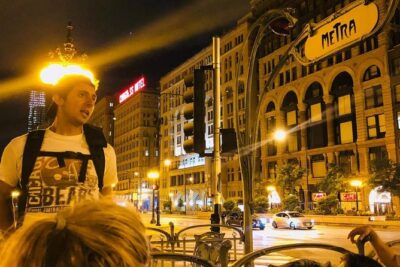

Chicago Architecture Center River Cruise aboard First Lady
Read our review →
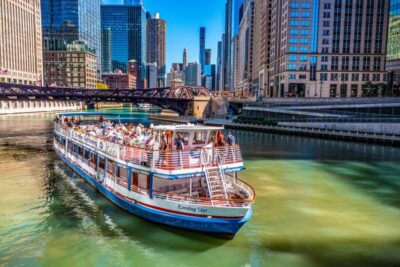
Architecture River Cruise Skip-the-Ticket Line
Read our review →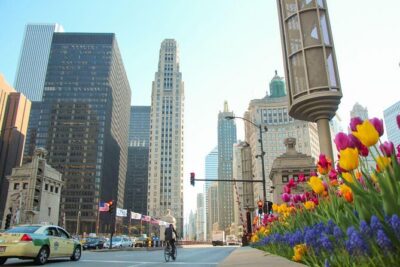
Browse the lists this tour appears in