
Reviewed · CHICAGO
Skip-the-line: Art Institute of Chicago Guided Tour
The Art Institute of Chicago is so large that a first visit can easily become a march from room to room, with famous paintings hiding among hundreds of other works. This 2.5-hour highlights tour gives you a clear route through the museum and puts major works such as Van Gogh’s The Bedroom, Seurat’s Sunday on La Grande Jatte, and Hopper’s Nighthawks on your path.
I like the small group of 12 or fewer, which makes it easier to hear, ask questions, and keep up with the guide. I also like the mix of art and Chicago stories. Guides including Joel, Bernie, Scout, Colleen, Arnold, Michelle, and Robert are praised for making the artists and the museum’s collection easier to understand.
The tradeoff is pace. You will see many famous works, but you will not have time to linger in every gallery. One especially useful feature is that admission is included, and the tour can leave you with time to return to favorite rooms afterward.
Key points to know before booking
- Major works in a short visit: See a long list of museum favorites in about two and a half hours.
- Small-group format: The group is limited to 12 people, allowing more room for questions than a large coach tour.
- Strong guide focus: Guides such as Joel, Bernie, Scout, Colleen, and Arnold are praised for storytelling, art knowledge, and Chicago insight.
- Skip-the-line convenience: The tour is designed to reduce the hassle of waiting and finding your own route through the museum.
- Admission included: Your museum entry is part of the tour, with all-day reentry noted as an added benefit.
- Fast but useful: This suits first-time visitors who want orientation more than quiet, extended time with individual paintings.
Why a guided visit helps at the Art Institute
The Art Institute of Chicago is not a museum you casually finish in one pass. Its famous collection covers many periods, artists, and styles, and the best-known works are spread across different galleries. Without a plan, you may spend too much time finding your way and too little time looking closely.
A good guide solves that problem by choosing a route and explaining why each stop matters. Instead of reading a label and moving on, you get a short story about the artist, the work, or the time in which it was made. That background can change how you see a painting.
The tour is especially useful if you have only a short stay in Chicago. It gives you a solid first look, then helps you decide which rooms deserve a return visit. The museum admission is included, so you can use the tour as an introduction rather than your entire museum experience.
The strongest part of the experience is the human element. Joel is repeatedly praised for his enthusiasm, his stories about artists, and his pride in Chicago. Bernie is valued for knowing the building well and moving a group efficiently. Scout is described as funny and personable, with a knack for adding Chicago history to the art.
Colleen is especially useful for visitors who want to see the major rooms before crowds build. Arnold is praised for answering questions, while Michelle and Robert bring an art history background and a clear speaking style. The exact guide is not guaranteed, but the pattern is clear: this tour depends heavily on the guide’s storytelling, and the available feedback gives that part a strong record.
A few more Chicago days worth weighing up
- NYC: One World Observatory Skip-the-Line Ticket
★ 4.7 · 12,329 reviews - NYC: Circle Line 1-Hr Statue of Liberty Skip-The-Line Cruise
★ 4.5 · 3,342 reviews - San Francisco: Skip-the-Line 1-Hour Bay Cruise by Boat
★ 4.6 · 1,483 reviews
Starting at 10:30 am on Michigan Avenue
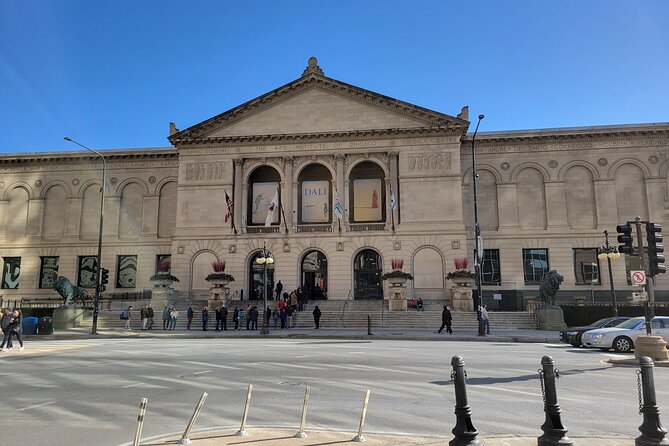
You meet at the Art Institute of Chicago, 111 S Michigan Ave, at 10:30 am. The location is near public transportation, making it practical to reach from other parts of central Chicago.
Starting in the morning has two advantages. First, you can make a strong beginning before spending the rest of the day elsewhere. Second, an early visit may help you see certain galleries before they feel crowded. Some past participants particularly valued the early access and the chance to cover highlights before the busiest part of the day.
Arrive ready to walk and stand. The required fitness level is moderate, and one participant noted that tired feet only became noticeable after the tour ended. Comfortable shoes are a sensible choice, especially if you plan to remain in the museum after the guided portion.
The tour ends back at the museum meeting point. That is convenient because you can continue on your own, leave for another activity, or return to a painting you want to study longer.
The Art Institute highlights route
The exact order can vary, and the guide may discuss some or all of the following works. Think of this as a carefully chosen survey rather than a promise that every painting will receive equal time.
Tiffany Studios, Hartwell Memorial Window
The Tiffany window provides a change of pace from the paintings. Its glass, color, and craftsmanship show how decorative art can command the same attention as a canvas. It is a useful early reminder that the Art Institute’s collection is broader than its most famous Impressionist and modern works.
A different sort of day out, same corner of Chicago:
- Chicago Architecture River Cruise
★ 5.0 · 15,756 reviews - Chicago River 90-Minute Architecture Tour
★ 4.5 · 9,629 reviews - Chicago River: 1.5-Hour Guided Architecture Cruise
★ 4.8 · 8,046 reviews - Chicago: Gangsters and Ghosts Walking Tour
★ 5.0 · 7,155 reviews
Gustave Caillebotte, Paris Street; Rainy Day
Caillebotte’s view of Paris gives the tour a chance to talk about city life, modern streets, and the unusual structure of the painting. The large figures and open pavement create a scene that feels both ordinary and carefully arranged.
This is the sort of work that benefits from a guide. You might notice the rainy street first, but a few well-chosen points can help you look at the balance of the people, buildings, and perspective.
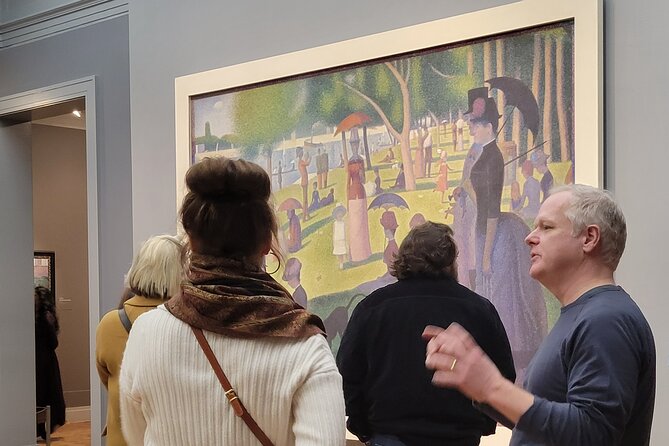
Georges Seurat, A Sunday on La Grande Jatte
Seurat’s famous park scene is one of the museum’s essential stops. Its pointillist technique can look simple from a distance, then surprisingly complex when you consider how the small marks build the larger image.
Your guide can help you understand what to look for without turning the stop into a technical lecture. Expect this to be a popular pause, and do not count on having a long, quiet stretch in front of the canvas during a fast highlights route.
Vincent van Gogh, The Bedroom
Van Gogh’s bedroom is familiar to many people before they enter the museum, but seeing it in person gives the work a different weight. The bold shapes and intense colors make it an easy painting to remember, while the title and subject give the guide a natural way to discuss the artist’s life and working style.
This is one of the works where a brief explanation can make a major difference. You will not need a long art history lesson to appreciate it, but you may want to return later for a slower look.
Georgia O’Keeffe, Sky Above Clouds
O’Keeffe’s Sky Above Clouds offers a calmer, more open visual experience than many of the densely detailed paintings on the route. It also shows the range of modern American art represented in the museum.
The work gives a guide room to discuss scale, pattern, and the way an artist can turn a familiar subject into something almost abstract. It is a good contrast with the European works earlier in the tour.
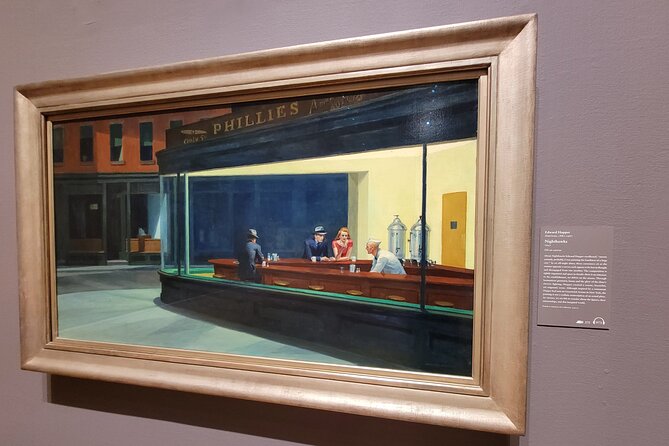
Edward Hopper, Nighthawks
Nighthawks is one of the clearest examples of a painting that rewards a few minutes of discussion. The scene is immediately readable, yet its mood, lighting, and sense of distance leave plenty to consider.
This stop often works well for people who do not think of themselves as art experts. You can begin with the story shown on the surface, then follow the guide into questions about isolation, city life, and the details that make the scene feel so memorable.
Ivan Albright, A Picture of Dorian Gray
Albright’s painting brings a darker, more unsettling note to the route. It is not simply a pretty picture, and that is part of its value. The work gives you a chance to consider how portraiture can show character, age, and unease rather than ideal beauty.
A guide is helpful here because the painting can be startling without context. The stop also keeps the tour from becoming a parade of only the most familiar names.
Grant Wood, American Gothic
American Gothic is one of the most recognizable works in American art. Seeing it in person lets you notice the faces, clothing, pose, and small details that are easy to miss in reproductions.
This is likely to be a busy stop, but the painting is well suited to a short explanation. You will get enough context to see it as more than a famous image used in countless parodies.
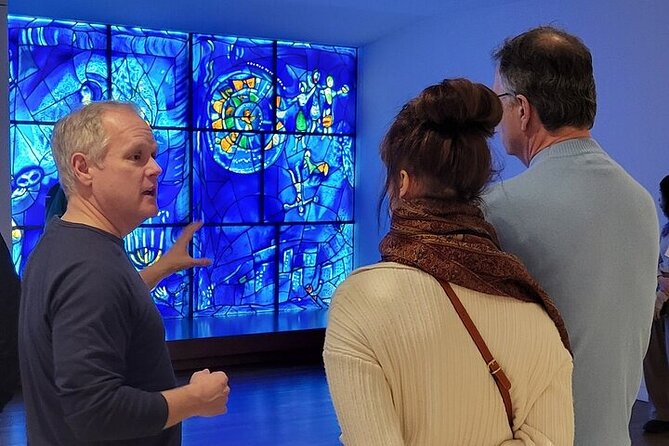
Marc Chagall, America Windows
Chagall’s America Windows returns the tour to stained glass, but with a modern style and a strong sense of movement and color. It helps show how the museum’s collection crosses boundaries between painting, design, and public art.
If you enjoy the Tiffany window, this later stop gives you a useful comparison. The two works use glass in very different ways, and a guide can point out that difference quickly.
Pablo Picasso, The Old Guitarist
Picasso’s The Old Guitarist is a chance to see how emotion can be conveyed through color, posture, and simplified form. It is one of the works where a guide can connect the painting to the artist’s changing style without assuming you already know the details.
The blue palette creates a serious mood, making this a quieter stop within a route full of visual variety. It is also the kind of work you may want to revisit after hearing the explanation.
Andy Warhol, Four Mona Lisas
Warhol’s Four Mona Lisas gives the tour a clear move into Pop Art. The familiar image becomes a repeated design, raising questions about fame, reproduction, and how we respond to an image we think we already know.
This is a good stop for a mixed group because it invites simple questions. Why repeat the image? What changes when the original becomes a mass-produced cultural symbol? A guide can keep the conversation lively without making the work feel remote.
Jackson Pollock, Greyed Rainbow
Pollock’s Greyed Rainbow is a strong closing example of modern abstraction. You may not see a single obvious subject, but the paint, motion, and structure give the guide plenty to discuss.
This stop can be especially useful if abstract art makes you uncomfortable. You do not have to like the work to understand what to look for. A clear explanation can help you approach it with more curiosity and less guesswork.
What the 2.5-hour pace feels like
The tour covers a lot. That is its strength and its limitation.
You will get a broad introduction to major European and American works, along with stories about the artists and the museum. Several guides are praised for making the time pass quickly, using humor and personal details rather than delivering a dry sequence of dates.
The pace is still fast. You may stop for only a few minutes at some paintings, and you will not have much freedom to wander while the group is moving. One participant felt the tour focused more on the museum than on art and missed important pieces. That criticism points to a real issue: no highlights tour can satisfy every idea of what the museum’s most important works are.
I would treat the guided portion as your framework. Listen closely, note the rooms or works you want to revisit, then use the included admission to explore on your own if time allows. That approach gives you both orientation and some independence.
The small group helps. A maximum of 12 people is not the same as a private tour, but it should feel more personal than a large group moving through the galleries. You have a better chance to ask why a work matters, request a little more context, or clarify something you did not catch.
Is $71.40 a fair price?
At $71.40 per person, this is not the cheapest way to enter the museum. You are paying for the guide, the planned route, the small group, and the convenience of not having to work out the museum on your own.
The value is strongest for a first visit, a short Chicago stay, or anyone who feels uneasy in large art museums. If you would otherwise spend time searching for the famous works, reading labels without context, and missing entire sections, the guide can save you effort and make the visit more focused.
The value is weaker if you already know the museum well or prefer to stand quietly in front of a single painting. It is also less suitable if you dislike fixed pacing. You may feel hurried when you want to stay longer with Nighthawks, The Bedroom, or another personal favorite.
Because admission is included, you can make the price work better by returning to the collection after the tour. The extra time lets you slow down and explore without paying for a second entry.
Who should book this Art Institute tour?
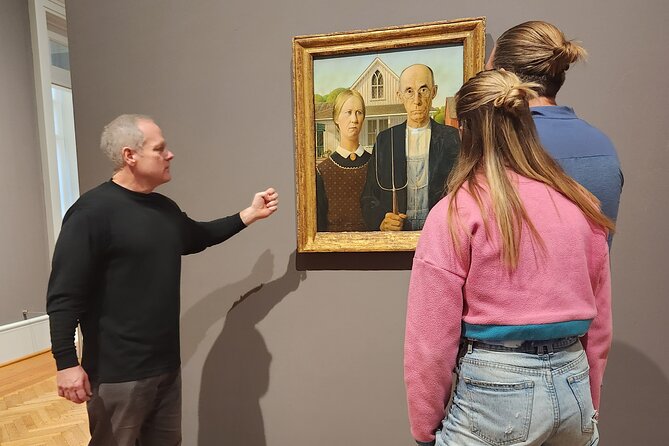
I would recommend it to first-time visitors, families with limited museum time, solo visitors who want an easy introduction, and couples who prefer stories to silent label reading. It is also a good fit for anyone curious about art but worried about not knowing enough.
The guides do not appear to rely only on art vocabulary. Joel, Bernie, Scout, Colleen, Arnold, Michelle, and Robert are praised for humor, personal detail, Chicago connections, and clear explanations. That makes the experience approachable for beginners while still giving people with some art background fresh details.
You should think twice if your main goal is a slow, self-directed visit. The tour moves through many rooms, and one critical response found that it did not spend enough time on certain important works. The best plan is to accept the brisk overview, then stay on afterward for your own priorities.
The experience is offered in English, uses a mobile ticket, and accepts service animals. It is near public transportation, and the maximum group size is 12. Free cancellation is available up to 24 hours before the start time, but changes or cancellations inside that window are not accepted for a refund.
My verdict: book it for orientation, not solitude
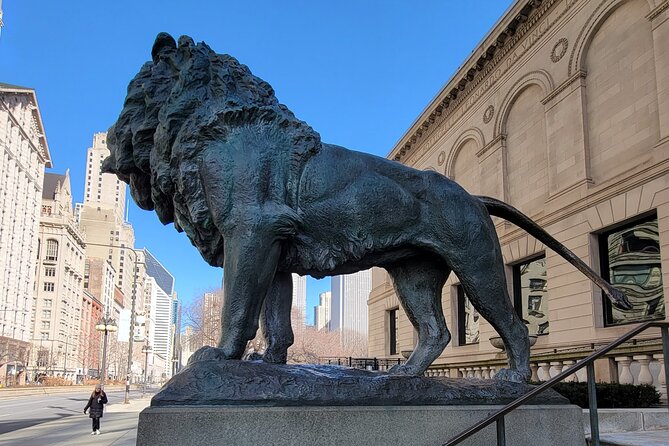
Book this tour if you want to see the Art Institute’s main names, understand what you are looking at, and make good use of a limited morning. The combination of admission, a small group, skip-the-line access, and an enthusiastic guide gives you a practical start at a very large museum.
Skip it if you already have a detailed plan and want to linger without interruption. For most first-time visitors, though, the tour is a smart way to get your bearings fast, learn the stories behind the paintings, and leave with a short list of rooms worth exploring on your own.
FAQ
How much does the Art Institute of Chicago guided tour cost?
The tour costs $71.40 per person. Admission fees are included.
How long does the tour last?
The tour lasts approximately 2 hours and 30 minutes.
What time does the tour start?
The listed start time is 10:30 am.
Where does the tour meet?
The meeting point is the Art Institute of Chicago at 111 S Michigan Ave, Chicago, Illinois 60603.
How large is the tour group?
The group is limited to a maximum of 12 people.
What language is the tour offered in?
The tour is offered in English.
Which artworks might be included?
Possible stops include works by Van Gogh, Seurat, Caillebotte, O’Keeffe, Hopper, Albright, Grant Wood, Chagall, Picasso, Warhol, and Pollock, along with the Tiffany Studios Hartwell Memorial Window.
Can I cancel for a refund?
Yes. You can cancel at least 24 hours before the experience start time for a full refund. Cancellations or changes made less than 24 hours before the start time are not accepted for a refund.
Just added around Chicago
- BYOB Spray Paint and Sip at Studio W.I.P.★ 5.0 · 401 reviews
- Delicious Donuts & City Sights: Chicago’s Original Donut Tour★ 5.0 · 1,389 reviews
- Bikes, Bites & Views: Chicago’s Signature Dishes Bike Tour-Adults★ 5.0 · 732 reviews
- Original Chicago Architecture Interiors Tour: Dazzling Interiors★ 5.0 · 1,489 reviews
- Chicago Loop District Food Tour with Deep Dish & Beef Sandwich★ 5.0 · 870 reviews
- Field Museum of Natural History Admission Tickets★ 4.5 · 489 reviews
- City Cruises Chicago: Signature Lunch Cruise on Lake Michigan★ 4.0 · 348 reviews
- Chicago Sightseeing River and Lake Cruise★ 4.5 · 509 reviews
Chicago Tours, compared.

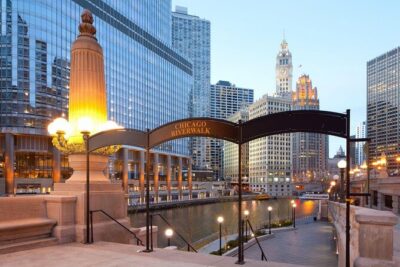

Chicago River: 1.5-Hour Guided Architecture Cruise
Read our review →

Chicago Architecture Center River Cruise aboard First Lady
Read our review →

Architecture River Cruise Skip-the-Ticket Line
Read our review →
Browse the lists this tour appears in