
Reviewed · NEW YORK CITY
Big Bus NYC: Hop-On Hop-Off Sightseeing Tour by Open-top Bus
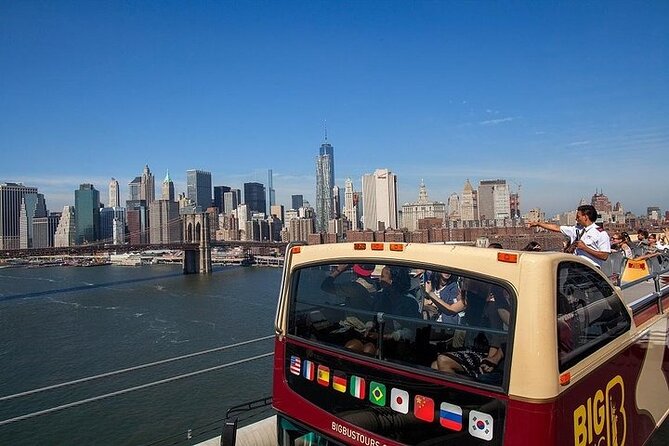
New York can feel like a puzzle of avenues, subway lines, bridges, and famous corners. This open-top double-decker tour gives you a broad first look without asking you to master the whole city on day one. A full loop takes about 90 minutes, so you can ride the route for orientation or use it as a sightseeing shuttle.
I like the freedom to get off near places such as the Empire State Building, Chinatown, or the Metropolitan Museum of Art, then rejoin later. I also like the live bus tracking through the Big Bus app, though service can be less predictable than the advertised schedule, and some riders have found stops hard to locate or audio equipment unreliable.
Key points to know
- A 90-minute loop covers a lot of Manhattan: Ride the full Downtown or Uptown circuit before deciding where to stop.
- The 24-hour pass is Downtown only: Upgrade to 48 hours for both Downtown and Uptown routes.
- The 72-hour ticket adds Brooklyn and digital walks: This is the better choice if you want a slower, fuller city overview.
- Audio commentary is in English: Bring or collect the supplied headphones, and do not assume every driver will announce each stop.
- Service frequency can vary: The stated schedule is about one bus per hour on each route, with traffic and street closures causing delays.
- The open top is weather dependent: Cold, rain, or poor weather can affect comfort and may lead to cancellation.
What the Big Bus ticket really gives you
The advertised price is $44 per person, with 24-, 48-, and 72-hour options available. The value depends almost entirely on how actively you use the pass.
A 24-hour ticket works best if you want one broad ride through Downtown and several planned stops. You could ride the complete loop first, get off at the Empire State Building or World Trade Center, explore on foot, then board again later if the service is running on schedule.
The 48-hour option gives you both the Downtown and Uptown loops, which makes more sense for a first visit. Manhattan is long, and the Uptown route reaches Central Park, the Metropolitan Museum of Art, Rockefeller Center, and Carnegie Hall. The 72-hour ticket adds Brooklyn tours and four digital walking tours, giving you more time to use the bus as a sightseeing base.
The pass is not a substitute for the subway. The subway is cheaper and usually faster for crossing town. Big Bus earns its keep when you want to see the streets while moving, avoid some long walks, and hear an explanation of what you are passing.
More Sightseeing Tours in New York City
- New York in One Day Guided Sightseeing Tour
★ 5.0 · 13,166 reviews - New York: Hop-on Hop-off Sightseeing Tour by Open-top Bus
★ 4.2 · 5,863 reviews - NYC: Manhattan Sightseeing Helicopter Tour
★ 4.8 · 5,826 reviews
Downtown route from Times Square to Lower Manhattan
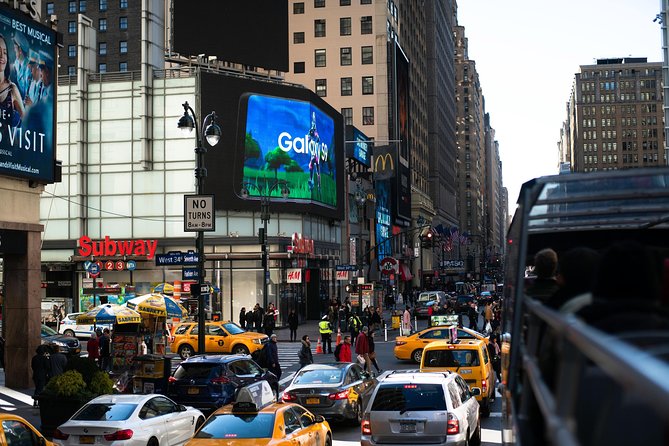
The Downtown loop begins around the theater district, with stops at M&M’S New York and Times Square. These are practical starting points, but they can be confusing because several sightseeing operators work in the same area. Check the exact stop address in the Big Bus app before you set out.
From Times Square, the bus heads toward the Empire State Building and Koreatown. The stop is at Fifth Avenue and West 32nd Street, placing you close to the Empire State Building, department stores, and Korean restaurants. If the weather is clear, the upper deck gives you a fine street-level view of the building’s long Art Deco form.
The Flatiron District stop is at Fifth Avenue and West 23rd Street. The famous triangular Flatiron Building is the main draw, though the stop also puts you near Madison Square Park and the old commercial streets around it. This is a good place to leave the bus for a short walk, especially if you want a break from the traffic and recorded narration.
The route continues to SoHo at West Broadway and Spring Street. This is one of the more useful stops for exploring on foot, with cast-iron facades, shops, galleries, and side streets that feel very different from Midtown. The bus cannot show you the best parts of SoHo from the top deck, so get off if architecture and street wandering matter to you.
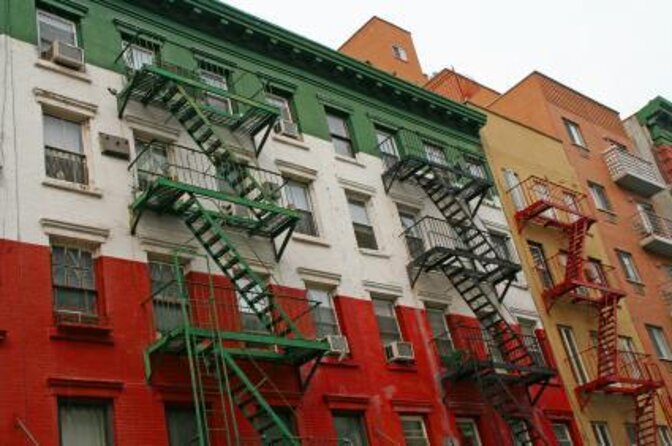
At Chinatown and Little Italy, the stop is near Lafayette Street and Walker Street. This area is worth a meal or a walk rather than a quick photograph from the bus. Keep your ticket and phone handy, since finding the correct return stop can take some attention.
The Brooklyn Bridge stop is at Park Row and Beekman Street. It is not a stop directly on the bridge, and the name can create false expectations. You will need to walk to the bridge area, and the exact distance and street access may feel less direct than expected.
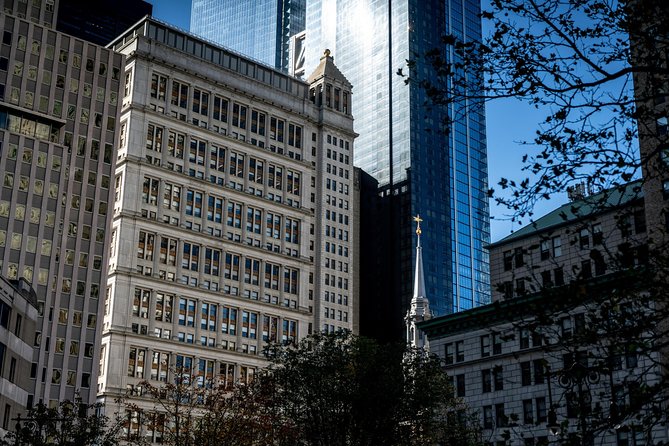
The Wall Street stop brings you into the Financial District, near the Statue of Liberty route. Nearby Trinity Church and the old stone-lined streets offer a more rewarding walk than simply hopping off for a few minutes. The Statue of Liberty stop is listed near Trinity Church on Trinity Place and Cedar Street, not on Liberty Island and not at a ferry dock.
That distinction matters. This bus does not take you to the Statue of Liberty itself. You can use the stop as a starting point for Lower Manhattan, but you need a separate boat or ferry experience to visit the island.
The Downtown circuit also serves the World Trade Center on Church Street and Vesey Street. This is a useful stop for the 9/11 Memorial area, the Oculus, and the surrounding business district. It is one of the strongest places to combine the bus with a substantial walking visit.
Farther north, stops at Pier 57, Hudson Yards, and the Midtown Circle Line area extend the ride along the west side of Manhattan. Pier 57 gives you access to an elevated public space and waterfront views, while Hudson Yards is the stop for The Vessel area and the modern buildings around it. The Circle Line stop is useful if you have a separate sightseeing cruise planned.
Uptown route for Central Park and Fifth Avenue
The Uptown loop begins near the Hope sculpture around Seventh Avenue and West 53rd Street, then returns to Times Square before continuing toward Rockefeller Center. The route is valuable because it links several major sights that are spread along Fifth Avenue and Central Park.
Rockefeller Center is a natural stop for the plaza, St. Patrick’s Cathedral, and Fifth Avenue shopping. In winter, it is also the main stop for the famous skating rink and Christmas tree, though the bus itself offers no special entry to those attractions.
The Metropolitan Museum of Art stop is at Fifth Avenue and East 83rd Street. The museum is large enough to fill most of a day, so do not treat this as a quick hop-off unless you already know what you want to see. The bus gives you a convenient way to reach the museum, but you should plan your return ride carefully.
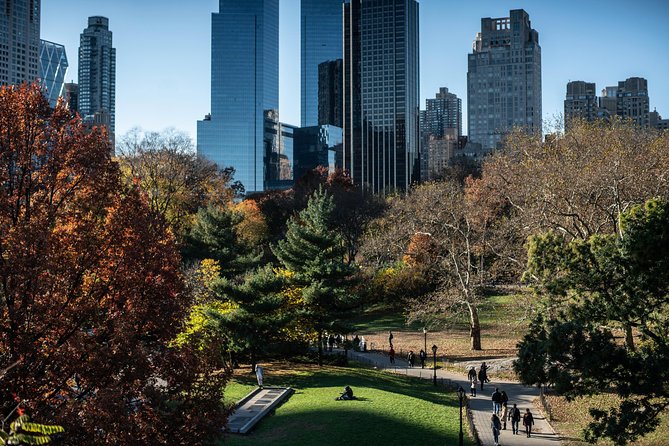
The Central Park Zoo stop is near Fifth Avenue and East 66th Street. This is a useful entry point for Central Park and the zoo, but the park itself is not a single compact attraction. Wear comfortable shoes if you plan to combine the bus with a walk.
The Columbus Circle stop sits at the southwest corner of Central Park. It is useful for the park’s southern edge, nearby shops, and the west side of Midtown. The Carnegie Hall stop on Seventh Avenue and West 57th Street rounds out the route with a famous music venue and a central location for returning to Midtown.
The Uptown loop is less about one dramatic landmark and more about putting the city’s grand avenues in context. From the upper deck, you can see how Fifth Avenue, Central Park, and the Upper East Side fit together. That perspective is hard to get when you move only by subway.
Riding conditions, commentary, and bus frequency
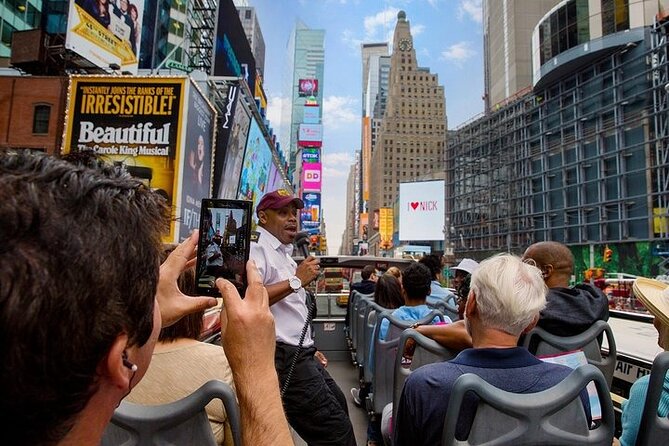
The tour uses recorded English commentary, with headphones available for the audio system. The narration provides basic facts and city stories, but it does not replace a live guide who can answer questions or point out something unexpected.
Some buses may have low volume or faulty audio, and not every driver announces stops clearly. I recommend sitting where you can hear the commentary, checking the route on your phone, and noting the stop name before you get off. If headphones are offered, take them at the start rather than assuming they will be handed to you later.
The published guidance says buses arrive approximately every hour on both the Downtown red route and Uptown blue route. Actual waits can stretch longer because of traffic, street closures, weather, or a bus change. One particularly important practical point: the routes are not guaranteed to behave like a frequent city shuttle running every 15 or 30 minutes.
Use the live tracker in the Big Bus app, but keep a backup plan. If you have a timed museum entry, dinner reservation, or theater ticket, do not depend on a bus arriving at a precise minute. The subway or a taxi may be the safer choice for a fixed appointment.
Street staff can be helpful, but the quality of directions is uneven. In crowded Midtown, look for the Big Bus stop sign and confirm that you are on the correct red or blue route. Other sightseeing companies operate nearby, and a staff member from another company may not be able to help you.
More Hop-On Hop-Off Tours in New York City:
- Savannah Hop-On Hop-Off Trolley Tour
★ 4.5 · 6,527 reviews - Nashville Hop On Hop Off Trolley Tour
★ 4.5 · 5,643 reviews - Boston Hop-On Hop-Off Trolley Tour with 13 Stops
★ 4.5 · 5,576 reviews - New Orleans City Sightseeing Hop-On Hop-Off Bus Tour
★ 4.5 · 4,943 reviews
Weather, seating, and practical comfort
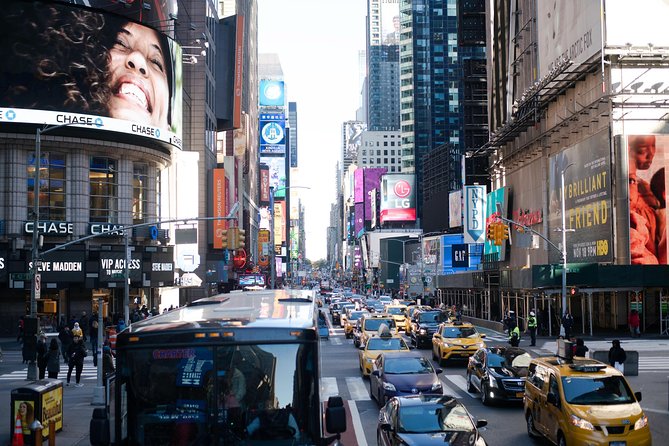
The open top is the main pleasure of the tour, but it is also the main weakness. On a clear day, the upper deck gives you a much better view of buildings and streets than a closed coach. On a freezing day, you can still enjoy it if you dress properly, but wind makes the ride colder than a normal walk.
Poor weather can cancel the service, and a bad-weather cancellation may result in a different date or a full refund. If rain or severe cold is in the forecast, check the operating status before crossing town to a stop.
Buses are not heated in the way you might expect from public transportation, and food or alcohol is not permitted onboard. A nonalcoholic drink in a screw-top bottle is allowed. Luggage is not allowed, so this is not a practical airport transfer or hotel shuttle.
Wheelchair-accessible buses with lifts are available, accommodating up to 650 pounds. If you need one, note the requirement in the special requests area when booking. Service animals are allowed, but ordinary pets are not.
Using the pass without wasting a day
I would begin with one complete loop if this is your first time in New York. Stay on board for the main circuit and use the narration to mark places you want to revisit. This prevents the common mistake of getting off too early, then spending the rest of the day trying to understand the route.
For a 24-hour ticket, choose two or three stops, not eight. A sensible Downtown plan might include the Empire State Building, SoHo or Chinatown, and the World Trade Center. Trying to visit every listed stop in one day turns a flexible tour into a waiting exercise.
The 48-hour pass gives you room to divide the city. Use one day for Downtown and another for Uptown. This is the best balance for a first visit if the price difference from the shorter ticket fits your budget.
The 72-hour option suits you if you want Brooklyn access and the digital walking tours. Those added walks are useful because some parts of New York are better explored at street level than from a bus seat. Use the bus to connect broad areas, then walk the smaller streets yourself.
Activate the ticket through the Big Bus app or with staff in person. Multiple-day tickets must be used on consecutive days, so do not activate a 48- or 72-hour pass before you are ready to use it.
Who will get the most from this tour
I recommend Big Bus for a first visit, a short weekend, families who want a simple overview, and anyone who would rather not walk miles on the first day. It is also useful if you want to show New York to someone who has never seen the main districts.
The tour is less suitable if you need dependable transportation, dislike waiting, or want a detailed live guide. The recorded commentary is functional but limited, and the experience can vary from one bus and driver to the next. A friendly driver such as Ms. Copeland or Santana can add useful local color, but you should not count on a live narration every time.
At $44 per person, the tour is fair value when you use it for sightseeing rather than transport alone. One full loop gives you a broad introduction, but the ticket becomes more worthwhile when you get off several times or choose the 48- or 72-hour pass.
Should you book Big Bus NYC?
Book it if you want a simple first look at Manhattan, enjoy open-air views, and can tolerate changing traffic conditions. The best plan is to ride one complete loop first, then use the pass for a small number of well-chosen stops.
Skip it if your main goal is fast transportation, a polished live guide, or a guaranteed timetable. In that case, the subway will cost less and often get you across town faster.
For most first-time visitors, I would choose the 48-hour option if the schedule allows. It gives you Downtown and Uptown, enough time to visit the major stops, and a better chance of getting real value from the ticket without rushing.
FAQ
How often does a Big Bus arrive at each stop?
A bus is scheduled to arrive approximately every hour on both the Downtown red route and Uptown blue route. Traffic, weather, and street closures can cause longer waits.
Where can I redeem my ticket?
You can show a printed or electronic ticket to staff at any listed stop along your route. You do not need to go to one central redemption location.
How long is a complete loop?
A full ride on either the Downtown or Uptown route takes approximately 90 minutes without getting off. The actual time can change by season and traffic conditions.
What does each ticket duration include?
The 24-hour ticket covers the Downtown route. The 48-hour ticket includes Downtown and Uptown, while the 72-hour ticket also includes Brooklyn tours and several digital walking tours.
Is the bus wheelchair accessible?
Yes. Accessible vehicles with lifts are available, with lifts that can accommodate up to 650 pounds. You should state your accessibility need in the special requirements area when booking.
Can I bring food, pets, or luggage?
Food and alcohol are not permitted. A nonalcoholic drink in a screw-top bottle is allowed. Only ADA service animals may ride, and luggage is not permitted onboard.
Just added around New York City
- All Inclusive Airport Arrival Transfer to NYC/ Brooklyn/Queens★ 4.0 · 849 reviews
- The Big Apple Coaster at New York New York Hotel and Casino★ 5.0 · 982 reviews
- Mike Hammer Comedy Magic Show at the Four Queens Hotel★ 5.0 · 538 reviews
- Brooklyn Food Walking Tour: Local Eats & Family‑Run Shops★ 5.0 · 592 reviews
- All Inclusive Airport Departure Transfer NYC/ Brooklyn/Queens★ 4.0 · 342 reviews
- Brooklyn Bridge & DUMBO Food Tour: Local Eats & Landmarks★ 5.0 · 478 reviews
- West Harlem: Gospel Church Service and Sunday Walking Tour★ 4.3 · 411 reviews
- Harlem: Central Harlem Sunday Gospel with Locals★ 3.9 · 499 reviews
New York City Tours, compared.


Empire State Building Tickets – Observatory & Museum
Read our review →
Empire State Building Observation Deck Tickets
Read our review →



Browse the lists this tour appears in