
Reviewed · NEW YORK CITY
Central Park Pedicab Guided Tours
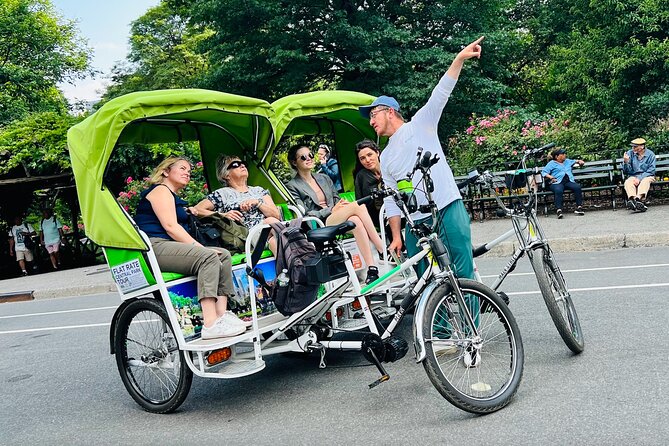
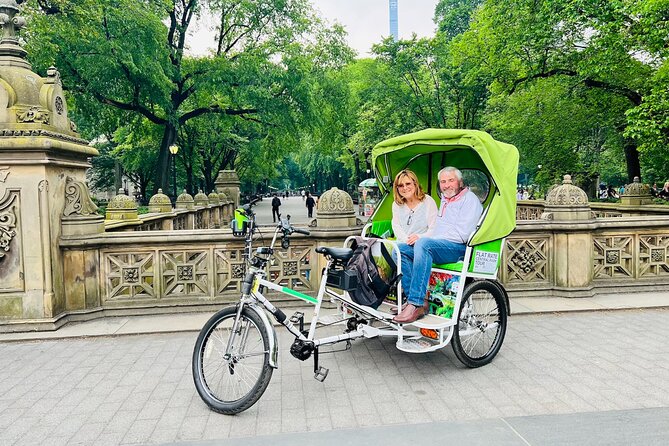
Central Park is too large to understand in a quick walk. This private pedicab ride lets you cover key sights without burning half a day on foot, while your guide handles the pedaling and points out movie locations, old bridges, statues, and bits of New York story. The route can be shaped around your party, and the guide can stop for photos.
I especially like two things here: the easy pace for first-time visitors, and the personal feel. Guides such as AJ, Sam, Peter, Ricky, and Josh are regularly praised for humor, local facts, family-friendly energy, and taking good pictures. The main caution is simple: an open pedicab can feel cold or wet, so bring a proper coat even though blankets are supplied in cold weather.
Key points to know before you book
- A private ride for your group: You are not sharing the cab with strangers, and the route can be adjusted to suit your interests.
- One hour covers the core sights: Bethesda Fountain, Bow Bridge, Strawberry Fields, Sheep Meadow, the Mall, and several film locations fit the shorter ride.
- Longer tours reach more of the park: The two-hour option adds Alice in Wonderland, the Metropolitan Museum of Art, Cleopatra’s Needle, the Reservoir, and Belvedere Castle.
- Guides are part of the value: AJ, Sam, Peter, Ricky, Josh, Nick, and MJ are among the guides praised for clear stories, humor, patience, and photo help.
- Cold-weather planning matters: Blankets are supplied in cold weather, but you still need warm clothing. The ride can be canceled for poor weather.
- Book ahead: The experience is often reserved about 24 days before the date, and at least two people are required except on Tuesdays.
Why a pedicab makes sense in an 843-acre park
Central Park covers 843 acres, or about 341 hectares. That size changes the value of this tour. On foot, you can spend a pleasant hour around Bethesda Terrace and the Lake, but reaching the southern entrances, Strawberry Fields, Sheep Meadow, and the northeast sights in one outing takes far more effort.
A pedicab gives you a moving view while keeping your legs fresh. You can sit back, listen, and step out when a spot deserves closer attention. The ride is not a substitute for a full day in the park, but it is an efficient first look, especially if you have limited time in New York.
The cab is bicycle-powered, so this is a quiet and low-impact way to move through the park. You are close to the trees, water, bridges, and city views, rather than sealed inside a vehicle. That makes the ride feel more connected to the park than a standard sightseeing bus.
The private format matters. Your guide can slow down for a family photo, spend extra time on a favorite film site, or move along when the children start to lose interest. The route is not entirely fixed, though the exact sights covered depend on the length you choose.
More Central Park Tours in New York City:
- Private Central Park Pedicab Tour
★ 5.0 · 6,981 reviews - NYC: Central Park Bike Rentals
★ 4.2 · 2,528 reviews - Official NYC Horse Carriage Rides in Central Park since 1979 ™
★ 5.0 · 2,365 reviews
Starting at the southern edge of Central Park
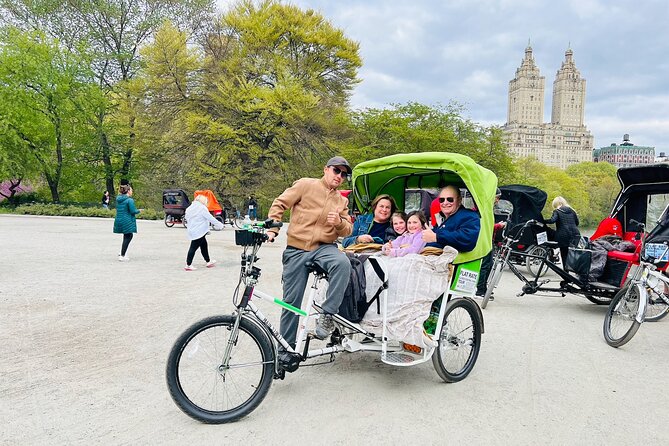
The meeting point is at 1411 Sixth Avenue, New York, NY 10019. From there, the ride enters the park near the busy southern end, where the city quickly gives way to paths, rocks, trees, and open lawns.
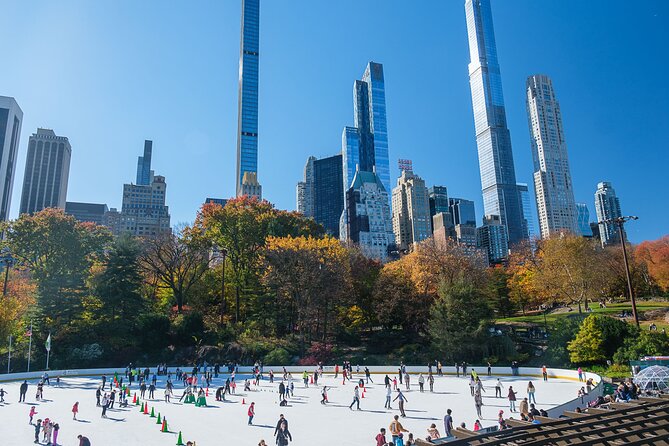
The first part often includes the area around Wollman Rink, a public ice rink open from late October to early April. It has appeared in films such as Serendipity, Rayn-o-Nyle, and Home Alone 2. In winter, the rink adds a classic New York scene, but you should not assume skating is part of the tour. The stop is for viewing, commentary, and photographs.
Nearby Gapstow Bridge is a short but worthwhile photo stop. Its rough stonework and climbing vines fit the park’s carefully designed natural look, and the bridge crosses the narrow end of the Pond. The setting is familiar from Home Alone 2, Gossip Girl, Jersey Girl, and King Kong.
The Pond itself is one of the park’s most recognizable southern views. It covers 3.8 acres and was designed to create changing views around rock outcrops and water. Your guide may connect it to the famous pigeon lady scenes from Home Alone 2, but the real pleasure is the contrast between quiet water and the towers just beyond the trees.
The Mall, the Carousel, and Balto
The route can then move toward several of the park’s older and more playful sights. The Central Park Carousel dates to 1908 and has 57 hand-carved horses and two decorative chariots. It is still in working order, though more than a century of repairs and maintenance has been needed.
The ride usually gives you an exterior look rather than a full carousel visit. That is worth knowing if you want to ride the horses yourself. Still, the story helps explain why this is more than a quick photo prop.
The Chess and Checkers House was built in 1952. Its small octagonal brick building is ringed by 24 game tables under a wooden trellis. It is a nice example of the park as a place for ordinary city life, not only grand monuments.
The Dairy House has a less grand but equally useful story. Built during the Great Depression, it reflects the park’s long role as a place made for families and everyday recreation. Guides often use these smaller sites to break up the parade of famous fountains and movie locations.
At the Balto statue, you get a story with real drama. Balto was a Siberian husky and sled dog associated with the 1925 delivery of medicine to Nome, Alaska. The bronze statue by Frederick Roth was installed in 1925, and its low position makes it easy to approach and photograph.
Conservatory Water and the Central Park Mall
Conservatory Water is also called the Model Boat Pond. Children and hobbyists launch miniature sailboats and yachts here, with boats stored and rented at the nearby Kerbs Boathouse. A cafe is also located there, though the pedicab ride itself does not include food or drinks.
The pond is associated with Stuart Little, and its benches make it one of the easiest places to pause and watch people. The Alice in Wonderland statue and Hans Christian Andersen monument are nearby, although the longer ride is the better choice if you want to include Alice as a formal stop.
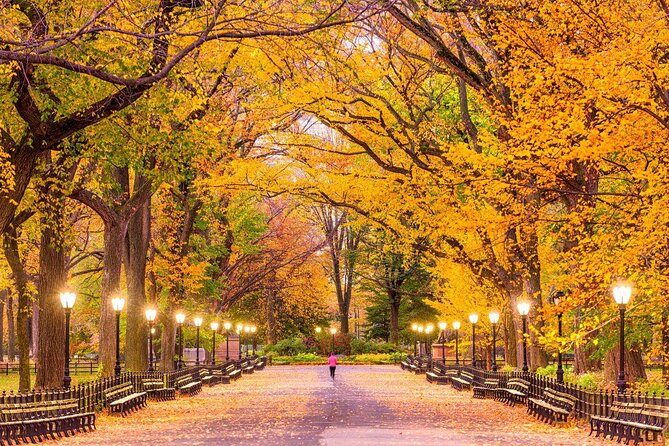
The Mall is one of the park’s most composed spaces. Two rows of American elm trees line a broad, straight promenade designed by Frederick Law Olmsted and Calvert Vaux. You may recognize it from Made in Manhattan, but the setting works even if you have never seen the film.
I like this part of the ride because it shows how Central Park was built for several kinds of use at once. You can stroll, sit, listen to music, watch people, study monuments, or simply look up into the elm canopy. A pedicab gives you the overview, while a longer photo stop lets you appreciate the details.
A few more New York City days worth weighing up
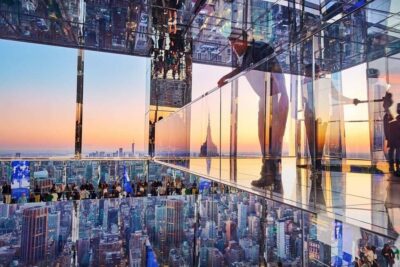
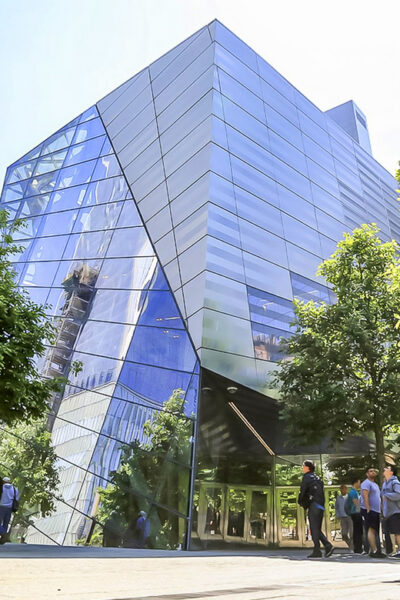
- NYC: SUMMIT One Vanderbilt Tickets
★ 4.7 · 51,195 reviews - NYC: 9/11 Memorial & Museum Timed-Entry Ticket
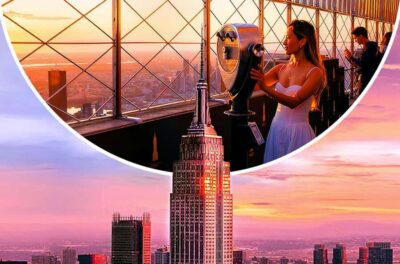
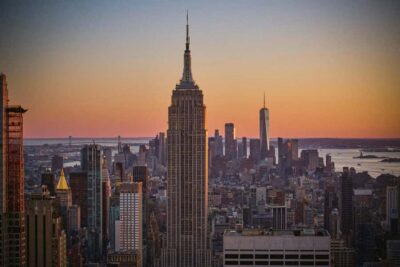
★ 4.8 · 31,428 reviews - NYC: Empire State Building Tickets – Observatory & Museum
★ 4.7 · 25,757 reviews - NYC: Empire State Building Observation Deck Tickets
★ 4.7 · 22,072 reviews
Bethesda Fountain and Terrace, the park’s grand center
Bethesda Fountain is the visual heart of the central park route. The fountain sculpture, Angel of the Waters, was designed by Emma Stebbins and unveiled in 1873. Stebbins was the first woman to receive a major public art commission in New York City.
The story behind the angel comes from the Gospel of John, where an angel gives healing power to the Pool of Bethesda. The fountain was the only statue funded by the city in the park’s original plan. That detail gives the stop more weight than its movie fame alone.
Nearby Bethesda Terrace is one of the best places to leave the pedicab and walk for a few minutes. The arcade ceiling contains 14,000 Minton tiles, most of them part of the original design. They were removed during a renovation, spent more than 20 years in storage, and were restored and reinstalled in 2007 after a private donation supported the work.
This is one of the tour’s strongest photo stops. Home Alone 2, Elf, Spider-Man, Gossip Girl, 27 Dresses, Avengers, and Law and Order have all used the terrace or nearby spaces. The drawback is that it can be busy, so you may need patience for a clean photograph.
Cherry Hill, the Lake, and Bow Bridge
Cherry Hill Fountain sits west of Bethesda Fountain in a circular plaza. Designed by Jacob Wrey Mould in the 1860s, it began as a watering trough for horses. The 14-foot structure has a granite dome, a bluestone basin, Minton tiles, and eight frosted glass lamps.
From there, the ride reaches the Lake, a 20-acre body of water that links the Ramble, Bethesda Terrace, and the western side of the park. Rowboats are available at the Loeb Boathouse, but boat rental is not part of this activity. You will see the water and boathouse from the pedicab, with time to stop for photographs.
Bow Bridge is one of the park’s most elegant crossings. Calvert Vaux and Jacob Wrey Mould designed it, and it was completed in 1862 by the same Bronx iron foundry that built the dome of the U.S. Capitol. It has appeared in Manhattan, Spider-Man 3, Night at the Museum, Glee, and many other productions.
The bridge was restored in 1974 and had another renovation in late 2023. It is a very popular picture stop, so your guide may give you a few minutes rather than a long break. That is enough for most people, but anyone wanting a quiet bridge portrait should return independently later.
Strawberry Fields, the Dakota, and Sheep Meadow
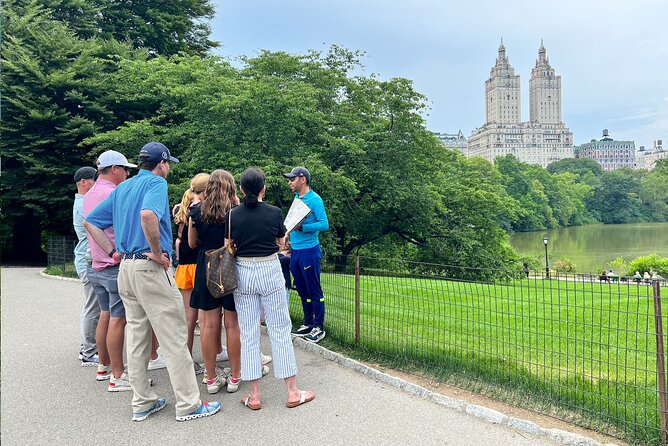
Strawberry Fields is a 2.5-acre section dedicated to John Lennon. It takes its name from Strawberry Fields Forever, which Lennon wrote for the Beatles. The memorial sits near the Dakota building, where Lennon lived and was killed outside in 1980.
The Dakota was completed in 1884 and later became a cooperative. Its history includes many artists, actors, and musicians, but the building is still a private residence. You should expect to view it from outside rather than enter.
Sheep Meadow offers a very different mood. The 15-acre lawn is used for relaxing, reading, picnicking, and sunbathing, with skyscrapers rising beyond the open grass. It is one of the clearest places to see how Central Park creates a break from the hard city grid.
Tavern on the Green borders this area. The building began as a sheepfold in 1870, designed by Vaux and Mould. The sheep were removed in 1934, and the building later became a restaurant. It reopened in 2014 after a major renovation. The tour can point out the exterior and its connection to the old sheep pasture.
The Pinebank Arch and Heckscher Playground round out the southern route. Pinebank Arch has delicate ironwork and was designed to look as if it rises from the surrounding rock. Heckscher Playground is the oldest and largest of the park’s 22 playgrounds, which makes it especially useful for families deciding where to return with children.
What the two-hour tour adds
The one-hour ride is enough for a strong introduction. If you want the park to feel less like a checklist, I would consider the two-hour option. The extra time reaches sights that sit farther north and gives the guide more room for stops.
The Alice in Wonderland statue is a favorite for families. Publisher and philanthropist George Delacorte donated it as a gift to city children and as a memorial to his wife, Margarita. You can climb around its bronze figures for photographs, making this one of the most hands-on stops.
Cleopatra’s Needle, beside the Metropolitan Museum of Art, is the oldest outdoor monument in New York City. It was made in Egypt about 3,500 years ago and brought to Central Park in 1881. The Met itself is not included as an admission stop, and the tour does not include museum entry.
The Jacqueline Kennedy Onassis Reservoir covers 106 acres and holds more than one billion gallons of water. It was built between 1858 and 1862 and was once the world’s largest man-made water body. The broad water view gives the longer route a calmer finish than the more crowded southern sights.
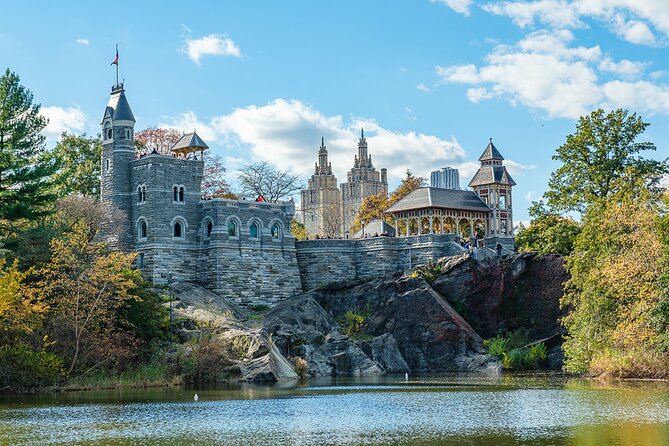
Belvedere Castle is another major addition. Designed by Calvert Vaux and Jacob Wrey Mould in 1867, it contains exhibit rooms, an observation deck, and the park’s official weather station, which has been housed there since 1919. The castle adds architecture and a higher viewpoint to a ride that otherwise focuses mainly on water, bridges, lawns, and movie scenes.
Guides, comfort, and the real value at $38
The listed price is $38 per person. For a private experience in Manhattan, that is reasonable if you want an overview, photo help, and a guide who can adapt the route. The value is strongest for first-time visitors, families, older adults, and anyone who would find several miles of walking tiring.
The ride includes local commentary, photo help, all taxes and fees, and a warm blanket in cold weather. Tips are optional. Hotel pickup and drop-off are not included, so you need to reach the Sixth Avenue meeting point yourself.
Guides vary, but AJ, Sam, Peter, Ricky, Nick, Josh, and MJ are among the names associated with this operation. The strongest pattern is clear: guides are expected to add humor, explain both past and present New York, help with photos, and adjust their pace to the group. Peter has been especially noted for helping a parent with mobility needs, while Sam and AJ are often praised for keeping families engaged in cold conditions.
There is one practical weakness. A pedicab is open to the air, and the ride can feel cold even with a blanket. Bring a coat, gloves, and sensible layers in winter. Rain also matters because the experience depends on good weather. If conditions force a cancellation, you are offered another date or a full refund.
Who should book this Central Park ride?
I would book it early in a New York visit if Central Park is unfamiliar to you. The ride helps you understand the layout, shows you which places deserve a return visit, and saves your energy for museums, neighborhoods, or an evening show.
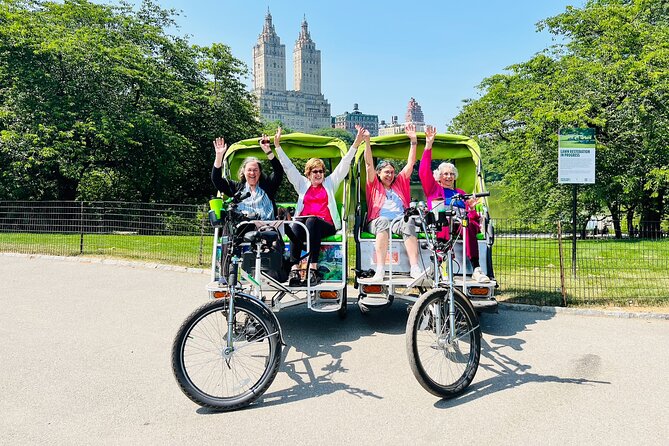
It suits couples who want an easy scenic outing, families with children, and anyone traveling with a parent who needs a slower pace. The private format also works well for a group of friends, though larger parties may use two pedicabs. The guides can keep the cabs together so everyone can hear the commentary.
I would choose one hour if you mainly want the classic central sights and a quick orientation. I would choose two hours if you care about Alice in Wonderland, the Met exterior, Cleopatra’s Needle, the Reservoir, and Belvedere Castle. The longer ride costs more in total, but the added coverage is useful because Central Park is too spread out for a short visit to show everything.
Booking requires a minimum of two people except on Tuesdays. Free cancellation is available up to 24 hours before the start time. Within 24 hours, changes are not accepted and the payment is not refunded.
Should you book it?
Book this tour if you want Central Park explained as you move through it, rather than simply walking past famous spots with a map. The best reasons are the private route, the large number of photo stops, and guides such as AJ, Sam, Peter, and Ricky who bring humor and solid local detail.
Skip it if you want a long, quiet walk at your own pace or plan to spend most of the day inside the park. For everyone else, especially first-time visitors with limited time, $38 per person buys a practical introduction with far less effort than covering the same ground on foot.
FAQ
How much does the Central Park pedicab tour cost?
The listed price is $38 per person. The price includes the pedicab ride, local guide, photo help, taxes, and fees.
How long does the tour last?
Tours last approximately one to three hours. The one-hour option covers the main central sights, while longer options add places such as Alice in Wonderland, the Metropolitan Museum of Art exterior, the Reservoir, and Belvedere Castle.
Is the pedicab tour private?
Yes. This is a private activity for your group only, so you do not share the ride with unrelated participants.
Where does the tour start and finish?
The meeting point is 1411 Sixth Avenue, New York, NY 10019. The activity ends back at the same meeting point.
Are blankets provided in cold weather?
Yes. A warm blanket is provided during cold weather, but you should still bring suitable clothing for an open-air ride.
Is hotel pickup included?
No. Hotel pickup and drop-off are not included. You need to make your own way to the Sixth Avenue meeting point.
What happens if the weather is poor?
The experience requires good weather. If the operator cancels because of poor conditions, you can choose another date or receive a full refund. Free cancellation is also available if you cancel at least 24 hours before the start time.
Just added around New York City
- All Inclusive Airport Arrival Transfer to NYC/ Brooklyn/Queens★ 4.0 · 849 reviews
- The Big Apple Coaster at New York New York Hotel and Casino★ 5.0 · 982 reviews
- Mike Hammer Comedy Magic Show at the Four Queens Hotel★ 5.0 · 538 reviews
- All Inclusive Airport Departure Transfer NYC/ Brooklyn/Queens★ 4.0 · 342 reviews
- Brooklyn Food Walking Tour: Local Eats & Family‑Run Shops★ 5.0 · 592 reviews
- Brooklyn Bridge & DUMBO Food Tour: Local Eats & Landmarks★ 5.0 · 478 reviews
- West Harlem: Gospel Church Service and Sunday Walking Tour★ 4.3 · 411 reviews
- Harlem: Central Harlem Sunday Gospel with Locals★ 3.9 · 499 reviews
New York City Tours, compared.
Empire State Building Tickets – Observatory & Museum
Read our review →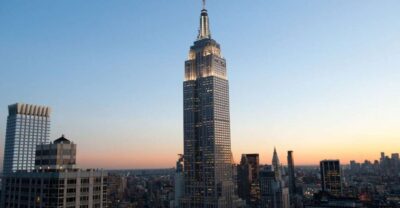
Empire State Building Observation Deck Tickets
Read our review →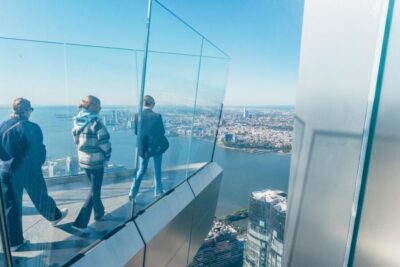
Browse the lists this tour appears in