
Reviewed · SEATTLE
Beneath The Streets Underground History Tour
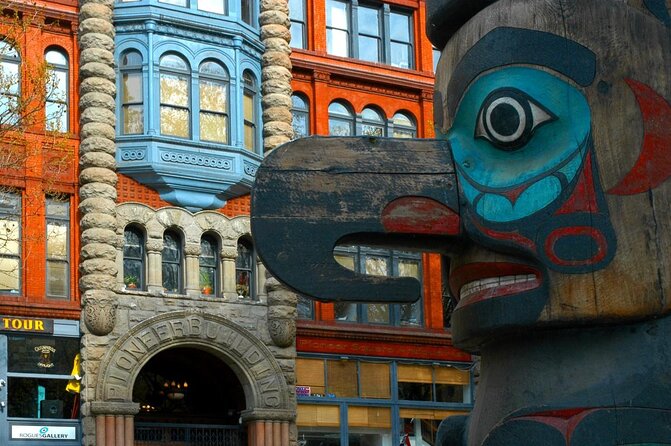
Seattle’s most curious attraction is not a view from the Space Needle. It is the old city floor beneath Pioneer Square. On this tour, you walk through three underground passageways built in the 1890s, then return to today’s streets to understand why Seattle ended up with a second level below the first.
I like the mix of local storytelling and solid history, especially the links between the Great Fire, the Klondike Gold Rush, and the city’s unusual street design. I also like the small maximum group of 20 and the range of guides, including David, Patti, Sarah, Jim, and Imogen, who bring plenty of humor and personality.
The main consideration is simple: this is not an hour spent entirely underground. The passages are not connected, so you spend part of the tour walking above ground between them. There are also three flights of stairs and uneven surfaces, so comfortable shoes matter.
Key points to know before booking
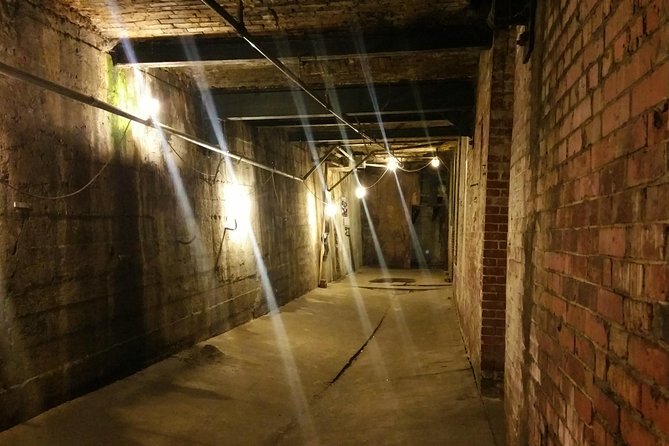
- Three separate underground passageways: The historic spaces are connected by above-ground streets, not by one continuous tunnel.
- Seattle’s early city in one hour: Expect stories about the Great Fire, 1890s construction, Skid Row, the Klondike Gold Rush, and Coast Salish peoples.
- Four blocks and about half a mile: The pace is leisurely, but you will be on your feet for the full tour.
- Small groups, up to 20 people: This gives the guide a better chance to answer questions and keep the group together.
- Guide style varies: The guides are not locked into a script, so the experience can feel personal and lively.
- Good value for history fans: At $29.03, the tour costs less than many major Seattle attractions and gives you useful context for Pioneer Square.
Why Seattle has a city beneath the city
Pioneer Square was Seattle’s first downtown district, built up in the late 1800s when the city was still young and rough around the edges. The underground spaces were created as the streets were raised and rebuilt after the Great Fire, leaving parts of the earlier city below the sidewalks.
That basic fact is more interesting once you see the physical evidence. Old storefronts, passageways, and sections of the original street level make the story concrete. You are not simply hearing that Seattle changed. You are looking at the leftover pieces of the change.
The tour also helps correct a common assumption. This is not a vast, continuous underground city. The spaces are separate, and the tour moves between them from above. If you arrive expecting a long tunnel system, you may feel shortchanged. If you arrive ready to study three historic sections and the streets connecting them, the format makes sense.
The outdoor portions are not filler. They show you how modern Pioneer Square sits on top of the earlier city. That comparison is one of the strongest parts of the experience.
More History Tours in Seattle:
- New York City: American Museum of Natural History Ticket
★ 4.5 · 15,447 reviews - History and Hauntings of Salem Guided Walking Tour
★ 5.0 · 14,564 reviews - Charleston’s Old South Carriage Historic Horse & Carriage Tour
★ 5.0 · 10,023 reviews
Starting at 102 Cherry Street
The tour begins at 102 Cherry Street, near Pioneer Street. The first part sets the scene for Seattle in the 1890s, when construction, commerce, migration, and civic ambition were reshaping the small settlement.
Your guide explains the city’s early architecture and the forces that pushed Seattle toward a new street level. Look up as well as down. Pioneer Square’s present-day buildings help make the underground story easier to understand, and the guide uses both levels to connect the past with the neighborhood you see now.
The guides are encouraged to tell the story in their own style rather than recite a fixed script. That creates useful variety. David has been praised for combining information about the streets above with the spaces below. Patti brings a lively sense of humor. Sarah is one of the more experienced guides, while Imogen is known for using theatrical energy to help you picture earlier Seattle.
Your guide on the day may be someone else, so do not book expecting one particular person. The important point is that the presentation is designed around conversation and storytelling rather than a recorded narration.
Three underground spaces from the 1890s
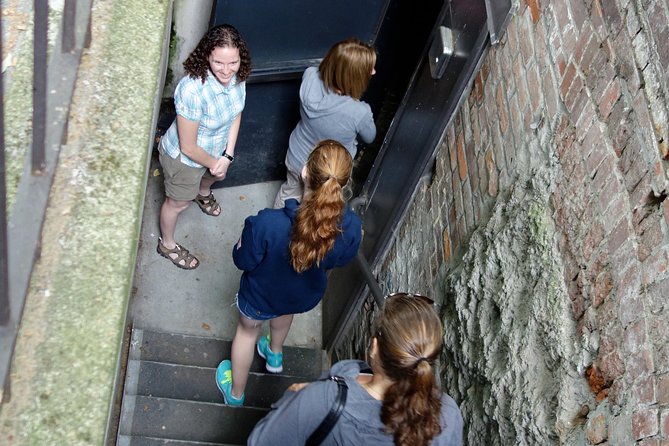
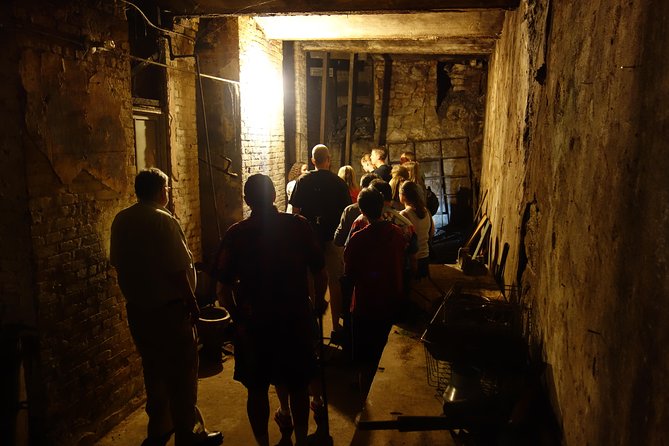
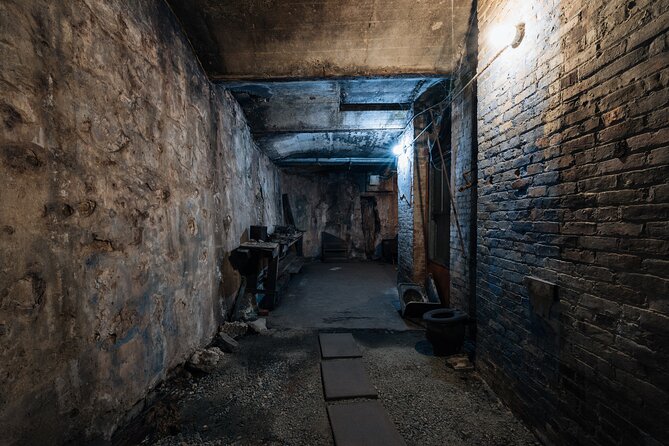
The underground portion is the reason most people book this experience. You descend by stairs into passageways associated with the first city level, then move through several sections beneath historic Pioneer Square.
The spaces are old, dark, and uneven in places, but they are not presented as a frightening attraction. The emphasis is on how they functioned and why they remain below the current sidewalks. That makes the tour a better fit for people interested in urban history than for anyone seeking a spooky or theatrical haunted-house show.
You will use three flights of stairs during the hour, going up and down each one. The floors are not perfectly smooth, and you should wear shoes that give you a steady footing. The underground areas may feel enclosed, but the experience is not described as especially difficult for people with mild claustrophobia.
The guide’s narration is important here. Without context, an old passageway can look like a collection of dusty walls. With the story of street raising, rebuilding, and changing city needs, the spaces become evidence of Seattle’s growth.
The underground sections are also fairly limited. One of the clearest cautions is that you may spend less time below the street than you imagined. The attraction is best understood as a history walk with underground access, not as a full underground expedition.
The Great Fire and Seattle’s new street level
The Great Fire is one of the central turning points on the tour. It provides the reason to discuss rebuilding, altered street grades, and the physical changes that produced the underground spaces.
You will hear how the city moved from its earliest form toward a more durable, organized downtown. The lesson is not only about destruction. It is about the practical decisions that followed, and how those decisions shaped the Pioneer Square you walk through today.
This is where the above-ground walking earns its place. The guide can point out how the current streets, buildings, and sidewalks relate to the old level below. You get a better sense of the city as a layered place, built and rebuilt rather than planned once and left alone.
If you enjoy architecture, the 1890s details are a useful bonus. The tour focuses on the birth of the city and the construction around Pioneer Square, so it gives you more than a collection of colorful anecdotes. It explains why the neighborhood looks the way it does.
A few more Seattle days worth weighing up
- Chef Guided Food Tour of Pike Place Market
★ 5.0 · 3,733 reviews - Mt. Rainier National Park Highlights Tour
★ 5.0 · 3,156 reviews - Seattle: Guided Underground Walking Tour
★ 4.6 · 2,144 reviews - Seattle’s Original Guided Harbor Cruise
★ 4.5 · 2,077 reviews
The Klondike Gold Rush and Seattle’s gamble
Seattle’s role in the Klondike Gold Rush is another major part of the story. The city became a crucial launching point for people heading north toward the Yukon gold fields, and the resulting rush changed Seattle’s fortunes.
The guide covers the stampede and the way Seattle positioned itself as a supply and transportation center. This helps explain why a young city grew so quickly and why its business leaders were eager to connect Seattle with the northern gold fields.
The story works well because it shifts the tour from bricks and stairs to ambition and marketing. Seattle was not simply lucky. It played an active role in presenting itself as the gateway to opportunity.
If you have time after the tour, the nearby Klondike Gold Rush museum is a useful follow-up. It is free, and the tour guides may point you toward it. The museum adds another layer to the gold-rush story, including a theater presentation, so it makes a good next stop if this subject catches your interest.
Coast Salish history belongs at the beginning
A valuable part of this tour is its attention to the Coast Salish peoples who first inhabited the area. The Coast Salish are a group of related Indigenous peoples with connected languages and cultural traditions.
That context matters. A tour about Seattle’s founding can easily begin with the 1890s and treat everything before that as a blank page. This experience makes an effort to place the city’s development within the much longer history of the people who lived here first.
The company says its guides take part in workshops on cultural traditions and history, with Native tribal members and special historians contributing to their ongoing training. You should still expect the focus to remain on Pioneer Square and Seattle’s early urban development, but this section gives the tour a more responsible starting point.
For me, this is one of the details that makes the experience more useful than a simple underground novelty. It asks you to see Seattle as more than a city created by settlers, fires, rail lines, and gold seekers.
Skid Row and the changing face of Pioneer Square
The tour also covers Skid Row, the rough urban district that once served as a main street in Pioneer Square. This part of the story shows how the neighborhood’s role changed over time and how different groups used the same streets.
Pioneer Square has never had just one identity. It has been an early commercial center, a working district, a troubled area, and a place of preservation and tourism. The guide uses the old street level and the current neighborhood to compare those different eras.
This section can be especially useful if you plan to spend more time in Pioneer Square after the tour. You will look at the neighborhood with more context, noticing that its historic buildings are not merely decorative backdrops. They are part of a long cycle of growth, decline, rebuilding, and renewal.
The tour does not promise to solve every issue facing the district today. Instead, it gives you a short, grounded look at how the area got here.
How the walking pace and group size affect the experience
The tour covers about four blocks, or roughly half a mile, at a leisurely pace. The advertised duration is about one hour, so the route is manageable for most people who can walk that distance and use stairs.
You will stand for much of the tour. A slower pace helps when the guide is speaking, but the group still needs to move between the three underground spaces. Plan on staying close enough to hear, especially outdoors when city noise competes with the guide.
The maximum group size is 20. That is not a private tour, but it is small enough to feel more personal than a large city walk. It also gives you a better chance to ask questions. The unscripted approach means a good guide may expand on subjects that interest your group.
The tradeoff is variation. A guide with a strong personality can make the hour funny and memorable. A less engaging presentation may leave you wishing for more time underground. The company’s best-known guides, including David, Patti, Sarah, Jim, and Imogen, receive especially warm praise for humor, energy, and storytelling, but guide assignments can change.
Price, timing, and practical value
At $29.03 per person, this is a reasonable price for a guided Seattle history walk. You are paying for access to historic underground spaces, a professional guide, and a compact introduction to Pioneer Square.
The value depends on what you want. If you want a quick way to understand Seattle’s early development, the price is fair. You get several important subjects in one hour, including Indigenous history, the Great Fire, the city’s 1890s rebuilding, the Klondike Gold Rush, and Skid Row.
If your only goal is to spend as much time underground as possible, the value is less certain. The passages are separate, and above-ground walking takes up a meaningful portion of the hour. A competing underground tour may suit you better if you prefer a different presentation style or a longer underground focus.
Multiple start times make it easy to fit the tour around other Seattle plans. You can use it early in the day to get your bearings in Pioneer Square, or place it between other downtown stops. The tour ends at the Union Trust Building at 119 South Main Street, so you are still well placed for more sightseeing in the neighborhood.
The tour operates in rain or shine. Seattle weather changes quickly, so bring suitable layers and rain protection. Confirmation is provided when you book, and mobile tickets make the arrival process simple.
Who should book this Pioneer Square tour?
I would recommend it to first-time visitors who want the city’s history explained before they explore downtown on their own. It is also a good fit for Seattle residents, families with older children, couples, solo visitors, and anyone who enjoys architecture and urban stories.
Children can enjoy it, especially if they like unusual places and questions about how cities are built. A seven-year-old has managed to enjoy the experience, and teenagers have also found it engaging. Still, the hour includes standing, stairs, and historical explanation, so very young children may not get much from it.
The tour suits people who like humor mixed with facts. The guides are not tied to a rigid script, and that can make the experience feel more human. You may hear extra stories or receive suggestions for nearby sights, such as the Klondike Gold Rush museum.
I would be more cautious if you have trouble with stairs, uneven floors, or walking half a mile. Service animals are allowed, and most people can participate, but the three flights of stairs are part of the route and cannot be avoided.
Free cancellation is available up to 24 hours before the start time. If you cancel inside that window, you do not receive a refund. The tour needs at least two people to operate, and if only one person signs up, the booking is fully refunded.
Should you book Beneath the Streets?
Book this tour if you want context, stories, and a look at Seattle’s unusual street levels in a compact format. The strongest guides make the hour funny, clear, and easy to remember, while the small group size keeps the presentation more personal.
Do not book it expecting a continuous underground city or an hour spent entirely below the sidewalks. You will walk above ground between three separate spaces, use stairs, and spend a good share of the tour listening to the history of Pioneer Square.
For $29.03, I think it is a sound introduction to Seattle, especially early in your visit. Wear comfortable shoes, dress for rain, and keep time afterward for the Klondike Gold Rush museum and the rest of Pioneer Square.
FAQ
How long does the Beneath the Streets tour last?
The tour lasts about one hour. It covers roughly four blocks, or about half a mile, at a leisurely pace.
Where does the tour begin?
The meeting point is 102 Cherry Street in Seattle, near Pioneer Street.
Where does the tour end?
The tour ends at the Union Trust Building at 119 South Main Street in Seattle.
How much does the tour cost?
The listed price is $29.03 per person.
Is the tour entirely underground?
No. You visit three underground passageways, but they are not connected. You walk above ground between the historic spaces.
How many stairs are involved?
The tour includes three flights of stairs, with each flight used going up and down during the route.
Is the tour offered in English?
Yes. The tour is offered in English and includes a professional guide.
What happens if only one person books the tour?
The tour requires at least two people to operate. If only one person signs up, a full refund is provided.
Just added around Seattle
- Seattle: Harbor Cruise with Local Guide★ 4.8 · 599 reviews
- Seattle: Half-Day Wildlife and Whale Watching Cruise★ 4.3 · 378 reviews
- Seattle: Pike Place Market Chef-Guided Food Tour★ 4.8 · 847 reviews
- Seattle CityPASS®: Save up to 46% at 5 Top Attractions★ 4.6 · 742 reviews
- Seattle: Chihuly Garden and Glass Entry Ticket★ 4.8 · 374 reviews
- Seattle: City Highlights Tour★ 4.7 · 416 reviews
- From Seattle: Mount Rainier National Park Guided Tour★ 4.8 · 412 reviews
- Seattle: City Sightseeing Hop-On Hop-Off Bus Tour★ 3.9 · 421 reviews
Seattle Tours, compared.


Space Needle & Chihuly Garden and Glass Ticket
Read our review →
Browse the lists this tour appears in