
Reviewed · NASHVILLE
Nashville: Country Music Hall of Fame and Museum
The Country Music Hall of Fame is more than a wall of famous names. It is a well-organized walk through the music’s working parts: handwritten lyrics, stage clothes, instruments, recordings, and film. You can trace country music from its early voices to current stars without being pushed along by a guide.
I especially like the freedom to set your own pace and the sheer range of material, from Elvis items and gold records to Patsy Cline memorabilia and newer artists such as Luke Combs. The main drawback is simple: this is a large museum, and a quick two-hour visit can feel rushed, especially when afternoon crowds gather.
Key points at a glance
- Plan two to four hours: The museum is large, and the displays reward a slower visit.
- Follow country music’s full story: Exhibits move from early traditions to present-day performers.
- Use the listening and film stations: They add voices and sound to the photographs and objects.
- See the Hall of Fame Rotunda: The tour ends among plaques honoring country music’s highest achievers.
- Check the special spaces: Your admission includes the Taylor Swift Education Center, American Currents exhibit, and Hatch Show Print Haley Gallery.
- Book with flexibility: Admission costs $31, and you can cancel up to 24 hours before the visit for a full refund.
What the Country Music Hall of Fame does best

I like museums that explain how an art form was built, not just who became famous. This one gives you the people, but it also gives you the tools of the trade: guitars, stage outfits, lyric sheets, awards, photographs, cars, recordings, and archival footage.
That approach helps if you are already a serious country fan. You can linger over familiar names and spot details you may have missed elsewhere. It also works if country music is not your usual choice. One especially useful aspect is the way the museum places older performers beside newer artists, so you can follow changes in sound, fashion, technology, and image.
The displays are designed for self-guided touring. You choose what to read, what to skip, and how long to spend at a listening station or film. You do not need to match the pace of a group, though you should remember that self-guided also means there is no personal guide explaining the collection as you move through it.
More Live Music Tours in Nashville
- Grand Ole Opry Show Admission Ticket
★ 4.5 · 2,518 reviews - Discover Nashville City Tour with Entry to Ryman & Country Music Hall of Fame
★ 4.5 · 2,412 reviews - Grand Ole Opry House Guided Backstage Tour in Nashville
★ 4.5 · 2,405 reviews
Entering at 222 Rep. John Lewis Way South
The meeting point is inside the Country Music Hall of Fame at the Information Desk, at 222 Rep. John Lewis Way S in Nashville. Once inside, you begin a museum visit rather than a fixed tour with scheduled stops.
That matters because the museum covers a lot of ground. You can make a quick circuit if your schedule is tight, but I would not plan less than two hours. Three hours gives you time to read the text panels, use the audio and visual stations, and pause at the objects that catch your eye. Four hours is reasonable if you enjoy museums or want to take in the films carefully.
A Sunday or afternoon visit may feel crowded at first. One useful tactic is to slow down rather than fight the busiest flow. If the galleries become packed, spend time with a film or listening station and return to the more popular display areas later.
Food and drinks are not allowed inside, and large bags or luggage are not permitted. Plan around that rule before you arrive. The museum is wheelchair accessible, which makes the broad self-guided format practical for visitors who need more control over their pace.
Following the story through photographs and sound
The heart of the visit is the main museum route. You move among photographs, artifacts, written panels, recordings, and archival footage. It is not just a line of glass cases. The audio and film elements give the material a stronger sense of place and help explain why certain artists mattered.
I would begin by reading enough of the early displays to understand the basic thread, then choose the objects that mean most to you. If you try to read every panel in order, your attention may fade before reaching the final galleries. The museum works better when you mix close reading with short pauses at the visual displays.
Look for the contrast between personal items and public performance. A lyric sheet shows the work behind a song. A costume shows how an artist presented that song on stage. A gold record shows commercial success, while a photograph or piece of film can reveal the setting and people behind the public image.
The range is one of the strongest parts of the museum. You might spend time with older country figures, then move to more recent performers. Patsy Cline, Elvis, Luke Combs, Kane Brown, and Lainey Wilson represent very different periods and styles, yet they appear within the same larger story.
That mix is useful for families and groups with different tastes. One person can focus on classic country while another looks for current artists. You do not have to agree on a favorite performer to find something worth seeing.
Gold records, costumes, cars, and personal objects

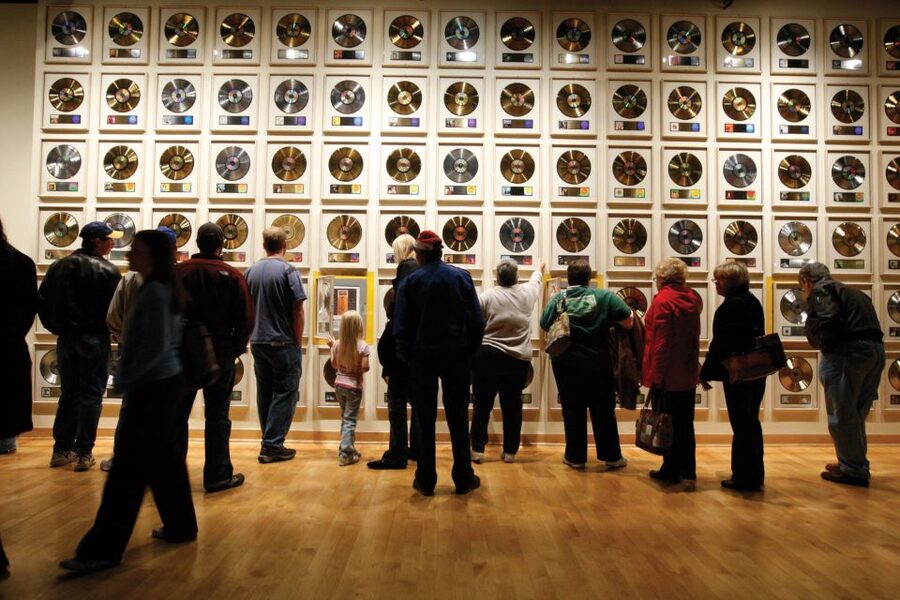
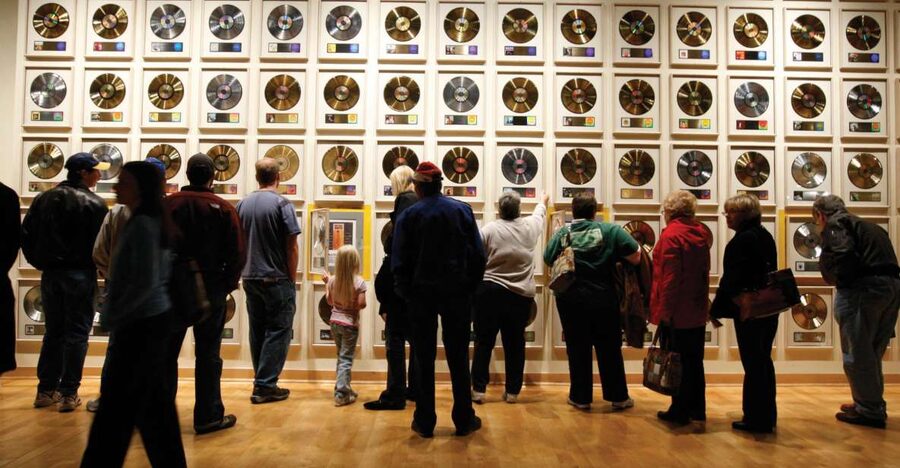
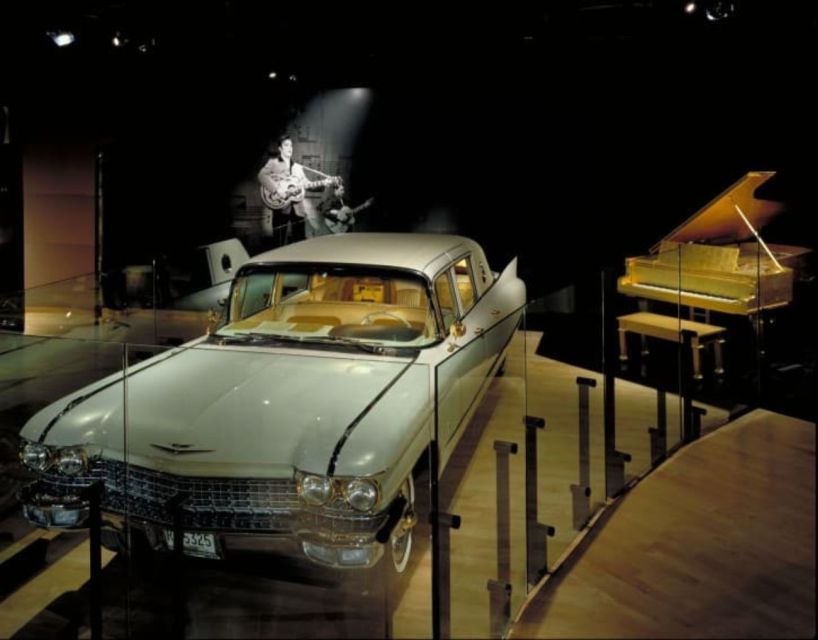
The museum’s visual displays are often the easiest way to keep younger visitors interested. Gold records create a bright, dramatic wall, while clothing and stage objects make the performers feel more present than a printed biography would.
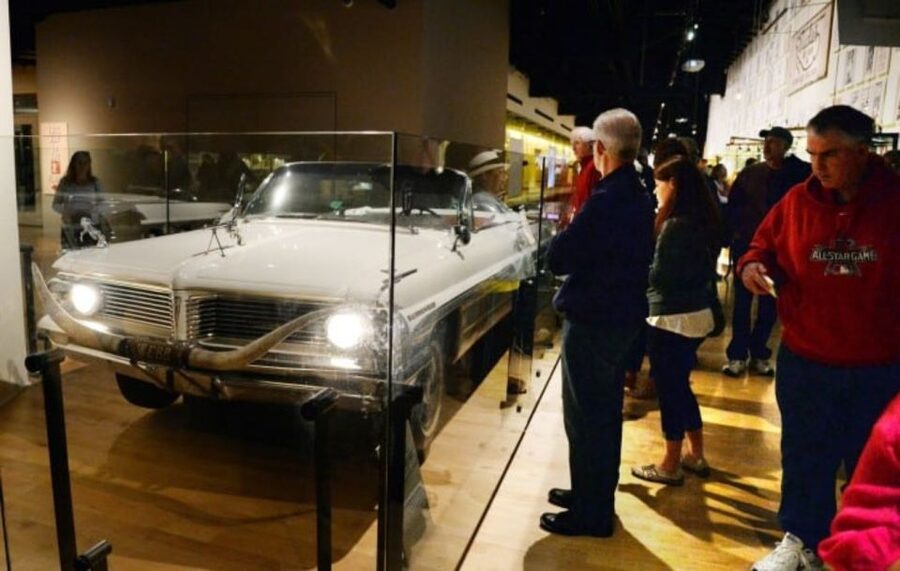
You may also find nostalgic objects that connect the music to a particular era. Cars and other large items add variety to the usual photographs and plaques. They break up the reading and give you something to photograph, although crowded galleries can make it harder to get a clear view.
The displays also show how country music has always involved presentation. Clothing is not a side issue here. Suits, gowns, hats, and stage outfits communicate the image an artist wanted to project, just as much as a recording does.
Some temporary or featured displays receive more space than others. The Luke Combs exhibit, for example, has been described as very large. That can be a plus if you are a fan, but it may feel out of balance if you came mainly to see a broad survey of many artists.
A different sort of day out, same corner of Nashville:
- Nashville Hop On Hop Off Trolley Tour
★ 4.5 · 5,643 reviews - Nashville: Food Tour with 5+ Tastings of Local Delicacies
★ 5.0 · 2,704 reviews - Best of Nashville City Sightseeing Tour on Double Decker Bus
★ 4.5 · 2,601 reviews - Explore the City of Nashville Sightseeing Tour by Golf Cart
★ 5.0 · 2,544 reviews
Listening stations and films add the missing sound
A museum about music can feel strangely quiet if it relies only on objects. The listening stations help solve that problem. Use them when you want to connect an instrument, photograph, or artist display with the sound that made the person famous.
The films are worth planning around. One long film presents country music across the years, and it is easy to leave before it finishes if you are trying to move quickly. I would stay for the full showing when possible. Film gives you performance footage and voices that a case label cannot provide.
Archival footage is especially useful for showing the difference between a studio recording and a live performer. It also gives the museum a stronger connection to Nashville’s performance culture. If you have limited time, choose at least one film and a few listening stations instead of trying to read every label.
There are handheld audio options connected with the self-guided visit. They give you another way to take in the material, particularly if you prefer listening to long blocks of text.
The Taylor Swift Education Center
The Taylor Swift Education Center is included with admission. Its purpose is more active than the standard galleries, with programs that can include instrument activities, songwriting programs, artist interviews, panel discussions, and other special programming.
Weekend programming is the main point to check. The exact activity can vary, so do not assume every program runs during every visit. If you are visiting with children, teenagers, or anyone who prefers doing something to reading display panels, this space may be a welcome change of pace.
It also broadens the museum beyond a look-back at famous careers. Playing an instrument or taking part in a songwriting activity helps you think about how songs are made, not just how they are sold and remembered.
American Currents and Hatch Show Print
Admission also includes the American Currents exhibit and the Hatch Show Print Haley Gallery. These areas add more variety to a museum day that could otherwise become heavy on photographs and text.
American Currents helps connect the museum’s larger country music story with a focused look at more recent developments. It is a useful stop if your musical interests lean toward current performers, and it gives returning visitors a reason to look for displays they may not have seen before.
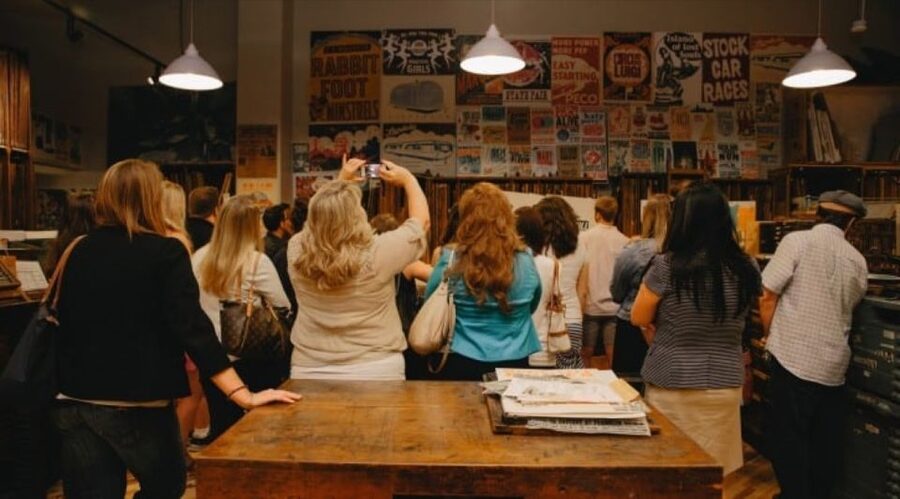
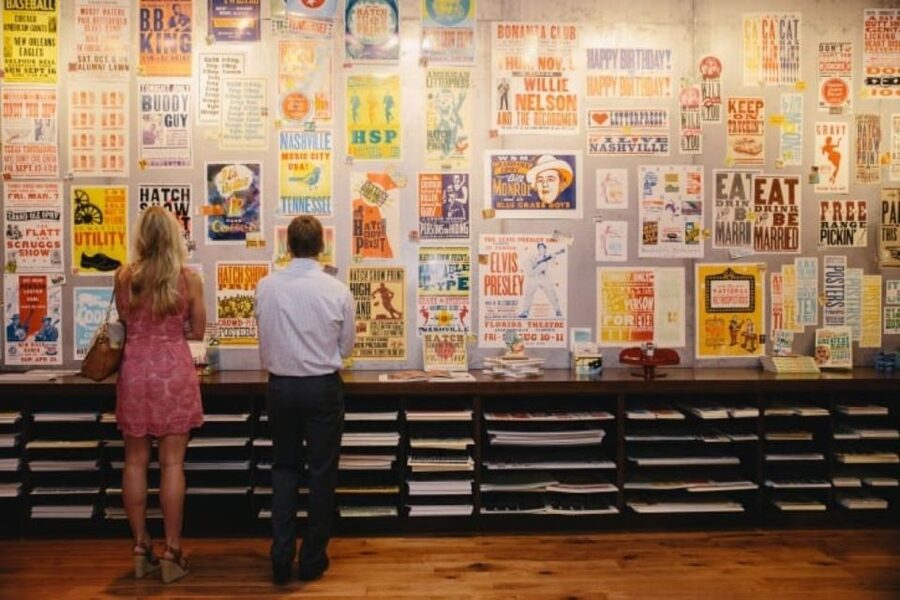
The Hatch Show Print Haley Gallery covers a different part of music culture: the printed artwork and promotional side of performances. That makes it a good companion to the costumes, instruments, and recordings elsewhere in the museum. One previous visit described Hatch as the best part of the experience, so I would not treat it as an optional afterthought.
Because these exhibits are included, the $31 admission covers more than the main historical route. The value improves if you make time for all of them instead of treating the museum as a quick stop between other Nashville sights.
Finishing in the Hall of Fame Rotunda

The walkthrough ends in the Hall of Fame Rotunda, where plaques honor artists who have received country music’s highest recognition. This is the most ceremonial space in the visit, and it feels different from the working displays and personal objects in the galleries.
Give yourself time here. The Rotunda is not simply a final room to cross on the way out. It brings the names together and gives the museum a clear emotional finish. If you have followed the displays from early performers through newer artists, the plaques show the long reach of the music and the number of careers that shaped it.
You may not recognize every name, especially if your interest is limited to current country music. That is part of the point. Take a few minutes to read unfamiliar names and consider the wider story rather than treating the room as a photo stop.
How long should you stay?

The practical answer is at least two hours, with three hours being a better target. A number of past visits have lasted two and a half hours, while others could easily have filled half a day.
Your ideal time depends on how you use the museum:
- Two hours: Make a brisk circuit, choose key displays, and see part of the film material.
- Three hours: Read more panels, use listening stations, and visit the special exhibits.
- Four hours or more: Take your time with films, temporary displays, interactive activities, and the Rotunda.
The self-guided format lets you stop before museum fatigue sets in. That is a real benefit. You can also return to a section instead of making one long, exhausting march through every room.
Is $31 a fair price?
At $31 per person, this is not a throwaway attraction, but it offers enough material to justify the cost for most music fans. You get the main museum galleries, special programming opportunities, the Taylor Swift Education Center, American Currents, Hatch Show Print Haley Gallery, and the Hall of Fame Rotunda.
The value is strongest when you allow several hours. Paying $31 for a rushed visit can feel less satisfying, especially if you skip the films and included galleries. Paying the same amount for a relaxed half-day visit makes more sense.
The self-guided arrangement also gives you control over your time. You are not paying for a short presentation and then being sent on your way. You can focus on the artists you know, discover unfamiliar names, or spend extra time with the objects that interest you most.
Free cancellation up to 24 hours before the visit and reserve now, pay later terms add useful flexibility when you are arranging a Nashville schedule. These policies are practical, but the museum’s value still depends on how much time you can give it.
Who will enjoy this museum most?
You should book if country music is a major reason for your Nashville visit. The museum covers classic and current performers, so fans of older stars and newer acts can both find familiar ground.
It also suits people who like music history, costumes, photography, and popular culture. You do not need to know every artist to appreciate the way the museum explains careers and changing styles.
Families can benefit from the interactive elements, films, and Education Center programs. Just remember that children who dislike reading may move faster through the text-heavy galleries. The chance to play an instrument or join a songwriting activity can help balance the quieter displays.
I would be more cautious if you have only a short Nashville stop or strongly dislike museums. You can see the main highlights in two hours, but the full experience asks for patience. Crowds, especially in the afternoon, may also make the visit less relaxed.
Should you book the Country Music Hall of Fame?
Book it if you want more than a quick photo outside a famous Nashville attraction. The museum gives you a broad look at country music through its songs, performers, clothes, instruments, films, and personal objects. The self-guided design is a strong choice for anyone who wants to linger over Elvis, Patsy Cline, Luke Combs, or another favorite.
I would reserve a morning or early afternoon time and protect at least three hours. Leave room for the special galleries, a complete film, and the Hall of Fame Rotunda. If your schedule allows only a fast visit, you will still see plenty, but the $31 price makes the most sense when you let the museum unfold at its own pace.
FAQ
How much does admission to the Country Music Hall of Fame cost?
The listed price is $31 per person.
How long is the museum visit valid?
The ticket is valid for one day from the first activation.
Is the visit guided?
No. This is a self-guided museum visit, so you choose your route and pace.
What is included with admission?
Admission includes the main museum galleries, special programming opportunities, the Taylor Swift Education Center, the American Currents exhibit, the Hatch Show Print Haley Gallery, and the Hall of Fame Rotunda.
Where do I meet for the visit?
The meeting point is inside the Country Music Hall of Fame at the Information Desk, 222 Rep. John Lewis Way S, Nashville, Tennessee 37203.
Is the museum wheelchair accessible?
Yes. The experience is wheelchair accessible.
Can I bring food, drinks, or large bags?
No. Food, drinks, luggage, and large bags are not allowed.
Can I cancel my booking?
Yes. You can cancel up to 24 hours in advance for a full refund. You can also reserve now and pay later, which keeps your plans flexible.
More Museums in Nashville
- Country Music Hall of Fame and Museum Admission
★ 4.5 · 1,918 reviews - NYC: 9/11 Memorial & Museum Timed-Entry Ticket
★ 4.8 · 31,428 reviews - NYC: Empire State Building Tickets – Observatory & Museum
★ 4.7 · 25,757 reviews - New York City: American Museum of Natural History Ticket
★ 4.5 · 15,447 reviews
Just added around Nashville
- Nashville: Line Dancing Class with Keepsake Video★ 4.9 · 773 reviews
- Nashville: Hop-on Hop-off Trolley Tour★ 4.6 · 1,634 reviews
- Nashville: Homes of the Stars Narrated Bus Tour★ 4.6 · 531 reviews
- Nashville: Grand Ole Opry Show Ticket★ 4.8 · 1,041 reviews
- Nashville: Music City Nighttime Trolley Tour★ 4.6 · 490 reviews
- Nashville: Double-Decker City Tour★ 4.6 · 738 reviews
- Nashville: Grand Ole Opry Backstage Tour★ 4.8 · 433 reviews
- Discover Nashville: Fully Narrated Half-Day City Tour★ 4.8 · 367 reviews
Nashville Tours, compared.


Food Tour with 5+ Tastings of Local Delicacies
Read our review →
Best of Nashville City Sightseeing Tour on Double Decker Bus
Read our review →
Explore the City of Nashville Sightseeing Tour by Golf Cart
Read our review →

Downtown Nashville Public Party Tractor 21+ Only
Read our review →
Discover Nashville City Tour with Entry to Ryman & Country Music Hall of Fame
Read our review →
Grand Ole Opry House Guided Backstage Tour in Nashville
Read our review →Browse the lists this tour appears in