

Reviewed · CHARLESTON
Charleston historical walking tour with a Professor of History at The Citadel
Charleston’s past comes alive street by street on this small-group walking tour led by Eric Lager, Ph.D., a history professor at The Citadel. In roughly three hours, you move from colonial buildings and churchyards to the harbor, where Fort Sumter sits across the water. This is a serious history lesson, but Lager keeps it conversational, funny, and open to questions.
I especially like the group limit of 12, which makes it easy to hear and speak with the guide. I also like the broad sweep, from the city’s early years and French Huguenot community to the Revolution and Civil War. The main drawback is the pace: you cover many sites and a lot of material on foot, so this suits you best if you enjoy concentrated history and have moderate physical fitness.
Key points to know before you book
- A true history-focused tour: Eric Lager brings academic training in American and European nineteenth-century history to Charleston’s streets.
- No more than 12 people: The small group leaves room for questions and personal conversation.
- Three hours of walking: You cover the historic center from Meeting Street to the Battery.
- The Battery is the finale: You see Fort Sumter from Charleston Harbor, but do not take a boat to the fort.
- A wide range of subjects: Expect architecture, religion, politics, war, public buildings, and the people tied to them.
- Best early in your stay: The route gives you useful context for choosing what to see afterward.
Why this Charleston walk feels different
Many city walks give you a quick date, a famous name, and a photo stop. This one is built around context. A building is not just an old facade. It becomes part of a story about government, religion, trade, war, or Charleston’s place in American politics.
Lager’s background matters most when you ask a side question. The supplied details describe a guide who can move from local buildings to larger American and European events without losing the thread. He also makes a point of speaking with people in the group as you walk, which helps the tour feel like a discussion rather than a lecture delivered over your head.
The route is especially useful if you want more than the postcard version of Charleston. You will hear about the American Revolution and the Civil War, but also about French Huguenots, Greek Revival architecture, public institutions, and the people connected with specific buildings. The emphasis is on understanding how the city developed over roughly four centuries.
That depth has a trade-off. Three hours is a long time to walk and listen, especially in heat, rain, or cold. The tour has gone ahead in rain, but it requires good weather and may be canceled if conditions are poor. Wear comfortable shoes, bring water, and arrive ready to stay on your feet.
More History Tours in Charleston
- Charleston’s Old South Carriage Historic Horse & Carriage Tour
★ 5.0 · 10,023 reviews - Historic Charleston Guided Sightseeing Walking Tour
★ 5.0 · 6,216 reviews - Charleston Horse-Drawn Carriage Tour: Explore Historic Charleston
★ 5.0 · 3,561 reviews
Starting at the Mills House and Dock Street Theater
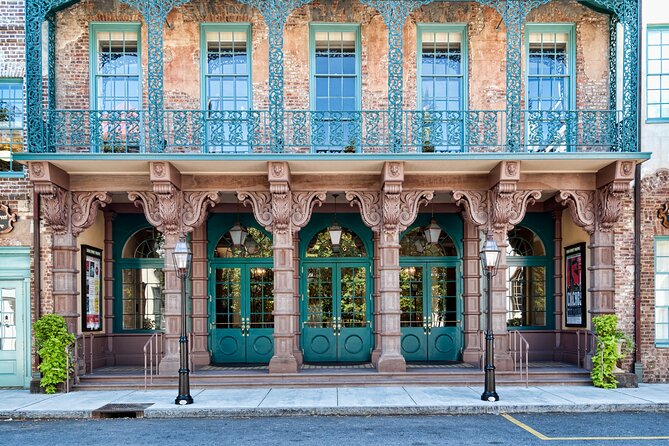
The meeting point is at 108 Meeting Street, near the historic Mills House Charleston. The hotel provides a fitting opening because it played a role during the early part of the Civil War. You begin with a building that looks like part of Charleston’s gracious historic center, then connect it to the political and military crisis that divided the country.
From there, the walk reaches Dock Street Theater. This stop brings theater and local personalities into the story, including the first theater built in North America and the colorful people associated with its past. It is a good early reminder that Charleston’s history is not limited to battles and statesmen.
The theater stop lasts about 10 minutes, as does the Mills House stop. That gives you enough time for explanation and questions, but not for an interior visit or a long pause. Think of the walk as a moving classroom, with buildings serving as evidence.
The Pink House, Washington Square, and Charleston’s public life
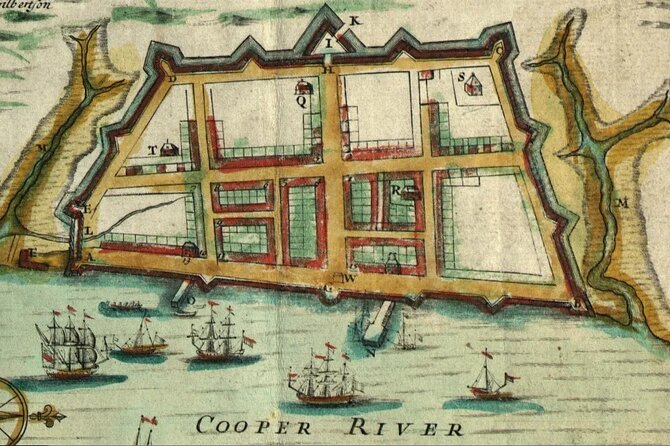
The Pink House Gallery is a short stop, about five minutes, but the building earns attention. Dating to around 1712, it is among Charleston’s oldest structures. Its small scale and age make it a useful counterpoint to the grander churches and civic buildings farther along the route.
At Washington Square, the tour slows down for about 15 minutes. The square contains several monuments and gives Lager room to connect individual memorials with the city’s public memory. I like this kind of stop because it helps you notice how Charleston chooses to honor its past, not just how old its buildings are.
Charleston City Hall follows. The building’s earlier lives as a meat market and bank reveal how civic spaces change as a city grows. It is an architectural stop, but also a lesson in everyday urban life. Government buildings did not always begin as grand government buildings.
The Charleston County Courthouse adds another layer. This site was once the old South Carolina statehouse, so the stop takes you beyond architecture and into the machinery of government. Together, City Hall and the courthouse show how Charleston’s political center developed in practical, sometimes unexpected spaces.
St. Michael’s Church and the city’s religious story
St. Michael’s Church is one of the major stops. Completed in 1761, it is Charleston’s oldest church edifice. The tour uses the church to explore both the building itself and the religious forces that shaped the city.
You do not need to be an architecture specialist to get something from this stop. Lager’s approach, as described, connects buildings to the people and institutions that used them. That makes the church more than a quick photograph. It becomes part of the story of Charleston before and after the Revolution.
This is also one of the points where the tour’s academic character becomes clear. If you want to ask about architecture, religion, politics, or the changing city, the small group gives you a fair chance to do so. The guide is not simply moving a large crowd along a fixed script.
More Walking Tours in Charleston
- Ghosts of Charleston Night-Time Walking Tour with Unitarian Church Graveyard
★ 4.5 · 2,835 reviews - Hidden Alleyways and Historic Sites Small-Group Walking Tour
★ 5.0 · 2,335 reviews - Highlights of Charleston Guided Walking Tour
★ 5.0 · 2,206 reviews - Charleston Haunted Booze and Boos Ghost Walking Tour
★ 5.0 · 1,569 reviews
George Washington, the Old Exchange, and French Huguenot Charleston
The Heyward-Washington House is linked to George Washington’s 1791 visit to Charleston. You see where he stayed and place that visit within the city’s early national story. Admission to the house is not included, so the tour focuses on the exterior and its historical setting rather than a house visit.
Next comes the Old Exchange and Provost Dungeon. This was the last public building built by the British in North America, and it is also tied to the ratification of the Constitution in 1788. Those two details alone show why Charleston can pack several different eras into a short walk.
Admission to the Old Exchange is not included either. That is worth noting if you hope to tour interiors during your visit. You can still understand the site from the outside, but you will need to arrange and pay for a separate entry if you want to explore the building and dungeon more fully.
The French Huguenot Church shifts the focus to Charleston’s immigrant and religious communities. You learn about French Huguenots in Charleston and see the first church built in the Gothic Revival style. It is another useful reminder that the city’s identity was shaped by several European traditions, not one simple colonial culture.
The French Quarter at walking speed
The French Quarter receives about 15 minutes, enough time to take in its streets and buildings while the guide explains why the area matters. This is the part of the route where many people will want to stop for photographs, but the value is in learning to read the setting.
Look for the way religious, residential, commercial, and civic uses sit close together. Charleston’s historic center is compact, and this tour takes advantage of that closeness. You are not being driven from sight to sight. You are walking through the connections between them.
The French Quarter is also where the tour can feel most like a standard sightseeing walk, since it is one of Charleston’s best-known areas. Lager’s added value comes from moving beyond appearance. The buildings are attractive, but the surrounding stories give them weight.
Hibernian Hall and the road to secession
Hibernian Hall brings the tour into the political tensions that helped lead to disunion. You hear about the building where the seeds of disunion were sown, along with its connection to Greek Revival architecture.
This is one of the stops where Charleston’s polished streets meet the harder questions of American history. A good guide must explain not only what happened, but how ideas about power, region, government, and identity developed. The tour’s focus on the Revolution and Civil War makes Hibernian Hall an important bridge between those periods.
Admission to Hibernian Hall is not included. As with the Heyward-Washington House and Old Exchange, the main experience is the guide’s explanation and the exterior setting. If an interior visit is important to you, plan additional time and entrance costs outside the tour.
Finishing at the Battery with Fort Sumter in view
The final stop is the Battery at 39 East Battery, near Charleston’s Rainbow Row area. The walk ends beside Charleston Harbor with a view toward Fort Sumter National Monument, where the first shots of the Civil War were fired.
This is not a boat excursion. You do not go out to Fort Sumter. Instead, Lager points it out from the Battery and explains its place in the opening of the Civil War. That distinction matters when you book. If you want to walk inside the fort, you need a separate visit.
Ending at the Battery works well because it brings together several themes from the route: Charleston’s harbor, defense, commerce, politics, and war. It also leaves you in a useful part of the city for continuing on foot. The end point is near Rainbow Row, so you can keep exploring the historic district after the tour.
What three hours and $40 buy you
At $40 per person, this is a strong value if you want a serious introduction to Charleston rather than a short orientation. You are paying for about three hours with a guide who has a Ph.D. and teaches history at The Citadel, plus a route that covers more than a dozen important sites.
The value is not in included attractions. Most stops are exterior explanations, and several admission tickets are not included. The value is the connection between those places. A self-guided walk can show you the same streets, but it will not necessarily explain why a former meat market became City Hall, how French Huguenots fit into Charleston’s story, or why the Battery matters to the Civil War.
The small group also changes the calculation. With a maximum of 12 people, you are less likely to lose the guide’s voice in a crowd, and you have more room to ask questions. People who enjoy discussion will get more from this format than people who prefer to wander quietly and take photographs.
The tour is offered in English and includes fees and taxes. Bottled water and private transportation are not included. The walk starts and ends in central Charleston, so you should plan your own way to Meeting Street and wear shoes suited to several hours outdoors.
Who will enjoy this walk most
I would choose this tour for a first or second day in Charleston if history is a major reason for your visit. It gives you a framework for the city, then helps you decide which buildings, museums, churches, and neighborhoods deserve more of your time.
It is a particularly good fit for:
- People who want more than basic dates and famous names
- Architecture fans who like buildings explained through their original uses
- Civil War and Revolutionary War history fans
- Visitors who value questions and conversation
- Small groups, couples, and solo visitors comfortable joining others
- Anyone able to walk for about three hours at a moderate level of fitness
I would think twice if you want frequent indoor breaks, a relaxed pace, or a tour built mainly around food, shopping, or ghost stories. The content is dense. The guide may cover 400 years in one outing, so you should expect a lot of names, events, and connections.
The experience also suits people who enjoy an academic guide without wanting a stiff classroom. The tone is described as friendly, funny, and personal, but the content remains detailed. That balance is unusual and is one of the main reasons to choose this walk over a broad, lighter sightseeing tour.
Practical advice for a better experience
Book ahead if your schedule is fixed. This tour is commonly reserved around 22 days before the date, which suggests that popular departures can fill before your trip.
Start with water, even though bottled water is not provided. Charleston weather can make a three-hour walk feel longer than the clock suggests. Comfortable shoes are essential, and a rain plan is sensible because the experience depends on good weather.
Use the guide’s question time. The small group is one of the best features, so do not hesitate to ask about a building, date, person, or connection that catches your attention. The guide’s strength is not only delivering prepared material, but responding to detailed questions.
If you want to enter the Heyward-Washington House, Old Exchange, or Hibernian Hall, set aside separate time and money. The walking tour gives you the outside context, while admission to some sites is not included.
Free cancellation is available up to 24 hours before the start time. Within 24 hours, the amount paid is not refunded, and changes are not accepted. If poor weather cancels the tour, you are offered another date or a full refund.
Should you book Charleston History Walk by Eric Lager?
Book it if you want Charleston explained by someone with serious academic training, and if you are happy to spend three hours on foot. The combination of a 12-person limit, a central route, and a guide who welcomes questions gives you more personal contact than a large group tour.
The strongest reason to go is the depth. You will see the French Quarter, St. Michael’s Church, the Old Exchange, Hibernian Hall, and the Battery, but the real payoff is learning how those places connect. Skip it only if you prefer a short, low-information orientation or need a mostly indoor activity.
For history buffs, architecture fans, and curious first-time visitors, this $40 walk is an efficient way to get your bearings and understand why Charleston’s streets matter.
FAQ
How long is the Charleston historical walking tour?
The tour lasts approximately three hours.
Where does the tour begin?
It begins at 108 Meeting Street, Charleston, South Carolina 29401.
Where does the tour end?
It ends at 39 East Battery, near the Rainbow Row area of Charleston.
How many people can join the tour?
The group is limited to a maximum of 12 people.
Who leads the tour?
The tour is led by Eric Lager, Ph.D., a history professor at The Citadel.
Is Fort Sumter included as a boat visit?
No. You view Fort Sumter from the Battery on Charleston Harbor. The tour does not travel out to the fort.
Are entrance tickets included?
All fees and taxes are included, but admission is not included for the Heyward-Washington House, Old Exchange and Provost Dungeon, and Hibernian Hall.
Is the tour offered in English?
Yes. The tour is offered in English.
Is bottled water provided?
No. Bottled water is not included, so you should bring your own.
What happens if bad weather cancels the tour?
You are offered a different date or a full refund if the experience is canceled because of poor weather. You can also cancel for a full refund up to 24 hours before the start time.
Just added around Charleston
- Charleston Ghosts of Liberty Guided Walking Tour★ 4.5 · 473 reviews
- Charleston’s Best Highlights: History, Culture & Architecture★ 5.0 · 422 reviews
- Charleston Harbor Sunset Cruise★ 5.0 · 905 reviews
- Undiscovered Charleston: Half Day Food, Wine & History Tour with Cooking Class★ 5.0 · 948 reviews
- Private Daytime Horse-Drawn Carriage Tour of Charleston★ 5.0 · 340 reviews
- Afternoon Schooner Sightseeing Dolphin Cruise on Charleston Harbor★ 4.5 · 620 reviews
- 2-Hour Guided Kayak Eco Tour in Charleston★ 5.0 · 954 reviews
- Savor the Flavors of Charleston Walking Food Tour★ 4.5 · 881 reviews
Charleston Tours, compared.

Charleston’s Old South Carriage Historic Horse & Carriage Tour
Read our review →
Historic Charleston Guided Sightseeing Walking Tour
Read our review →
Haunted Evening Horse and Carriage Tour of Charleston
Read our review →
Charleston Horse-Drawn Carriage Tour: Explore Historic Charleston
Read our review →
Fort Sumter Admission and Self-Guided Tour with Roundtrip Ferry
Read our review →
Fort Sumter Entry Ticket with Roundtrip Ferry
Read our review →
Ghosts of Charleston Night-Time Walking Tour with Unitarian Church Graveyard
Read our review →
Charleston Harbor History Day-Time or Sunset Boat Cruise
Read our review →Browse the lists this tour appears in