
Reviewed · CHARLESTON
Charleston History Tour /
Charleston’s historic center is best understood on foot, where a single short walk can connect colonial churches, harbor defenses, colorful row houses, and the city’s Gullah story. This two-hour tour covers that compact core, beginning at 80 Broad Street and returning there after stops at the Dock Street Theater, St. Michael’s Church, Rainbow Row, the Battery, and the French Huguenot Church. It also includes a historic site tied to the ratification of the United States Constitution.
I like the small maximum group of 10, which gives the guide room to answer questions and point out details you could miss alone. I also like the mix of architecture, military history, civic history, and Gullah culture, rather than a walk that focuses only on pretty buildings. The main caution is that it is a walking tour with a moderate fitness requirement, and one isolated booking problem involved a guide falling ill without being able to contact the group.
Key points at a glance

- Two hours through Charleston’s old center: The route links several major sights without taking up an entire morning or afternoon.
- A useful mix of subjects: Expect stories about the Constitution, military events, architecture, Charleston’s development, and the Gullah people.
- Six small-group stops: The group limit is 10, a good size for a conversational walk.
- No extra admission payments: The listed sites are included, while food and drinks are not.
- Strong overall satisfaction: The experience has a 4.9 rating from 388 reviews, with 98 percent recommending it.
- Weather and timing matter: The tour operates Monday through Saturday, requires suitable weather, and allows free cancellation up to 24 hours before departure.
Why this two-hour Charleston walk works
Charleston can look easy to cover on a map, but its meaning is in the details. A church steeple, a row of pastel houses, and a seawall each tell a different part of the city’s story. A guide helps connect those pieces, especially when you have limited time.
This tour is a good fit if you want a broad first look at Charleston rather than a single-theme walk. You get major architecture, public landmarks, harbor views, and cultural background in about two hours. That leaves you time to return to a favorite area later, visit another museum, or continue exploring on your own.
The small group size is important. With no more than 10 people, you should have a better chance of hearing the guide clearly and asking questions than you would on a large coach-style outing. Joyce, one guide named in the tour feedback, was praised for covering city development, military facts, architecture, and cultural subjects with an easy, personal manner.
The pace is not described as strenuous, but you should be comfortable walking for about two hours. Wear practical shoes and plan around Charleston’s weather. The experience can be canceled if conditions are poor, with a different date or a full refund offered.
More History Tours in Charleston
- Charleston’s Old South Carriage Historic Horse & Carriage Tour
★ 5.0 · 10,023 reviews - Historic Charleston Guided Sightseeing Walking Tour
★ 5.0 · 6,216 reviews - Charleston Horse-Drawn Carriage Tour: Explore Historic Charleston
★ 5.0 · 3,561 reviews
Starting at Broad Street and Charleston’s civic story
The meeting point is 80 Broad Street, and the tour ends back there. That simple out-and-back arrangement makes the activity easy to fit into a day, especially if you want to keep your morning or afternoon plans nearby.
One part of the route focuses on a building dating to 1771 that was home to the ratification of the United States Constitution. The supplied details do not name the building, so your guide will provide the exact context during the walk. This is an especially useful stop for anyone interested in the early United States, since it connects Charleston’s local streets with the formation of the national government.
The value here is not just seeing an old structure. You are being shown how Charleston’s civic life was tied to major national events. Ask the guide how the building was used and why it mattered at the time. That kind of question can turn a quick exterior stop into a clearer lesson in American political history.
Dock Street Theater and Charleston’s stage tradition
The first named stop is the Dock Street Theater, an ornate playhouse with elegant woodwork and a courtyard. The building is associated with the early 19th century, around 1810, and the tour allows about five minutes here.
Five minutes is enough for a focused introduction, not a full theater visit. You can expect to look at the exterior and hear why the building matters to Charleston’s cultural life. The woodwork and courtyard give the stop visual appeal, but the larger point is that Charleston was not only a port and political center. It also supported theater, entertainment, and public social life.
Because this is a short stop, I would not book the tour expecting an extended interior examination. The tour description lists admission as included, and all listed sites require no extra payment, but the exact amount of time inside each place can depend on access and the guide’s pacing. Treat the Dock Street Theater as a concise historical introduction.
St. Michael’s Church and the city’s oldest religious building

At St. Michael’s Church, the guide introduces what is described as Charleston’s oldest religious building. The church dates to around 1764, and the planned stop is about five minutes.
This is the kind of place where a short explanation can add a lot. The age of the building places it in Charleston’s colonial period, before the American Revolution. Its presence among later streets and buildings helps you see how the city grew around its earliest public institutions.
The church is also a useful architectural pause. You can compare its formal design with the theatrical decoration of the Dock Street Theater and the colorful homes later on the route. If you want a detailed religious or architectural study, you may need more time than this tour provides. If you want a clear introduction to Charleston’s old civic core, five minutes is a practical length.
A different sort of day out, same corner of Charleston:
- Haunted Evening Horse and Carriage Tour of Charleston
★ 4.5 · 3,678 reviews - Fort Sumter Admission and Self-Guided Tour with Roundtrip Ferry
★ 4.5 · 3,343 reviews - Charleston: Fort Sumter Entry Ticket with Roundtrip Ferry
★ 4.7 · 2,879 reviews - Ghosts of Charleston Night-Time Walking Tour with Unitarian Church Graveyard
★ 4.5 · 2,835 reviews
Rainbow Row and Charleston’s colorful waterfront edge
Rainbow Row is one of Charleston’s most recognizable sights. It consists of nine attached buildings, and all but one predate the American Revolution. The tour allocates about five minutes here.
The pastel colors make this a natural photo stop, but the older story is more useful than the picture alone. The attached buildings show a different side of Charleston’s urban form, where commercial and residential structures were packed closely together. Their age also gives you a sense of how much of the old city predates the United States itself.
This stop can be brief because the visual impression is immediate. Listen for the explanation of how the buildings fit into the city’s development rather than treating Rainbow Row as only a backdrop for photographs. The route’s broader value comes from placing these houses beside churches, theaters, and defensive works, giving you several ways to read the city.
The Battery and White Point Gardens by Charleston Harbor
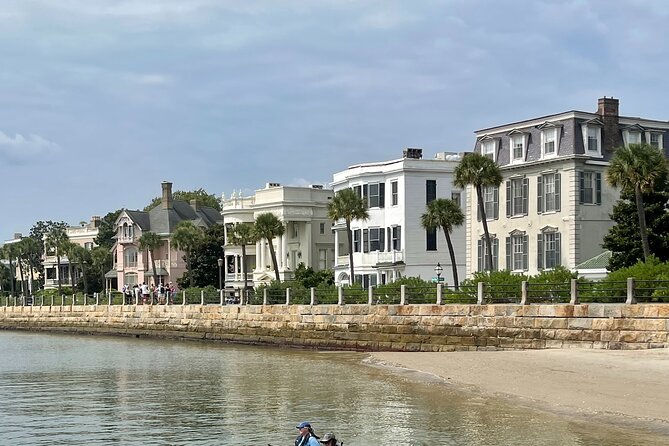
The Battery is a defensive seawall and promenade along Charleston Harbor, with White Point Gardens forming part of the stop. The tour spends about five minutes here.
This is where Charleston’s position on the water becomes clear. Earlier stops focus on buildings and streets. Here, you get the city’s defensive edge and a wider view of the harbor. The guide may connect the seawall with military history, one of the subjects specifically covered during the walk.
Do not expect a long waterfront pause. Five minutes is enough to orient you, take in the setting, and hear the key explanation, but not enough for a relaxed stroll along the entire promenade. If the Battery appeals to you, return later when you can set your own pace.
White Point Gardens also gives the tour a change of rhythm. After several close architectural stops, the open waterfront helps you understand why Charleston developed where it did. It is a small but important part of the route.
The French Huguenot Church and Charleston’s faith communities
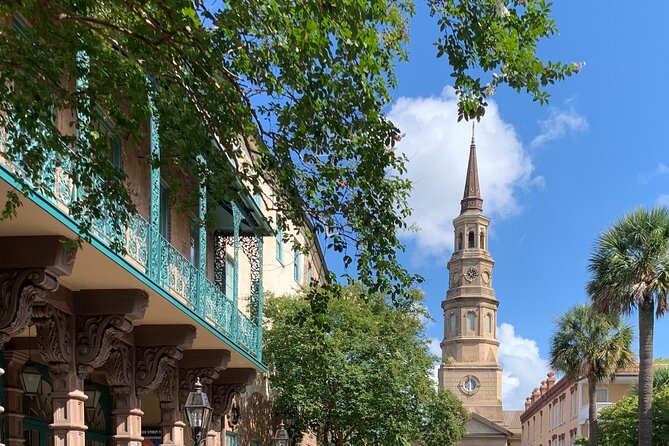
The French Huguenot Church dates to 1844 and is described as the oldest Gothic Revival church in South Carolina. It is also the only independent Huguenot church in the country. The planned stop lasts about five minutes.
This is one of the tour’s more distinctive locations because it adds a specific religious community to the city’s story. The church is not simply another old building. Its connection to French Huguenot worship gives the guide a chance to explain how different communities shaped Charleston.
The Gothic Revival design also broadens the architectural range of the walk. You see colonial-era buildings, early 19th-century theater design, colorful attached houses, and a later Gothic Revival church in one compact route.
Again, five minutes means a concise visit. I would think of the stop as a strong introduction rather than a full church tour. If the church’s history catches your interest, note its location and consider returning independently if access allows.
Learning about Charleston’s Gullah culture
The tour also introduces you to the Gullah people of Charleston, an essential part of understanding the city’s cultural history. The supplied details do not name a separate stop for this subject, so it may be discussed while walking between the main landmarks.
That flexibility can work well. Gullah history is not limited to one building or one corner. Bringing the subject into a broader walk can help you connect Charleston’s streets and institutions with the people and traditions that shaped the region.
You may want to ask the guide to explain which parts of the route connect most directly to Gullah history. Since the tour covers several topics in two hours, this section may be brief. Still, its inclusion matters. A Charleston tour that discusses architecture and military history but leaves out Gullah culture would give you only part of the city’s story.
What the guide adds to the walk
The guide is the main difference between this experience and a self-guided stroll. The route itself is easy to follow, but dates and building names do not explain how Charleston developed or why the sites belong together.
Joyce received especially strong praise for explaining the city’s growth, military subjects, architecture, and cultural background. Her approach was described as enthusiastic and friendly, more like walking with someone showing you the city than listening to a formal lecture. That style will suit you if you prefer conversation and clear stories over a dense list of dates.
Guide quality can vary, of course, and no specific guide is guaranteed for every departure. The small group helps, since a good guide can adjust the conversation more easily when the group is limited to 10.
There is one practical concern worth noting. One booking resulted in no tour because the guide had been taken to the hospital and could not make contact. The provider apologized afterward. It appears to be an unusual emergency rather than a pattern suggested by the overall rating, but I would still keep a phone handy on the day of the tour and avoid scheduling an important timed attraction immediately afterward.
Timing, weather, and what to bring
The walk lasts about two hours and operates Monday through Saturday from 9 a.m. to 5 p.m. during the listed operating periods, March 15 through December 31 in 2025 and 2026.
You should plan for outdoor walking and changing conditions. The tour requires good weather, and a cancellation for poor weather results in either another date or a full refund. Comfortable shoes are the sensible choice, and water is worth carrying even though food and drinks are not included.
The moderate fitness requirement is the main physical note. No special accessibility details are provided, so contact the provider before booking if you have mobility needs or need to know about surfaces, rest opportunities, or interior access.
The activity uses a mobile ticket, which keeps the arrival process simple. Confirmation is sent within 48 hours of booking, subject to availability. Free cancellation is available until 24 hours before the start time. Within that final 24-hour window, cancellations and changes are not accepted for a refund.
Is the tour good value?
No tour price is provided here, so I cannot judge it against a dollar amount. I can judge what you receive for the fee: a two-hour guided walk, a limited group, several major landmarks, cultural context, and no additional admission payments at the listed sites.
That is good value if you are new to Charleston and want a clear orientation before exploring alone. It is also useful if you have only a short stay and want to cover the historic center without arranging several separate visits.
The value is less clear if you want long interior visits, extensive time at the Battery, or a specialist focus on one topic. The five-minute stops keep the route moving, but they also limit how much time you have at each location. Think of this as a well-rounded introduction, not an in-depth architectural inspection or a museum-style tour.
Who should book this Charleston walk?
I would recommend it for first-time visitors, history fans, architecture enthusiasts, and anyone who enjoys learning a city through a guide’s stories. The mix of national politics, local development, churches, theater, harbor defenses, and Gullah culture gives you a useful foundation.
It is also a good choice for solo visitors or couples who prefer a smaller group. The maximum of 10 creates a more personal setting than a large sightseeing outing.
I would hesitate if you dislike walking, need a highly detailed accessibility plan, or want guaranteed interior access at every stop. I would also avoid placing a strict appointment directly after the tour, since weather or an especially engaging discussion could affect the exact finish time.
FAQ
Where does the Charleston History Tour start?
The tour starts at 80 Broad Street, Charleston, South Carolina 29401.
Where does the tour end?
The activity ends back at the meeting point on Broad Street.
How long does the tour last?
The tour lasts approximately two hours.
What sights are included?
The route includes Dock Street Theater, St. Michael’s Church, Rainbow Row, the Battery and White Point Gardens, and the French Huguenot Church. It also covers a historic site connected with the ratification of the United States Constitution and introduces Charleston’s Gullah culture.
Are admission fees included?
Yes. The listed sites do not require additional payments. Food and drinks are not included.
Can I cancel for a full refund?
Yes, if you cancel at least 24 hours before the experience begins. Changes or cancellations made less than 24 hours before the start time are not accepted for a refund. If poor weather causes the provider to cancel, you are offered another date or a full refund.
Should you book it?
Book this tour if you want a compact, small-group introduction to Charleston with a guide who can connect its buildings to larger stories. The route is varied, the group limit is sensible, and the strong overall rating suggests a consistently good experience.
Just keep your expectations in the right place. You will see many important places, but most stops are brief. For a first look at Charleston’s historic core, especially with limited time, this is a practical choice. Afterward, return to the Battery, Rainbow Row, or the French Huguenot Church if one of those short introductions leaves you wanting more.
Just added around Charleston
- Charleston Ghosts of Liberty Guided Walking Tour★ 4.5 · 473 reviews
- Charleston’s Best Highlights: History, Culture & Architecture★ 5.0 · 422 reviews
- Charleston Harbor Sunset Cruise★ 5.0 · 905 reviews
- Undiscovered Charleston: Half Day Food, Wine & History Tour with Cooking Class★ 5.0 · 948 reviews
- 2-Hour Guided Kayak Eco Tour in Charleston★ 5.0 · 954 reviews
- Private Daytime Horse-Drawn Carriage Tour of Charleston★ 5.0 · 340 reviews
- Afternoon Schooner Sightseeing Dolphin Cruise on Charleston Harbor★ 4.5 · 620 reviews
- Savor the Flavors of Charleston Walking Food Tour★ 4.5 · 881 reviews
Charleston Tours, compared.

Charleston’s Old South Carriage Historic Horse & Carriage Tour
Read our review →
Historic Charleston Guided Sightseeing Walking Tour
Read our review →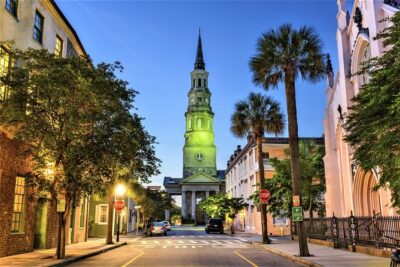
Haunted Evening Horse and Carriage Tour of Charleston
Read our review →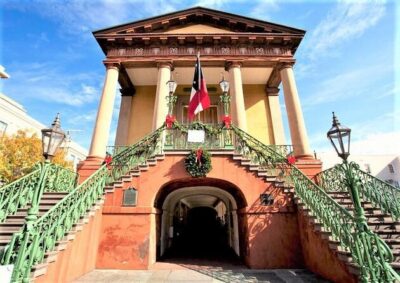
Charleston Horse-Drawn Carriage Tour: Explore Historic Charleston
Read our review →
Fort Sumter Admission and Self-Guided Tour with Roundtrip Ferry
Read our review →
Fort Sumter Entry Ticket with Roundtrip Ferry
Read our review →
Ghosts of Charleston Night-Time Walking Tour with Unitarian Church Graveyard
Read our review →
Charleston Harbor History Day-Time or Sunset Boat Cruise
Read our review →Browse the lists this tour appears in