
Reviewed · CHICAGO
Chicago: 1.5-Hour Lake and River Architecture Cruise
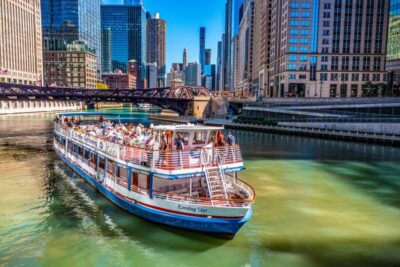
Chicago’s architectural story makes the most sense from the water. On this 90-minute river and lake cruise, you move from the tight canyon of downtown towers to the broad view of the skyline from Lake Michigan, with the Chicago Lock linking the two parts of the trip.
I like two things especially: the guides bring buildings to life with sharp stories and humor, and the route gives you both close-up river views and the best wide-angle skyline photographs. Guides such as Lucas, Kenny, Jack, Sarah, and Scotty D have been singled out for making the commentary lively rather than dry.
The main drawback is the wait and weather exposure before boarding. On a warm day, the dock can have little shade or seating, and the lake portion can feel cool or windy. Reserve ahead, arrive ready for the conditions, and treat the $44 fare as payment for a guided city tour with a moving view, not just a boat ride.
Key points to know before boarding
- The route uses both waterways: You cruise the main branch of the Chicago River, pass through the Chicago Lock, and continue onto Lake Michigan.
- The guide makes the difference: Expect live English commentary, with humor and building facts woven into Chicago’s story.
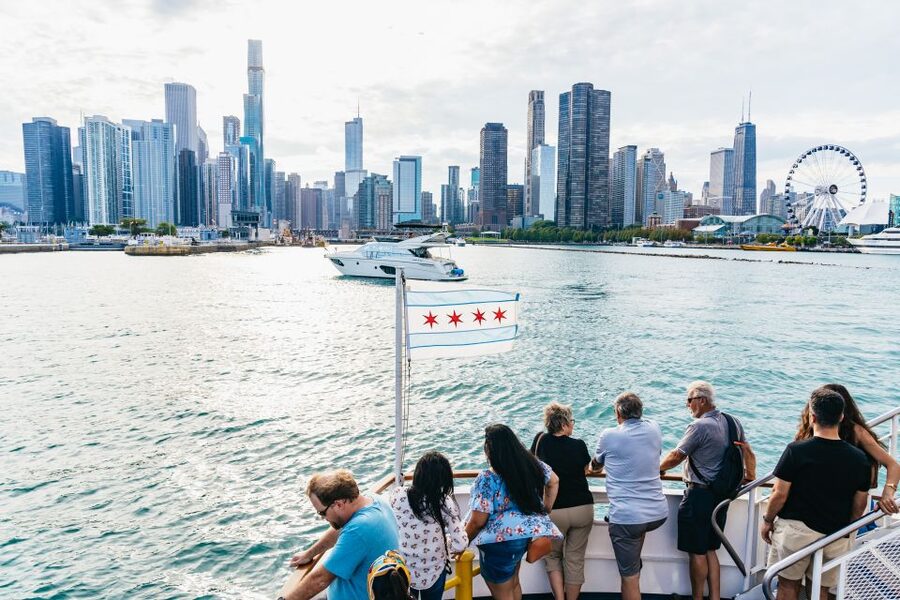
- The lake portion earns its place: From the water, you get broad views of Willis Tower, the John Hancock Building, Grant Park, and the lakefront museums.
- You can choose your setting: Sit outside for open views and photographs, or inside in climate-controlled comfort.
- The trip is family-friendly: Restrooms, diaper-changing tables, onboard snacks, and a cash bar make the 90 minutes easy to manage.
- Book ahead in busy periods: The cruise can sell out, and pre-purchase lets you skip the ticket line and protect your place.
Why this Chicago cruise is worth your time
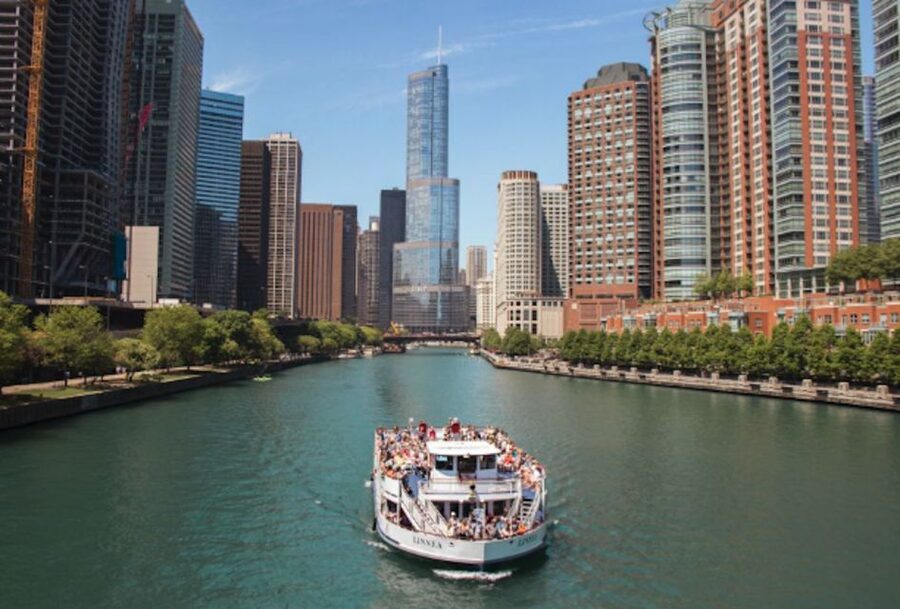
Chicago has plenty of architecture tours, but this one solves a common problem: you do not have to choose between the river and the lake. The river gives you the close view, where buildings rise almost straight from the water. Lake Michigan gives you distance, letting you see the city as a long wall of towers.
That change in scale is the heart of the experience. On the river, the guide can point out details on individual buildings, from decorative stonework to unusual shapes. On the lake, the commentary shifts toward the city’s overall form, its famous towers, parks, stadiums, and museums.
At $44, this is not the cheapest way to see Chicago. It is a fair price if you want a guide, a comfortable vessel, and two distinct viewpoints in one outing. A basic sightseeing boat may cost less, while a longer architecture cruise may offer more time on the river. This cruise makes a good middle choice for a first visit, a family group, or anyone with limited time.
More Architecture Tours in Chicago
- Chicago Architecture River Cruise
★ 5.0 · 15,756 reviews - Chicago River 90-Minute Architecture Tour
★ 4.5 · 9,629 reviews - Chicago River: 1.5-Hour Guided Architecture Cruise
★ 4.8 · 8,046 reviews
Starting near the DuSable Bridge
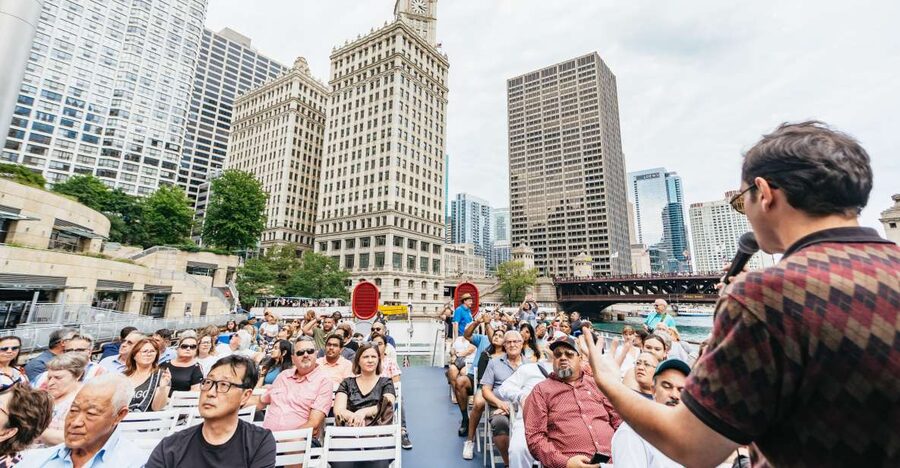
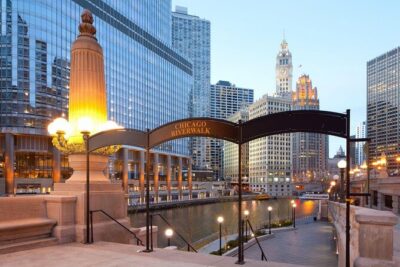
The closest dock address is 400 N Michigan Avenue, near the Wrigley Building and the Michigan Avenue bridge, also called the DuSable Bridge. Check in with the dock employee, who can direct you to the correct boarding area.
Give yourself time to find the dock. The area is busy, and the practical starting point is not simply a quiet storefront with an obvious entrance. The pre-purchased ticket helps you avoid the ticket line, but it does not remove the need to locate the boarding area and wait to board.
The cruise begins near the bridge, placing you among some of the city’s most recognizable early views. Have your camera ready, but do not spend the first minutes staring only at the screen. The guide will begin setting up the story of the river, downtown, and the buildings around you.
The Chicago River: buildings at close range
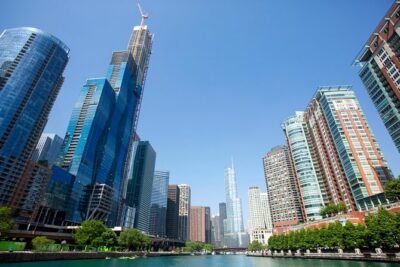
The first major part of the route follows the main branch of the Chicago River toward Wolf Point. This is where the cruise feels most like an architecture lesson. The river keeps you close to the buildings, and the boat’s low position makes the towers appear even taller.
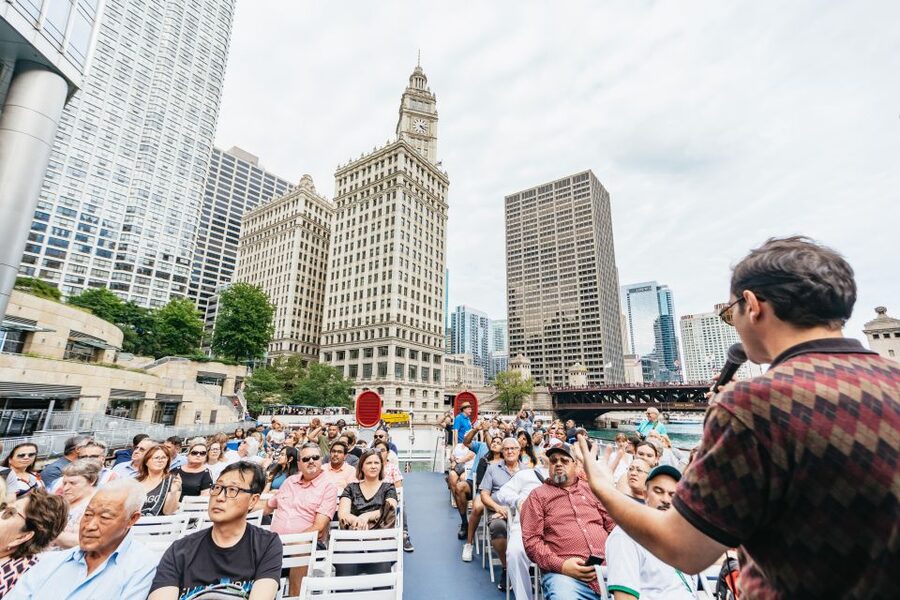
The Wrigley Building is one of the first essential sights. Its white exterior and clock tower are easy to recognize, but the river view lets you see how it helps frame the entrance to the downtown canyon.
Nearby, Tribune Tower brings another style into the picture. Its ornate Gothic-inspired design contrasts with the simpler glass and steel buildings that came later. The guide can help you read that contrast instead of treating every tower as just another tall building.
The Merchandise Mart is a different kind of landmark. Its size and block-like form show how Chicago’s commercial buildings can be as important as its skyscrapers. The structure is especially useful for understanding the scale of the river corridor.
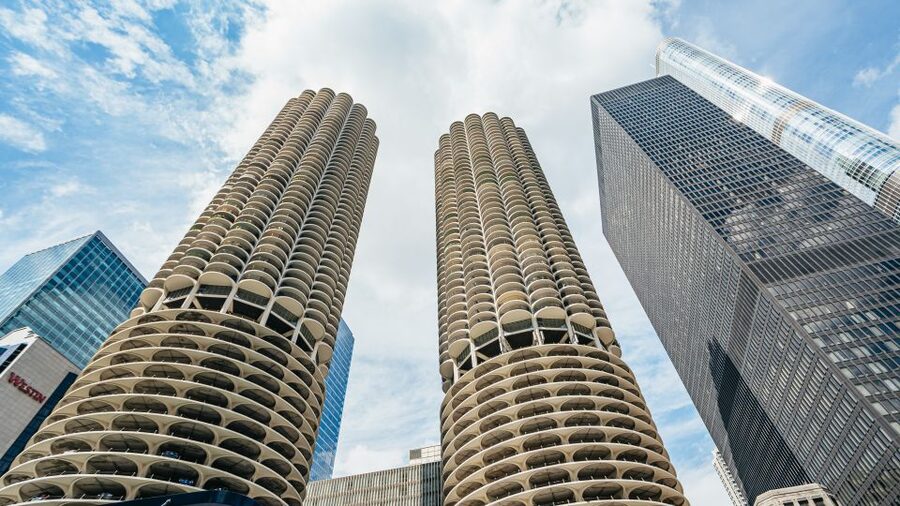
As the boat continues, you will see the Marina City towers, the round residential buildings often compared to ears of corn. Their circular forms are a welcome break from the usual rectangular tower. This is one of the easiest buildings to identify from the boat, even if you know little about Chicago architecture.
The route also passes the Aon Center, NBC Tower, and the Mies van der Rohe AMA Building. Together, they show how Chicago moved from ornate early skyscrapers to clean modernist design. You do not need an architecture background to enjoy this section. The guide’s job is to explain why the shapes, materials, and dates matter.
From Aqua to Wolf Point
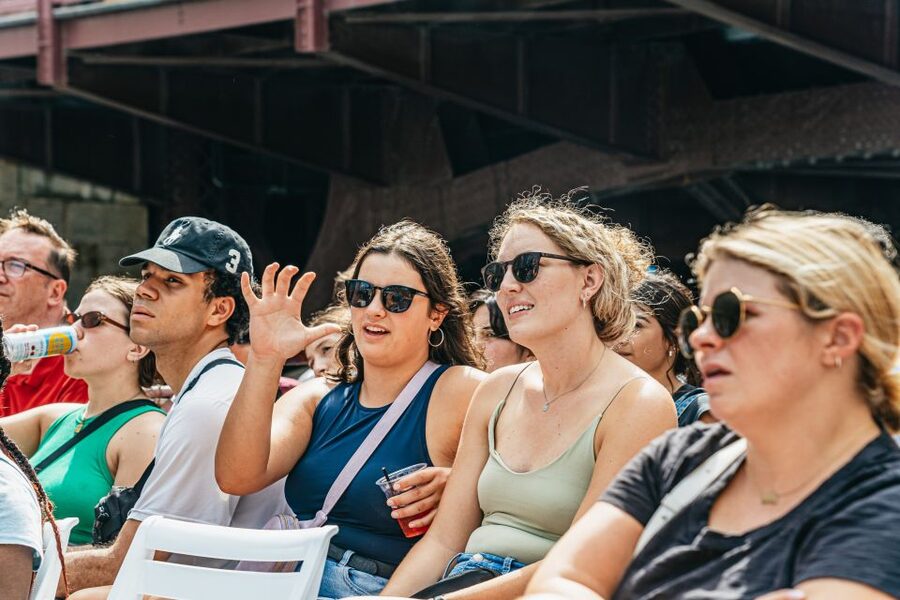
Aqua at Lakeshore East adds a more recent chapter. Its rippling balconies give the exterior a changing outline, especially when seen from the river. It is a good example of a modern building that uses its shape, not just its height, to get attention.
The route reaches Wolf Point before returning toward the lake. This is a useful point in the trip because you see the river corridor from another direction on the way back. Buildings that seemed familiar on the outbound leg can look different when the boat turns around, and the guide has a second chance to point out details you missed.
The tour focuses on the main branch rather than spending a long time on the north and south branches. That matters when you compare this experience with a dedicated river-only architecture cruise. You see many major buildings, but the route is designed to add the lake and skyline views, not to cover every river branch.
More Boat Tours in Chicago
- Chicago Architecture Center River Cruise aboard First Lady
★ 5.0 · 5,536 reviews - Chicago: Architecture River Cruise Skip-the-Ticket Line
★ 4.8 · 4,325 reviews - Chicago: 45-Minute Family-Friendly Architecture River Cruise
★ 4.7 · 2,304 reviews - Chicago River 90-Minute Architecture Boat Tour
★ 5.0 · 1,635 reviews
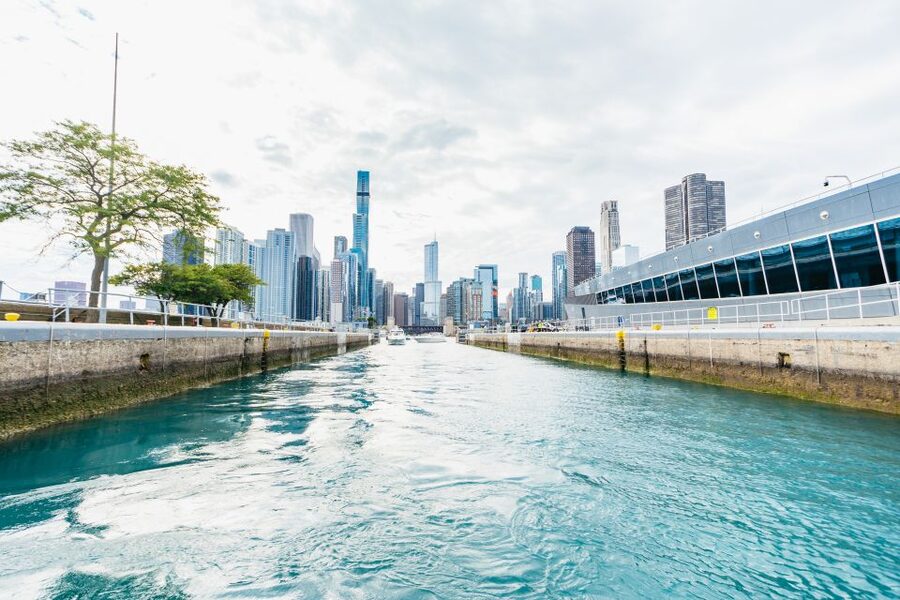
The Chicago Lock is the unusual part

The transition between river and lake is more than a change in scenery. The boat passes through the Chicago Lock, which links the Chicago River with Lake Michigan. This practical piece of water engineering becomes one of the most memorable parts of the cruise.
The timing is not always exact. The cruise usually lasts about 90 minutes, but a busy lock can make the trip run slightly longer in high summer. That is worth knowing if you have a dinner reservation or another timed activity afterward.
The lock also gives the cruise a sense of movement that a simple loop on one waterway cannot provide. You begin among tall buildings, pass through a working connection between the river and lake, and then emerge into a much wider view.
Lake Michigan opens up the city
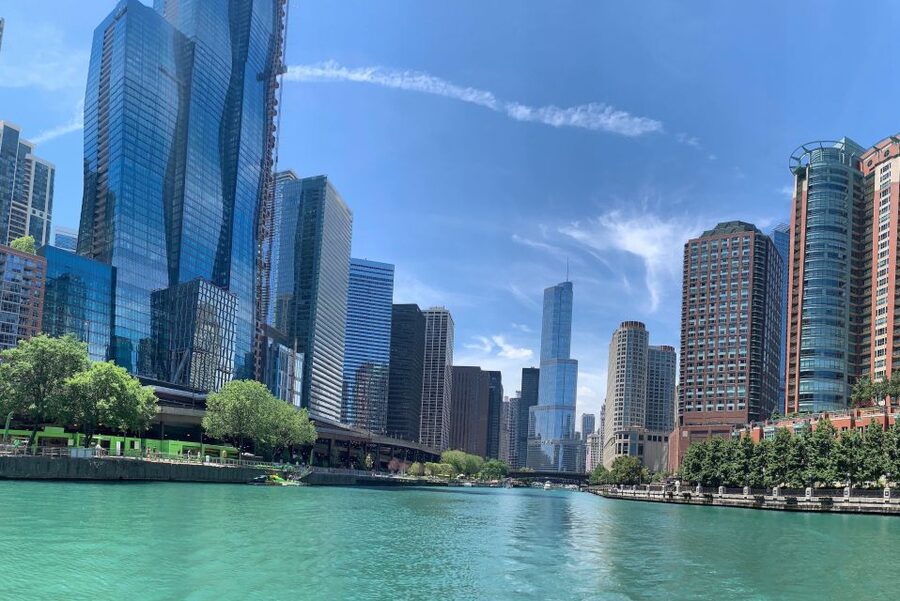
Once the boat reaches Lake Michigan, Chicago changes shape. The river walls no longer fill your view. Instead, you see the skyline from offshore, with enough distance to take in its height, gaps, and changing architectural styles.
This is the best section for a skyline photograph. The Willis Tower, formerly known as the Sears Tower, is easy to pick out. The John Hancock Building, now commonly associated with 360 Chicago, gives the northern part of the skyline a strong vertical marker.
You also get views toward Navy Pier, one of Chicago’s most recognizable lakefront landmarks. From the boat, it forms a useful point of reference between the downtown towers and the open water.
The lake can be calmer or rougher depending on the day. A clear, sunny morning offers crisp views and strong photographs, while a cloudy or lightly rainy trip can still work well if you have a jacket and a protected place to sit. One outing continued through a rough-weather alert with smooth handling, but conditions are never something you can control. Bring a layer even in summer.
Grant Park and the museum campus
The lake route continues past Grant Park, with its famous Buckingham Fountain, and toward the lakefront cultural landmarks. You can see Soldier Field, the Adler Planetarium, and the Shedd Aquarium from the water.
This section gives you a better sense of Chicago’s public waterfront. The city is not only a collection of towers. Parks, museums, sports venues, and open lake views are all part of its identity.
The Adler Planetarium is especially valuable as a photo stop because of its position beyond the downtown core. From the water, you can frame the museum, the lake, and the towers together. That view is hard to get from street level.
The boat then heads back toward the river and the DuSable Bridge. The return trip gives you one last look at the buildings from a fresh angle before the cruise ends near Michigan Avenue.
Choosing the best seat
The boats offer outdoor deck seating and indoor climate-controlled seating. I would choose the outdoor deck on a mild, clear day if photographs and an unobstructed view are your priority. You will feel the wind more on Lake Michigan, but you will also have the most direct view.
Indoor seating is the sensible choice in rain, strong sun, or cold weather. It is also useful if someone in your group tires easily or needs a steadier temperature. The vessel has restrooms and diaper-changing tables, so families do not need to treat the 90 minutes as a logistical challenge.
You may move between the two areas, but the best seat is not guaranteed. For that reason, dress for the weather and decide which matters more to you: comfort or the clearest possible photographs.
Guides who keep the tour moving
The guide is the main reason this cruise feels like more than sightseeing from a boat. The strongest guides mix facts with jokes and keep the commentary moving as the scenery changes.
Lucas was praised for humor and detail. Kenny was described as both fun and informative, while Jack was repeatedly noted for making the information easy to follow. Sarah received particular praise for explaining many buildings and keeping attention on the route. Scotty D used humor while still giving useful facts about the skyline.
You should expect an English-language live guide, not a recorded narration. That gives the trip a more personal feel, though the exact guide and style will vary. Some guides lean more toward architecture, while others add more city history, notable people, or jokes.
If you are new to Chicago, this is a strong introduction. If you already know the city, you may still enjoy hearing how the buildings connect and seeing familiar landmarks from the water.
Food, drinks, and practical comfort
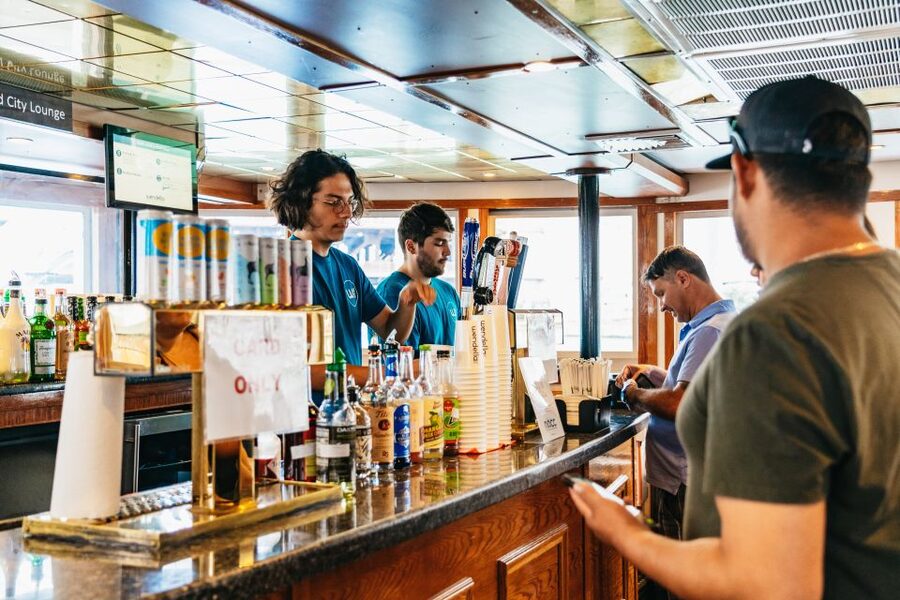
The boat has a full-service cash bar and snacks for purchase, including local beer and spirits and Garrett’s Popcorn. Prices onboard are not included in the $44 fare, so consider the bar a convenience rather than a budget meal stop.
You may bring your own non-alcoholic drinks and food. That is useful for families or anyone who wants to avoid waiting at the bar. Alcohol and drugs are not allowed as outside items, and pets are not permitted, except for assistance dogs.
The vessel has climate control, restrooms, and diaper-changing tables. These details do not sound glamorous, but they matter on a 90-minute outing, especially with children. The cruise is also family-friendly because there is no need to walk between distant sights or keep a group moving through crowded streets.
Timing, weather, and who should book
Pre-booking is smart because this is an often-sold-out cruise. It also lets you skip the ticket line and use the reserve-now, pay-later option if available for your booking. Cancellation is free up to 24 hours before departure, which gives you some flexibility if the forecast turns poor.
A morning departure can be good for photographs and lake views. A sunset or evening departure gives the buildings a different mood, and one evening trip was described as especially pretty. The best time depends on your schedule and the weather, not on a single perfect departure.
I would choose this cruise for a first Chicago visit, a family outing, architecture fans, and anyone who wants a broad city overview without spending half a day on a boat. It also works well for repeat visitors who have already taken a river-only tour and want to add the lake.
I would hesitate if you want a long, highly detailed exploration of every river branch. This route covers the main branch and lakefront rather than every corner of the river system. I would also think twice if you dislike wind, waiting outdoors, or fixed sightseeing schedules.
Should you book the Lake and River Architecture Cruise?
Yes, if you want Chicago’s best combination of close building views and a full skyline panorama in a single 90-minute trip. The guide commentary, Chicago Lock passage, lakefront views, and comfortable facilities make the $44 fare reasonable for most first-time visitors.
Book it when you can keep the rest of your day flexible, especially during high summer when the lock can slow the route. Arrive prepared for sun, rain, or wind, and choose the outdoor deck when photographs matter most. If you want an engaging introduction to Chicago’s architecture without overcomplicating your sightseeing plan, this is an easy choice.
FAQ
How long does the Chicago Lake and River Architecture Cruise last?
The cruise lasts about 90 minutes. It can run slightly longer during high summer if the Chicago Lock is busy.
Where does the cruise meet?
The closest dock address is 400 N Michigan Avenue near the Wrigley Building and DuSable Bridge. Check in with a dock employee, who can direct you to the boarding area.
Does the cruise include both the Chicago River and Lake Michigan?
Yes. The boat travels along the main branch of the Chicago River toward Wolf Point, returns toward the lake, passes through the Chicago Lock, and continues onto Lake Michigan.
Is seating indoors or outdoors?
You can choose between outdoor deck seating and indoor climate-controlled seating. The vessel also has restrooms and diaper-changing tables.
Can I bring food and drinks?
You may bring your own non-alcoholic beverages and food. A cash bar and snacks, including local products and Garrett’s Popcorn, are also available onboard.
What language is the tour guide?
The live tour guide speaks English. Guides provide commentary about Chicago’s architecture, buildings, city history, and notable landmarks.
Just added around Chicago
- BYOB Spray Paint and Sip at Studio W.I.P.★ 5.0 · 401 reviews
- Delicious Donuts & City Sights: Chicago’s Original Donut Tour★ 5.0 · 1,389 reviews
- Bikes, Bites & Views: Chicago’s Signature Dishes Bike Tour-Adults★ 5.0 · 732 reviews
- Original Chicago Architecture Interiors Tour: Dazzling Interiors★ 5.0 · 1,489 reviews
- Chicago Loop District Food Tour with Deep Dish & Beef Sandwich★ 5.0 · 870 reviews
- Field Museum of Natural History Admission Tickets★ 4.5 · 489 reviews
- City Cruises Chicago: Signature Lunch Cruise on Lake Michigan★ 4.0 · 348 reviews
- Chicago Sightseeing River and Lake Cruise★ 4.5 · 509 reviews
Chicago Tours, compared.

Chicago River: 1.5-Hour Guided Architecture Cruise
Read our review →
Chicago Architecture Center River Cruise aboard First Lady
Read our review →
Architecture River Cruise Skip-the-Ticket Line
Read our review →
Browse the lists this tour appears in