
Reviewed · CHICAGO
Chicago’s Secret Interiors Architectural Walking Tour
Chicago’s best architecture is not always above your head. Some of the city’s finest work is tucked behind office doors, hotel entrances, and department-store facades. This walking tour takes you into those interiors, including the Rookery’s elegant lobby, the Marquette Building’s mosaics, and the Palmer House’s grand hotel rooms open to the public.
I like two things right away. First, the route connects Chicago’s major architectural ideas to real buildings instead of treating the Loop like an outdoor museum. Second, the $35 price gives you a guide who can explain why these places matter, not just point at them. The main drawback is weather: you walk outdoors between stops, and the Rookery is not included on Sundays.
Key points to know before booking
- The best interiors are indoors but the tour is still a walking route: Expect streets, crossings, and time outside between buildings.
- The Rookery is a major highlight: It combines Burnham and Root’s 1888 design with a lobby later reworked by Frank Lloyd Wright.
- The Marquette Building rewards close attention: Its terra cotta exterior and lobby mosaics reveal both technology and local history.
- The route ends at Macy’s former Marshall Field building: The Tiffany glass dome and walnut-paneled Tea Room provide a strong finish.
- Guide quality matters: Ethan, Grant, Ty, Matthew, Matt, and Avery have all led highly praised versions of the tour.
- The advertised group limit is 15 people: Some past tour accounts describe larger groups, so confirm the current size when booking if that matters to you.
Why Chicago’s interiors tell the real architectural story
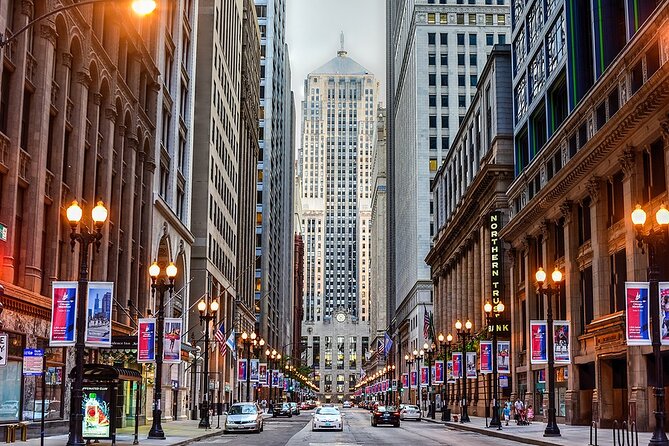
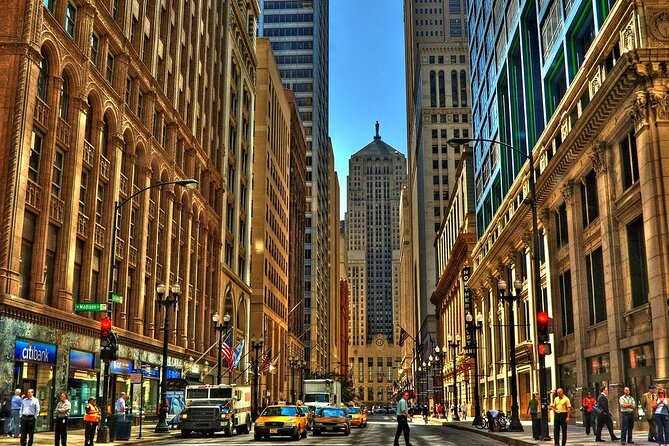
From the sidewalk, the Loop can feel like a contest in height. Towers crowd the streets, office workers hurry past, and the Chicago Board of Trade and Willis Tower pull your eyes upward. But the city’s architectural story becomes more interesting when you step inside.
The tour begins at Chicago Union Station, at 225 South Canal Street, then works east through the financial district toward State Street. You hear about commerce, engineering, wealthy industrialists, department-store owners, hotel life, and the architects who helped Chicago rebuild and grow after the Great Fire.
That mix gives the walk its value. You are not only looking at decoration. You are learning how Chicago’s buildings handled light, weight, crowds, transportation, retail, and prestige.
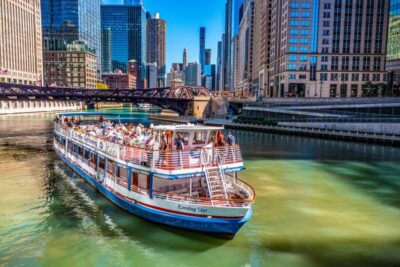
The route is especially useful if you have already taken an architecture boat tour. A boat gives you the big exterior view. This walk lets you inspect the doorways, ceilings, mosaics, staircases, and lobbies that are easy to miss from the river.
More Architecture Tours in Chicago
- Chicago Architecture River Cruise
★ 5.0 · 15,756 reviews - Chicago River 90-Minute Architecture Tour
★ 4.5 · 9,629 reviews - Chicago River: 1.5-Hour Guided Architecture Cruise
★ 4.8 · 8,046 reviews
Starting at Union Station and entering the Loop
Union Station is a fitting starting point because it presents Chicago architecture on a grand public scale. Designed by Daniel Burnham and completed in 1925, the station has a Beaux-Arts exterior and a large Great Hall crowned by a skylight.
You begin at 225 South Canal Street. The first stop is listed as a short introduction to the Downtown Loop, followed by a look at La Salle Street, sometimes called Chicago’s Financial Canyon. These early sections help you read the city from outside before the route turns toward interior spaces.
Expect stories about the architects and the economic forces behind the buildings. The financial district was not shaped by one style or one generation. Romanesque forms, early skyscraper design, Art Deco ornament, and modern towers all appear within a compact area.
The walking is manageable for most people, but do not confuse a two-hour tour with two hours spent inside. You will cross streets and move between buildings. Comfortable shoes are a good idea, especially if you plan to continue exploring after the tour.
The Rookery, Chicago’s most rewarding interior
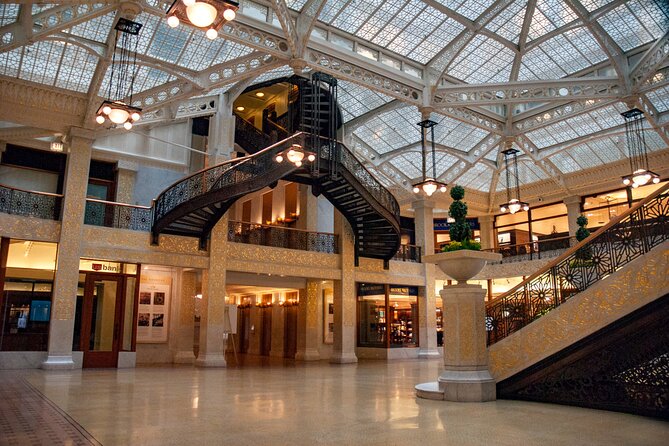
The Rookery is likely to be the architectural high point of the route. Burnham and John Wellborn Root designed the building in 1888, and its original Romanesque and Moorish influences remain visible in the exterior and structural details.
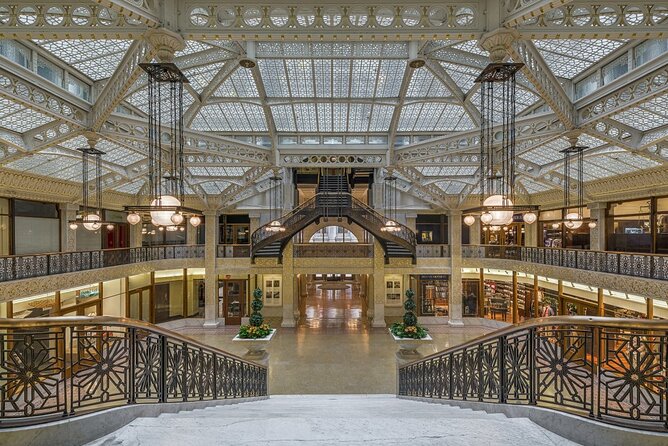
Inside, the famous light court shows how early architects worked to bring daylight into a large office building. Ironwork, stone, ornament, and the celebrated oriel staircase make the lobby worth slow looking.
Frank Lloyd Wright later reworked the lobby, giving the interior a cleaner, more controlled appearance while retaining the building’s central character. That combination makes the Rookery useful for understanding how architectural ideas changed over time.
The visit is brief, listed at about 10 minutes, so listen closely and look up quickly. You may want to return independently if you prefer to study details at your own pace.
The important scheduling warning is simple: the Rookery is closed on Sundays and is left off the Sunday route. If this building is your main reason for booking, choose another day.
The Field Building and the practical beauty of Art Deco
The Field Building provides a change of mood. Instead of the more layered ornament of the Rookery, you see the order and confidence of Art Deco design.
The stop focuses on the building’s architectural details and its place in Chicago’s skyline. Art Deco is often associated with glamour, but here it also reflects a period when offices, banks, and commercial buildings used strong lines and polished surfaces to project power.
This is one of the shorter stops, so the guide’s explanation matters. A good guide helps you notice details that would otherwise blur into the larger Loop scene. Guides such as Grant, Ethan, Ty, Matthew, Matt, and Avery have been praised for making technical subjects clear and keeping the group moving.
More Walking Tours in Chicago
- Chicago: Gangsters and Ghosts Walking Tour
★ 5.0 · 7,155 reviews - Chicago Favorites Ultimate Food and Walking Tour
★ 5.0 · 1,962 reviews - Chicago: Gangsters and Ghosts Guided Walking Tour
★ 4.7 · 1,697 reviews - Chicago in a Day: Food, History & Architecture Walking Tour
★ 5.0 · 1,153 reviews
The Marquette Building and a lobby made for close looking
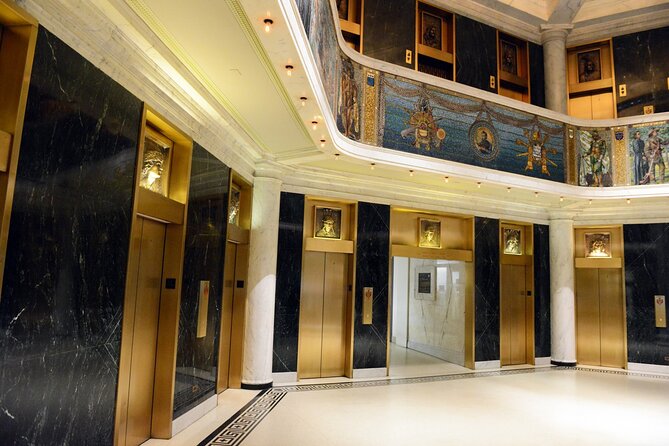
The Marquette Building is one of the tour’s most satisfying stops because it joins engineering, decoration, and exploration history.
Its design is associated with the Chicago School of Architecture and the Chicago window, which placed large panes of glass within a strong structural frame. The exterior terra cotta work is worth examining, but the lobby is the real draw.
Inside, mosaics tell the story of Jacques Marquette’s exploration of Illinois. You get art, regional history, and architectural innovation in one compact space. This is exactly the kind of building that can disappear into a normal workday if you do not know to enter.
I like this stop for readers who want more than famous names. The building is not just a backdrop for a guide’s speech. Its surfaces carry a story, and the guide helps you connect the images to the city around you.
Palmer House, where hotel history meets theatrical design
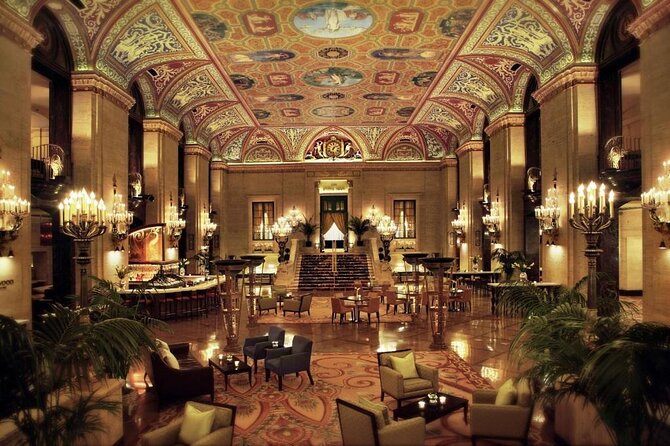
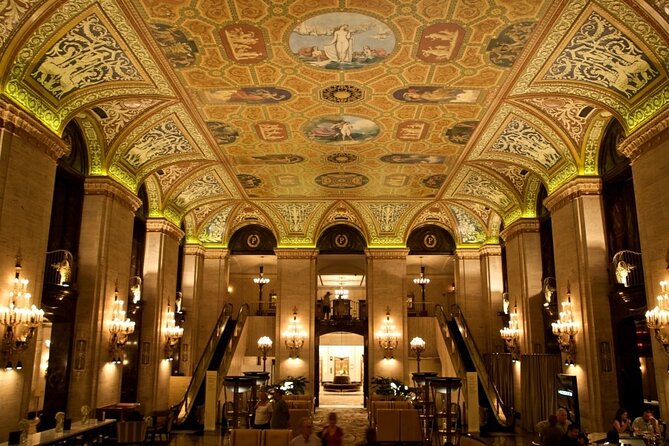
The Palmer House gives the walk its grandest hotel interior. Rebuilt after the Great Chicago Fire in 1871, it reflects the Gilded Age taste for scale, ceremony, and expensive materials.
Look for the frescoed ceiling, mosaic floors, and bronze peacock doors. These details were meant to impress people arriving for business, social events, or a stay in one of Chicago’s leading hotels.
The guide also brings in the people connected with the hotel, including celebrities and public figures from different periods. That human element keeps the stop from becoming a list of architectural terms.
The Palmer House is still a working hotel, so the atmosphere differs from a quiet museum. You may encounter ordinary hotel activity while looking at extraordinary design. That is part of the appeal, but it also means the group must be respectful and follow the guide’s instructions.
Chicago Cultural Center or Monadnock Building
At the next stage, the route may include the Chicago Cultural Center or the Monadnock Building. These are not interchangeable experiences, so this is one point to clarify when you book or meet the guide.
The Chicago Cultural Center is known for its architectural beauty and cultural role. It fits the tour’s focus on civic interiors and public craftsmanship.
The Monadnock Building offers a different lesson. It is linked to the commercial style of the late 19th century and helps explain how Chicago’s office buildings developed before the city’s later towers changed the skyline.
Both choices support the larger theme: Chicago architecture is not only about height. It is also about how buildings served commerce, culture, government, hotels, transportation, and retail.
Marshall Field and Company, the strong finish at Macy’s
The final stop is the Marshall Field and Company Building, now occupied by Macy’s at 111 North State Street. This is a fitting place to end because department stores once turned shopping into a public spectacle.
The famous Tiffany glass mosaic dome is the main attraction. It is a remarkable ceiling feature, and it rewards a slow look at the color and detail overhead.
The walnut-paneled Tea Room adds another layer. It reflects the polished world of early 20th-century department stores, when a major shop offered dining, social life, and architecture along with merchandise.
The route ends here rather than returning to Union Station. That makes the tour easy to combine with shopping, lunch, the Chicago Cultural Center, Millennium Park, or an afternoon in the Loop. It also means you should plan your onward route before you start.
What the guides add to the buildings
The strongest part of this experience is the human explanation. Architecture can be hard to read when you are standing in a lobby for only a few minutes. A guide gives you the background, points out the detail, and keeps the group from drifting apart in a crowded downtown area.
Ethan has been praised for his energy, clear explanations, and ability to keep people engaged in poor weather. Grant is described as organized, warm, and careful about keeping the group together. Ty is noted for being accommodating, funny, and full of useful detail.
Matthew has been praised for mixing professionalism with humor, while Matt and Avery have also led well-received tours. The exact guide will depend on the date, but these names give you an idea of the style to expect: historical context, practical crowd management, and plenty of answers about Chicago beyond the formal stops.
One point needs a little caution. The tour information gives a maximum of 15 people, but some past accounts describe groups larger than that. If a small group is important to you, confirm the current arrangement before paying.
Timing, weather, and the $35 value
The price is $35, and the listed duration is about two hours. The individual stop descriptions often allow around 10 minutes each, but the full experience includes walking, introductions, street crossings, and movement between buildings.
That price is fair if you care about architecture. You gain access to interiors you might otherwise pass without entering, plus a guide who explains the relationship between buildings. If you only want exterior photographs, you can explore the Loop for free. The fee makes more sense when you value interpretation and access.
The walk operates in changing Chicago weather. You may spend much of the tour indoors, but rain, cold, or heat still affect the outdoor portions. Wear shoes with good support and bring the right coat. One especially determined guide kept a group engaged during heavy rain, but bad weather can still reduce the pleasure of the experience.
The tour requires good weather. If the operator cancels because conditions are poor, you are offered another date or a full refund. You can cancel for a full refund up to 24 hours before the start time. Inside that window, refunds are not available.
Who should book this walk
I would choose this tour for anyone who enjoys architecture, urban history, engineering, historic hotels, or old department stores. It also suits people who have already seen the Loop and want a more focused second look.
It works well for a half-day plan. Start at Union Station, finish at Macy’s, then continue to the Cultural Center or nearby attractions. The route is also a useful introduction on your first Chicago visit because it gives you a framework for understanding the downtown core.
You may want another activity if you dislike walking, need a fully indoor experience, or prefer to linger for a long time at each building. The stops are short, and the group needs to keep moving.
The tour is accessible to most people, and service animals are allowed. It is near public transportation, which makes both the start at Union Station and the finish near State Street convenient.
Should you book Chicago’s Secret Interiors Architectural Walking Tour?
Book it if you want Chicago’s architecture explained at eye level. The Rookery, Marquette Building, Palmer House, and Marshall Field building provide enough visual appeal to justify the price, while Union Station, La Salle Street, the Field Building, and the Cultural Center or Monadnock Building give the route useful range.
Choose a non-Sunday date if the Rookery matters to you. Check the group size if you prefer a quiet, intimate walk, and dress for outdoor weather even though many stops are indoors.
At $35, this is a strong value for an architecture-focused visitor. It will not replace a river cruise, but it does something the cruise cannot: it gets you through the doors.
FAQ
How long does the Chicago Secret Interiors Architectural Walking Tour last?
The experience lasts approximately two hours. Individual stops are generally listed at about 10 minutes, with additional time used for walking between buildings.
Where does the tour begin?
The tour begins at Chicago Union Station, 225 South Canal Street, Chicago, Illinois 60606.
Where does the tour end?
The tour ends at the Marshall Field and Company Building, now Macy’s, at 111 North State Street, Chicago, Illinois 60602.
Is the Rookery included every day?
No. The Rookery is closed on Sundays, so it is not included on the Sunday route.
What does the $35 price include?
The price includes the guided walking experience and an expert tour guide. A mobile ticket is provided.
How many people can join the tour?
The stated maximum is 15 people. Some past tour accounts describe larger groups, so confirm the current group arrangement if this is important to you.
What happens if the weather is poor?
The experience requires good weather. If the operator cancels because of poor conditions, you will be offered another date or a full refund. You may cancel at least 24 hours before the start time for a full refund.
Just added around Chicago
- BYOB Spray Paint and Sip at Studio W.I.P.★ 5.0 · 401 reviews
- Delicious Donuts & City Sights: Chicago’s Original Donut Tour★ 5.0 · 1,389 reviews
- Bikes, Bites & Views: Chicago’s Signature Dishes Bike Tour-Adults★ 5.0 · 732 reviews
- Original Chicago Architecture Interiors Tour: Dazzling Interiors★ 5.0 · 1,489 reviews
- Chicago Loop District Food Tour with Deep Dish & Beef Sandwich★ 5.0 · 870 reviews
- Field Museum of Natural History Admission Tickets★ 4.5 · 489 reviews
- City Cruises Chicago: Signature Lunch Cruise on Lake Michigan★ 4.0 · 348 reviews
- Chicago Sightseeing River and Lake Cruise★ 4.5 · 509 reviews
Chicago Tours, compared.

Chicago River: 1.5-Hour Guided Architecture Cruise
Read our review →
Chicago Architecture Center River Cruise aboard First Lady
Read our review →
Architecture River Cruise Skip-the-Ticket Line
Read our review →
Browse the lists this tour appears in