
Reviewed · CHARLESTON
Lost Stories of Black Charleston Walking Tour
Charleston’s polished historic center tells only part of the story. This walking tour follows the city’s streets through the experience of Black Charlestonians, linking slavery, Reconstruction, civil rights, and the people whose work and courage were often left out of standard accounts. Guide Damon Fordham brings both scholarship and family connections to the subject.
I like the tour’s street-level approach, since you move through real neighborhoods rather than listening from a vehicle or classroom. I also like Fordham’s mix of research, personal perspective, humor, and music, including the melodica noted by several people who took the tour. The main consideration is that his delivery can be forceful and theatrical, and one person found the corrections and dramatic touches uncomfortable.
Key points to know before you book
- Damon Fordham leads the walk: He is an author, historian, educator, and licensed Charleston guide who connects academic research with personal and family stories.
- The route covers major downtown sites: You’ll see Charleston City Market, the Jehu Jones Hotel site, Catfish Row, Heyward-Washington House, the Old Slave Mart Museum, and Waterfront Park.
- Black history stays at the center: The tour moves from slavery through Reconstruction and civil rights, including stories connected to Mother Emanuel A.M.E. Church.
- Expect a two-hour outdoor walk: You will spend time walking and standing in place while Fordham tells longer stories, so comfortable shoes and weather-ready clothing matter.
- The group is capped at 20 people: That keeps the walk relatively small, though the experience depends on your comfort with a strong, performance-style guide.
- The price is $39 per person: For two hours with a specialist guide and a route through several key Charleston sites, I consider that a fair price, especially if you want history beyond the grand houses.
A different way to read Charleston’s old streets
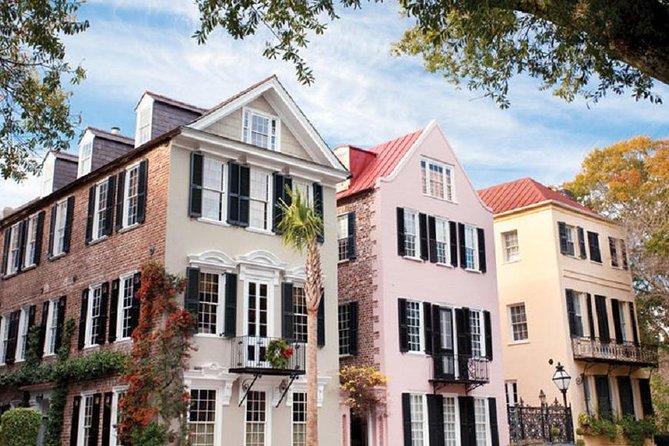
Many Charleston walks focus on architecture, wealthy families, and the city’s role in the American Revolution. This one asks you to look again at the same streets and consider who built, worked in, endured, resisted, and reshaped the city.
That change in focus is the tour’s real value. You are not simply collecting dates or pausing for photographs. Fordham uses the places around you as prompts for stories about Black life in Charleston and South Carolina. His aim is to connect the past to the present, not to treat history as a sealed-off chapter.
The tone is serious because the subject requires it, but the experience is not presented as a dry lecture. Fordham is described as witty, musical, spontaneous, and willing to answer questions. He sometimes uses different voices and theatrical delivery to give a story extra force. For some people, that makes the past feel immediate. For others, it may feel more dramatic than expected.
I would choose this tour if you want a guide who takes a clear position on the importance of remembering overlooked people and events. If you prefer a quiet, restrained presentation with little interpretation, this may not be your best match.
More Walking Tours in Charleston
- Historic Charleston Guided Sightseeing Walking Tour
★ 5.0 · 6,216 reviews - Ghosts of Charleston Night-Time Walking Tour with Unitarian Church Graveyard
★ 4.5 · 2,835 reviews - Hidden Alleyways and Historic Sites Small-Group Walking Tour
★ 5.0 · 2,335 reviews
Meeting at Buxton Books at 3:30pm
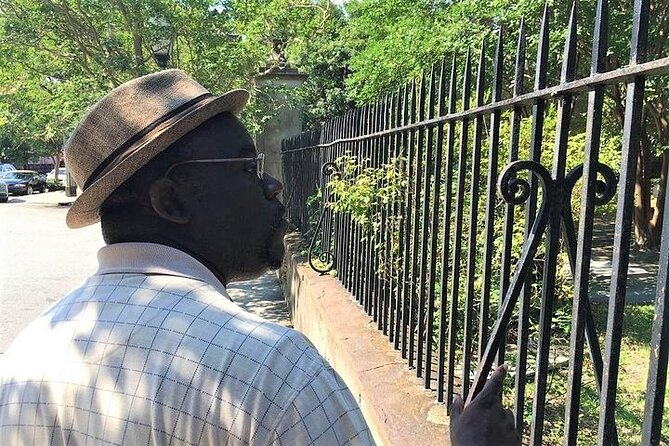
The tour begins at Buxton Books, 160 King Street, at 3:30pm. This is a useful starting point in central Charleston, and beginning at a bookshop fits the literary side of Fordham’s work. He has written books about Charleston, and you may have the chance to purchase one and have it signed after the experience.
The tour is offered in English, with a mobile ticket. It lasts about two hours and returns to the same meeting point. Since you stay on foot, you avoid the distance and distraction of a bus or carriage. You also get the simple pleasure of noticing the city at walking pace: building fronts, public spaces, street corners, and the changing feel of the historic center.
The group can include up to 20 people. That is not an intimate private walk, but it is small enough for questions and for the guide to keep the group together. The format also means you should be prepared to listen while standing in one spot for an extended time. One practical tip is to arrive ready for heat, sun, and changing weather. The tour requires good weather, and poor conditions can lead to a different date or a full refund.
Charleston City Market and the Jehu Jones Hotel site
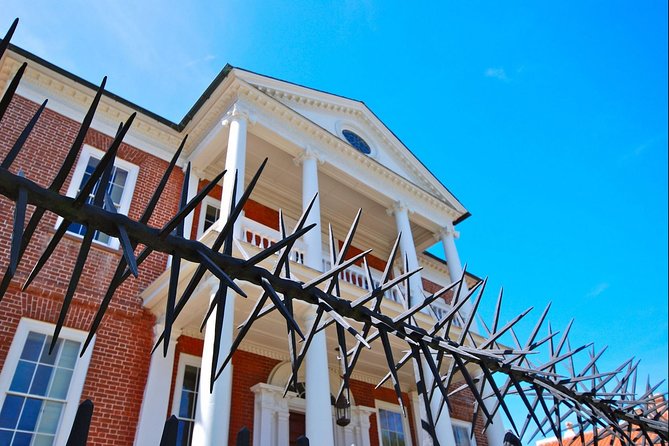
The first part of the route centers on Charleston City Market. The market is one of the city’s best-known downtown places, but this tour uses it to look beyond its familiar public image and into the Black history connected to the area.
You then move toward the site of the Jehu Jones Hotel. Jones was a Black hotel owner, and the site offers a way to discuss Black enterprise, independence, and the limits imposed by segregation and slavery’s legacy. The exact building experience is less important here than the story attached to the place. You are learning to read a location for the people and events that are not always marked by grand plaques.
This portion lasts about 30 minutes. It is a good early introduction to Fordham’s method: locate a place, explain its setting, and then widen the story to include people whose work is often treated as background.
Catfish Row and the world of Porgy and Bess
The walk continues to Catfish Row, known to many people through the opera Porgy and Bess. That reference gives the site instant recognition, but the tour pushes beyond the fictional and artistic image.
Here, you can expect a discussion of the real Black community and culture behind the setting. The point is not simply that Charleston inspired a famous work. It is that a living community, with its own struggles and traditions, was transformed into an artistic setting that many people know better than the people who lived there.
This is one of the places where context matters most. A short stop can connect music, literature, performance, race, and memory. Fordham’s own musical ability adds another layer. Several accounts describe him playing the melodica, an unexpected touch that brings sound into a tour otherwise built around spoken stories.
A different sort of day out, same corner of Charleston:
- Charleston’s Old South Carriage Historic Horse & Carriage Tour
★ 5.0 · 10,023 reviews - Haunted Evening Horse and Carriage Tour of Charleston
★ 4.5 · 3,678 reviews - Charleston Horse-Drawn Carriage Tour: Explore Historic Charleston
★ 5.0 · 3,561 reviews - Fort Sumter Admission and Self-Guided Tour with Roundtrip Ferry
★ 4.5 · 3,343 reviews
Heyward-Washington House and the view from another side
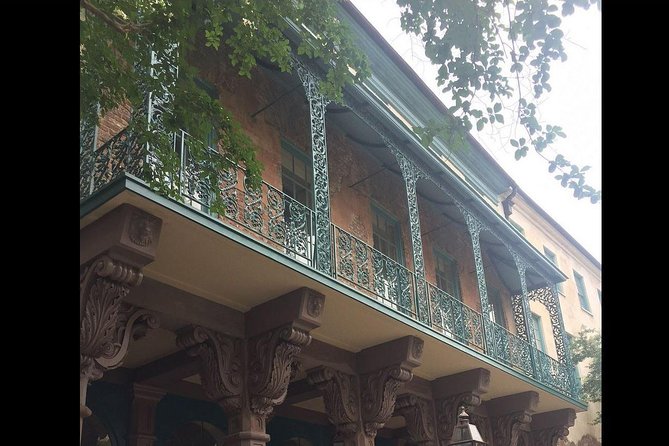
The walk passes the Heyward-Washington House, associated with Thomas Heyward Jr., a signer of the Declaration of Independence. Admission to the house is not included, and the tour does not present this as a full interior visit.
That is not a problem if you understand the stop correctly. The house works as a reference point for the city’s political and social order. As you stand outside, Fordham can place the lives of enslaved people and free Black residents beside the celebrated figures whose names appear in schoolbooks and on historic markers.
I appreciate this kind of contrast. Charleston’s old houses can be beautiful, but beauty can blur the labor and coercion that made elite life possible. This stop helps correct that imbalance without pretending the city’s architecture is irrelevant.
The Old Slave Mart Museum and a difficult subject
The Old Slave Mart Museum is another major stop. The building once held slave auction galleries, making it one of the most direct physical reminders of Charleston’s role in the domestic slave trade.
The tour passes by the site, and admission is not included. If you want to go inside, plan that as a separate visit. The walking tour’s purpose is different: Fordham provides a larger story around the place, helping you connect the site to the people, systems, and aftermath that a building alone cannot explain.
This can be one of the hardest sections emotionally. The subject is not softened into a picturesque version of the past. You may hear about exploitation, resistance, and the long effects of slavery on Charleston and the country. I would not book this expecting light entertainment, though the guide’s wit can keep the experience from becoming flat or relentlessly grim.
The strongest part of a good historical tour is often the context around a famous site. Anyone can point out an old building. The better question is what happened there, who paid the price, and what changed afterward. That is the question this experience keeps asking.
Waterfront Park and Charleston Harbor
The route ends with a walk through Waterfront Park and along Charleston Harbor. On the surface, this is the most scenic part of the experience. The open views and waterfront air provide a welcome change after several serious stops.
But the park also serves a historical purpose. Fordham uses this stretch to discuss lesser-known people who helped shape Charleston but missed the history books. The walk traces a broad path from slavery through Reconstruction to the civil rights era.
That sweep is important. Black Charleston is not presented only through suffering, and it is not frozen in the period before emancipation. You hear about persistence, public action, community life, and people who pushed the city and country toward change.
The waterfront ending also gives you time to think. The tour returns to the starting point, but the route has changed how you see the city. Waterfront Park is not merely a pleasant finish. It becomes part of the contrast between Charleston’s postcard appearance and its difficult past.
Stories connected to Mother Emanuel A.M.E. Church
The experience also includes stories connected with Mother Emanuel A.M.E. Church, one of Charleston’s central sites of Black religious and civic life. The church itself is not listed as a formal timed stop, so you should think of these stories as part of Fordham’s broader narration rather than a guaranteed interior visit.
This is an important inclusion because churches in Black communities have often served as places of worship, education, organizing, leadership, and refuge. Hearing about Mother Emanuel within a tour about Black Charleston helps connect individual stories to larger community institutions.
Fordham’s personal perspective is especially useful here. He draws on family ties and years of study, and that gives the stories a sense of connection to lived Charleston rather than a distant textbook account. At the same time, his personal point of view is clear. One person appreciated the directness but felt that some interpretations were strongly framed. I see that as something to know before booking, not something to hide.
What Damon Fordham adds to the experience
The guide is the main reason to take this particular walk. Fordham is an author, historian, educator, and licensed guide, and the experience depends heavily on his ability to tell stories aloud.
He brings more than prepared facts. He answers questions, adds personal and family connections, and sometimes adjusts the presentation to the group. People who enjoy a guide with energy and conviction will likely respond well to him. His humor helps, and his music gives the walk a quality you will not get from a standard script.
His style is not neutral in the bland sense. He wants you to notice the gaps in the way Charleston and American history are often taught. That can be refreshing, especially if you grew up in South Carolina and still never heard many of these stories in school.
The tradeoff is that a forceful personality can divide opinion. Fordham may correct an assumption or challenge a comment directly. Most of the feedback describes him as engaging, kind, entertaining, and passionate, but one account found the tone abrasive and the theatrical voice work awkward. I would describe him as an assertive storyteller, not a background narrator.
Is $39 a fair price?
At $39 per person, this is a reasonable buy for a two-hour specialist walking tour. You are paying for a guide with a clear area of expertise, a carefully chosen route, and interpretation that goes beyond pointing out buildings.
The price does not include admission to the Heyward-Washington House or Old Slave Mart Museum. That is worth noting, but it also means you are not paying for attractions you may not have planned to enter. The tour itself is about the outdoor route and Fordham’s narration.
Value depends on what you want from Charleston. If you only want architecture and famous names, a less expensive general walk may suit you. If you want to understand how Black people shaped the city and how slavery and segregation affected its streets, $39 buys a focused two-hour introduction.
The tour is commonly booked about 13 days ahead, so I would not wait until the last moment if your Charleston schedule is tight. Confirmation is provided within 48 hours, subject to availability.
Who should book this walk?
I recommend it to adults, families with older children, students, history-minded visitors, and anyone who wants a fuller view of Charleston. Children must be accompanied by an adult, and most people can take part, but the length of the walk and the serious subject matter may not suit very young children.
It is also a good choice for repeat visitors. If you have already toured the grand houses and seen the main landmarks, this walk can change your understanding of places you thought you knew.
You should be comfortable with outdoor walking, standing, and a guide who speaks with conviction. Service animals are allowed. Wear practical shoes and prepare for the weather, since the route is outside and poor conditions can cancel the tour.
You can cancel for a full refund up to 24 hours before the start time. Cancellations or changes inside that window are not refunded, and a weather cancellation brings the choice of another date or a full refund.
Should you book the Lost Stories of Black Charleston Walking Tour?
Book it if you want Charleston history told from a perspective that is often missing from the standard route. The strongest reasons are Damon Fordham’s research, personal ties, storytelling, and willingness to connect slavery, Reconstruction, civil rights, and present-day understanding.
I would not book it only because you want a gentle sightseeing stroll. The tour asks you to listen closely, confront painful subjects, and accept a guide with a strong presentation style. For me, that is also its strength.
At $39, this is a focused and worthwhile addition to a Charleston visit. It gives you more than a list of landmarks. It teaches you how to look at the city with wider eyes.
FAQ
Where does the Lost Stories of Black Charleston Walking Tour start?
The tour starts at Buxton Books, 160 King Street, Charleston, South Carolina, at 3:30pm.
How long does the tour last?
The walking tour lasts approximately two hours and finishes back at the starting point.
Who leads the tour?
Damon Fordham leads the experience. He is an author, historian, educator, and licensed tour guide.
What places do you see?
The route includes Charleston City Market, the Jehu Jones Hotel site, Catfish Row, the Heyward-Washington House, the Old Slave Mart Museum, and Charleston Waterfront Park. It also includes stories connected with Mother Emanuel A.M.E. Church.
Is admission to the museums and houses included?
Admission tickets to the Heyward-Washington House and Old Slave Mart Museum are not included. The stops at Charleston City Market and Waterfront Park are free.
What is the cancellation policy?
You can cancel at least 24 hours before the start time for a full refund. Cancellations or changes made less than 24 hours before the start time are not refunded. If bad weather cancels the tour, you can choose another date or receive a full refund.
Just added around Charleston
- Charleston Ghosts of Liberty Guided Walking Tour★ 4.5 · 473 reviews
- Charleston’s Best Highlights: History, Culture & Architecture★ 5.0 · 422 reviews
- Charleston Harbor Sunset Cruise★ 5.0 · 905 reviews
- Undiscovered Charleston: Half Day Food, Wine & History Tour with Cooking Class★ 5.0 · 948 reviews
- Private Daytime Horse-Drawn Carriage Tour of Charleston★ 5.0 · 340 reviews
- Afternoon Schooner Sightseeing Dolphin Cruise on Charleston Harbor★ 4.5 · 620 reviews
- 2-Hour Guided Kayak Eco Tour in Charleston★ 5.0 · 954 reviews
- Savor the Flavors of Charleston Walking Food Tour★ 4.5 · 881 reviews
Charleston Tours, compared.

Charleston’s Old South Carriage Historic Horse & Carriage Tour
Read our review →
Historic Charleston Guided Sightseeing Walking Tour
Read our review →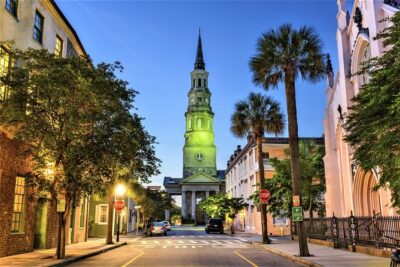
Haunted Evening Horse and Carriage Tour of Charleston
Read our review →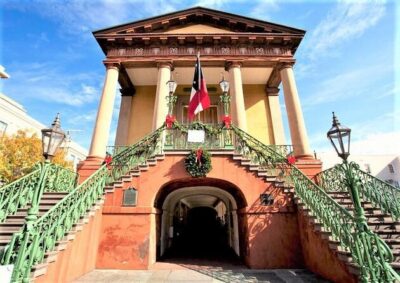
Charleston Horse-Drawn Carriage Tour: Explore Historic Charleston
Read our review →
Fort Sumter Admission and Self-Guided Tour with Roundtrip Ferry
Read our review →
Fort Sumter Entry Ticket with Roundtrip Ferry
Read our review →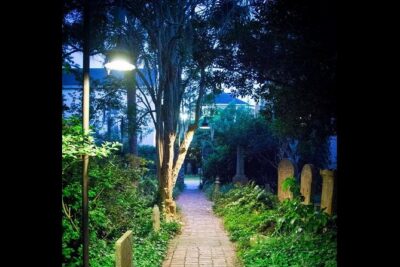
Ghosts of Charleston Night-Time Walking Tour with Unitarian Church Graveyard
Read our review →
Charleston Harbor History Day-Time or Sunset Boat Cruise
Read our review →Browse the lists this tour appears in