

Reviewed · NEW YORK CITY
NYC: Intrepid Museum Entry Ticket
The Space Shuttle Enterprise is the showstopper here, but it shares the stage with a World War II aircraft carrier, 28 restored aircraft, and a Cold War submarine. You can walk flight decks, crew spaces, combat rooms, and a real space shuttle exhibit in one visit.
I like the way the museum connects impressive machines with human stories, especially through the kamikaze exhibit and restored shipboard living areas. I also like the Growler submarine, included with admission, though queues can be long. The main catch is time: two hours feels rushed, and some areas require stairs, ladders, long walks, and standing.
Key points to know before you go

- Four decks of the USS Intrepid: See the hangar, flight, gallery, and third decks, each showing a different side of carrier life.
- Enterprise in the Space Shuttle Pavilion: View NASA’s prototype orbiter with spacecraft artifacts, films, photographs, and audio.
- Growler submarine included: This is one of the most memorable parts of the visit, but the queue can build quickly.
- Apollo 11 and moon exploration: See a command module recreation, moon rocks, lunar landing gear, and Apollo technology.
- Concorde may cost extra: The aircraft is a popular highlight, but it is not part of the basic admission.
- Allow at least two to three hours: Arrive early if you want time for the ship, aircraft, submarine, and space exhibits.
Why the Intrepid is more than an aircraft display

The Intrepid Museum gives you something unusual in New York: the chance to walk through a former fighting ship rather than simply look at objects behind glass. The USS Intrepid was launched in 1943, served in World War II, survived five kamikaze attacks and a torpedo strike, and later served during the Cold War and Vietnam War.
That background gives the visit weight. You are not touring a replica or a purpose-built hall. You are walking through a National Historic Landmark that carried aircraft, sailors, Marines, and machinery through several major periods of American military history.
I like the contrast between the ship and the technology on display. One moment you are looking at cramped crew berthing or a restored galley. The next, you are standing below a space shuttle or beside one of the fastest military jets ever built.
The museum also makes a useful effort to connect machines with people. Displays explain how the ship operated, how crews lived, and what service demanded from those aboard. Veterans are sometimes present to answer questions, adding a personal touch that recorded panels cannot quite match.
More Attraction Tickets in New York City
- NYC: SUMMIT One Vanderbilt Tickets
★ 4.7 · 51,195 reviews - NYC: 9/11 Memorial & Museum Timed-Entry Ticket
★ 4.8 · 31,428 reviews - NYC: Empire State Building Tickets – Observatory & Museum
★ 4.7 · 25,757 reviews
Start on the hangar deck for the human story
The hangar deck is the best place to get your bearings. It is the museum’s main indoor exhibit space, and it combines the ship’s hardware with the lives of the people who worked aboard it.
Here you can learn about Intrepid’s service, operations, and combat history through displays, artifacts, and media. The Kamikaze: Day of Darkness, Day of Light exhibit is especially important. It helps explain the danger faced by the ship and its crew, rather than treating the carrier as a giant object with no human context.
I would not rush this section. The aircraft on the flight deck may attract you first, but the hangar deck explains why the ship matters. It gives meaning to the rooms, equipment, and aircraft you see later.
The indoor setting also helps on hot or rainy days. Much of the carrier is exposed or only partly sheltered, so the hangar deck offers a useful pause from strong sun, cold wind, or wet weather.
Walk the flight deck among historic aircraft
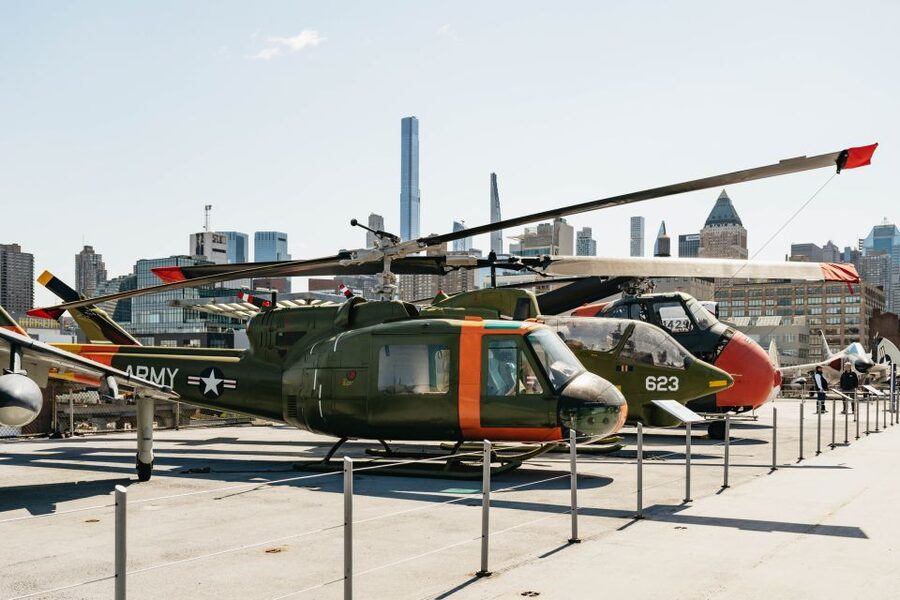
The flight deck is the visual centerpiece. You get close to more than two dozen restored aircraft, including military jets and aircraft from different eras. The collection includes the world’s fastest military jet, along with aircraft from around the world.
This is the part that makes the museum especially appealing to anyone interested in aviation. You are not viewing planes from a distant gallery walkway. You can study their size, cockpit shapes, engines, wings, and landing gear at close range.
The open deck also gives you a better sense of what an aircraft carrier demands. The space is broad, but it is still a working deck crowded with aircraft, island structures, equipment, and the machinery needed to launch and recover planes.
Some indoor aircraft displays let you look into cockpits or explore interactive elements, depending on the area open during your visit. The combination of full-size aircraft and shipboard surroundings makes this more engaging than a standard aviation collection.
Plan for weather here. On hot days, the upper deck can feel harsh, with limited shade and water fountains. Bring water and take breaks. On a clear day, you also get broad views toward the Hudson River and Manhattan, but the deck remains a place for walking and standing rather than lingering in comfort.
Climb toward the island and bridge areas

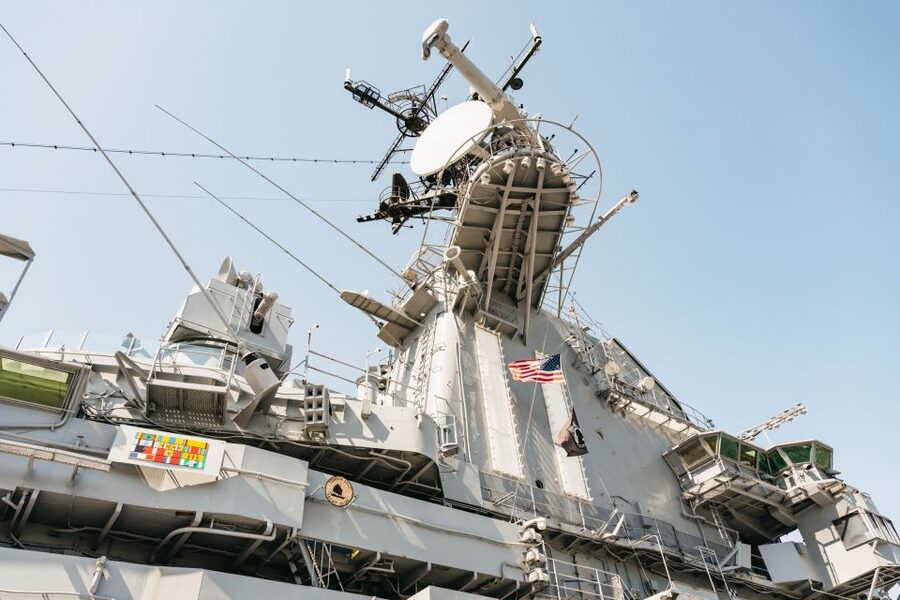
The Intrepid’s island and bridge areas show how the ship was controlled. Reaching them can involve stairs and narrow passages, but the effort is worthwhile if you can manage it.
The bridge gives you a practical sense of the ship’s command structure. Instead of seeing only the outside silhouette of a carrier, you can look into the spaces where navigation and operations were directed.
This is one area where the museum’s partial accessibility matters. The site offers wheelchair access in general, but not every part of the ship is accessible because some sections require stairs or ladders. The attraction is officially not suitable for wheelchair users who cannot manage these barriers.
You should also expect a lot of walking. Children and teenagers often have plenty to hold their attention, but smaller children may tire before the visit is over. I would treat the ship as a full museum visit, not a quick photo stop.
More Museums in New York City
- New York City: American Museum of Natural History Ticket
★ 4.5 · 15,447 reviews - NYC: Museum of Modern Art (MoMA) Entry Ticket
★ 4.6 · 12,540 reviews - 9/11 Memorial, Ground Zero Tour with Optional 9/11 Museum Ticket
★ 5.0 · 6,381 reviews - 9/11 Memorial Museum Admission Ticket
★ 4.5 · 6,376 reviews
See how the crew lived on the third deck

The third deck shifts attention away from aircraft and toward daily life. Restored areas include the galley, enlisted mess, and crew berthing.
These rooms are valuable because they show the less glamorous side of military service. A carrier is easy to admire from the outside, but cramped sleeping quarters, shared meals, and tightly organized work areas explain what life aboard actually involved.
The displays help you picture the routine of the crew. You can compare the broad flight deck with the enclosed spaces below it, where hundreds of people worked and lived in confined conditions.
This section may be less instantly dramatic than the aircraft, but I find it one of the most useful parts of the visit. It turns a huge ship into a place shaped by ordinary tasks, discipline, and limited personal space.
Use the gallery deck to understand ship operations

Between the hangar and flight decks, the gallery deck contains the combat information center, squadron ready room, and Marine berthing.
The combat information center shows the coordination behind naval operations. Aircraft carriers depend on communication, timing, and constant attention, and this area helps you understand that the planes were only one part of a much larger system.
The squadron ready room provides another look at preparation before missions. Marine berthing continues the focus on shipboard life and the people who used these spaces.
Signage is generally clear, but some areas could be better marked. If you are visiting on a tight schedule, follow the museum route carefully and check the map or staff directions rather than wandering randomly. The ship has enough corridors and decks to make a casual route surprisingly inefficient.
Make time for the Growler submarine

The Cold War-era submarine USS Growler is included in the admission, and it is one of the strongest reasons to allow extra time.
The submarine gives you a very different experience from the Intrepid. The carrier is enormous and open in places. Growler is compact, enclosed, and built around tight passageways and equipment. Moving through it helps you understand how different submarine service was from life aboard a surface ship.
You may encounter a queue, especially at busy times. One practical approach is to check the submarine early, before settling into the carrier exhibits. A long wait can force you to skip Growler later, particularly if you arrive in the afternoon.
The submarine is not just a bonus object beside the carrier. It changes the scale of the visit. After walking through the wide decks of Intrepid, the confined submarine makes the limits of Cold War naval technology feel immediate.
Visit Enterprise and the Space Shuttle Pavilion
The Space Shuttle Pavilion houses Enterprise, NASA’s prototype orbiter that helped prepare the way for the space shuttle program.
Seeing the shuttle in person is different from seeing launch footage or a photograph. Its scale, shape, and engineering details become easier to grasp when you are close to the vehicle. The exhibit adds original artifacts, photographs, audio, and films to explain the shuttle era.
The pavilion works well for families because it connects science with a very large physical object. You can discuss how spacecraft were designed, tested, and used without needing a technical background.
The shuttle section also gives the visit a clear change of mood. The carrier galleries focus on war, service, and naval operations. Enterprise points toward research, engineering, and space exploration. That range is one of the museum’s best qualities.
Follow Apollo from the Moon to Mars

The Apollo: When We Went to the Moon exhibit tells the story of the Apollo missions and the people who made them possible.
You can see a recreation of the Apollo 11 command module, the spacecraft that carried Neil Armstrong, Buzz Aldrin, and Michael Collins to the Moon and back. Moon rocks, lunar landing gear, photographs, and other artifacts help explain the technology behind the missions.
I like that this section does not treat Apollo as a finished story. It also looks at how the program shaped later plans for lunar exploration and eventual missions to Mars.
For children and adults, the command module recreation is a useful anchor. It makes the size of the spacecraft easier to understand and shows how little room astronauts had during a mission of historic importance.
Decide if Concorde is worth the extra cost
Concorde is another major attraction at the museum, but access requires an additional fee. That catches some people by surprise because the aircraft is displayed as part of the wider museum complex.
If supersonic aviation is a priority for you, check the current admission options before arriving. The aircraft is a highlight for many aviation fans, and its presence adds another era of flight technology to the museum.
If your budget is tight, the basic ticket still gives you plenty: the Intrepid, Enterprise, aircraft collection, Apollo exhibit, and Growler. I would not pay extra for Concorde unless you specifically want to see the aircraft or have enough time for another section.
Is $38 good value for New York?
At $38 per person, the ticket is fair value if you care about aviation, naval history, military technology, or space exploration. You are not paying for a single gallery. You are getting access to a large historic ship, its decks and interiors, the Space Shuttle Pavilion, and the submarine.
The value depends heavily on your schedule. A two-hour visit can cover the main sights, but it may feel rushed. Three hours gives you a better chance to read displays and enter Growler. With an early start and a strong interest in the subject, you could spend much of the day here.
Priority access means you use the timed ticket and advance purchase line rather than the standard ticket-buying queue. It does not always mean instant entry. A wait of up to 30 minutes can still occur before you enter.
The ticket is valid for one day, and cancellation is allowed up to 24 hours ahead for a full refund. You can also reserve now and pay later, which helps if your New York plans are still shifting.
Who will enjoy this museum most?
I would recommend it first to people who enjoy aircraft, ships, engineering, military history, or space. Families with older children and teenagers often get more from it because there are many large objects, interactive elements, and practical questions to explore.
It also suits adults who want a museum with physical scale. You are walking through real workspaces, passageways, decks, and machinery rather than moving from one framed display to another.
It may not be the best choice if you dislike military subjects, struggle with stairs and long periods of standing, or have only a short gap in your day. The ship is large, and the experience asks for time and energy.
Children under 16 must be accompanied by an adult, and unaccompanied minors are not allowed. Veterans with valid identification enter free, which can change the value calculation for military families.
How to plan a better visit
Choose an early entry time if you want to see everything. A late afternoon arrival can leave you with only two hours before closing, and last entry is one hour before the museum closes.
Start by checking the Growler queue. If the line is short, visit the submarine first. Then work through the carrier, taking time for the hangar deck before moving outside to the aircraft.
Wear comfortable shoes. You will walk across large decks, move through narrow interior areas, and may climb stairs or ladders. Keep large bags and luggage elsewhere, since they are not allowed inside.
I would also bring water on warm days and plan indoor breaks. Shade is limited on the upper deck, and the museum’s size makes it easy to underestimate how tiring the visit can be.
Should you book the Intrepid Museum?
Book it if you want a hands-on look at a working aircraft carrier, a genuine space shuttle, a Cold War submarine, and historic aircraft in one New York attraction. The strongest parts are the ship’s scale, the Enterprise exhibit, the submarine, and the human stories behind the machines.
Skip it if your schedule allows only a quick stop, you are not interested in military or technical history, or stairs and long walks are a serious problem. For most people with the right interests, $38 buys several solid hours of sightseeing, with enough variety to keep a family or mixed-age group interested.
FAQ
How long should I allow for the Intrepid Museum?
Allow two to three hours for the museum. You may need longer if you want to read the displays carefully, visit the submarine, and spend time with the Apollo and aircraft exhibits.
What does the $38 ticket include?
It includes museum admission, priority access at the ticket line, access to the Intrepid aircraft carrier, the Space Shuttle Pavilion, the Story of Intrepid, the Kamikaze exhibit, and free WiFi. The Growler submarine is included as well.
Is Concorde included with admission?
No. Concorde may require an additional fee, so check the available ticket options if seeing it is important to you.
Is the museum wheelchair accessible?
The museum has wheelchair-accessible areas, but some sections are not accessible because they require stairs and ladders. The experience also involves long periods of walking and standing.
Can children visit alone?
No. Children under 16 must be accompanied by an adult, and unaccompanied minors are not allowed.
Where do I enter the museum?
The meeting point is 1 Intrepid Square at 12th Avenue and 48th Street, New York, NY 10036. Present your QR-coded ticket at the Priority Access, Timed Ticket or Advanced Purchase line at the box office.
Just added around New York City
- All Inclusive Airport Arrival Transfer to NYC/ Brooklyn/Queens★ 4.0 · 849 reviews
- The Big Apple Coaster at New York New York Hotel and Casino★ 5.0 · 982 reviews
- Mike Hammer Comedy Magic Show at the Four Queens Hotel★ 5.0 · 538 reviews
- Brooklyn Food Walking Tour: Local Eats & Family‑Run Shops★ 5.0 · 592 reviews
- All Inclusive Airport Departure Transfer NYC/ Brooklyn/Queens★ 4.0 · 342 reviews
- Brooklyn Bridge & DUMBO Food Tour: Local Eats & Landmarks★ 5.0 · 478 reviews
- West Harlem: Gospel Church Service and Sunday Walking Tour★ 4.3 · 411 reviews
- Harlem: Central Harlem Sunday Gospel with Locals★ 3.9 · 499 reviews
New York City Tours, compared.



Empire State Building Tickets – Observatory & Museum
Read our review →
Empire State Building Observation Deck Tickets
Read our review →



Browse the lists this tour appears in