

Reviewed · CHICAGO
Chicago: Architecture Center Cruise on Chicago’s First Lady
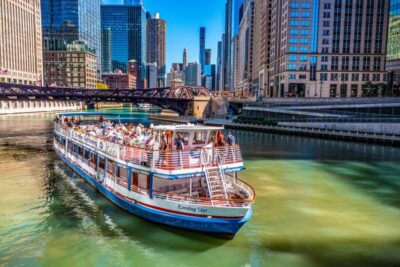
Chicago’s skyline makes the most sense from the water. On this 90-minute cruise, you trace all three branches of the Chicago River while a Chicago Architecture Center docent explains how Art Deco, neoclassicism, mid-century modernism, and postmodernism shaped the city. The river is not just a photo backdrop here. It is the main character.
I like the live, highly personal narration, with guides such as Russell, Amy, Patricia, Tim, and Mary Jo bringing their own Chicago knowledge and pride to the trip. I also like the guaranteed open-air seating, which means you can focus on the buildings without fighting for a rail-side perch. The main drawback is practical: the dock has no elevator access, and the route to the accessible ramp can be a long walk from the boat.
Key points to know before boarding
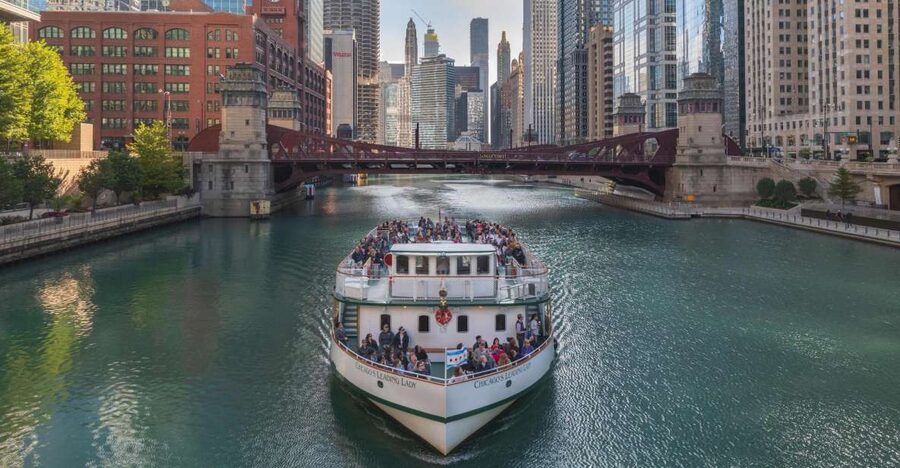
- All three branches of the Chicago River: You see more than the central stretch, including the river forks that many shorter cruises skip.
- More than 50 buildings and 13 bridges: The commentary links architecture to Chicago’s past, architects, materials, and city life.
- Chicago Architecture Center docents: This is an educational cruise, not simply a scenic boat ride.
- Guaranteed upper-deck seating: You can enjoy 360-degree views from the open-air decks, with covered seating available if the weather turns.
- A useful $5 museum add-on: Add general admission to the Chicago Architecture Center for $5 instead of the regular $14 price.
- A few access limits: There is no elevator to the dock, and motorized scooters and electric wheelchairs cannot board.
Why this cruise is different from a basic river ride
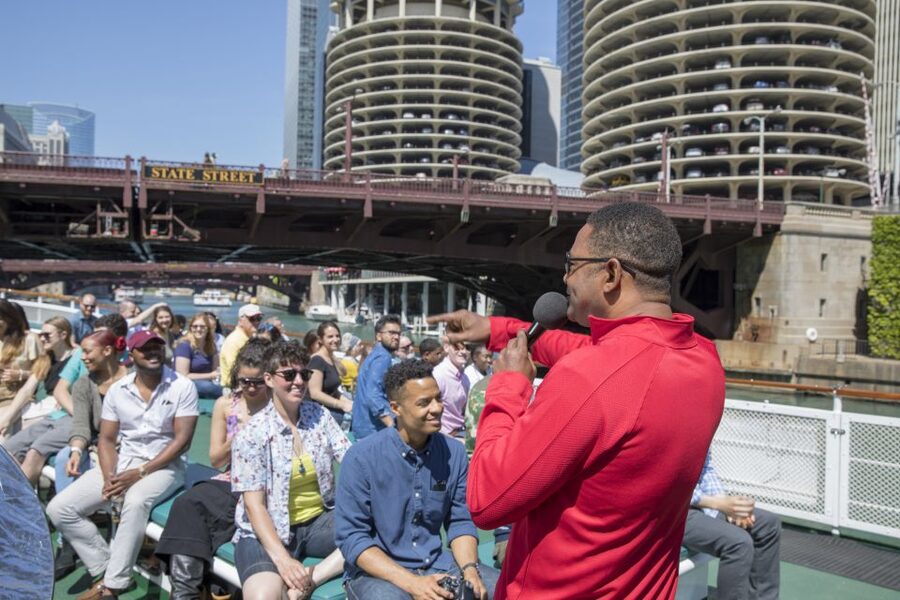
Chicago offers several ways to see its famous riverfront buildings. This one earns its price by making the architecture the focus. You are not simply pointed toward a tower and given its name. The docent explains why the building looks the way it does, who shaped it, and how its design fits into Chicago’s growth.
That difference matters if you arrive with only a passing interest in architecture. Terms such as Art Deco and neoclassicism can feel like classroom material, but they become easier to grasp when you are looking directly at a building from river level. The changing facades turn a technical subject into something visual and immediate.
The guides are volunteers trained by the Chicago Architecture Center, and the strongest part of the experience is clearly the quality of the live talk. Russell was praised for his command of Chicago architecture, while Amy was described as both informative and entertaining. Patricia, Tim, Barbara, Mary Jo, Jessica, and many others have also led memorable trips.
The exact style depends on the person holding the microphone. Some guides are polished performers. Others are more conversational. One guide was occasionally repetitive with filler words, and another was described as a little dramatic near the end. That is a small trade-off for a live presentation, but it is worth knowing if you expect a tightly scripted audio tour.
More Architecture Tours in Chicago
- Chicago Architecture River Cruise
★ 5.0 · 15,756 reviews - Chicago River 90-Minute Architecture Tour
★ 4.5 · 9,629 reviews - Chicago River: 1.5-Hour Guided Architecture Cruise
★ 4.8 · 8,046 reviews
Boarding at Michigan Avenue and Wacker Drive
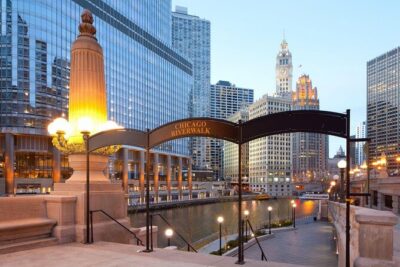
Check in at the black awning for Chicago’s First Lady on the Riverwalk level, at the southeast corner of the Michigan Avenue bridge where Michigan Avenue and Wacker Drive meet. Give yourself time to find the exact entrance. Downtown riverwalk access can be confusing, especially if you are approaching from street level or arriving by car.
The boat offers guaranteed seating on the open-air upper decks, a useful advantage during busy departures. You do not need to arrive with the hope of grabbing a seat, though arriving early can still help you settle in and get comfortable before the commentary begins.
The boat also has climate-controlled indoor salons with covered seating, a full-service cocktail and snack bar, and bathrooms. You can buy water, soda, wine, beer, chips, cookies, and nuts onboard. Food and drinks are not included in the $57 ticket, so plan on paying separately if you want refreshments.
The open decks are the place to be for photographs and full views. Bring sunglasses and a sun hat, especially on bright summer afternoons. Cruises operate rain or shine, so the indoor area matters more than it might on a quick sightseeing ride. A covered seat gives you shelter, but the best views can still come from stepping outside when conditions allow.
Large bags and luggage are not permitted. Pets cannot board, except for assistance dogs. Alcohol and drugs are also prohibited, though drinks can be purchased from the bar.
The central river canyon and Chicago’s changing skyline
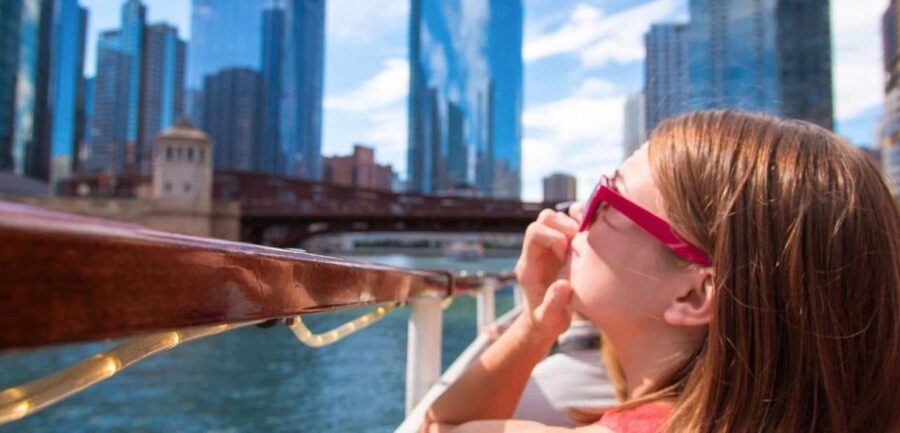
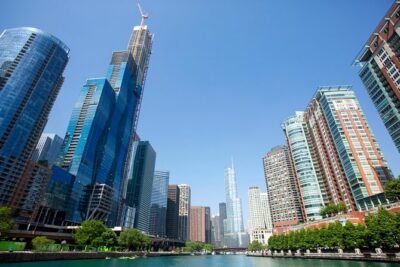
Once underway, the boat puts you at an unusual viewing height. From the streets, Chicago’s towers often feel separate and imposing. From the river, they form a narrow canyon, with older masonry buildings, glass towers, ornamented facades, and modern structures sharing the same frame.
The docent discusses more than 50 buildings along the route. You hear about different architectural styles, the materials used, and the people responsible for the designs. The talk also connects buildings to the city’s past and to the way Chicagoans have used and reshaped the river.
That context is what makes the cruise useful early in a Chicago visit. It gives you a framework for the rest of your time in town. Later, when you walk along the Loop or look up from a street corner, you may recognize the difference between a decorative Art Deco facade and the cleaner lines of mid-century modernism.
Several people who have taken the cruise found the 90 minutes just right. It is long enough to cover a large part of the river system without turning into an all-day commitment. You get a substantial introduction, but you still have time for a museum, meal, or neighborhood walk afterward.
The main compromise is sound. One person found the boat audio too quiet, making parts of the talk hard to catch. Most praise focuses on the guides, but your ability to hear may vary with your seat, the wind, and the general noise on the boat. If hearing every word matters to you, sit where you have a clear view of the docent and avoid lingering in the noisiest areas.
The bridges are part of the show
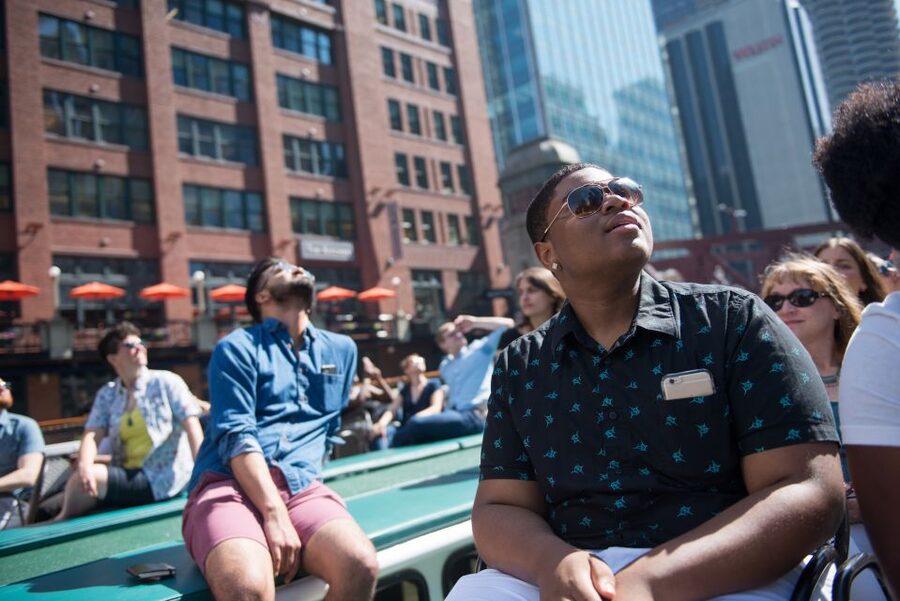
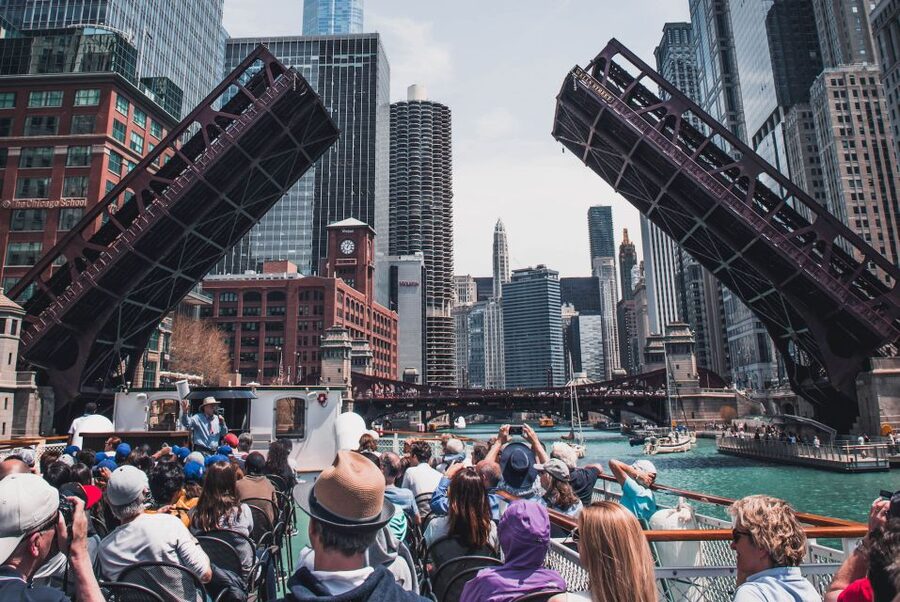
The cruise includes stories about 13 bascule bridges. These are movable bridges designed to lift so boats can pass along the river. They are practical pieces of infrastructure, but from the boat they also become part of the architectural story.
The bridge crossings break up the views of the buildings and give the guide natural moments to explain how transportation and river traffic affected Chicago. You begin to notice that the river is not an empty channel between towers. It is a working route that helped shape the city’s structure.
This is also where the live format helps. A recorded narration would need to cover every departure in the same order. A docent can react to the route, point out what is directly in front of you, and connect a bridge to the building or section of river you are seeing at that moment.
More Boat Tours in Chicago
- Chicago Architecture Center River Cruise aboard First Lady
★ 5.0 · 5,536 reviews - Chicago: Architecture River Cruise Skip-the-Ticket Line
★ 4.8 · 4,325 reviews - Chicago: 45-Minute Family-Friendly Architecture River Cruise
★ 4.7 · 2,304 reviews - Chicago: 1.5-Hour Lake and River Architecture Cruise
★ 4.7 · 2,050 reviews
Seeing all three branches of the Chicago River
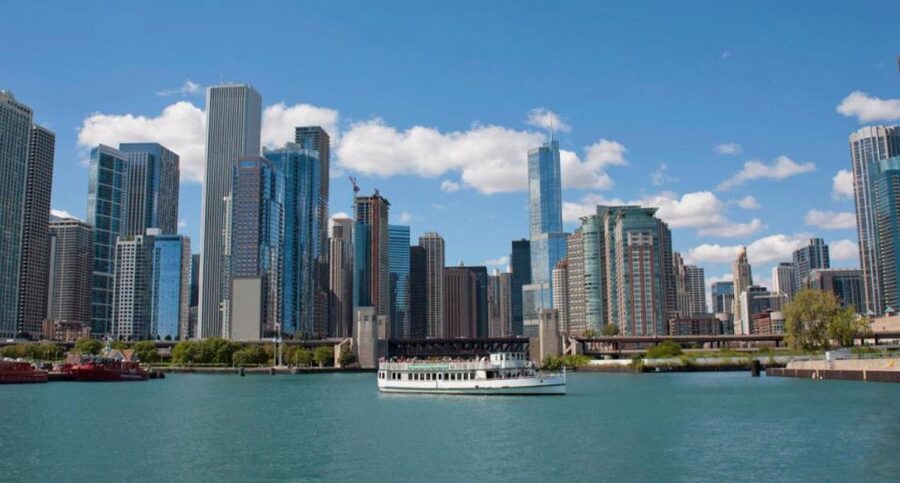
A major strength of this cruise is its coverage of all three branches. Some river rides focus mainly on the central section, where the tallest buildings create the most familiar skyline. Chicago’s First Lady goes beyond that core area and includes the river forks.
That wider route gives you a better sense of how the city developed around the water. The view changes as the boat moves away from the densest cluster of towers. You may find the pace a little less dramatic in some sections, but the broader route gives the cruise more substance.
One repeat rider specifically preferred seeing the forks rather than only the main river stretch. That is a useful distinction when comparing boats. If your only goal is a quick skyline photograph, a shorter cruise may do. If you want to understand the river as a whole, this route is the better fit.
The open-air upper deck is particularly valuable here. You can turn freely as the boat moves through bends and branches, instead of looking at the city through a fixed side window. The 360-degree view also helps you follow the guide’s references to buildings on both banks.
The guides make or break the 90 minutes
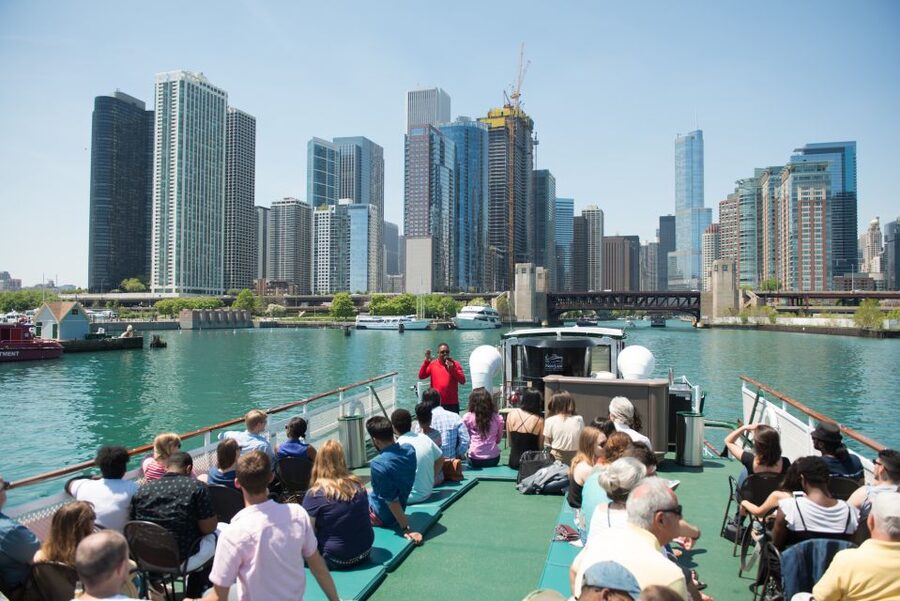
The cruise depends heavily on the docent. That is both its greatest strength and its one variable element. A strong guide turns architectural facts into stories about people, decisions, setbacks, and changing city life.
The best examples are guides who combine clear explanations with a sense of humor. Tim was praised for being both fun and well versed in the subject. Mary Jo’s talk was described as captivating, while Barbara was credited with making the city’s view from the river especially meaningful.
You do not need prior architecture training. One particularly useful feature of the narration is its accessibility to beginners. A person with little background can follow the basic styles and still come away with a stronger sense of why Chicago matters in architectural history.
The presentation can also appeal to design students and practicing architects. One passenger with a group that included architects found the trip enjoyable, and another described it as more useful than studying the subject from books. That does not mean every minute is a formal lesson. It means the river provides examples you can see immediately.
The guide speaks in English only. If you are comfortable following an English presentation, the live format adds warmth and local character. If you need multilingual narration, this is not the right choice.
Is $57 a fair price?
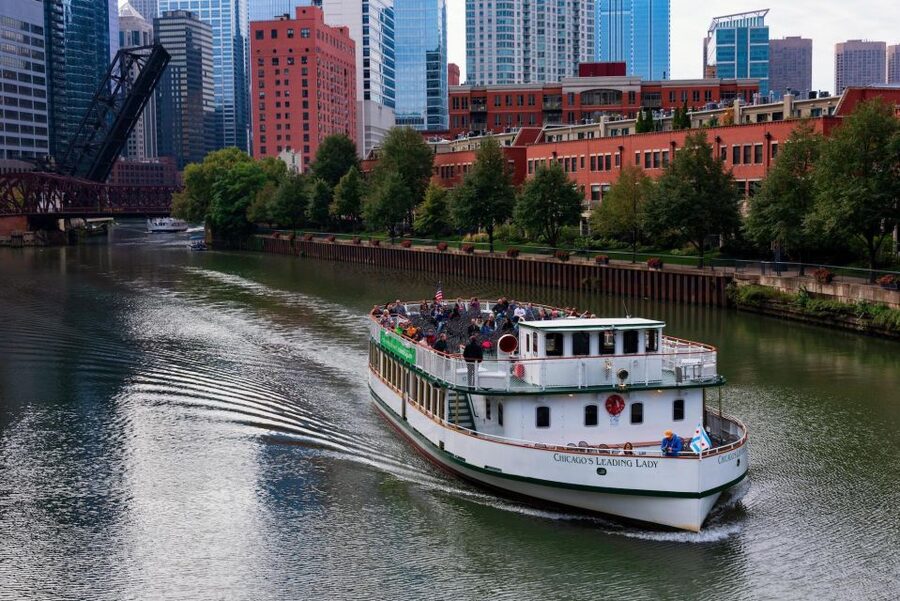
At $57 per person, this is not the cheapest way to get on the Chicago River. You are paying for more than the boat ride, though. The fare includes the 90-minute cruise, guaranteed open-air seating, the live CAC-trained docent, and the wider route through all three branches.
I consider it good value if architecture, city history, or photography is a real interest. The live instruction gives the trip a purpose beyond sightseeing, and the river views would be difficult to reproduce on foot. It is also a strong first activity because you can use what you learn to understand the rest of downtown.
The price feels less compelling if you only want a short ride and a few skyline pictures. In that case, a lower-cost option might meet your needs. This cruise is best when you want the buildings explained, not merely displayed.
The $5 Chicago Architecture Center add-on improves the calculation. Regular admission is listed as $14, so the discounted entry saves $9. The center is at the same general boarding location, making it easy to visit before or after the cruise. One useful detail is that the ticket can provide museum access for up to five days after the cruise, according to the experience details shared onboard and at the center.
Part of each ticket supports the Chicago Architecture Center’s nonprofit educational mission. If you like spending money on experiences that also fund public education, that gives this cruise added value.
Timing, weather, and practical access
Departures often sell out, so reserve ahead rather than counting on a same-day seat. You can cancel up to 24 hours before departure for a full refund, and the reserve-now, pay-later option can help if your Chicago schedule is still shifting.
Late arrivals cannot be refunded. The meeting point is downtown, and finding the Riverwalk entrance can take longer than expected, so do not cut it close. Parking can also be awkward. Prepaid parking may be easier than searching downtown at the last minute, and street-level directions are not always obvious.
The cruise runs in rain or shine. On a cool or wet day, the covered interior seating is important. On a hot day, the air-conditioned salon gives you a break from the sun, though the open deck remains the best place for unobstructed views.
The activity is described as wheelchair accessible, but the details require care. There is no elevator access to the dock. The accessible ramp is farther away, and reaching it may involve a longer route from State Street or other downtown access points.
Motorized scooters and electric wheelchairs cannot be accommodated for safety reasons. If you can transfer, the provider may have a manual wheelchair available, depending on availability. Call ahead if mobility is a serious concern, and do not rely on the simple label of wheelchair accessible without discussing the dock route.
Who should book Chicago’s First Lady?
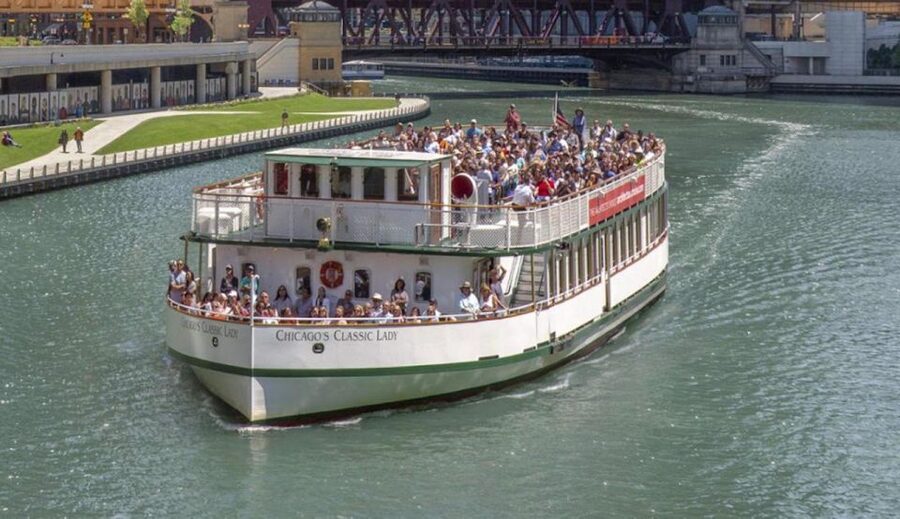
I would choose this cruise for a first visit, a family trip with older children, a design-minded traveler, or anyone who wants a stronger introduction to Chicago than a standard sightseeing loop provides. It also works well for locals who want to see familiar buildings from a new angle.
The experience suits people who enjoy listening. The guide speaks for much of the 90 minutes, and the value comes from paying attention to the story as the city passes around you. It is less ideal if you want a quiet boat ride or prefer to explore at your own pace.
Families can appreciate the manageable length, open decks, snacks, and indoor seating. Older adults may enjoy the guaranteed seats, but mobility planning is essential because of the dock access. Photographers should bring sun protection and be ready for changing light, especially around sunset. An early evening departure can show the buildings beginning to light up, though starting times vary.
Should you book it?
Yes, if you want Chicago’s architecture explained by a live local docent and you value seeing all three river branches. The combination of open-air seating, bridge stories, city history, and more than 50 buildings makes this more than a scenic float.
I would book in advance, add the Chicago Architecture Center for $5, and arrive early enough to find the Riverwalk entrance without stress. Pick a departure with weather you can enjoy, but remember that the boat runs in rain or shine and has covered seating.
Skip it only if $57 is beyond your budget or if you want a short, mostly silent skyline ride. For everyone else, this is one of the most useful ways to get your bearings in Chicago and understand why the river is central to the city’s identity.
FAQ
How long is the Chicago Architecture Center cruise?
The cruise lasts 90 minutes.
What language is the tour in?
The live commentary is in English.
How many buildings and bridges are discussed?
The docent shares stories about more than 50 buildings and 13 bascule bridges.
Does the cruise visit all three branches of the Chicago River?
Yes. The route travels along all three branches of the Chicago River.
Is seating guaranteed?
Yes. Guaranteed seating is provided on the open-air upper decks.
Is there indoor seating?
Yes. The boat has climate-controlled interior salons with covered seating.
Can I buy food and drinks onboard?
Yes. Water, soda, wine, beer, chips, cookies, and nuts are available for purchase. Food and drinks are not included in the ticket price.
Is the cruise wheelchair accessible?
The cruise is described as wheelchair accessible, but there is no elevator access to the dock. Motorized scooters and electric wheelchairs cannot board, and the accessible ramp may require a longer route. A manual wheelchair may be available for guests who can transfer, subject to availability.
Can I add admission to the Chicago Architecture Center?
Yes. You can add general admission for $5 instead of the regular $14 price.
Just added around Chicago
- BYOB Spray Paint and Sip at Studio W.I.P.★ 5.0 · 401 reviews
- Delicious Donuts & City Sights: Chicago’s Original Donut Tour★ 5.0 · 1,389 reviews
- Bikes, Bites & Views: Chicago’s Signature Dishes Bike Tour-Adults★ 5.0 · 732 reviews
- Original Chicago Architecture Interiors Tour: Dazzling Interiors★ 5.0 · 1,489 reviews
- City Cruises Chicago: Signature Lunch Cruise on Lake Michigan★ 4.0 · 348 reviews
- Chicago Loop District Food Tour with Deep Dish & Beef Sandwich★ 5.0 · 870 reviews
- Field Museum of Natural History Admission Tickets★ 4.5 · 489 reviews
- Chicago Sightseeing River and Lake Cruise★ 4.5 · 509 reviews
Chicago Tours, compared.

Chicago River: 1.5-Hour Guided Architecture Cruise
Read our review →
Chicago Architecture Center River Cruise aboard First Lady
Read our review →
Architecture River Cruise Skip-the-Ticket Line
Read our review →
Browse the lists this tour appears in