
Reviewed · CHICAGO
Chicago Walking Tour: Historic Treasures of Chicago
Chicago’s best architecture is not limited to the famous river views. This two-hour walk takes you into the city’s grand public interiors, including the Palmer House lobby and the Chicago Cultural Center, while connecting them to the skyscrapers outside. You’ll also begin at the Chicago Architecture Center, where a docent sets the stage for what you’re about to see.
I like the small maximum of 15 people, which makes it easier to hear the guide and ask questions. I also like the mix of celebrated façades and places many people hurry past, especially the Reliance Building and the lavish interiors along the route. The main consideration is that some interior visits can change on weekends, holidays, or during unexpected closures, so the exact experience is not completely fixed.
Key points to know before you book
- The route links several major Loop landmarks: You’ll walk from the Chicago Architecture Center to the Wrigley Building, Palmer House, Carbide and Carbon Building, Reliance Building, and Chicago Cultural Center.
- The best moments are indoors: The Palmer House lobby and Chicago Cultural Center add detail, color, and scale that photographs from the street cannot provide.
- Guides make the difference: Bob, John, Jim, Maureen, Laurel, Margaret, Jean, Beth, Paul, and Russell have all led tours noted for clear explanations, humor, patience, and good answers to questions.
- It is short but not shallow: Two hours gives you a useful introduction without taking up a full morning or afternoon.
- The group stays small: No more than 15 people can join, a helpful limit in busy downtown streets and large public buildings.
- Plan for a walking start and finish: The tour begins at 111 East Wacker Drive and ends at the Chicago Cultural Center on East Washington Street.
Why this short Chicago walk works so well
Chicago can feel like an open-air architecture museum, but the best details are easy to miss. You might notice the Wrigley Building’s gleaming exterior, yet walk straight past an ornate lobby. You might admire a tall office tower without knowing what problem its designers were trying to solve.
This tour gives you a framework. The guide connects buildings, design ideas, Chicago history, and the changing role of downtown streets. That makes the walk more useful than a simple checklist of façades.
The route is also well chosen for a first look at central Chicago. Michigan Avenue, State Street, and the Loop bring together commercial buildings, hotels, civic spaces, and early skyscraper design. You get a sense of how the city’s business center developed while moving between six distinct stops.
I would not book this as a substitute for a full architectural river cruise or a longer specialist walk. It is more focused and more compact. But at $35 per person, it offers good value if you want a guided introduction, a handful of significant buildings, and admission to the Chicago Architecture Center’s galleries.
More Walking Tours in Chicago
- Chicago: Gangsters and Ghosts Walking Tour
★ 5.0 · 7,155 reviews - Chicago Favorites Ultimate Food and Walking Tour
★ 5.0 · 1,962 reviews - Chicago: Gangsters and Ghosts Guided Walking Tour
★ 4.7 · 1,697 reviews
Starting at the Chicago Architecture Center
The tour begins at the Chicago Architecture Center at 111 East Wacker Drive. The opening introduction lasts about five minutes and includes admission to the center’s galleries.
That short orientation matters. You are not simply released onto the sidewalk with a guide pointing at buildings. The docent gives you a starting point for understanding Chicago’s architecture, then carries that context into the streets.
The Architecture Center also gives you a useful indoor beginning, particularly if the weather is poor. You should not expect a long museum visit during this tour, since the main activity is the walk, but the included gallery admission adds value before or after the route.
Your guide may be a certified professional guide or a docent associated with the Chicago Architecture Center. The names appearing in the supplied experiences include Bob, Russell, John, Paul, Jim, Maureen, Laurel, Margaret, Jean, and Beth. Their styles differ, but the strongest pattern is clear: expect explanation rather than a memorized list of dates.
The Wrigley Building and Michigan Avenue
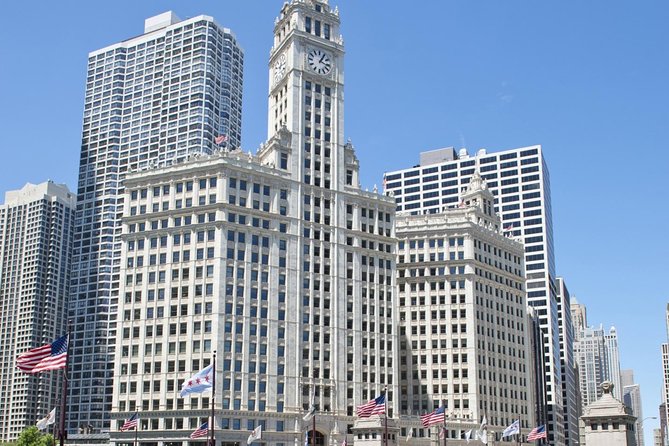
The Wrigley Building is the first major exterior sight. You spend about five minutes viewing it, so this is a brief stop rather than a long examination of every decorative detail.
That brevity is sensible. The building is easy to see from the street, and the guide can use it to explain how Chicago’s grand commercial architecture presents itself to the public. Look up as you listen. Street-level movement can pull your attention away from the upper stories, where much of the visual interest is found.
This part of the walk also helps you get your bearings. From the Chicago Architecture Center, the route moves into one of downtown’s most recognizable corridors. You are already seeing how Chicago’s architecture works as a group, not just as isolated monuments.
Because this is an outdoor stop, weather matters. The tour runs in rain, as one outing did, but comfortable shoes and a coat or umbrella will make the experience easier. There is no hotel pickup, and luggage or strollers cannot be stored, so arrive ready to walk.
Palmer House: the lobby is the point
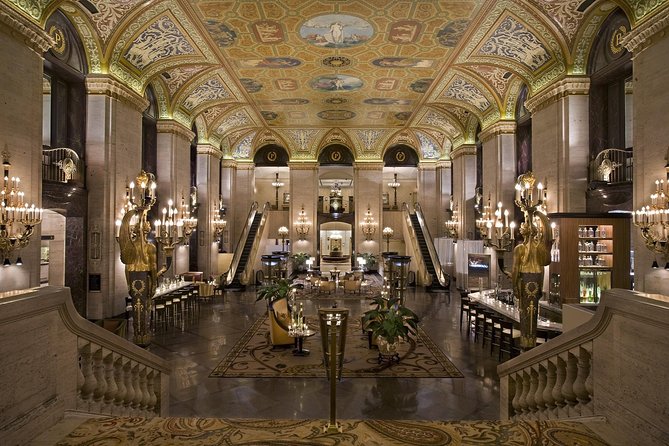
The Palmer House Hilton is one of the tour’s most useful stops because you see both the exterior and interior. About 10 minutes are set aside here.
The lobby gives you the kind of architectural detail that is hard to appreciate from a sidewalk. Grand hotels were designed to impress arriving visitors, and the interior lets you see how decoration, scale, and public space worked together.
This is also where the tour moves beyond skyline watching. The buildings are not only engineering feats. They were hotels, stores, offices, and gathering places, designed around how people moved and spent time in the city.
Pay attention to the guide’s story about the Seven Sisters and retail. That topic has been a particularly interesting part of the tour because it explains how Chicago’s commercial center developed around department stores and related businesses.
There is one important condition here: proof of COVID-19 vaccination is required to enter this location, according to the supplied tour information. Building access can also change, so confirm current requirements before you go.
More History Tours in Chicago:
- Chicago in a Day: Food, History & Architecture Walking Tour
★ 5.0 · 1,153 reviews - Chicago: Field Museum of Natural History Ticket or VIP Tour
★ 4.7 · 717 reviews - Field Museum of Natural History Admission Tickets
★ 4.5 · 489 reviews - New York City: American Museum of Natural History Ticket
★ 4.5 · 15,447 reviews
Carbide and Carbon Building: a quick exterior look
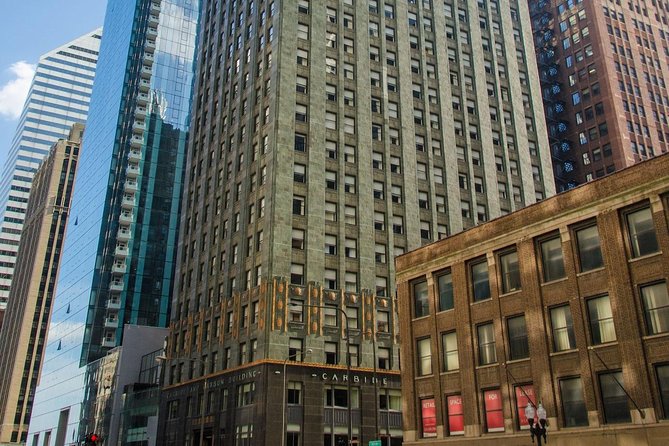
The Carbide and Carbon Building receives about five minutes. This is an exterior viewing stop, with no admission included or needed.
The short visit works as a contrast to the Palmer House. Instead of lingering inside, you look closely at the building’s outer design and hear how it fits into Chicago’s collection of landmark towers. The guide’s commentary is what gives the stop its weight.
If you already know a little about architecture, you may enjoy the comparison between this building and the other towers on the route. If you know very little, the guide helps you notice proportions, materials, decoration, and period details that might otherwise pass unnoticed.
Do not expect every stop to be a long presentation. The tour covers several buildings in two hours, so the pace stays steady. That is good for people who want variety, but less ideal if you prefer to spend 20 minutes studying one façade.
The Reliance Building and the story of early skyscrapers
The Reliance Building is another five-minute stop, with a free exterior visit. It is an important part of the route because it helps explain the move toward modern office architecture.
The guide can place it within the larger story of Chicago’s skyscraper era. You will hear about the city’s architectural development rather than only the building’s name and date. That broader context is one of the tour’s strongest features.
This is where a good guide really earns the $35 fee. A plaque can identify a building, but it cannot respond when you ask why the design mattered or how the building related to the city around it. Guides such as John and Paul have been praised for taking questions and bringing buildings to life, while Russell has been noted for his enthusiasm for both architecture and Chicago history.
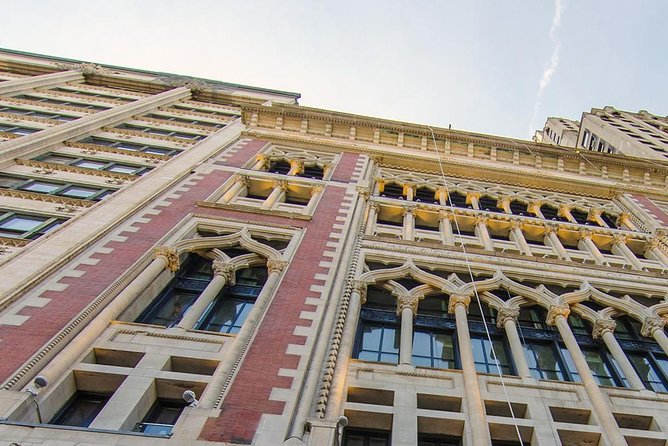
The Reliance stop is also a reminder to look above the street. Downtown Chicago can feel crowded at eye level, but the upper façades often reveal the clearest signs of a building’s design period.
Chicago Cultural Center: a grand finish indoors
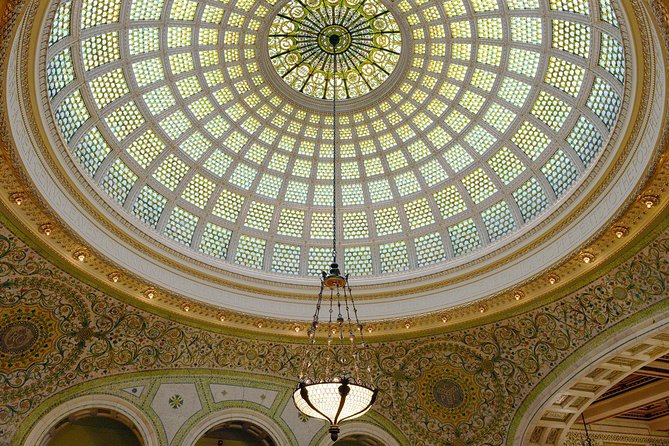
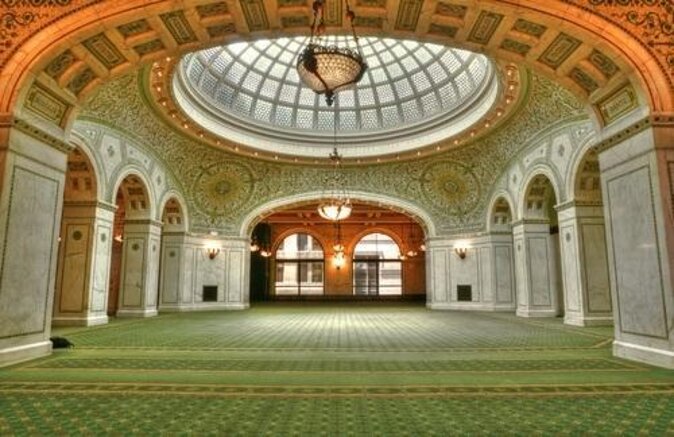
The tour ends at the Chicago Cultural Center, at 78 East Washington Street. You spend about 10 minutes viewing both the exterior and interior.
This is the strongest closing stop because it gives you another impressive public interior after the Palmer House. The building is free to enter, and the interior helps explain why a short walking tour can feel substantial even without access to every building along the route.
Your guide may point out architectural and civic details that are easy to miss if you enter on your own. One particularly memorable feature mentioned during the tour is the interior of the first public library. That detail adds a human side to the building’s story: this was not just decoration, but public space meant to serve the city.
The tour officially ends here. Your docent returns to the Chicago Architecture Center, and you are welcome to walk back with the docent. That option is useful if you need to retrieve something nearby or want to finish where you began.
What the guides add to the experience
The guide is the most important variable on this tour. The route is strong, but the buildings become much more interesting when someone explains the choices behind them.
The guides named in the supplied experiences have received praise for several specific qualities:
- Bob has been described as informative and engaging.
- Russell has brought clear enthusiasm for Chicago’s buildings and history.
- John has been especially good at taking time with questions.
- Jim has offered thorough explanations and a friendly manner.
- Maureen has added backstories that connect buildings to life in Chicago.
- Laurel has kept the two-hour walk fun and well paced.
- Margaret has handled questions about old buildings and the city’s broader development.
- Jean has explained early Chicago architecture clearly.
- Beth has kept a rainy-day outing interesting and responsive.
- Paul has been noted for a calm pace and strong interest in the subject.
Guide assignments can change, so you should not book on the assumption that one particular person will lead your departure. Still, the repeated pattern is encouraging: this is a question-friendly experience, not a silent march from one address to the next.
One guide also had to adjust the route during a Memorial Day parade. That is a useful sign for anyone visiting during a busy event. Downtown streets can change quickly, and a flexible guide can preserve the main ideas even if the exact path shifts.
Pace, group size, and practical comfort
The tour lasts about two hours and has a maximum of 15 participants. That is small enough for a more personal exchange without turning the outing into a private tour.
You should expect regular walking between stops, time on city sidewalks, and periods spent standing inside buildings. Most people can participate, and service animals are allowed. Pets are not allowed.
The route is near public transportation, which makes the starting point practical for visitors staying elsewhere in Chicago. There is no hotel pickup or drop-off, so you will need to make your own way to the Chicago Architecture Center.
Do not bring luggage or count on a stroller or coat check. Those services are not provided. If you are visiting in cool weather, wear a coat you can keep with you, and use comfortable shoes rather than fashion footwear that will punish you by the second hour.
Interior access may change because of weekend or holiday schedules, private events, or unforeseen closures. Think of the outdoor architecture as the reliable core of the experience, with the interiors adding much of the pleasure when available.
Who will get the most from this tour?
I would recommend it for a first visit to Chicago, especially if you want more than a general city orientation. It is also a good choice for architecture fans who have already taken a river tour and want to see important buildings from street level.
History-minded visitors will appreciate the connection between design and city life. The discussions of early architecture, retail, hotels, public libraries, and the Seven Sisters give the buildings a social setting rather than treating them as decorative objects.
It also suits locals who want a compact introduction to buildings they may have passed many times. One especially useful lesson from the outing is that even frequent visitors can miss the details above department-store entrances and inside familiar lobbies.
I would be more cautious about booking it for very young children who dislike walking or standing. The tour is only two hours, but the subject is mainly architecture and urban history. It is also not the right pick if you want extensive time inside each building, a private group, or transportation from your hotel.
Is $35 a fair price?
At $35, the value comes from the guide and the access rather than the number of stops alone. You get a certified guide, a two-hour walking route, and admission to the Chicago Architecture Center galleries.
Several stops are free public spaces, and most exterior viewing requires no ticket. That means you are paying primarily for structure, interpretation, and the chance to enter interiors such as the Palmer House and Chicago Cultural Center with someone who can explain what you are seeing.
For a visitor who would otherwise wander downtown without context, that is a fair trade. You cover a lot of ground, learn how the buildings relate to one another, and finish with a better eye for Chicago’s architecture.
The value is weaker if you already know the Loop well and prefer exploring at your own pace. In that case, the short stop times may feel hurried. But for most first-time visitors, the focused route and small group make the price reasonable.
Should you book the Historic Treasures of Chicago walk?
Book it if you want a compact, well-guided introduction to Chicago’s architecture, especially if grand interiors matter as much to you as famous exteriors. The Palmer House and Chicago Cultural Center add real substance, while the Architecture Center gives the tour a useful starting point.
Go in with sensible expectations. This is not a full survey of Chicago architecture, and interior access can change. It is a two-hour sampler with a strong route, a small group, and guides who generally make room for questions.
I would book it early if the timing fits your plans. The tour is often reserved about 10 days ahead, and the 99 percent recommendation with a 4.9 rating from 362 ratings points to steady demand. You can cancel for a full refund up to 24 hours before the start time, but changes or cancellations inside that window are not accepted.
FAQ
How long does the Chicago Historic Treasures walking tour last?
The tour lasts approximately two hours.
Where does the tour begin?
It begins at the Chicago Architecture Center, 111 East Wacker Drive, Chicago, Illinois 60601.
Where does the tour end?
The tour ends at the Chicago Cultural Center, 78 East Washington Street, Chicago, Illinois 60602. You may accompany the docent back to the Chicago Architecture Center.
What buildings are included?
The route includes the Chicago Architecture Center, Wrigley Building, Palmer House Hilton, Carbide and Carbon Building, Reliance Building, and Chicago Cultural Center.
Is admission to the Chicago Architecture Center included?
Yes. Admission to the galleries of the Chicago Architecture Center is included.
Is vaccination proof required anywhere on the tour?
Proof of COVID-19 vaccination is required to enter the Palmer House location, according to the supplied tour information. Access rules for building interiors may change.
Just added around Chicago
- BYOB Spray Paint and Sip at Studio W.I.P.★ 5.0 · 401 reviews
- Delicious Donuts & City Sights: Chicago’s Original Donut Tour★ 5.0 · 1,389 reviews
- Bikes, Bites & Views: Chicago’s Signature Dishes Bike Tour-Adults★ 5.0 · 732 reviews
- Original Chicago Architecture Interiors Tour: Dazzling Interiors★ 5.0 · 1,489 reviews
- Chicago Loop District Food Tour with Deep Dish & Beef Sandwich★ 5.0 · 870 reviews
- Field Museum of Natural History Admission Tickets★ 4.5 · 489 reviews
- City Cruises Chicago: Signature Lunch Cruise on Lake Michigan★ 4.0 · 348 reviews
- Chicago Sightseeing River and Lake Cruise★ 4.5 · 509 reviews
Chicago Tours, compared.

Chicago River: 1.5-Hour Guided Architecture Cruise
Read our review →

Chicago Architecture Center River Cruise aboard First Lady
Read our review →
Architecture River Cruise Skip-the-Ticket Line
Read our review →
Browse the lists this tour appears in